
COP30 Delegates Clash Over Net Zero Timeline
Brazil summit sees tensions on emissions targets
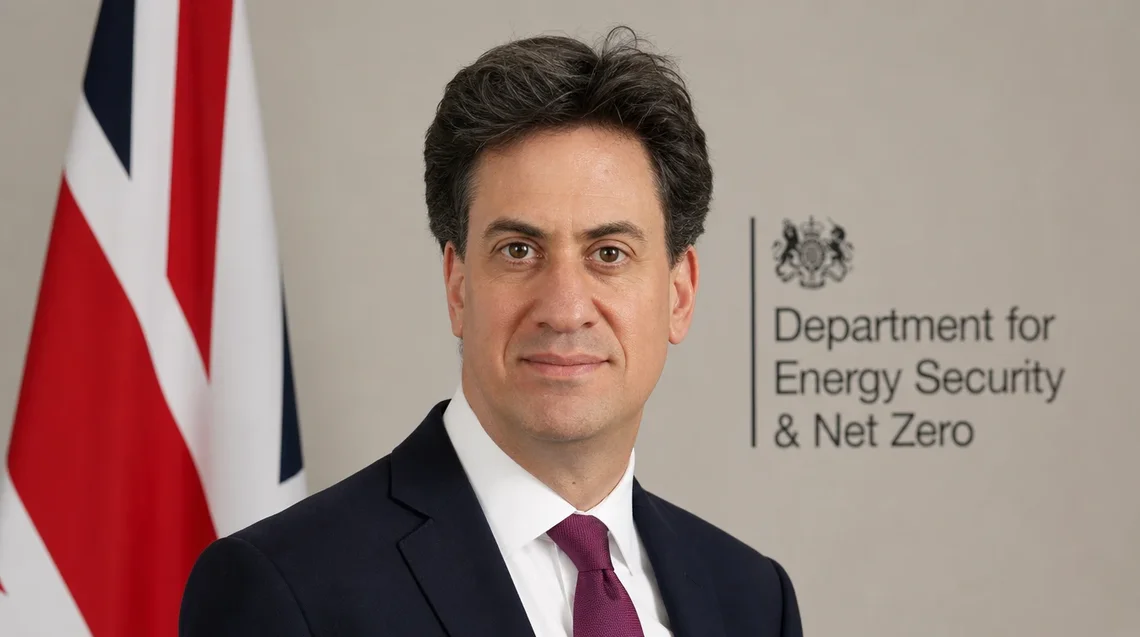
Negotiations at the COP30 climate summit in Belém, Brazil have entered a critical phase, with delegations from major economies clashing over the pace and structure of net zero emissions commitments, as scientific bodies warn that current national pledges remain insufficient to keep global warming within internationally agreed limits. The disputes centre on whether emerging economies should face the same timelines as industrialised nations, how climate finance obligations will be enforced, and whether existing targets carry meaningful legal weight.
The divisions have exposed deep fault lines between the Global North and South, with developing nations arguing that wealthier countries must accelerate their own transitions before demanding equivalent commitments from states still reliant on fossil fuel revenues to fund public services. According to the Intergovernmental Panel on Climate Change, global greenhouse gas emissions must reach net zero by around the middle of this century to limit warming to 1.5 degrees Celsius above pre-industrial levels — a threshold scientists warn, if crossed on a sustained basis, risks triggering irreversible consequences across ecosystems and human settlements alike.
Climate figure: Global CO₂ emissions from energy combustion reached approximately 37.4 billion tonnes in the most recently completed annual cycle, according to the International Energy Agency — a record high, and roughly 1.1% above the previous peak recorded before the pandemic disruption. The IPCC's Sixth Assessment Report estimates that, on current policy trajectories, warming of between 2.5°C and 3.1°C above pre-industrial levels is the most likely outcome by the end of this century. To stay within 1.5°C, global emissions would need to fall by approximately 43% by 2030 relative to 2019 levels. (Source: IEA, IPCC AR6)
The Core Disputes at Belém
The summit, hosted by Brazil under the presidency of President Luiz Inácio Lula da Silva, was intended to deliver strengthened Nationally Determined Contributions — the voluntary climate pledges each signatory to the Paris Agreement is required to submit and, in principle, ratchet upward over successive cycles. Instead, negotiators have spent the opening sessions trading competing proposals over baseline years, sectoral carve-outs, and the treatment of land use and forestry carbon credits.
Related Articles
Differentiated Responsibilities
A bloc of developing nations — including representatives from Africa, South Asia, and parts of Latin America — has insisted that any revised framework must enshrine the principle of "common but differentiated responsibilities," a formulation embedded in the original UN Framework Convention on Climate Change. These delegations argue that per capita historical emissions from wealthy nations justify an asymmetric timeline, under which industrialised economies would achieve net zero by the mid-2040s while developing countries are permitted to reach that benchmark a decade or more later. Officials from the EU and the United States have resisted this framing, according to summit observers, arguing that the physics of the climate system does not accommodate differentiated warming thresholds.
Carbon Credit Controversies
Separate but related tensions have emerged over Article 6 of the Paris Agreement, which governs the international trading of carbon offsets. Several delegations have proposed frameworks that would allow countries to count forestry-based carbon removals — including credits from the Amazon basin — against their national emissions targets. Critics, including researchers cited by Carbon Brief, have argued that such accounting mechanisms risk masking the need for deep reductions in fossil fuel consumption, effectively substituting offsets for structural decarbonisation. Brazil's own delegation has defended the integrity of its forest protection programmes while simultaneously facing domestic scrutiny over deforestation rates in the Cerrado biome.
For more on the financial dimensions of these disputes, see COP30 Talks Stall Over Net Zero Finance Gaps, which examines how unresolved questions about multilateral funding are complicating target-setting negotiations.
National Positions and the Emissions Gap
Analysis published ahead of the summit by the United Nations Environment Programme concluded that, even if all currently submitted NDCs were fully implemented, the world would still be on course for warming significantly above the 1.5°C threshold. The so-called "emissions gap" — the difference between where trajectories currently point and where they need to reach — remains substantial across nearly every major emitting sector, from power generation and transport to heavy industry and agriculture.
Major Emitters' Stated Positions
| Country / Bloc | Current Net Zero Target Year | Share of Global Emissions (approx.) | Key Contested Issue at COP30 |
|---|---|---|---|
| European Union | 2050 | ~7% | Pushing for universal 2050 deadline for all major economies |
| United States | 2050 | ~14% | Domestic policy uncertainty affecting credibility of pledges |
| China | Before 2060 | ~27% | Resistance to binding interim milestones before 2035 |
| India | 2070 | ~7% | Demanding accelerated finance transfers before tightening targets |
| Brazil | 2050 | ~3% | Forest carbon accounting and land-use classification |
| African Union bloc | Varies by state | ~4% | Differentiated timelines and loss-and-damage funding access |
| Gulf states / OPEC members | Varies (some unset) | ~6% | Opposition to language phasing out fossil fuel production |
(Source: IEA World Energy Outlook, IPCC AR6 Working Group III, UNEP Emissions Gap Report)
The table illustrates the structural complexity of the negotiations: no single bloc holds a majority of global emissions, and any durable agreement requires consensus across parties with fundamentally divergent economic interests and development trajectories. Research published in Nature has previously demonstrated that the credibility gap between stated targets and enacted domestic policies is as consequential as the targets themselves — a finding that has been cited repeatedly on the floor of negotiations in Belém, officials said.
The Finance Deadlock
Underpinning virtually every substantive disagreement at COP30 is the question of climate finance. Developing nations have long argued that the failure of wealthy countries to deliver on earlier commitments — including a pledge of 100 billion dollars per year in climate finance that was consistently missed during the previous decade — has eroded trust and undermined the willingness of lower-income states to accept more ambitious emissions constraints.
At the previous COP cycle, a new collective quantified goal on climate finance was agreed in principle, but the mechanisms for its delivery, verification, and allocation remain contested. Delegations from small island developing states and least-developed countries have argued that existing finance flows disproportionately favour mitigation projects that generate measurable carbon reductions, at the expense of adaptation funding for communities already experiencing the consequences of warming. According to IEA data, clean energy investment in emerging and developing economies — excluding China — currently accounts for only around 15% of global clean energy capital flows, despite those economies representing the majority of projected future emissions growth.
Coverage of the specific funding disputes shaping these negotiations is available in our report on COP30 Talks Stall Over Net Zero Funding Gaps.
Loss and Damage Fund Activation
The loss and damage mechanism agreed at COP27 and operationalised at COP28 was expected to be a central point of progress at Belém. Instead, it has become another site of contention. Developing nations have expressed frustration at the pace of capitalisation, with pledges falling well short of the hundreds of billions of dollars that affected states say are needed annually to address climate-attributable disasters, sea-level rise, and ecosystem degradation. Guardian Environment reporting ahead of the summit noted that the fund had received commitments of only a fraction of the amounts demanded by vulnerable-country coalitions, leaving its practical utility in doubt.
Scientific Community's Assessment
Researchers and scientific observers attending the summit have been candid about the gap between the pace of diplomatic progress and the urgency indicated by the evidence base. The IPCC's latest synthesis report made clear that every increment of warming avoided translates into measurable reductions in projected harm across human and natural systems — a framing that scientists have urged negotiators to treat as the fundamental premise of the talks rather than as background context.
Sectoral Gaps Identified
Beyond the headline net zero debates, technical working groups at COP30 have been examining sector-specific trajectories. The IEA's most recent tracking data indicate that the power sector is decarbonising faster than most models projected a decade ago, driven by the rapid cost reduction of solar photovoltaic and wind generation. However, progress in hard-to-abate sectors — including steel, cement, shipping, and aviation — remains substantially below the pace required by 1.5°C-aligned pathways. Methane emissions from agriculture and fossil fuel operations have also attracted renewed attention, with Carbon Brief analysis suggesting that near-term methane reductions represent one of the most cost-effective available levers for limiting warming over the coming two decades.
The divergence between sectors where momentum is visible and those where structural barriers persist is shaping which parts of the NDC framework attract the most contentious negotiating language at Belém, technical delegates said.
Political Durability of Commitments
A recurring theme in the corridors of the Belém convention centre has been the question of political durability — whether net zero pledges made by governments will survive changes of administration, shifts in energy prices, or domestic economic pressures. The withdrawal of the United States from the Paris Agreement during the previous decade and its subsequent re-entry demonstrated the fragility of commitments not embedded in domestic legislation. Several delegations have pushed for language in any COP30 outcome document that would create stronger accountability mechanisms, though resistance from parties concerned about sovereignty constraints has limited the ambition of those proposals.
Analysts tracking the negotiations have noted that the structural design of the Paris Agreement — voluntary targets with soft review mechanisms — remains both its political strength, enabling broad participation, and its scientific weakness, providing insufficient guarantee that commitments will translate into emission reductions at the required scale and pace. For context on how these dynamics are playing out across the summit agenda, see our analysis of Net Zero Goals Face Reality Check at COP30.
Civil Society and Non-State Actors
Beyond formal government delegations, COP30 has attracted a substantial presence from subnational governments, businesses, and civil society organisations. Several major corporations have submitted updated science-based targets aligned with 1.5°C pathways, though independent researchers have noted significant variation in the rigour with which those targets are constructed and verified. Cities and regional governments from Europe, North America, and parts of Asia have made commitments that in several cases exceed those of their national governments — a dynamic that summit observers say both supplements and complicates the official negotiating process.
What a Successful Outcome Would Require
For COP30 to be assessed as a substantive advance on previous summits, analysts and scientific bodies have identified several benchmarks. A credible outcome would, at minimum, require the submission of materially strengthened NDCs from the world's largest emitters, a concrete capitalisation plan for the loss and damage fund, a resolved framework for Article 6 carbon markets that prevents double-counting and displacement of domestic action, and language that explicitly links financial commitments to the delivery of more ambitious emissions targets from developing economies.
Whether the current state of negotiations in Belém is capable of producing agreement on any of these elements before the summit's scheduled conclusion remains, according to officials familiar with the process, genuinely uncertain. The history of COP summits suggests that significant movement typically occurs in the final hours of talks — but equally that the gap between what the science requires and what the politics delivers has, at each previous summit, remained substantial.
Detailed reporting on how the target-setting impasse developed through earlier negotiating sessions is available in our coverage of COP30 Talks Stall Over Net Zero Targets. Background on the broader trajectory of international commitments heading into the summit is covered in Net Zero Targets Face Global Setback at COP30.
The outcome of COP30 will be read not only as a verdict on the current round of negotiations, but as a signal of whether the international climate framework established in Paris retains the institutional capacity to deliver the course corrections that the scientific evidence, across multiple independent lines of research, indicates are now urgently required.