
COP30 Talks Stall on Carbon Emission Cuts
Nations clash over net zero timelines at Brazil summit
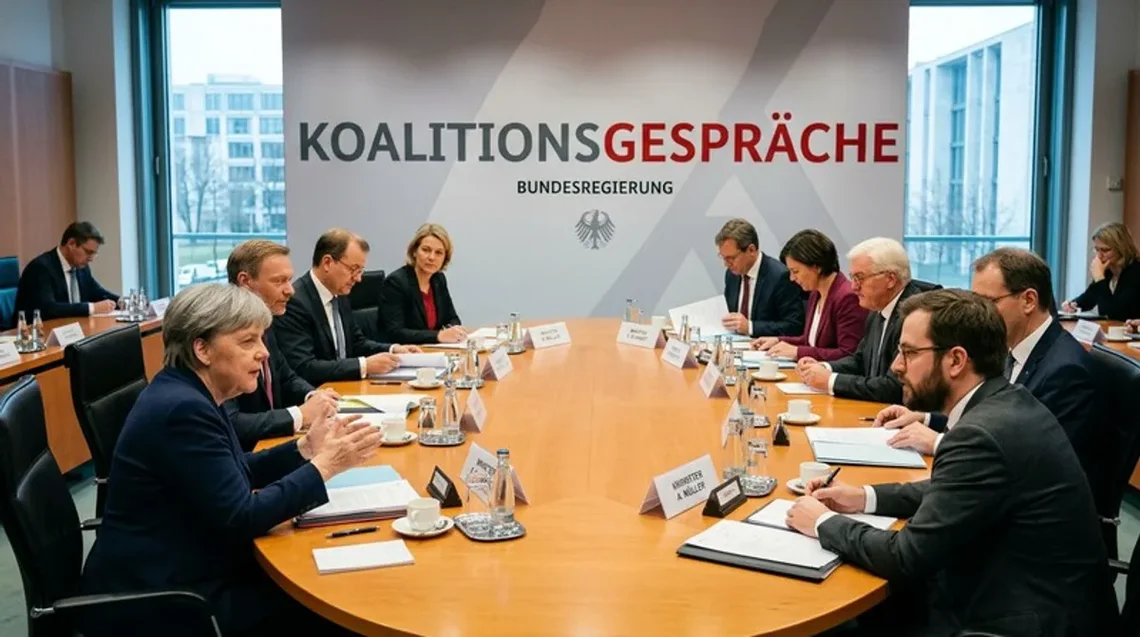
Negotiations at the United Nations climate summit in Belém, Brazil have reached a critical impasse, with delegations from major emitting nations unable to agree on binding timelines for reducing carbon emissions — raising serious doubts about whether COP30 will deliver the strengthened commitments scientists say are urgently needed. The deadlock centres on how quickly countries must phase down fossil fuels and whether wealthy nations will accept earlier net zero deadlines than those being demanded of developing economies.
Climate figure: Global average surface temperatures are currently tracking approximately 1.3°C above pre-industrial levels, according to the Intergovernmental Panel on Climate Change (IPCC). The IPCC's Sixth Assessment Report warns that limiting warming to 1.5°C requires global CO₂ emissions to reach net zero by around mid-century, with a 43% reduction in greenhouse gas emissions required by 2030 compared to 2019 levels. The International Energy Agency (IEA) reports that global energy-related CO₂ emissions reached a record high recently, underscoring the gap between current policy trajectories and the reductions scientists say are necessary.
The Core Dispute: Who Cuts, and When
At the heart of the breakdown is a longstanding fault line between developed and developing nations over the principle of "common but differentiated responsibilities" — the legal and moral framework embedded in the UN Framework Convention on Climate Change. Delegations from the G77 bloc, representing more than 130 countries, have pushed back firmly against proposals that would require all nations to adopt identical net zero timelines regardless of historical emissions or current economic development, officials said.
Developed Nations Under Pressure
The European Union and several other high-income economies entered the summit with proposals calling for a collective commitment to phase out unabated coal power by the early 2030s and to accelerate net zero targets to 2045 for the wealthiest economies. However, progress on these proposals has been slow. According to Carbon Brief, which has tracked national climate pledges extensively, only a minority of current nationally determined contributions (NDCs) align with a 1.5°C pathway, and several major emitters have submitted targets that analysts describe as insufficient.
Related Articles
Emerging Economies Reject Uniform Timelines
India, China, Brazil, South Africa, and Indonesia — collectively responsible for a substantial share of current global emissions — have argued that any new framework must account for development needs and the accumulated emissions of industrialised nations over the past two centuries. Negotiators from these countries have stated that accepting the same net zero deadlines as Europe or North America without corresponding financial and technological support would be economically untenable, officials said. For broader context on how financial commitments are complicating the emissions debate, see COP30 Talks Stall Over Net Zero Finance Gaps.
The Science Behind the Urgency
The political conflict at Belém is unfolding against a backdrop of increasingly clear scientific evidence that the window for avoiding the most severe warming scenarios is narrowing. Researchers writing in Nature have warned that carbon budgets consistent with 1.5°C are being consumed at a rate that leaves little room for procedural delay at multilateral forums. The IPCC has noted that every fraction of a degree of warming carries measurable consequences for food security, sea level rise, and the frequency of extreme weather events.
Emissions Trajectories and the Policy Gap
The IEA's most recent World Energy Outlook, cited by multiple delegations during plenary sessions, projects that existing policies — without strengthening — would result in warming significantly above 2°C by the end of the century. The agency's net zero scenario requires a near-total transformation of the global energy system within the next two decades, including a halt to new approvals of unabated coal, oil, and gas projects. That prescription remains deeply contested by fossil fuel-producing nations attending the summit. For an in-depth look at how national targets are measuring up against these benchmarks, read Net Zero Targets Face Pressure as Emissions Stall.
| Country / Bloc | Net Zero Target | NDC 2030 Reduction Target | IEA 1.5°C Alignment |
|---|---|---|---|
| European Union | 2050 | 55% (vs 1990) | Partially aligned |
| United Kingdom | 2050 | 68% (vs 1990) | Partially aligned |
| United States | 2050 | 50–52% (vs 2005) | Partially aligned |
| China | Before 2060 | Carbon intensity reduction target | Not aligned |
| India | 2070 | 45% emissions intensity (vs 2005) | Not aligned |
| Brazil | 2050 | 50% (vs 2005) | Under review |
| Saudi Arabia | 2060 | 278 MtCO₂e reduction by 2030 | Not aligned |
| Small Island States | 2050 or earlier | Near-100% renewable targets | Aligned |
Source: IEA, IPCC Sixth Assessment Report, Carbon Brief NDC Tracker. Alignment assessments are approximate and reflect current policy trajectories.
Finance and the Stalled Pledges
Observers and civil society groups attending the Belém summit have pointed to an unresolved financing gap as a fundamental driver of the impasse on emissions timelines. Developing countries have made clear that their willingness to adopt more ambitious carbon reduction schedules is directly linked to the delivery of climate finance — both for mitigation and adaptation — from wealthier nations. The $100 billion per year commitment made at Copenhagen has been widely described as inadequate and was only recently reported as being met, though the quality and composition of those funds remains disputed.
The New Collective Quantified Goal
Negotiators are attempting to agree on a New Collective Quantified Goal (NCQG) on climate finance that would replace the previous benchmark with a substantially larger figure. Estimates from independent research groups suggest developing nations require hundreds of billions of dollars annually to transition their energy systems and adapt to impacts that are already locked in. According to the Guardian Environment desk, which has covered the finance negotiations extensively, major donors have resisted committing to figures that match the scale of assessed need. The funding dimension is explored further in our coverage: COP30 Talks Stall Over Net Zero Funding Gaps.
The Role of Fossil Fuel Interests
A record number of fossil fuel industry representatives reportedly attended accreditation registration at this year's summit, a fact that has drawn criticism from scientists, campaigners, and several small island delegations. The presence of these actors within national delegations has become a point of procedural contention, with calls from some parties for clearer rules on conflicts of interest in the negotiating process. Officials from the Alliance of Small Island States (AOSIS) have argued that the pace of the fossil fuel phase-down is existential for low-lying nations already experiencing measurable sea-level rise and increased storm intensity, officials said.
Methane and the Broader Emissions Basket
While much of the headline attention at COP30 has focused on carbon dioxide, negotiators are also grappling with commitments around methane — a greenhouse gas with significantly higher short-term warming potential than CO₂. The Global Methane Pledge, launched at a previous COP, committed signatories to a 30% reduction in methane emissions by the end of the decade. Carbon Brief analysis suggests progress on that pledge has been uneven, with some major methane-emitting sectors in agriculture and fossil fuel extraction showing limited measurable reduction. Research published in Nature has highlighted methane's outsized role in near-term temperature trajectories, lending scientific weight to calls for its inclusion in any strengthened outcome text.
What a Successful Outcome Would Require
Analysts and former negotiators briefing press at the summit have outlined what a credible final agreement would need to contain. At minimum, most observers agree, it would require all major economies to submit updated NDCs that collectively close the gap identified by the IPCC between current trajectories and the emissions pathway consistent with 1.5°C. It would also require a credible and deliverable finance package that addresses the concerns of developing nations, and clearer language on the fossil fuel phase-down that was agreed, in broad terms, at the previous summit in Dubai.
The NDC Ratchet Mechanism
The Paris Agreement's built-in ratchet mechanism requires parties to submit progressively more ambitious NDCs every five years. The current cycle requires updated pledges to be submitted ahead of or at COP30. According to IPCC analysis, the collective ambition of submitted NDCs remains far below what is scientifically required, meaning the ratchet mechanism — while structurally sound — has not yet delivered the acceleration it was designed to produce. Tracking where target-setting disputes currently stand is covered in related reporting: COP30 Talks Stall Over Net Zero Targets, and the broader deadlock is examined in COP30 talks deadlock over net zero targets.
Prospects and Next Steps
With negotiating sessions entering their final stretch, senior diplomats have acknowledged that a bridging text circulated by the COP presidency has yet to gain consensus support. Several delegations have called for an extension of formal negotiating hours, a standard feature of COP processes when agreement proves elusive. The Brazilian presidency, led by veteran diplomat André Aranha Corrêa do Lago, has urged parties to demonstrate political will commensurate with the scientific evidence, officials said.
The outcome at Belém will be closely scrutinised not only for what it commits governments to do but for the signal it sends to financial markets, energy investors, and the broader international system about the credibility of multilateral climate governance. If major emitters leave the summit without meaningfully strengthened commitments, the practical and reputational costs for the UN climate process will be significant — though analysts caution that assessments of COP outcomes must account for the full range of parallel workstreams, bilateral agreements, and policy actions that occur outside the formal text. The science, according to the IPCC and IEA, does not permit extended ambiguity about direction — even if diplomacy continues to demand patience with process.