
COP30 Talks Stall Over Net Zero Commitments
Nations clash on emissions reduction timelines
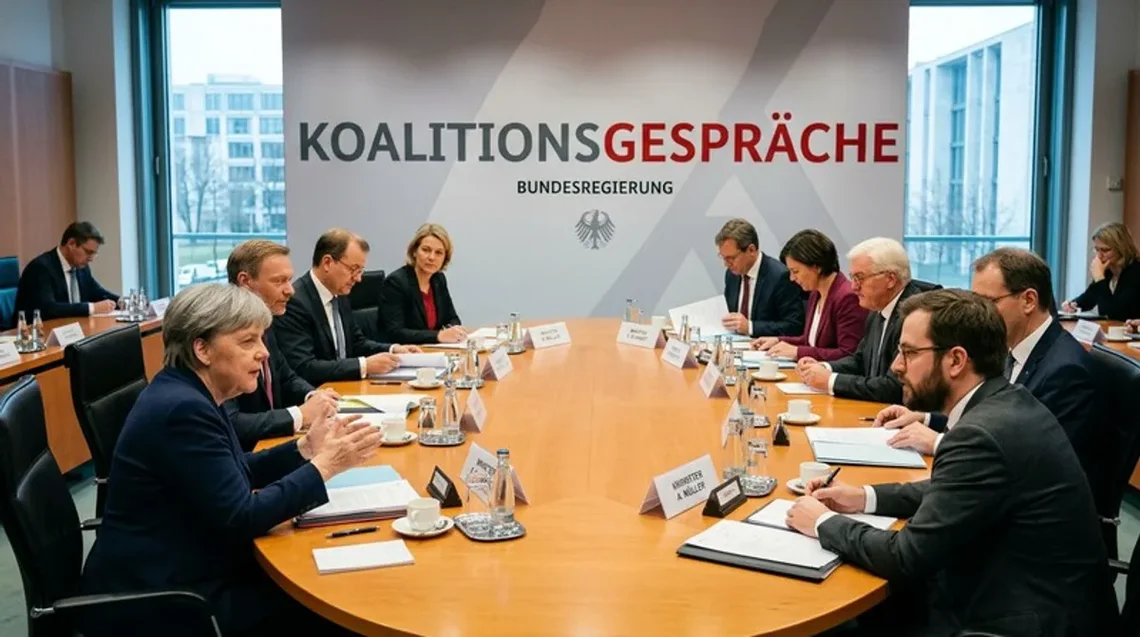
Negotiations at COP30 in Belém, Brazil, have hit a significant impasse as delegations from major emitting nations clash over the pace and legal framing of emissions reduction commitments, with developing economies pushing back against timelines they describe as economically punitive and structurally unfair. The deadlock threatens to undermine what the IPCC has identified as a narrowing window to limit average global warming to 1.5 degrees Celsius above pre-industrial levels, a threshold scientists warn carries substantially lower risks of irreversible climate tipping points compared with higher warming scenarios.
Climate figure: Global average surface temperature has risen approximately 1.2°C above pre-industrial levels, according to the World Meteorological Organization. The IPCC's Sixth Assessment Report states that to maintain a 50% probability of limiting warming to 1.5°C, global CO₂ emissions must reach net zero by around mid-century, with total cumulative emissions from this point not exceeding approximately 500 gigatonnes of CO₂. Current national pledges, even if fully implemented, are projected by the IEA to result in warming of approximately 2.5°C by 2100.
The Core Dispute: Timelines and Legal Obligations
At the centre of the standoff is a fundamental disagreement over whether net zero targets should be encoded into a binding legal framework or remain aspirational national pledges under the existing Nationally Determined Contribution, or NDC, architecture established by the Paris Agreement. The European Union and a coalition of climate-vulnerable small island states have pushed for firmer, legally enforceable language. The United States, China, India, and several major oil-producing nations have resisted, citing sovereignty concerns and the differential burden such obligations would place on economies still heavily reliant on fossil fuel revenues and coal-fired power generation, officials said.
The 1.5°C Threshold Under Pressure
Scientific bodies have been unequivocal on the urgency underpinning these negotiations. According to the IPCC, every fraction of a degree of warming carries measurable increases in extreme weather frequency, sea-level rise, and ecosystem disruption. The gap between current pledges and the trajectory required for 1.5°C is not marginal — data from Carbon Brief indicate that, collectively, G20 nations account for roughly 75% of global greenhouse gas emissions, and most have not submitted NDCs aligned with a 1.5°C pathway. The science is not in dispute at the negotiating table; the political will to act on it demonstrably is.
Related Articles
Differentiated Responsibilities and Historical Emissions
A recurring flashpoint in the Belém talks has been the principle of Common But Differentiated Responsibilities, enshrined in the UN Framework Convention on Climate Change. Delegations representing the G77 bloc and China have argued that wealthier industrialised nations, which accumulated the largest share of historical atmospheric carbon loading, bear a greater obligation to achieve net zero earlier and to finance transition pathways in the Global South. Data published in Nature show that the cumulative CO₂ emissions of the United States since industrialisation are roughly double those of China and more than fifteen times those of India, providing a statistical basis for the equity arguments being advanced by developing-nation negotiators.
Finance Remains the Deepest Fault Line
Separate from but closely entwined with the emissions timeline dispute is the question of climate finance. The failure of developed nations to fully deliver on the previously agreed $100 billion annual climate finance commitment has eroded trust among developing country delegations, and this mistrust is now casting a shadow over every technical discussion on emissions commitments, according to senior negotiators briefed by diplomatic correspondents covering the talks. For the full financial dimension of this story, see our coverage of COP30 Talks Stall Over Net Zero Finance Gaps.
The New Collective Quantified Goal
A central financial negotiation at COP30 concerns the New Collective Quantified Goal on climate finance, intended to replace the previous $100 billion benchmark with a figure more commensurate with the actual investment needs of developing economies. Estimates from the IEA suggest that emerging and developing economies outside China require approximately $2.8 trillion in clean energy investment annually by the early 2030s — roughly seven times the current flow of international public climate finance. Bridging this gap is considered by many analysts to be a prerequisite for securing meaningful emissions commitments from the Global South, since nations cannot credibly commit to decarbonisation pathways they lack the financial infrastructure to deliver.
Sectoral Breakdown: Where Emissions Cuts Are Contested
| Sector | Share of Global Emissions | Key Contested Issue | Primary Blocking Parties |
|---|---|---|---|
| Energy (fossil fuels) | ~34% | Coal phase-out timeline and language | India, China, South Africa, Indonesia |
| Industry | ~24% | Carbon border adjustment compatibility | China, Brazil, Russia |
| Agriculture & Land Use | ~22% | Methane reduction obligations | Brazil, Argentina, United States |
| Transport | ~16% | Shipping and aviation net zero dates | Major shipping nations, Gulf states |
| Buildings | ~6% | Retrofit financing and building codes | Developing economies broadly |
(Source: IEA World Energy Outlook; IPCC Sixth Assessment Report Working Group III)
The Coal Question
The phasedown versus phase-out debate over coal, which consumed significant negotiating time at COP26 in Glasgow and COP27 in Sharm el-Sheikh, has resurfaced with renewed intensity in Belém. India has maintained that a hard deadline on coal is incompatible with its current energy security requirements, a position backed by data showing coal still accounts for approximately 70% of India's electricity generation. China, which produces and consumes more coal than the rest of the world combined according to IEA figures, has reiterated that its emissions are expected to peak before 2030, though independent analysis cited by Carbon Brief suggests this peak may be later and higher than official projections indicate.
The Role of NDC Architecture in the Deadlock
Much of the technical deadlock at COP30 relates to the architecture of NDCs themselves. Under the Paris Agreement's design, nations set their own targets, and ambition is meant to ratchet upward with each successive submission cycle. Critics, including several environmental law scholars cited in Guardian Environment reporting, argue that this structure lacks enforcement mechanisms sufficient to drive alignment with global temperature goals. Proponents counter that a legally binding universal emissions framework is politically unachievable and would risk the withdrawal of major emitters from the process entirely, as occurred with the Kyoto Protocol's second commitment period. Detailed analysis of the target-setting disputes is available in our report on COP30 Talks Stall Over Net Zero Targets.
Ratchet Mechanism Proposals
A bloc of European and Pacific island nations has tabled proposals for a strengthened ratchet mechanism that would require nations to demonstrate measurable progress against previous NDCs before submitting new ones, with independent technical review built into the cycle. Opponents argue this constitutes external verification of sovereign policy — a red line for several large delegations. The proposals remain in brackets in draft negotiating text, diplomatic language indicating no consensus has been reached, officials said.
Science-Policy Gap: What the Data Demand Versus What Is Being Offered
The divergence between what the scientific literature prescribes and what nations are prepared to commit to has rarely been more starkly illustrated than at the current talks. The IPCC's Sixth Assessment Report is explicit: global greenhouse gas emissions must decline by approximately 43% below recently recorded levels by 2030 to maintain a plausible 1.5°C pathway. Current aggregate NDCs, according to the UN Environment Programme's Emissions Gap Report, place the world on a trajectory that is far short of this requirement. For broader context on the specific targets under negotiation, our earlier coverage of COP30 talks deadlock over net zero targets examines the specific language disputes in detail, and our analysis of COP30 Talks Stall on Carbon Emission Cuts provides a granular breakdown of the sectoral carbon reduction figures at stake.
Carbon Budget Arithmetic
Carbon budget calculations — which quantify the total volume of CO₂ the atmosphere can absorb before a given warming threshold is breached — provide the quantitative backbone of the scientific case for urgency. Research published in Nature indicates the remaining carbon budget for a 50% chance of staying below 1.5°C has been revised downward in successive IPCC assessments as the pace of historical emissions has outstripped earlier projections. At current global emission rates, this budget could be exhausted within approximately a decade, a figure that has significant implications for the credibility of net zero commitments targeting mid-century. Carbon Brief's analysis of national carbon budgets further illustrates that many current pledges, if examined against each country's proportional share of the global budget, imply warming well in excess of stated ambitions. The funding infrastructure required to match this ambition is explored further in our coverage of COP30 Talks Stall Over Net Zero Funding Gaps.
Prospects for a Breakthrough
Experienced COP observers note that the most consequential decisions in these negotiations typically come in the final hours, under significant political pressure, and that the current state of the talks, while concerning, is not unprecedented for this stage of proceedings. Whether that pattern holds at COP30 — given the compounding pressures of the finance dispute, the political contexts in several major emitting nations, and the scientific community's increasingly urgent messaging — remains genuinely uncertain. What is not uncertain is the underlying physics: atmospheric CO₂ concentrations are currently at their highest level in at least 800,000 years, according to ice core data cited by the IPCC, and the window for avoiding the most severe projected impacts of climate change is, by every credible scientific measure, closing. The outcome of the Belém talks will play a material role in determining how much of that window remains.