
COP30 talks stall over net zero financing gap
Developing nations reject climate fund proposal
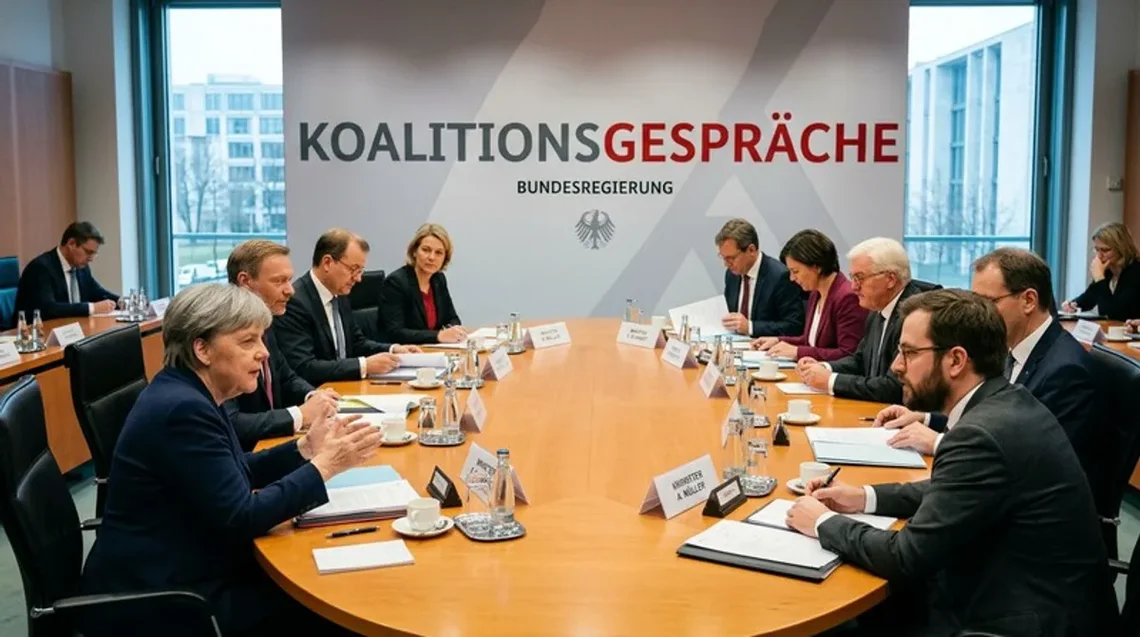
Negotiations at COP30 in Belém, Brazil have reached a critical impasse after a coalition of developing nations formally rejected a proposed climate finance framework, citing what they describe as an inadequate and structurally flawed approach to closing the net zero financing gap. The breakdown represents one of the most significant procedural failures in recent climate diplomacy, with delegations from the Global South walking out of a key working group session and demanding a complete restructuring of the draft text before talks can resume.
Climate figure: The IPCC's most recent synthesis report estimates that limiting global warming to 1.5°C above pre-industrial levels requires annual clean energy investment in developing economies to reach approximately $2.4 trillion by the early 2030s — roughly six times current flows. Without a credible financing mechanism, scientists warn the 1.5°C threshold becomes effectively unachievable within the decade.
The Core Dispute: What Went Wrong at the Finance Negotiating Table
The proposal under contention — a restructured climate finance framework intended to succeed the $100 billion per year commitment that wealthy nations repeatedly failed to meet on schedule — was presented to negotiators early in the Belém session. According to officials familiar with the text, the draft proposed a new collective quantified goal (NCQG) anchored primarily in private capital mobilisation rather than direct public grants, a formulation that has drawn fierce opposition from vulnerable nations.
The G77 plus China bloc, representing more than 130 countries, issued a joint statement arguing that the proposed framework "offloads sovereign responsibility onto market mechanisms that have consistently failed to reach the countries most in need," according to negotiators present at the session. Small Island Developing States (SIDS) and Least Developed Countries (LDCs) were particularly vocal, with several delegations arguing the text essentially repackaged existing commitments under new accounting categories without delivering genuinely additional funding.
Related Articles
Private Finance vs. Public Grants: A Structural Fault Line
At the heart of the dispute is a fundamental disagreement over what counts as climate finance. Developed nations, led by the European Union and the United States, have advocated for a broad definition that includes mobilised private investment, export credits, and multilateral development bank lending. Developing nations argue this conflates commercially motivated capital flows with the concessional, grant-based finance they need to fund adaptation infrastructure, early warning systems, and clean energy transitions without accumulating unsustainable debt.
Data published by Carbon Brief ahead of the summit showed that of the finance reported by developed nations toward the previous $100 billion goal, less than 25 percent took the form of grants — the modality considered most effective for the poorest and most climate-vulnerable nations. The remainder consisted largely of loans, many at near-market rates, which critics argue deepens fiscal stress rather than alleviating it. (Source: Carbon Brief)
Loss and Damage: Still an Open Wound
Compounding the financing dispute is the unresolved question of loss and damage — compensation for climate harms that exceed the limits of adaptation. The fund established at COP27 and operationalised at COP28 remains critically undercapitalised, with pledges totalling only a fraction of what independent assessments suggest is required. According to projections cited in Nature, economic losses attributable to climate-related extreme events in low-income countries could exceed $400 billion annually by mid-century under current trajectories. (Source: Nature)
Developing Nation Positions: Who Is Saying What
The negotiating positions among developing nations are not monolithic, and the stall in talks reflects tensions not only between the Global North and South but also within the broader coalition of vulnerable states. While the G77 bloc has maintained a broadly unified front on the need for public finance, there are divergences over timelines, conditionalities, and the role of emerging economies such as China, India, and Brazil in contributing to the new goal.
The Alliance of Small Island States
AOSIS — the Alliance of Small Island States — has taken one of the most uncompromising positions, insisting that any agreed finance goal must include a dedicated grant-based window specifically for adaptation in nations facing existential climate risk. Delegates from the Pacific and Caribbean have pointed to the inadequacy of loan-based instruments for countries whose GDP and debt-to-GDP ratios make further borrowing fiscally impossible, officials said. For these nations, the financing gap is not an abstraction; it is the difference between managed retreat from rising seas and catastrophic displacement.
The Numbers Behind the Stalemate
Understanding why talks have stalled requires engaging seriously with the scale of the financing gap. The International Energy Agency estimates that emerging and developing economies — excluding China — need to attract clean energy investment of around $1 trillion per year by the late part of this decade to remain on track for net zero by mid-century. Currently, these economies receive approximately $150 billion annually in tracked clean energy finance. (Source: IEA)
| Region | Annual Investment Needed (2030 target) | Current Annual Investment | Gap |
|---|---|---|---|
| Sub-Saharan Africa | ~$190 billion | ~$25 billion | ~$165 billion |
| South and Southeast Asia | ~$400 billion | ~$80 billion | ~$320 billion |
| Latin America and Caribbean | ~$200 billion | ~$60 billion | ~$140 billion |
| Middle East and North Africa | ~$130 billion | ~$20 billion | ~$110 billion |
| Small Island Developing States | ~$30 billion | ~$2 billion | ~$28 billion |
These figures, drawn from IEA modelling and cross-referenced with World Bank and OECD data, illustrate why developing nations regard the proposed framework as fundamentally insufficient. The gap is not a rounding error; it represents a structural failure of the international climate finance architecture to keep pace with the scale of the challenge. (Source: IEA)
The Broader Context: Why COP30 Was Supposed to Be Different
COP30 was widely anticipated as a pivotal moment in the climate calendar. Held in the Brazilian Amazon — itself a region facing alarming deforestation pressure and ecosystem stress — the summit carried enormous symbolic weight. Brazil's presidency had signalled an ambition to broker a breakthrough on finance, building on the incremental progress at COP28 in Dubai. Host President Luiz Inácio Lula da Silva had personally lobbied allied governments in the months preceding the conference, framing climate finance justice as inseparable from global development equity.
The Role of the Brazilian Presidency
The Brazilian COP presidency has been careful to position itself as a bridge-builder rather than a partisan actor, given that Brazil is simultaneously a major emerging economy, a significant fossil fuel producer through Petrobras, and the steward of the world's largest tropical rainforest. Analysts and observers covering the summit have noted that this triangular position, while diplomatically useful, has also constrained Brazil's ability to apply decisive pressure on either developed nations or the larger emerging economies within the G77.
For related coverage of how the talks have evolved on specific target-setting, see COP30 Talks Stall Over Net Zero Targets and COP30 talks deadlock over net zero targets, which examine the parallel impasse on national emissions commitments.
Scientific Stakes: What Failure Means in Practice
The IPCC has been unambiguous in its assessment: the window for limiting warming to 1.5°C is narrowing rapidly, and the pace of mitigation action in developing countries is directly contingent on the availability of affordable, accessible finance. Without it, nations facing high energy poverty are structurally incentivised to develop the cheapest available power generation — which in many parts of sub-Saharan Africa and South Asia still means coal or unregulated heavy fuel oil. (Source: IPCC)
The Guardian Environment desk has also reported extensively on the widening gap between pledged and delivered climate finance, noting that the credibility of the entire Paris Agreement framework depends on whether wealthy nations can demonstrate that their commitments translate into verifiable, on-the-ground financial flows. The reputational damage from repeated shortfalls has, analysts argue, eroded trust in the multilateral process to a degree that structural repair will require more than rhetorical reassurances. (Source: Guardian Environment)
Temperature Overshoot and Irreversible Thresholds
Scientists have increasingly warned that a failure to mobilise sufficient finance for a clean energy transition in developing economies is not simply a question of delayed progress — it materially increases the probability of temperature overshoot beyond 1.5°C, potentially triggering tipping points in the West Antarctic Ice Sheet, the Amazon dieback, and permafrost carbon release that are considered irreversible on human timescales. The IPCC's most recent assessment underlines that each fraction of a degree of additional warming carries compounding costs, with the most severe impacts concentrated in regions that have contributed least to cumulative emissions. (Source: IPCC)
What Happens Next: Paths Forward and Remaining Leverage
Negotiators and observers describe several possible scenarios for the remainder of the Belém summit. A narrow technical agreement — sometimes called a "landing zone" in diplomatic parlance — remains possible if developed nations table a substantially revised finance proposal with a larger public grant component and clearer accountability mechanisms. Some delegations have pointed to the possibility of a bridging decision that extends the negotiating timeline, though this risks being perceived as kicking the most difficult questions into a future COP.
A more substantive outcome would require the United States and the European Union to move significantly from their current positions on the public-private finance split — a politically difficult ask given domestic fiscal constraints and, in the American context, continued congressional hostility to international climate commitments. Some analysts suggest the EU has greater flexibility and may be the key actor in any last-minute compromise.
For a detailed breakdown of the financial architecture under negotiation, COP30 Talks Stall Over Net Zero Funding Gaps provides additional technical context on the competing frameworks. Further background on how these financial disputes intersect with broader commitment structures is available at COP30 Talks Stall Over Net Zero Commitments.
The outcome of these talks will reverberate well beyond Belém. A credible finance agreement is the necessary condition for unlocking more ambitious nationally determined contributions from developing nations ahead of the next NDC submission cycle. Without it, the gap between the Paris Agreement's stated ambitions and the trajectory implied by current policies will continue to widen — measured not in diplomatic language but in parts per million, degrees Celsius, and the lived experience of communities already contending with the consequences of a warming planet. For ongoing coverage of how the finance gap connects to specific national commitments, see COP30 Talks Stall Over Net Zero Finance Gaps.