
COP30 Talks Stall Over Net Zero Targets
Nations clash on emissions reduction timelines
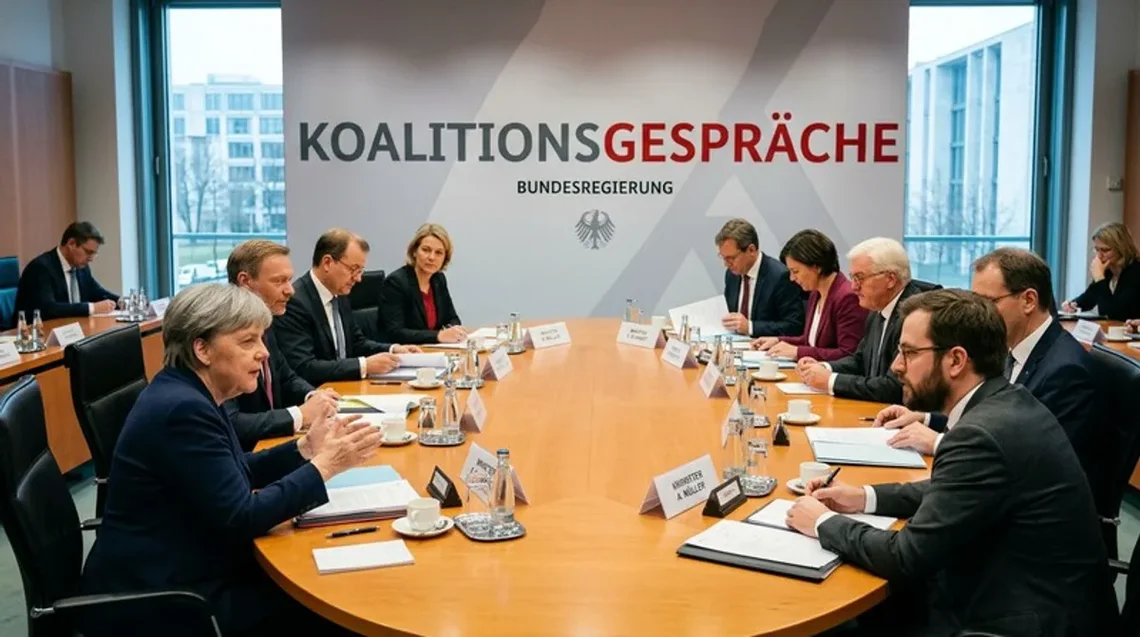
Negotiations at COP30 in Belém, Brazil, have entered a critical impasse as delegations from major emitting nations fail to reach consensus on the pace and architecture of net zero commitments, with developing economies pushing back hard against what they describe as unrealistic timelines imposed by wealthier states. The deadlock threatens to undermine the landmark Paris Agreement framework and raises serious questions about whether the global community can hold warming to 1.5°C above pre-industrial levels.
Climate figure: Global average surface temperatures are currently approximately 1.2°C above pre-industrial baselines, with the IPCC warning that exceeding 1.5°C would significantly increase the frequency and severity of extreme weather events. Global CO₂ emissions reached approximately 37.4 billion tonnes in the most recently assessed year, according to the Global Carbon Project (Source: IPCC Sixth Assessment Report; Global Carbon Project).
The Core Dispute: Timelines and Responsibility
At the heart of the COP30 stalemate lies a fundamental disagreement over who bears responsibility for cutting emissions first, and how fast. Delegates from the G7 bloc, led by the European Union and Canada, have pressed for binding commitments to phase out unabated fossil fuel use by mid-century, aligning national policies with net zero targets established under the Paris Agreement framework. Their counterparts from the Global South — a coalition including India, Brazil's domestic development lobby, and a bloc of African nations — have rejected what they call a "one-size-fits-all" timeline that ignores historical emissions disparities.
The Principle of Common But Differentiated Responsibilities
The principle of Common But Differentiated Responsibilities (CBDR), enshrined in the UN Framework Convention on Climate Change, holds that nations that industrialised early bear greater historical culpability for accumulated atmospheric carbon. Developing nations at the talks have invoked this principle to argue that their net zero target dates should extend further into the second half of the century, allowing for development cycles that wealthy states have already completed. Officials from the African Group of Negotiators said the current draft text "fails to reflect the lived reality of nations that have contributed least to the climate crisis," according to statements circulated in the conference corridors.
Related Articles
G7 Positions Under Pressure
Even within the G7, unity is strained. The United States has arrived in Belém without a refreshed Nationally Determined Contribution, following political shifts that have weakened its domestic climate legislation. Japan and Australia have faced criticism from independent analysts for submitting NDCs that Carbon Brief described as "insufficient to meet Paris-aligned pathways." The result is a negotiating floor where ambition is contested not just between North and South, but within the developed world itself.
For more on the structural finance failures complicating these talks, see COP30 talks stall over net zero finance gaps, which examines how the breakdown in climate fund pledges is reinforcing the diplomatic deadlock in Belém.
Emissions Data and the Gap Between Pledges and Reality
Independent analysis consistently shows a yawning chasm between the aggregate effect of current national pledges and the reductions required to stay within safe temperature limits. The International Energy Agency has assessed that even if all existing NDCs were fully implemented — an optimistic assumption given current policy trajectories — the world would still be on course for warming in excess of 2.5°C by the end of the century (Source: IEA World Energy Outlook). The IPCC's Sixth Assessment Report was equally stark, noting that global emissions must fall roughly 43 percent by the early 2030s relative to recent levels to remain on a 1.5°C pathway (Source: IPCC AR6 Synthesis Report).
Sector-by-Sector Divergence
Progress on emissions reduction is deeply uneven across sectors. Power generation has seen meaningful advances in many OECD nations, driven by the rapid deployment of renewable energy, but industry, transport, and agriculture continue to lag behind decarbonisation schedules. The IEA has noted that clean energy investment globally has reached record levels recently, yet fossil fuel investment also remains elevated, undermining the displacement effect that climate modellers had anticipated (Source: IEA Electricity Market Report). Nature journal analysis has highlighted that land-use change and agricultural emissions — sectors with complex political constituencies in both developed and developing nations — represent a persistent blind spot in national climate accounting (Source: Nature Climate Change).
| Country / Bloc | Net Zero Target Year | NDC Ambition (Independent Assessment) | Key Sector Challenge |
|---|---|---|---|
| European Union | 2050 | Insufficient (needs strengthening) | Heavy industry, agriculture |
| United Kingdom | 2050 | Partially aligned | Grid transition, heating |
| United States | 2050 (domestic uncertainty) | Critically insufficient | Policy continuity, transport |
| India | 2070 | Partially aligned (conditional) | Coal phase-down, industrialisation |
| China | 2060 | Insufficient | Coal, cement, steel |
| Brazil | 2050 | Under review at COP30 | Deforestation, agriculture |
| African Group | Varies by nation | Highly conditional on finance | Energy access, adaptation |
(Sources: Climate Action Tracker; IPCC AR6; Carbon Brief NDC analysis)
The Finance Question: Still Unresolved
A persistent fault line at COP30 is the failure of developed nations to deliver on the $100 billion per year climate finance commitment first made at Copenhagen — a pledge that was already acknowledged to be inadequate for current needs. Developing nations argue, with considerable analytical support, that without concessional finance for clean energy infrastructure and adaptation measures, ambitious net zero timelines are not merely politically difficult but physically impossible to meet.
Loss and Damage: A Deepening Crisis
The newly operationalised Loss and Damage Fund, agreed at COP27 in Sharm el-Sheikh and formalised at COP28 in Dubai, has so far attracted pledges that fall substantially short of the hundreds of billions of dollars that vulnerable nations say they require annually. Small Island Developing States and low-lying coastal nations have used their COP30 platform to demand that loss and damage finance be treated as a legal obligation rather than voluntary philanthropy, according to official statements from the Alliance of Small Island States. The Guardian Environment desk has reported that internal UN documents suggest the current fund capitalisation covers less than two percent of estimated annual loss and damage costs in the most affected nations (Source: Guardian Environment).
The interconnection between finance failures and target-setting gridlock is explored in depth in our related coverage: net zero targets face global setback at COP30.
The United Kingdom's Position at COP30
The UK government arrived in Belém carrying both diplomatic credibility — as the host of COP26 in Glasgow — and domestic political complexity. The Climate Change Committee has previously assessed that the UK's overall trajectory toward its legally binding 2050 net zero target requires a significant acceleration in policy delivery, particularly in building retrofits, surface transport electrification, and agricultural emissions management. Officials at the conference indicated the UK would support stronger language on fossil fuel phase-out in the final negotiated text, but stopped short of committing to an accelerated domestic timeline.
Grid Transition as a Litmus Test
The UK's credibility in pushing for global ambition is partly contingent on its own delivery record. Domestic challenges around electricity grid infrastructure, planning consent for new renewable capacity, and the pace of coal and gas exit have drawn scrutiny from independent analysts. Readers tracking the UK's domestic energy transition can find detailed analysis in our coverage of how UK net zero grid overhaul acceleration is reshaping energy policy, as well as the countervailing pressures documented in our report on UK net zero target delays driven by grid transition challenges.
Scientific Consensus and the Policy Gap
One of the defining tensions at COP30 is the divergence between what climate science demands and what political systems are currently delivering. The IPCC has been unambiguous: the carbon budget consistent with a reasonable probability of limiting warming to 1.5°C is now extremely small, and the window for action is narrowing with every year of delayed emissions reductions (Source: IPCC AR6). Carbon Brief analysis shows that at current rates of emissions, the 1.5°C carbon budget could be exhausted within this decade (Source: Carbon Brief).
The Role of Carbon Markets and Offsetting
Negotiations over Article 6 of the Paris Agreement — which governs international carbon markets and the trading of carbon credits between nations — have remained unresolved through multiple COP cycles. At COP30, proposals to allow high-emitting nations to offset domestic emissions through purchases of carbon credits from developing countries have drawn sharp criticism from environmental groups and some negotiating blocs, who argue that poorly designed carbon markets create accounting loopholes rather than genuine emissions reductions. The IEA and independent researchers have consistently flagged that reliance on carbon removal and offsetting mechanisms should not substitute for direct emissions reduction at source (Source: IEA Net Zero by 2050 Report).
The broader pattern of global ambition stalling is not new to this conference cycle. Our previous analysis of how net zero targets face pressure as global emissions stall provides essential context for understanding the structural pressures arriving in Belém.
What Happens If Talks Collapse
A failure to reach a strengthened agreement at COP30 would not legally dissolve existing Paris commitments, but it would deliver a severe political signal at a moment when the credibility of the multilateral climate process is already under strain. Analysts at the IPCC and IEA have both noted that the value of COP-level agreements lies substantially in the ratchet mechanism they provide — the expectation that each successive conference raises ambition. A Belém outcome seen as a step backward would weaken that mechanism and potentially embolden domestic political forces in multiple countries that seek to dilute or delay climate legislation.
The next seventy-two hours of negotiation in Belém will test whether the architecture built since Paris remains capable of delivering the policy convergence that the scientific evidence demands. Officials from both the EU and the African Group have indicated that talks remain active, and bridging text is under preparation, but as of the most recent plenary session, no breakthrough had been announced. The world, in the assessment of the IPCC's own synthesis work, has very little margin for further delay.