
EU Tightens Russia Sanctions Over Ukraine Stalemate
Brussels moves to block energy loopholes as war enters fifth year
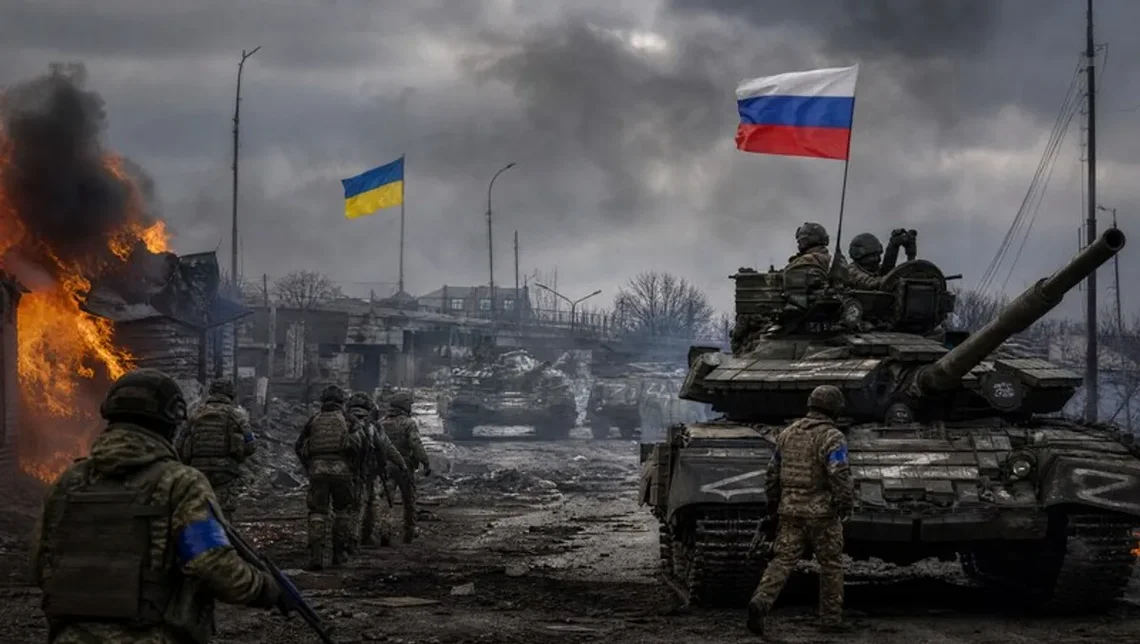
The European Union has approved its sixteenth package of sanctions against Russia, targeting energy revenue streams and third-country intermediaries that have allowed Moscow to circumvent earlier restrictions — a move Brussels describes as the most comprehensive enforcement action since the conflict in Ukraine began. The package, endorsed by EU foreign ministers in Brussels, closes loopholes that have allowed Russian liquefied natural gas to transit European ports for re-export, a practice critics argued was effectively subsidising the Kremlin's war chest while the bloc publicly condemned the invasion.
Key Context: Russia remains the world's second-largest natural gas exporter. Despite sweeping sanctions introduced after the full-scale invasion of Ukraine, the EU collectively paid an estimated €8 billion to Russia in energy revenues in a recent twelve-month period, according to data compiled by the Centre for Research on Energy and Clean Air (CREA). The new sanctions package specifically targets LNG transshipment through EU ports — a channel that had remained largely unaddressed in prior measures. The war in Ukraine is now in its fifth year with no credible ceasefire framework currently in place.
What the New Sanctions Package Contains
The sixteenth package represents a significant escalation in the EU's economic pressure campaign, officials said. At its core, the measures ban the transshipment of Russian LNG through European ports to third countries — a practice that had allowed tankers to offload Russian gas at terminals in Belgium, France, and Spain before re-routing it to Asian and global markets, effectively sustaining demand for Russian energy exports.
The package also expands the list of designated individuals and entities to over 2,200 names, adding several dozen executives linked to Russia's shadow fleet — the network of ageing, often uninsured tankers used to move Russian oil in defiance of the G7 price cap. An additional tranche of export controls covers dual-use goods and advanced electronics components identified by EU investigators as having been recovered from Russian military equipment on the battlefield in Ukraine, according to European Commission briefing documents.
Related Articles
The LNG Transshipment Loophole
The transshipment prohibition has been among the most politically contested elements of the package. France, home to the Montoir-de-Bretagne terminal which processed significant volumes of Russian LNG re-exports, had previously resisted moves that could complicate contractual arrangements with TotalEnergies, which holds long-term supply agreements with Russian producer Novatek. EU officials confirmed that existing long-term contracts will face a phase-out period, with full prohibition on transshipment taking effect within months, rather than immediately — a compromise that reflects the political sensitivity of the measure. (Source: European Commission)
Shadow Fleet and Third-Country Enforcement
Beyond energy, the package introduces new mechanisms to penalise third-country companies and shipping registries that facilitate sanctions evasion. Several entities registered in the United Arab Emirates, Turkey, and Hong Kong have been added to the sanctions list for their alleged role in procuring restricted goods for Russia, officials said. The EU has also written formally to a number of flag-of-convenience states whose registries have been used disproportionately by the shadow fleet, warning of potential secondary consequences for trade access. (Source: Reuters)
The Diplomatic Context: A War Without an End in Sight
The sanctions announcement arrives as diplomatic efforts to end the conflict remain deeply stalled. Talks brokered at various international forums have not produced a sustainable framework, and the UN Security Council deadlocked on Ukraine arms embargo resolutions has rendered the body largely ineffective as a mediating institution. Russia's permanent veto on the Security Council has consistently blocked binding measures, and recent UN reports have documented continued strikes on civilian infrastructure across Ukraine, including energy grid attacks that have left millions without heating during winter months. (Source: UN Office for the Coordination of Humanitarian Affairs)
The broader geopolitical picture is complicated by shifting dynamics in Washington, where the current US administration has sent mixed signals on the depth of its continued commitment to Ukrainian sovereignty. European officials, speaking on condition of anonymity ahead of a NATO foreign ministers meeting, told Reuters that the EU's sanctions acceleration was partly designed to demonstrate that Europe retains the strategic will to act independently of American policy direction.
Ukraine's Battlefield Position
On the ground, the military situation remains one of grinding attrition. Ukrainian forces have held significant defensive lines while conducting cross-border drone and missile operations targeting Russian logistics and refinery infrastructure. Russian forces have made incremental territorial gains in eastern Ukraine, though at substantial cost in personnel and equipment, according to assessments from the Institute for the Study of War and corroborated by AP reporting. Neither side currently appears capable of the kind of decisive breakthrough that would force a political settlement. (Source: AP)
EU Internal Cohesion: Cracks and Consensus
Securing agreement on the sixteenth package required intensive negotiation among the bloc's twenty-seven member states. Hungary, under Prime Minister Viktor Orbán, maintained its posture of resistance to the most far-reaching measures, ultimately signing on after exemptions were negotiated for pipeline gas supplies that Budapest argues are essential to its energy security. The Hungarian position has been a recurring source of friction throughout the sanctions process, with several member states openly questioning whether Budapest's stance serves Russian interests more than Hungarian ones — an accusation the Hungarian government rejects. (Source: Foreign Policy)
The Role of Central and Eastern Europe
Poland, the Baltic states, and the Czech Republic have consistently pushed for the most aggressive sanctions posture within EU councils. Polish officials have argued that the LNG loophole, in particular, represented a fundamental contradiction in the bloc's stated policy. Warsaw has also called for the full seizure — rather than merely the freezing — of Russian sovereign assets held in European financial institutions, a step that remains legally contested within the EU. The approximately €300 billion in frozen Russian central bank assets, held largely at the Euroclear depository in Belgium, continues to generate intense debate over both legality and strategic utility. (Source: Reuters)
What This Means for the UK and Europe
The United Kingdom, no longer bound by EU sanctions architecture following Brexit, has nonetheless moved broadly in coordination with Brussels. The UK Treasury and Foreign, Commonwealth and Development Office have maintained a parallel sanctions regime that mirrors most EU designations, though British officials have at times argued that London has moved faster on certain categories, including financial services restrictions. The new EU LNG transshipment ban will have limited direct impact on UK energy supply, given that Britain has substantially diversified its import sources and expanded domestic storage capacity, energy analysts said.
For continental Europe, the medium-term implications are more complex. Phasing out Russian LNG transshipment will not, in isolation, prevent that gas from reaching global markets — it will simply reroute it through non-European ports. Critics of the measure have argued that its principal effect is reputational and symbolic rather than materially damaging to Russian revenues. Proponents counter that every incremental reduction in Russia's ability to use European infrastructure reduces Moscow's leverage and signals continued political resolve to Kyiv.
Energy prices across the EU remain volatile. While wholesale gas prices have eased from the extreme peaks seen earlier in the conflict, they remain structurally higher than pre-war levels, a burden falling disproportionately on lower-income households and energy-intensive industries. European policymakers are acutely aware that public support for Ukraine-related economic sacrifices is not unlimited, and that fatigue — particularly in countries further from the eastern flank — is a genuine political risk.
For related coverage of earlier measures in this campaign, see the analysis of how the EU tightens Russia sanctions over Ukraine offensive shaped the current policy trajectory.
The Economic Pressure Calculus
Independent economists and institutions including the Kyiv School of Economics have argued that while cumulative sanctions have imposed real costs on the Russian economy — contributing to inflation, labour shortages, and technological stagnation — Moscow has proven more resilient than many Western analysts initially projected. Russia has reoriented trade flows toward China, India, and other non-aligned economies, and has funded the war effort through elevated hydrocarbon revenues in periods of high global energy prices.
Effectiveness Debate
The effectiveness of economic sanctions as a tool of strategic coercion remains genuinely contested in academic and policy literature. Foreign Policy has published extensive analysis suggesting that sanctions work best when combined with credible military deterrence and clear political offramps — conditions that are not fully present in the current Ukraine conflict. The International Monetary Fund has noted that Russia's economy, while under stress, has not experienced the kind of collapse that would compel a change in strategic direction from the Kremlin. (Source: Foreign Policy; International Monetary Fund)
EU officials acknowledge these limitations while arguing that the alternative — removing sanctions pressure — would send a catastrophic signal about the costs of territorial aggression in the European neighbourhood. The sixteenth package, they say, is less about delivering an economic knockout blow and more about sustaining a coherent, credible posture over what is now understood to be a long-duration confrontation.
| EU Sanctions Package | Key Measures Introduced | Approximate Entities Designated | Major Focus Area |
|---|---|---|---|
| Package 1–4 (Early Phase) | Asset freezes, travel bans, SWIFT exclusions | ~400 | Financial system, oligarchs |
| Package 5–8 (Mid Phase) | Coal ban, partial oil embargo, gold restrictions | ~900 | Energy commodities, media |
| Package 9–12 | Oil price cap support, drone components export ban | ~1,500 | Military supply chain |
| Package 13–15 | Shadow fleet targeting, third-country intermediaries | ~2,000 | Sanctions evasion networks |
| Package 16 (Current) | LNG transshipment ban, expanded entity list | ~2,200+ | Energy loopholes, dual-use goods |
Technology, Surveillance, and the Broader Regulatory Environment
The sanctions effort exists within a wider context of regulatory activism across the EU and UK. European institutions are simultaneously grappling with how to govern emerging technologies that carry dual-use implications for both the Ukraine conflict and broader security. The UK's parallel moves on technology governance — including efforts to address accountability frameworks in artificial intelligence, a domain with clear military and intelligence applications — reflect a recognition that the regulatory and security agendas are increasingly intertwined. Analysts following the intersection of technology policy and national security have noted the relevance of how the UK tightens AI regulation with new safety framework measures as European governments confront the use of AI-enabled systems in modern warfare and disinformation campaigns.
Outlook: Pressure Without Resolution
There is little expectation among European officials, analysts, or diplomatic observers that the sixteenth sanctions package will, by itself, alter the trajectory of the conflict. The honest assessment within EU institutions, reflected in background briefings to journalists including this correspondent, is that sanctions are a long-game instrument — designed to degrade capacity over years, not months, and to maintain the political and legal architecture of accountability for when a political process eventually becomes possible.
What Brussels has demonstrated with this package is institutional persistence: the political will to keep tightening the framework even as individual member states push back, even as economic costs accumulate, and even as the prospect of a negotiated end to the war remains distant. Whether that persistence translates into strategic effect on the ground in Ukraine remains, for now, deeply uncertain. The pressure continues. The war continues. And Europe, for the fifth consecutive year, is navigating both simultaneously.