
EU Tightens Sanctions on Russia Over Ukraine Supply Lines
Brussels targets financial networks supporting military logistics
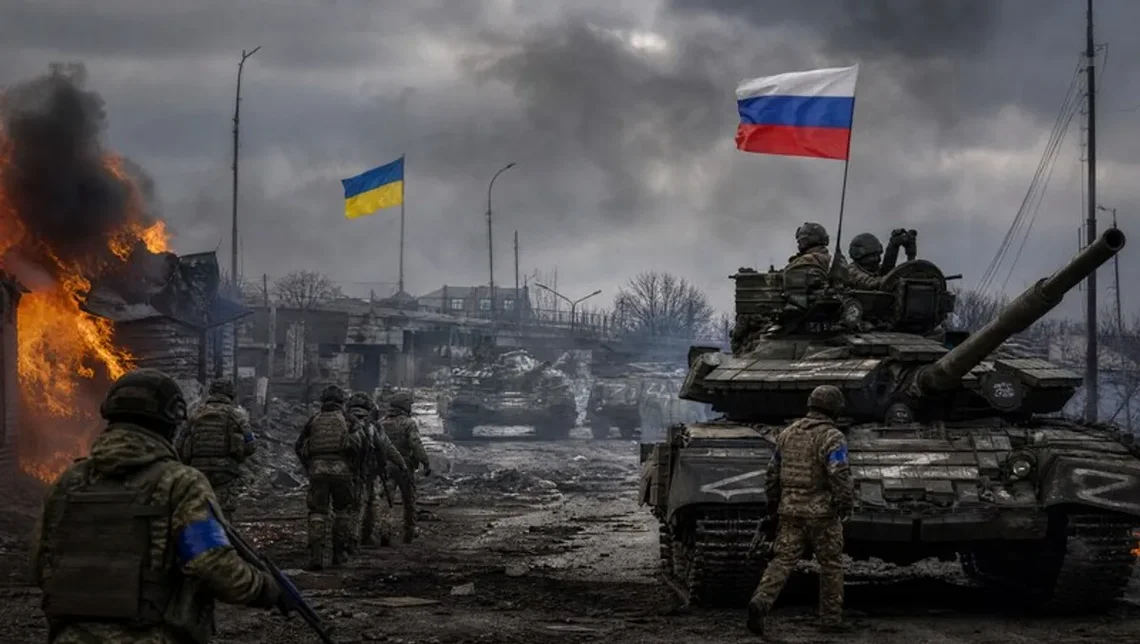
The European Union has moved to close financial loopholes enabling Russia's military machine in Ukraine, adopting a sweeping new sanctions package that directly targets the shadow banking networks, third-country intermediaries, and logistics infrastructure sustaining Moscow's war effort. The measures represent Brussels' most operationally focused economic intervention since the conflict began, with officials describing them as a direct response to evidence that sanctioned funds continued flowing through offshore conduits and non-aligned jurisdictions.
Key Context: Since Russia launched its full-scale invasion of Ukraine, the EU has adopted more than a dozen successive sanctions packages targeting Russian energy, finance, and defence sectors. Despite these measures, Western intelligence assessments and UN monitoring reports have consistently flagged the resilience of Russia's military supply chain, sustained in part by financial networks routed through Turkey, the UAE, Central Asia, and China. The latest package attempts to address those structural gaps by targeting the enabling intermediaries rather than solely Russian entities themselves.
What the New Sanctions Package Contains
The package — confirmed by the European Council following weeks of negotiation among member states — introduces asset freezes and transaction prohibitions on dozens of new entities identified as facilitating Russian military logistics, according to EU officials. These include shipping companies, freight brokers, financial institutions in third countries, and individuals accused of orchestrating payments for dual-use goods that ultimately reach Russian armed forces.
Critically, the package expands the scope of what the EU classifies as "military support infrastructure," extending designations beyond conventional arms suppliers to encompass fuel transport operators, telecommunications procurement networks, and currency conversion services used to move roubles through non-sanctioning jurisdictions. According to Reuters, European officials acknowledged the package was shaped in part by intelligence shared by member state security services and partner governments including the United Kingdom and the United States.
Related Articles
Shadow Fleet Restrictions
Among the most technically significant elements is a new tranche of vessel designations targeting what analysts call Russia's "shadow fleet" — a network of ageing oil tankers operating under flags of convenience that has allowed Moscow to continue exporting crude oil above the G7 price cap. The EU's list of designated vessels now runs into the hundreds, and the new package adds further shipping companies believed to manage fleet logistics, according to officials cited by AP. Port authorities in EU member states are instructed to deny these vessels entry, a measure with direct implications for Baltic Sea trade flows.
Financial Channel Interdiction
European Commission officials indicated that the package targets specific correspondent banking relationships that have allowed Russian financial institutions — themselves already under SWIFT exclusions — to conduct transactions via proxy banks in Armenia, Georgia, Serbia, and Kazakhstan. Foreign Policy has reported extensively on how this grey-zone banking infrastructure emerged rapidly following earlier sanctions rounds, with Russian state-linked entities establishing new legal vehicles in jurisdictions maintaining economic ties with Moscow.
The Strategic Logic Behind the Escalation
Brussels' decision to intensify financial pressure on logistics networks rather than broadening sectoral bans reflects an evolving understanding of where sanctions have succeeded and where they have fallen short. EU economists and external analysts have argued that blanket prohibitions on Russian energy and financial services, while historically significant, created predictable avoidance corridors that Moscow's government and private sector actors moved quickly to exploit.
The current approach — sometimes described within Commission circles as "targeted disruption" — is designed to increase the operational cost and complexity of sustaining military supply chains, rather than simply cutting off formal access to Western markets. Officials said the goal is to force Russia to spend more time, money, and institutional energy on workarounds, thereby degrading the efficiency of its logistics pipeline. For further context on how this compares to earlier rounds, see our coverage of how the EU tightens Russia sanctions over Ukraine stalemate.
Pressure on Third-Country Enablers
A notable feature of the latest package is the explicit naming of non-Russian entities in third countries. This marks a rhetorical and legal escalation, as the EU has historically been cautious about designating firms in countries with which it maintains trade relationships. Officials said Brussels has coordinated with Washington on several of these designations, with parallel US Treasury actions anticipated. According to UN reports monitoring sanctions compliance, re-export of controlled goods through Central Asian intermediaries has increased substantially since the conflict began, with electronics, machine tools, and microprocessors among the most commonly diverted categories (Source: United Nations Panel of Experts).
Reactions From Moscow and Designated States
The Russian government dismissed the sanctions as economically counterproductive and politically motivated, with the foreign ministry issuing a statement characterising the measures as an act of "economic warfare against civilian infrastructure." Moscow has consistently denied that its military logistics depend on Western or Western-aligned financial systems, a claim contradicted by both EU Commission assessments and independent trade data analysis cited by Reuters.
Several third-country governments named in connection with the package — without themselves being formally designated — pushed back diplomatically. Officials in Yerevan and Tbilisi indicated they would review the EU's concerns, while Kazakhstan's government reiterated its stated policy of not facilitating sanctions evasion, according to AP wire reports. Analysts note, however, that the gap between stated government policy and commercial activity in these jurisdictions remains wide.
China's Role Under Scrutiny
European officials have grown increasingly vocal about the role of Chinese commercial entities in sustaining Russian supply chains. While Beijing itself has not been formally targeted, the new sanctions package includes entities in third countries that EU intelligence assessments allege serve as conduits for Chinese-manufactured components reaching Russian defence manufacturers. Foreign Policy has noted that this represents a diplomatic tightrope for Brussels, which is simultaneously managing fraught trade negotiations with Beijing and attempting to maintain pressure on Moscow's war economy.
Impact on Ukraine and the Battlefield
Ukrainian officials welcomed the package, with the foreign ministry in Kyiv describing it as a necessary step toward genuine enforcement of existing prohibitions. The practical battlefield impact of financial sanctions is difficult to measure in real time, and analysts caution against expecting immediate operational effects. However, longer-term disruption to Russian procurement cycles — particularly for precision electronics and specialised metals — is assessed by Western intelligence agencies as having cumulative significance.
This latest round builds on a series of progressively tightened measures. Readers can review the trajectory through our earlier reports, including analysis of how the EU tightens Russia sanctions over Ukraine escalation and the more recent examination of how the EU tightens Russia sanctions over Ukraine arms escalation have shaped Western economic strategy.
Sanctions and the Frontline Economy
Economic pressure on Russia's military logistics is not merely a financial exercise — it has direct connections to what happens on the ground. Ukrainian military analysts have pointed to specific shortfalls in Russian artillery shell production and armoured vehicle maintenance as partly attributable to restricted access to Western-manufactured components. UN monitoring data indicate that Russia has sought to compensate through procurement from North Korea and Iran, a trend that Western officials said the new package also seeks to interrupt by targeting the financial clearing mechanisms used in those transactions (Source: UN Panel of Experts on North Korea Sanctions).
What This Means for the UK and Europe
For the United Kingdom, which operates its own parallel sanctions regime aligned closely but not identically with the EU framework, the Brussels package reinforces pressure to match and potentially exceed the new designations. UK officials said the government is reviewing the EU list and expects to announce corresponding measures. The Office of Financial Sanctions Implementation has expanded its enforcement capacity considerably in recent periods, though critics from think tanks and legal advocacy groups argue that enforcement of existing designations remains inconsistent.
Across Europe more broadly, the sanctions package carries economic implications beyond Russia policy. Energy market volatility — linked in part to continued uncertainty over Russian export volumes — remains a concern for European industry and consumers. The shadow fleet designations, in particular, could affect insurance markets at Lloyd's of London and other European underwriters, as P&I clubs face renewed pressure to decline cover for designated vessels. According to Reuters, some shipping insurers had already begun tightening policies in anticipation of the new designations.
Broader European security planning is also affected. NATO member states in Eastern Europe — particularly the Baltic states and Poland — have argued consistently for more aggressive sanctions enforcement, viewing economic pressure as integral to deterrence. The latest package is likely to be welcomed in Tallinn, Riga, Vilnius, and Warsaw as a signal of political will, even as questions persist about implementation capacity. For a broader view of how successive rounds compare, our archive on how the EU tightens Russia sanctions over Ukraine offensive provides useful longitudinal context.
| Package Focus | Primary Targets | New Designations (approx.) | Third-Country Scope | Enforcement Lead |
|---|---|---|---|---|
| Energy & Finance (Early Rounds) | Banks, energy majors, oligarchs | 500+ | Limited | EU member states |
| Dual-Use Goods (Mid Rounds) | Electronics exporters, tech firms | 200+ | Moderate | EU + US coordination |
| Shadow Fleet (Recent) | Shipping companies, flag registries | 150+ | Significant | EU + UK + G7 |
| Financial Logistics (Current Package) | Proxy banks, freight brokers, currency converters | 300+ (estimated) | Extensive | EU Commission + member intelligence |
Implementation Challenges and Enforcement Gaps
The most persistent criticism levelled at EU sanctions policy — by academic economists, investigative journalists, and some member state officials — is not the ambition of the measures but the consistency of their enforcement. Asset freeze orders are only as effective as the legal infrastructure supporting them, and across the EU's 27 member states, that infrastructure varies considerably in capacity and political will.
The European Commission has moved to address this through proposed harmonisation of criminal penalties for sanctions evasion, a legislative initiative that would make deliberate circumvention a serious criminal offence across the bloc. However, the measure still requires approval from member states, some of which have reservations about ceding prosecutorial autonomy. Officials said the Commission hoped the measure would advance in parallel with the current sanctions package.
Foreign Policy has reported that compliance gaps are most acute in sectors where beneficial ownership of assets is deliberately obscured — real estate held through shell companies, yachts registered under nominee owners, and corporate structures layered across multiple jurisdictions. EU enforcement agencies acknowledge the challenge. (Source: European Commission Directorate-General for Financial Stability)
As Brussels continues to calibrate its economic pressure campaign, the central question for policymakers, analysts, and Ukraine's partners alike is whether financial interdiction can meaningfully constrain a war economy that has proven adaptive and resourceful. The evidence base remains contested, but the EU's strategic direction is clear: the cost of sustaining Russia's military logistics must be made progressively higher, one designation at a time.