
EU Weighs Stricter Sanctions on Iran Nuclear Program
Brussels considers fresh measures after uranium enrichment surge
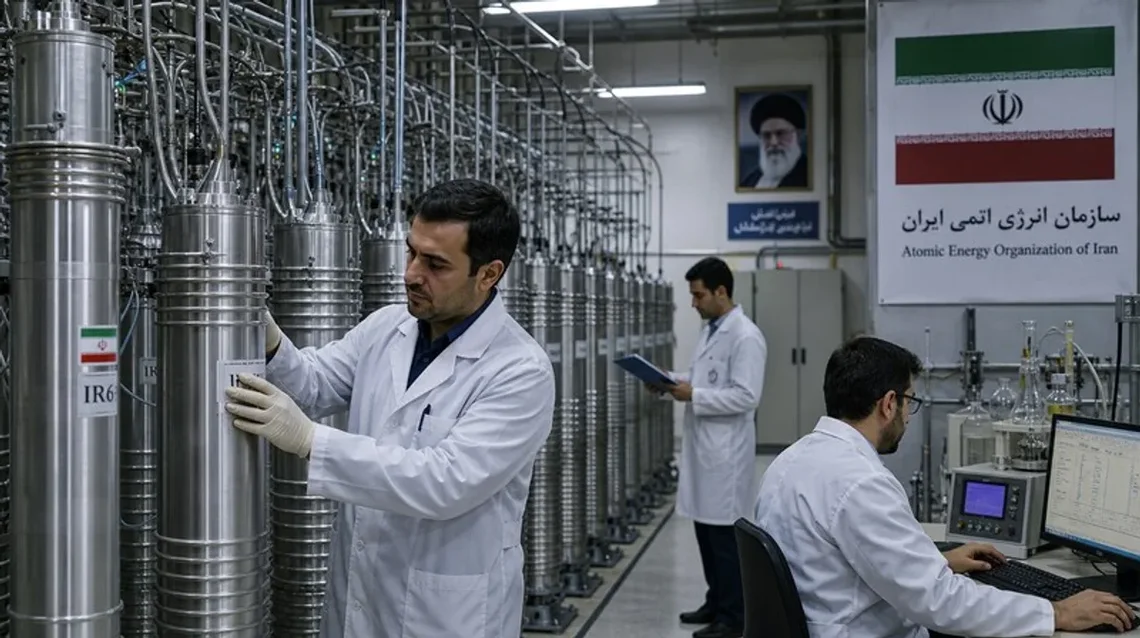
The European Union is weighing a new package of sanctions against Iran following a significant surge in uranium enrichment levels, with Brussels officials warning that Tehran's nuclear activities have reached a threshold that demands a coordinated diplomatic and economic response. Uranium enriched to 60 percent purity — a level with no credible civilian justification, according to nuclear experts — now places Iran closer to weapons-grade material than at any point in its recorded nuclear history, prompting alarm from EU foreign policy chiefs and member state governments alike.
Key Context: The International Atomic Energy Agency (IAEA) has confirmed that Iran currently holds enriched uranium stockpiles far exceeding the limits set under the 2015 Joint Comprehensive Plan of Action (JCPOA). Weapons-grade uranium requires enrichment to 90 percent; Iran's 60 percent threshold is considered by nuclear analysts a short technical step away. The JCPOA, which offered Iran sanctions relief in exchange for nuclear curbs, effectively collapsed after the United States withdrew in 2018, and subsequent diplomatic efforts to revive the deal have stalled. (Source: IAEA, Reuters)
The Brussels Deliberations: What Is on the Table
Senior EU officials are currently examining a range of measures that could form the basis of a fresh sanctions package, according to diplomatic sources cited by Reuters. Options reportedly under consideration include targeting additional Iranian entities connected to the country's nuclear supply chain, expanding asset freezes on individuals linked to the Islamic Revolutionary Guard Corps, and tightening restrictions on dual-use goods that could support enrichment infrastructure.
The Role of the E3
France, Germany, and the United Kingdom — collectively known as the E3 — remain central to any coordinated European response. The three nations have historically served as the primary Western interlocutors with Tehran on nuclear matters, and their collective diplomatic leverage has shaped EU policy for over two decades. Foreign Policy reported recently that internal E3 discussions have grown increasingly urgent, with some officials privately acknowledging that the window for a negotiated settlement is narrowing considerably. British officials, despite operating outside the formal EU foreign policy structure post-Brexit, remain closely aligned with Brussels on Iran sanctions architecture, coordinating through bilateral channels and joint statements.
Related Articles
Snapback Mechanism Still in Play
The E3 nations retain the right to trigger the so-called "snapback" mechanism under United Nations Security Council Resolution 2231, which underpins the JCPOA. Activating snapback would automatically reimpose all pre-2015 UN sanctions on Iran without requiring a new Security Council vote — meaning neither Russia nor China could block the process with a veto. Officials have indicated the E3 has not yet formally triggered snapback, but multiple diplomatic sources suggest the mechanism is under active review. (Source: AP, UN Security Council documentation)
Iran's Enrichment Timeline: A Rapid Escalation
| Period | Enrichment Level | Stockpile Status | Diplomatic Context |
|---|---|---|---|
| Pre-JCPOA (before 2015) | Up to 20% | Significant accumulation | Heavy international pressure; talks ongoing |
| JCPOA Active Period | Capped at 3.67% | Severely limited | Sanctions relief; IAEA monitoring in place |
| Post-US Withdrawal | Climbed to 20%, then 60% | Rapidly expanding | Talks stalled; IAEA access restricted |
| Current Status | 60% (confirmed) | Exceeds all JCPOA thresholds | EU sanctions review underway; IAEA monitoring curtailed |
The pace of Iran's enrichment expansion has alarmed nuclear non-proliferation analysts. According to data published by the IAEA and cited by Reuters, Tehran has accumulated stockpiles of 60 percent enriched uranium that, if further refined, could potentially yield sufficient fissile material for multiple nuclear devices. Iranian officials have consistently denied any intention to develop nuclear weapons, framing enrichment as a sovereign right under the Nuclear Non-Proliferation Treaty.
International Pressure and Fragmented Responses
The US Position
Washington has maintained a policy of maximum economic pressure on Tehran, though officials have periodically signalled openness to diplomatic engagement under specific conditions. The Biden administration held indirect negotiations with Iran in Vienna that ultimately failed to produce a revived JCPOA, and the current diplomatic atmosphere is described by analysts as deeply pessimistic. US Treasury sanctions on Iran's oil revenues, banking sector, and energy infrastructure remain among the most comprehensive imposed on any country, according to AP reporting. European officials have at times expressed frustration with the lack of a unified transatlantic strategy, particularly regarding timing and the sequencing of any new measures.
Russia, China, and the Security Council Impasse
Any attempt to pass new binding UN Security Council resolutions targeting Iran faces near-certain obstruction from Moscow and Beijing, both of which maintain significant economic and strategic relationships with Tehran. This dynamic mirrors the broader pattern of Security Council paralysis observed in other major geopolitical crises. As ZenNewsUK has reported, the UN Security Council remains deadlocked on key arms-related votes, reflecting a structural fracture in multilateral governance that now extends well beyond Ukraine to encompass Iran, and potentially other proliferation challenges.
Russia's deepening defence cooperation with Iran — including reported drone transfers that have featured in the Ukraine conflict — adds a further layer of complexity to European calculations. Analysts at Foreign Policy argue that Moscow has a direct interest in keeping the Iranian nuclear file unresolved, as it serves as a strategic distraction for Western governments and a pressure point in broader geopolitical negotiations.
What This Means for the UK and Europe
For European capitals, an Iran armed with, or capable of rapidly assembling, a nuclear weapon represents a fundamental shift in regional security calculus across the Middle East, with direct downstream implications for European energy markets, migration patterns, and alliance commitments.
Energy Market Exposure
Europe's energy markets, already under sustained pressure from disruptions linked to the Russia-Ukraine conflict, would face additional volatility in any scenario involving military escalation in the Gulf region. Iran sits adjacent to the Strait of Hormuz, through which a substantial share of global oil and liquefied natural gas shipments transit. Even a partial disruption to that corridor would send energy price shocks reverberating through European economies still managing the inflationary consequences of the past several years of supply instability. The UK, as a net energy importer, would be particularly exposed to such price spikes.
The UK's Independent Sanctions Architecture
Since departing the EU, the United Kingdom has developed its own autonomous sanctions regime, administered through the Office of Financial Sanctions Implementation and the Foreign Commonwealth and Development Office. British officials have signalled willingness to align closely with EU measures on Iran, and in practice the two regimes have tracked each other closely on the nuclear file. Senior British foreign policy figures have indicated that the UK would consider additional designations targeting Iranian individuals and entities connected to nuclear procurement networks, coordinating with the E3 through diplomatic channels rather than formal EU structures. (Source: Reuters, AP)
The broader European security architecture is also affected. As Brussels recalibrates its strategic posture — evident in sanctions packages like those detailed in ZenNewsUK's coverage of how the EU tightened Russia sanctions over the Ukraine offensive and in the longer arc of pressure documented as the EU tightened Russia sanctions amid the Ukraine stalemate — policymakers are acutely aware that managing multiple simultaneous sanctions regimes stretches diplomatic bandwidth and risks diminishing the credibility of each individual measure.
Regional Implications and the Gulf States
Arab Gulf states, particularly Saudi Arabia and the United Arab Emirates, have watched Tehran's enrichment programme with sustained alarm. Riyadh has previously indicated that it would seek its own nuclear capabilities if Iran were to acquire a weapon — a prospect that would trigger a regional proliferation cascade of potentially catastrophic consequence. Israel, which maintains a policy of nuclear ambiguity and has conducted covert operations against Iranian nuclear infrastructure in the past, remains the actor most likely to take unilateral military action if diplomacy fails entirely.
EU foreign policy chief Josep Borrell and his successor in the institutional cycle have repeatedly emphasised that European policy seeks a diplomatic solution, framing sanctions as a tool of pressure designed to bring Tehran back to the negotiating table rather than as an end in themselves. Whether that framing still commands credibility in Tehran is a matter of significant debate among analysts cited by Foreign Policy.
The Diplomatic Road Ahead
The immediate diplomatic calendar includes ongoing IAEA Board of Governors sessions at which Europe is expected to table critical resolutions calling for enhanced transparency and monitoring access inside Iran. Tehran has in recent periods restricted IAEA inspector access to key facilities, a development described by the agency's director-general as "seriously concerning" in official communications cited by Reuters.
Any new EU sanctions package would require consensus among all 27 member states, a process that has historically produced delays but has ultimately yielded agreement on major geopolitical files, as demonstrated in the successive rounds of Russia sanctions. The political will within the EU currently appears stronger on Iran than at several previous junctures, driven in part by intelligence assessments shared among member states regarding the pace of enrichment and the status of Iranian ballistic missile development.
European governments have also drawn broader lessons from the Ukraine experience about the limits and possibilities of economic pressure as a foreign policy tool. ZenNewsUK has followed NATO's evolving posture closely, including how NATO bolstered its eastern flank amid Russia concerns — a strategic reorientation that has simultaneously constrained European military capacity available for contingencies in the Middle East and heightened awareness of how quickly security environments can deteriorate when deterrence fails. The Iran nuclear file, analysts warn, may be approaching a similar inflection point, and Brussels is acutely aware that the cost of inaction now may substantially exceed the cost of coordinated pressure applied while diplomatic options remain.