
G7 Nations Commit Fresh Billions to Renewable Energy
Global investment pledge aims to accelerate net zero transition
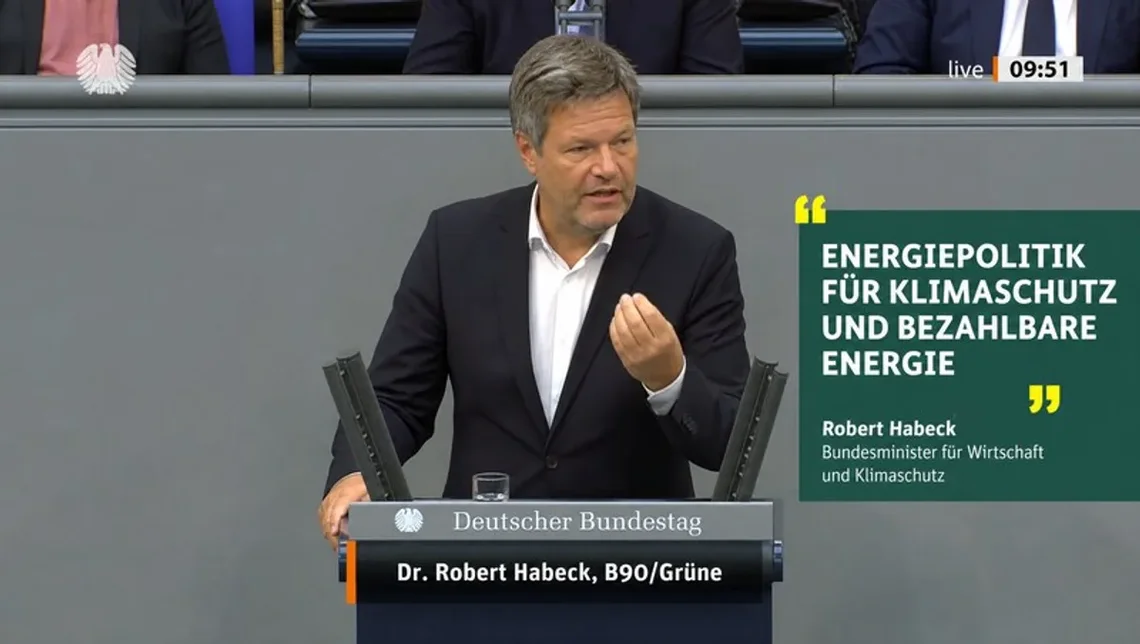
G7 nations have collectively committed hundreds of billions of dollars in fresh financing for renewable energy infrastructure, marking one of the most significant coordinated investment pledges in the history of international climate diplomacy. The announcement, made at a summit attended by leaders from the United States, United Kingdom, Canada, France, Germany, Italy, and Japan, sets an ambitious trajectory for accelerating the global net zero transition amid mounting pressure from scientific bodies and civil society alike.
Climate figure: The Intergovernmental Panel on Climate Change (IPCC) has confirmed that limiting global warming to 1.5°C above pre-industrial levels requires global CO₂ emissions to reach net zero by around mid-century, with immediate and deep reductions across all sectors. Current national pledges, if fully implemented, are projected to limit warming to approximately 2.5°C — a gap the G7 investment package is intended, in part, to help close. (Source: IPCC Sixth Assessment Report)
The Scale of the Commitment
The investment package spans clean power generation, grid modernisation, long-duration energy storage, and green hydrogen infrastructure across G7 member states and partner economies in the Global South. Officials said the financing will be delivered through a combination of public funds, multilateral development bank lending, and catalytic private capital mobilised through blended finance instruments.
Public Versus Private Financing
A core feature of the pledge is the explicit effort to use public money to de-risk private investment at scale. According to senior officials briefed on the agreement, every dollar of public financing is expected to leverage between three and five dollars of private capital, in line with frameworks developed by the International Energy Agency and the OECD. This multiplier model has been applied in previous climate finance arrangements but officials said this round involves stronger accountability mechanisms and clearer timelines for disbursement.
Related Articles
The International Energy Agency has previously estimated that annual clean energy investment must reach approximately $4 trillion globally by the early 2030s to remain consistent with a net zero pathway. Current global clean energy investment, while growing rapidly, remains significantly below that benchmark. (Source: IEA World Energy Outlook)
Country-by-Country Breakdown
While the headline figure represents a collective G7 commitment, the allocation differs substantially by country, reflecting varying domestic energy mixes, industrial structures, and political contexts. The table below outlines the reported contribution and primary focus areas for each member state, according to summit documentation reviewed by ZenNewsUK.
| Country | Reported Contribution | Primary Focus Areas | Key Delivery Vehicle |
|---|---|---|---|
| United States | Largest single contributor | Solar, wind, grid infrastructure, hydrogen | Inflation Reduction Act mechanisms |
| United Kingdom | Significant bilateral pledge | Offshore wind, grid overhaul, storage | Great British Energy, UK Infrastructure Bank |
| Germany | Major industrial transition fund | Green hydrogen, industrial decarbonisation | KfW Development Bank |
| France | Nuclear and renewables package | Nuclear modernisation, solar, EVs | Bpifrance, state budget |
| Japan | Asia-Pacific clean energy corridor | Offshore wind, ammonia co-firing, hydrogen | Japan Bank for International Cooperation |
| Canada | Clean electricity grid package | Hydropower, wind, critical minerals | Canada Infrastructure Bank |
| Italy | Mediterranean solar initiative | Solar, North Africa energy corridors | Cassa Depositi e Prestiti |
For context on the United Kingdom's domestic component of the pledge, see our earlier reporting on how UK grid investment is being structured to accommodate surging renewable capacity, and the broader trajectory documented in our analysis of how UK renewable energy investment has reached record highs in recent periods.
The Policy Architecture Behind the Pledge
The announcement does not exist in isolation. It builds on a series of climate finance frameworks developed through the UN Framework Convention on Climate Change process, the Paris Agreement's Article 9 obligations, and successive G7 climate and energy ministerial communiqués. Officials said the new commitment is designed to be more operationally specific than earlier pledges, with quarterly reporting requirements and an independent technical review body.
Closing the Credibility Gap
Previous G7 climate finance commitments have faced sustained criticism for conflating loans with grants, double-counting existing aid flows, and failing to meet stated timelines. Carbon Brief analysis of prior G7 climate finance rounds found significant discrepancies between announced figures and independently verified disbursements, a pattern that civil society organisations say has eroded trust among developing country negotiators. (Source: Carbon Brief)
Officials at this summit sought to address those concerns directly, stating that the new package includes a dedicated verification secretariat and that contributions will be reported under OECD Development Assistance Committee methodologies to ensure comparability. Whether this satisfies critics will depend on implementation over the coming years.
The Role of the Just Energy Transition Partnerships
A substantial portion of the new financing is expected to flow through Just Energy Transition Partnerships, or JETPs — bespoke bilateral and multilateral arrangements designed to help high-emissions, coal-dependent economies accelerate their shift to clean power. South Africa, Indonesia, Vietnam, India, and Senegal have all been engaged in JETP negotiations at various stages, according to reporting by the Guardian Environment desk and analysis published in Nature Climate Change. (Source: Guardian Environment; Nature Climate Change)
The JETP model has attracted both interest and scepticism. Proponents argue it provides flexible, country-specific financing that respects national sovereignty over energy transition planning. Critics, including some economists cited in IEA working papers, note that disbursement rates have been slow and that conditionality attached to some tranches has complicated domestic political adoption in recipient countries. (Source: IEA)
What the Science Requires
The scientific basis for the urgency of this investment is well-established. The IPCC's Sixth Assessment Report, synthesising thousands of peer-reviewed studies, identifies rapid scaling of renewable energy as a central mitigation strategy with among the highest cost-effectiveness profiles of any available intervention. Solar photovoltaic and wind power costs have fallen by more than 85 percent over the past decade, fundamentally altering the economics of clean energy deployment. (Source: IPCC; IEA)
Emissions Trajectories and Investment Gaps
Global energy-related CO₂ emissions reached their highest recorded level recently, even as renewable energy deployment also hit record figures — a paradox explained by continuing growth in overall energy demand, particularly in emerging economies. The IEA has noted that while clean energy is growing faster than any fuel in history, the absolute pace remains insufficient to compensate for demand growth without additional policy intervention. (Source: IEA World Energy Outlook)
Nature Energy research has highlighted that the gap between current investment levels and what is required is largest not in the G7 nations themselves, but in emerging market and developing economies, where financing costs are typically three to five times higher than in advanced economies for equivalent renewable projects. The G7 pledge is in part a response to this structural financing inequality. (Source: Nature Energy)
The UK Dimension
For the United Kingdom, the G7 commitment aligns with and reinforces domestic energy policy ambitions. The government has set legally binding targets for a fully decarbonised electricity system, with officials repeatedly citing offshore wind as the cornerstone technology. The country's renewable sector has undergone a rapid structural shift in recent years, as documented in our reporting on how the UK renewable energy sector has surged past coal as a share of the generation mix.
The UK's contribution to the G7 package is understood to include financing for offshore wind supply chains in partner countries, grid digitalisation exports, and concessional lending for solar deployment in sub-Saharan Africa, officials said. These elements align with the government's broader industrial strategy, which frames clean energy exports as a significant economic opportunity alongside a climate imperative.
Previous G7 renewable financing rounds involving the UK are covered in our earlier pieces on the £240bn G7 renewable energy fund and the £180bn G7 renewable energy fund, which together trace the escalating scale of collective G7 ambition over successive summits.
Industry and Civil Society Response
The reaction from the clean energy industry has been broadly positive, though tempered by calls for speed and specificity. Trade bodies representing solar, wind, and storage manufacturers have welcomed the headline figures but said the priority must be ensuring finance reaches projects on the ground rather than remaining at the level of high-level political commitments.
Environmental organisations have offered a more mixed assessment. Several major NGOs acknowledged the scale of the pledge as meaningful progress while questioning whether it adequately accounts for loss and damage financing for the most climate-vulnerable nations, a separate but related track of international climate negotiations. Some analysts noted that the package contains no explicit phase-out timeline for G7 fossil fuel financing through export credit agencies — a long-standing demand from developing country negotiators and climate scientists alike.
Carbon Brief's analysis of previous G7 energy finance rounds has consistently found that fossil fuel-linked export credits have, in some years, exceeded clean energy financing from the same institutions, a metric that advocacy groups argue must be addressed alongside the new renewable commitments. (Source: Carbon Brief)
Looking Ahead to COP and Beyond
The G7 announcement is timed to build diplomatic momentum ahead of the next Conference of the Parties under the UNFCCC process, where financing will again be a central negotiating issue. Officials from several G7 delegations said the package is intended to signal good faith to the Global South and demonstrate that wealthy nations are beginning to operationalise commitments made under the Paris Agreement.
Whether the pledge translates into measurable progress on emissions trajectories will depend on implementation quality, the degree to which private capital responds to public de-risking, and the political durability of commitments across electoral cycles in member states. The IPCC has been unambiguous that the decisions made in the current decade will largely determine whether the 1.5°C threshold remains achievable, placing considerable weight on precisely the kind of coordinated multilateral action this week's summit has sought to advance. (Source: IPCC)
For now, the G7 commitment represents the most substantial collective renewable energy financing pledge from advanced economies on record — a development that independent analysts, policy officials, and scientific institutions broadly characterise as necessary, if not yet sufficient, for the scale of the challenge ahead.