
G7 nations pledge £180bn renewable energy fund
Major investment push ahead of COP30 climate talks
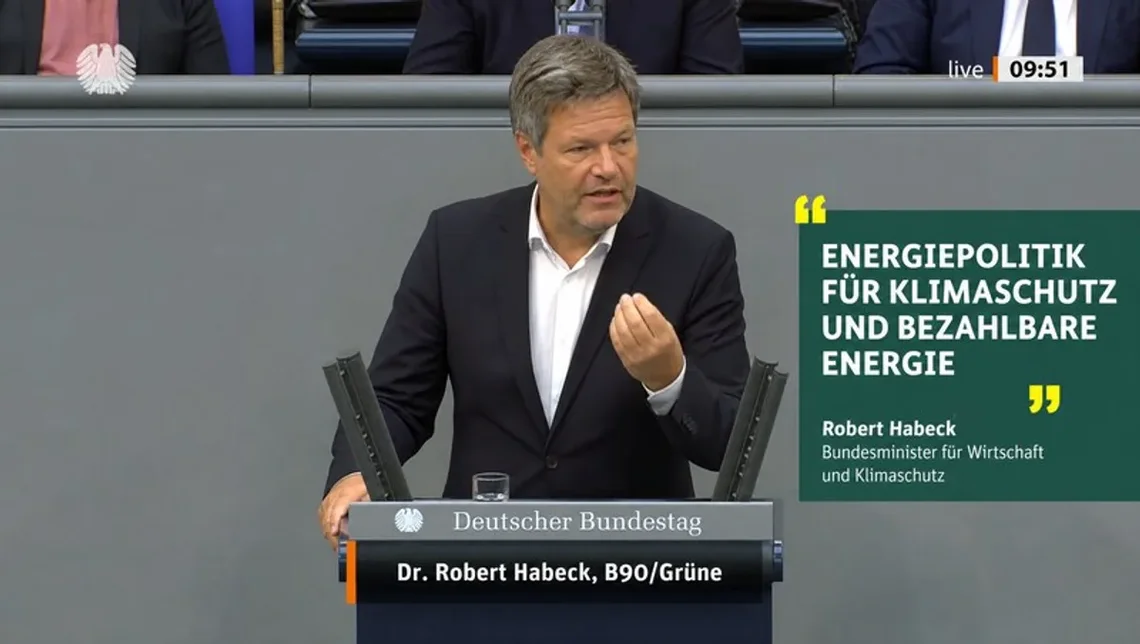
G7 nations have committed to a joint £180 billion renewable energy fund, marking the largest coordinated clean energy investment pledge in the group's history and positioning the world's wealthiest democracies at the forefront of decarbonisation efforts ahead of the COP30 climate summit in Belém, Brazil. The announcement, made following closed ministerial sessions, signals a significant shift in the pace and scale of public finance for low-carbon infrastructure across member states.
The fund, structured as a combination of direct government expenditure, blended finance mechanisms and development bank co-investment, is intended to accelerate the build-out of solar, wind, grid storage and green hydrogen capacity across G7 economies and, crucially, to mobilise further capital into emerging markets where energy transitions have stalled. Officials said the pledge is designed to complement — not replace — existing climate finance commitments made under the Paris Agreement framework.
Climate figure: Global average surface temperatures have already risen approximately 1.2°C above pre-industrial levels, according to the Intergovernmental Panel on Climate Change (IPCC). The IPCC's Sixth Assessment Report concludes that limiting warming to 1.5°C requires global CO₂ emissions to reach net zero by around mid-century and that renewable energy capacity must triple globally by the end of this decade. The International Energy Agency (IEA) estimates that clean energy investment must reach $4.5 trillion annually by 2030 to remain on a pathway consistent with net zero emissions.
What the £180bn Fund Covers
The pledge is structured across several pillars, officials said, with the largest single allocation directed toward electricity grid modernisation and cross-border transmission infrastructure. A substantial portion is earmarked for offshore wind development, reflecting the comparative advantage of coastal G7 members including the United Kingdom, Japan and Canada. Remaining tranches cover green hydrogen production facilities, battery storage deployment and concessional finance routed through multilateral development banks toward lower-income nations.
Related Articles
Blended Finance and Private Sector Leverage
A core principle of the fund's design is the use of public money to de-risk private investment, a model that development economists and the IEA have consistently identified as essential to scaling clean energy in markets where perceived political or currency risk deters institutional capital. According to officials, every £1 of public finance within the fund is expected to crowd in an additional £3 to £4 of private investment, potentially expanding the real-world impact of the pledge to more than £700 billion in total mobilised capital. The IEA has previously cautioned, however, that leverage ratios of this kind depend heavily on robust governance frameworks and transparent project pipelines (Source: International Energy Agency).
For context on domestic commitments running alongside this multilateral pledge, the UK's renewable energy grid overhaul programme represents one of the largest single-country contributions within the G7 package, with significant capital directed toward upgrading aging transmission infrastructure to handle variable renewable generation at scale.
The Road to COP30 and Why Timing Matters
The announcement arrives at a politically charged moment. COP30, scheduled to take place in the Brazilian Amazon city of Belém, is widely regarded by climate negotiators and scientists as a critical juncture for assessing national progress against Paris Agreement targets. Under the agreement's ratchet mechanism, nations are required to submit updated Nationally Determined Contributions — their formal climate pledges — and the gap between current policies and the trajectories required to limit warming to 1.5°C or even 2°C remains substantial.
NDC Credibility and the Finance Gap
Analysts at Carbon Brief have documented that most G7 nations' existing NDCs, while improved relative to the pre-Paris baseline, still fall short of the emissions reductions consistent with the group's stated commitment to the 1.5°C limit (Source: Carbon Brief). The £180 billion fund is partly intended to strengthen the credibility of revised NDCs that G7 governments plan to table ahead of COP30, officials said. Separately, research published in Nature has quantified the global clean energy finance gap at several trillion dollars annually through the end of this decade, underlining that even a commitment of this scale, while historically significant, represents a fraction of what models indicate is necessary (Source: Nature).
The UK's trajectory heading into these talks has been closely watched. Recent analysis of UK clean energy acceleration ahead of COP30 shows that domestic policy ambition has increased measurably in recent months, though delivery timelines for key infrastructure projects remain subject to planning and grid connection bottlenecks.
Country-by-Country Breakdown and Commitments
While the fund is presented as a collective commitment, contributions are not equally distributed. The United States, as the world's largest economy, accounts for the largest nominal share of the pledge, followed by Japan, Germany and the United Kingdom. France and Italy have committed smaller but still substantial tranches, with Canada rounding out the G7 contribution. Officials declined to provide a precise country-by-country breakdown pending formal budget ratification processes in each member state's legislature.
| Country | Estimated Contribution (£bn) | Primary Focus Area | Current Renewable Share of Electricity |
|---|---|---|---|
| United States | ~55 | Solar, Grid Storage, Green Hydrogen | ~23% |
| Japan | ~28 | Offshore Wind, Hydrogen, LNG Transition | ~22% |
| Germany | ~26 | Onshore Wind, Industrial Decarbonisation | ~52% |
| United Kingdom | ~24 | Offshore Wind, Grid Modernisation | ~45% |
| France | ~20 | Nuclear Integration, Solar | ~27% (excl. nuclear) |
| Italy | ~15 | Solar, Mediterranean Wind Corridors | ~38% |
| Canada | ~12 | Hydropower Expansion, Clean Fuels | ~67% |
Renewable share figures are approximate and drawn from IEA national energy data (Source: International Energy Agency). Discrepancies exist across accounting methodologies, particularly regarding how nuclear and large hydropower are classified in individual national statistics.
UK's Role and Domestic Policy Context
The United Kingdom's contribution to the fund is consistent with a broader domestic policy trajectory that has seen the country's clean energy sector expand significantly over recent years. Data compiled by the Guardian Environment desk shows that the UK's offshore wind fleet is now among the largest in the world by installed capacity, though grid connection queues and planning delays continue to constrain the pace of new project commissioning (Source: Guardian Environment).
Investment Milestones and Sector Growth
The domestic investment picture has strengthened in parallel with the G7 commitment. According to recent industry data, UK renewable energy investment reached a record high in the most recent reporting period, driven primarily by offshore wind contract awards under the government's Contracts for Difference auction mechanism and increasing private equity interest in battery storage projects. Separately, sector-level analysis confirms that UK renewable energy generation has now surpassed coal on an annual basis by a wide margin, with coal's contribution to the electricity mix having fallen to negligible levels.
The grid itself remains a critical constraint. Without significant expansion of transmission capacity and smarter demand management, analysts warn, even the most ambitious generation build-out cannot deliver on its potential to reduce emissions and energy costs. This concern is central to the UK's domestic allocation within the G7 fund, officials said.
Critical Reactions and Scientific Assessment
The announcement has drawn measured but cautious responses from climate scientists, economists and civil society organisations. Supporters argue that a credible G7 commitment of this scale — particularly its emphasis on mobilising private finance for emerging markets — represents meaningful progress on the longstanding promise by wealthy nations to support lower-income countries through energy transitions.
Where Sceptics Focus Their Concerns
Critics, including several development finance researchers, have raised three primary concerns. First, a portion of the fund recycles commitments previously announced under other frameworks, meaning the genuinely new money may be considerably less than the headline figure implies. Second, the fund's governance structure and independent verification mechanisms have not yet been publicly detailed, raising questions about accountability. Third, and most substantively from a scientific standpoint, the IPCC's scenarios for limiting warming to 1.5°C require not only new clean energy investment but simultaneous rapid phase-down of fossil fuel infrastructure — a component notably absent from the G7 communiqué language (Source: IPCC).
Carbon Brief analysis has also highlighted that the gap between G7 nations' domestic fossil fuel subsidies and their stated clean energy commitments remains a structural inconsistency that undermines the credibility of net-zero narratives (Source: Carbon Brief). Officials did not directly address this point in post-announcement briefings.
Emerging Markets and the Global Dimension
Perhaps the most consequential aspect of the pledge — and the one that will face the most scrutiny at COP30 — is the commitment to channel a significant share of the fund toward emerging economies in Asia, Africa and Latin America. The IEA has repeatedly emphasised that the global energy transition cannot succeed if developing nations continue to lock in fossil fuel infrastructure due to a lack of affordable clean energy finance (Source: International Energy Agency).
The Belém summit will provide the first major diplomatic test of whether G7 nations can translate this fund into tangible project pipelines, particularly in sub-Saharan Africa and South and Southeast Asia, where energy access deficits and high borrowing costs create compounding barriers to clean energy deployment. Officials said detailed country partnership agreements are expected to be announced in the weeks surrounding COP30.
For those tracking the longer arc of this policy story, earlier reporting on a related — and subsequently revised — G7 renewable energy commitment of £240bn provides useful context on how these multilateral pledges are negotiated, revised and ultimately landed, and why the final figures often differ substantially from those initially floated in diplomatic channels.
The £180 billion fund will not, by itself, resolve the structural challenge of financing a global clean energy transition that scientists estimate requires investment an order of magnitude larger. What it may accomplish, if implemented with transparency and genuine additionality, is to shift market expectations, establish credible political momentum ahead of Belém and demonstrate that the G7's stated commitment to the Paris Agreement is supported by financial architecture rather than rhetoric alone. The test, as with every major climate finance announcement, will be in the delivery.