
G7 nations pledge £240bn renewable energy fund
Major investment drive to accelerate net zero targets
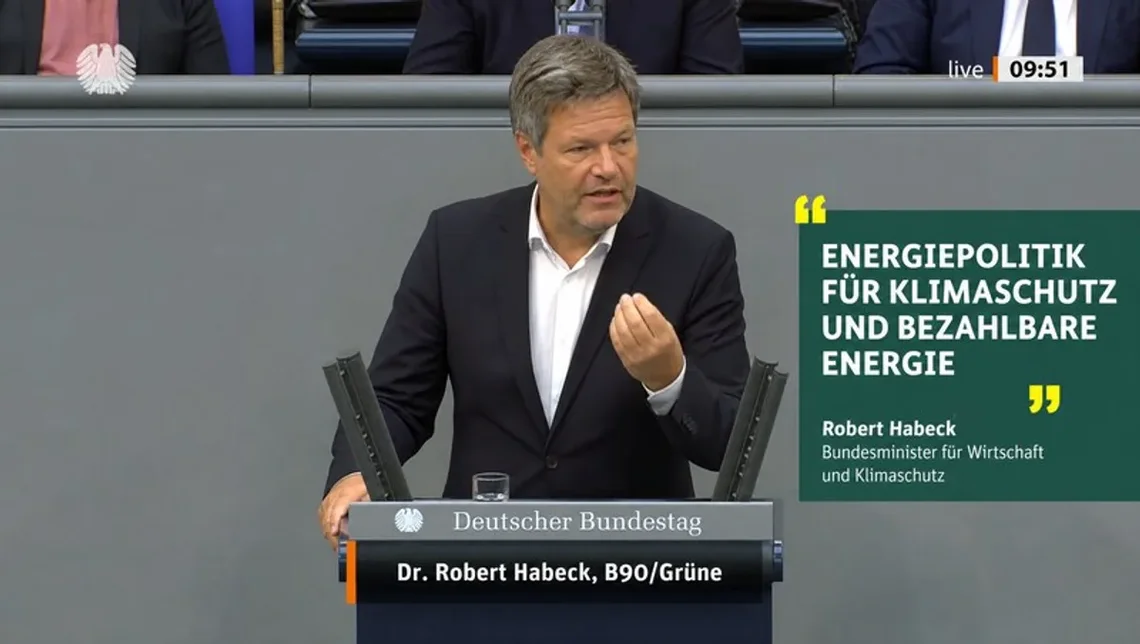
G7 nations have committed a combined £240 billion to a new renewable energy fund designed to accelerate the transition away from fossil fuels, in what officials described as the most significant multilateral clean energy financing agreement since the Paris Agreement. The pledge, announced at the G7 summit, sets binding contribution schedules for each member nation and is intended to channel capital into solar, wind, grid infrastructure, and energy storage across both developed and emerging economies.
Climate figure: The Intergovernmental Panel on Climate Change (IPCC) has established that global average temperatures have already risen approximately 1.1°C above pre-industrial levels, and that limiting warming to 1.5°C requires cutting global CO₂ emissions by roughly 45 percent from current levels by 2030. The International Energy Agency (IEA) estimates that clean energy investment must reach $4 trillion annually by the early 2030s to place the world on a credible net zero pathway. (Source: IPCC Sixth Assessment Report; IEA World Energy Outlook)
What the £240 Billion Pledge Covers
The fund will be structured as a blended finance mechanism, combining direct government contributions with guarantees designed to unlock private capital at scale. Officials said the ratio of public to private funding is expected to reach approximately one-to-three, meaning the £240 billion in sovereign commitments could mobilise close to £720 billion in total investment over the programme's lifespan.
Eligible projects under the framework include utility-scale offshore and onshore wind, photovoltaic solar installations, long-duration energy storage, cross-border transmission interconnectors, and green hydrogen production facilities. A proportion of the fund — reported at roughly 30 percent — is ring-fenced for deployment in lower-income and emerging-market nations, addressing longstanding criticism that multilateral climate finance has disproportionately benefited wealthier signatories.
Related Articles
Allocation by Technology Sector
According to summit documentation reviewed by officials, the largest single allocation — approximately 38 percent — is directed toward solar capacity expansion, reflecting the technology's current cost competitiveness. Wind energy, including both offshore arrays and onshore installations, accounts for a further 29 percent. Grid modernisation and storage infrastructure, widely identified by the IEA as the critical bottleneck in the energy transition, receives 22 percent. The remaining 11 percent is reserved for emerging technologies including green hydrogen and advanced geothermal. (Source: IEA)
Country Contributions and Commitments
The United States leads individual national contributions with a commitment equivalent to approximately £68 billion, followed by Germany at £42 billion and Japan at £38 billion. The United Kingdom's share stands at £29 billion, building on domestic spending already committed under the government's clean energy strategy. France, Canada, and Italy account for the remainder of the aggregate total.
| Country | Commitment (£bn) | Primary Focus Area | Deployment Timeline |
|---|---|---|---|
| United States | 68 | Solar & Grid Storage | 5 years |
| Germany | 42 | Offshore Wind & Hydrogen | 5 years |
| Japan | 38 | Advanced Geothermal & Solar | 6 years |
| United Kingdom | 29 | Offshore Wind & Interconnectors | 5 years |
| France | 26 | Solar & Green Hydrogen | 5 years |
| Canada | 22 | Grid Modernisation | 6 years |
| Italy | 15 | Solar & Mediterranean Grid | 5 years |
The United Kingdom's Position
The UK's £29 billion contribution arrives at a moment of considerable domestic momentum in the clean energy sector. Offshore wind has expanded rapidly, and the government has signalled ambitions to decarbonise the electricity grid entirely within the decade. For context on the scale of domestic ambition running in parallel with this multilateral commitment, the government has separately outlined major domestic spending, as detailed in reporting on renewable energy grid infrastructure investment. Analysts note that the UK's role as both a significant contributor and a recipient of interconnector-linked benefits gives it a dual interest in the fund's success.
The UK's renewable sector has also reached structural milestones that lend credibility to its international commitments. Analysis tracking how clean power generation has surpassed coal in the national energy mix illustrates the scale of transformation already achieved, providing a template other G7 nations are seeking to replicate at pace. (Source: Carbon Brief)
Scientific Context and the Net Zero Imperative
The IPCC's Sixth Assessment Report, the most comprehensive synthesis of climate science to date, makes clear that the window for limiting warming to 1.5°C is narrowing rapidly. Every fraction of a degree of additional warming carries measurable consequences for extreme weather frequency, sea level rise, and ecosystem stability. The scientific literature, including research published in Nature, consistently identifies the pace of clean energy deployment — rather than the availability of the technology itself — as the primary constraint on decarbonisation. (Source: IPCC; Nature)
The Investment Gap
The IEA's most recent World Energy Outlook quantified the gap between current clean energy investment trajectories and what is required for a net zero pathway. Even accounting for the record levels of renewable investment recorded in recent years, the IEA calculates that annual clean energy spending must more than triple from its current baseline in fossil-fuel-dependent economies. The G7 fund, while substantial, addresses only a portion of that gap, and officials acknowledged at the summit that the pledge is intended as a catalytic signal to private markets rather than a comprehensive solution in isolation. (Source: IEA)
Carbon Brief analysis has previously shown that the cost of utility-scale solar and wind has fallen by more than 80 percent over the past decade, fundamentally altering the economics of the transition. The £240 billion fund is designed to exploit those cost reductions by concentrating capital where deployment barriers remain highest — primarily grid infrastructure and storage — rather than subsidising generation technologies that are already competitive in most markets. (Source: Carbon Brief)
Policy Architecture and Governance
The fund will be administered through a newly established G7 Clean Energy Facility, governed by a board with representatives from each contributing nation alongside independent technical advisers. A dedicated transparency mechanism will require annual public reporting on capital deployment, project outcomes, and emissions reductions achieved against projected baselines. Officials said this reporting architecture was a direct response to criticism of earlier multilateral climate funds, where accountability frameworks were regarded as insufficient by civil society organisations and parliamentary scrutiny bodies alike.
Conditions and Safeguards
Projects seeking allocation from the fund must meet defined environmental and social safeguards, including assessments of land use, biodiversity impact, and community engagement. Officials confirmed that no financing will be available to projects involving coal infrastructure or fossil fuel lock-in, and that natural gas projects will only qualify under strictly time-limited transition provisions with mandatory sunset clauses. The governance model draws on frameworks developed by the Green Climate Fund and the European Investment Bank, though officials emphasised that lessons from implementation weaknesses in both institutions have informed the new structure. (Source: Guardian Environment)
Market Reaction and Private Sector Engagement
Clean energy developers and institutional investors have broadly welcomed the announcement. The blended finance structure is widely viewed by infrastructure funds as reducing the risk profile of projects in markets where political or currency risk has historically suppressed private capital flows. Industry bodies noted that the fund's emphasis on grid investment is particularly well-timed, given that transmission bottlenecks have increasingly constrained the ability to connect new generation capacity in both Europe and North America.
The announcement follows a period in which global clean energy investment has reached successive record levels. Detailed analysis of those trends is available in coverage of how global renewable energy investment has reached record levels, providing broader context for the G7's decision to formalise and scale what has been a more fragmented international financing landscape.
Domestic Industry Implications for the UK
For the UK specifically, the fund creates export opportunities for a domestic supply chain that has developed considerable expertise in offshore wind development, subsea cable manufacturing, and grid management technology. Trade bodies have indicated that UK firms are well-positioned to compete for project contracts in emerging markets where the fund will be active, provided domestic industrial policy keeps pace with international demand signals. Reporting on how UK renewable energy investment has reached record levels underscores the competitive foundation from which the sector enters this new phase of international activity.
Outlook and Remaining Challenges
Despite the scale of the commitment, analysts and policy experts have identified several structural challenges that will determine whether the fund achieves its stated objectives. Supply chain constraints in wind turbine manufacturing, shortages of skilled labour for installation and grid construction, and permitting delays in multiple G7 jurisdictions remain significant operational risks. The IEA has consistently highlighted that administrative and regulatory bottlenecks — not finance alone — are responsible for a substantial share of deployment delays in developed markets. (Source: IEA)
Geopolitical factors also bear on the fund's prospects. Trade tensions involving critical mineral supply chains, particularly for lithium, cobalt, and rare earth elements used in batteries and wind turbine components, could affect project costs and timelines. G7 governments have signalled awareness of this exposure, with several nations pursuing parallel agreements to diversify critical mineral sourcing, though concrete progress remains at an early stage.
With COP30 approaching, the pressure on G7 governments to demonstrate that financial pledges translate into measurable emissions reductions has rarely been greater. The UK's preparations for that moment are detailed in analysis of how the UK is accelerating its renewable energy push ahead of COP30. The £240 billion commitment provides a significant multilateral anchor for those efforts, but officials and independent analysts alike caution that governance, speed of deployment, and genuine accountability will ultimately determine whether the pledge marks a turning point in the global energy transition or becomes another well-intentioned target that falls short of delivery.