
Global emissions rise despite net-zero pledges
Latest data shows carbon output defies climate targets
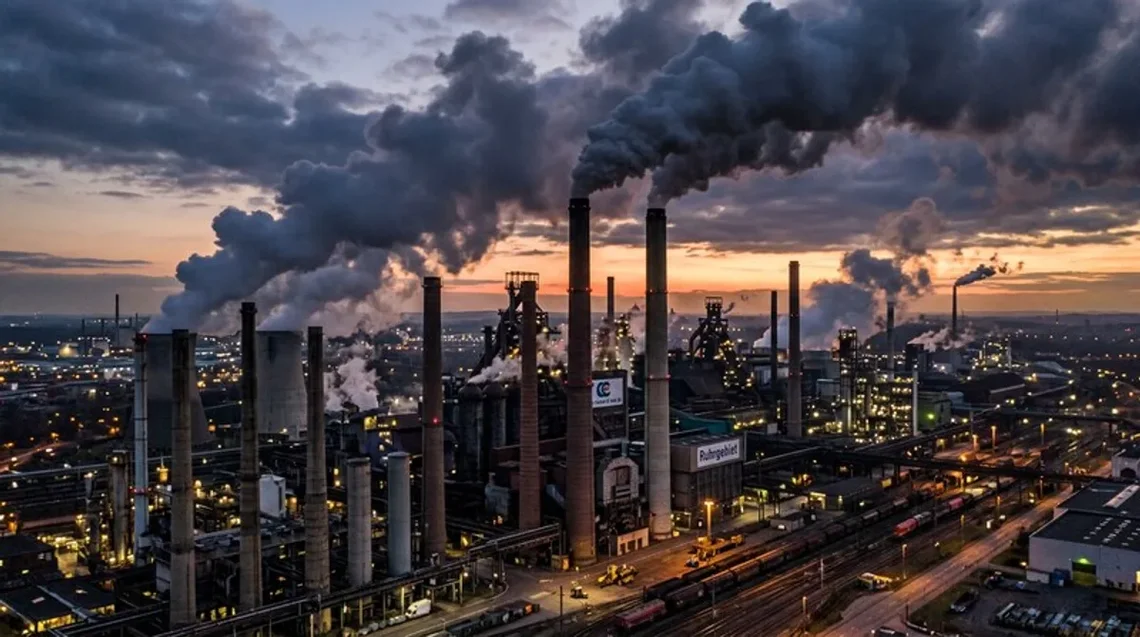
Global carbon dioxide emissions have reached record levels once again, defying a decade of net-zero pledges and accelerating climate commitments from governments across the world. According to data published by the International Energy Agency (IEA) and analysed by Carbon Brief, total global CO₂ output continues to climb even as renewable energy capacity expands at an unprecedented pace — a paradox that scientists and policymakers are increasingly struggling to resolve.
Climate figure: Global energy-related CO₂ emissions hit approximately 37.4 billion tonnes in the most recently reported year, a record high according to IEA figures. The Intergovernmental Panel on Climate Change (IPCC) has warned that to limit warming to 1.5°C above pre-industrial levels, global emissions must fall by roughly 43% by the end of this decade. Current trajectories place the world on course for between 2.5°C and 3°C of warming by 2100. (Source: IEA, IPCC Sixth Assessment Report)
Record Emissions in a Renewable Energy Boom
The central contradiction of contemporary climate policy is this: the world is building clean energy infrastructure faster than at any point in history, yet total greenhouse gas output continues to rise. The IEA attributes this to surging electricity demand driven by industrial growth, digitalisation, and extreme weather events — particularly heatwaves — that are themselves symptoms of a warming climate.
Why Renewables Are Not Yet Enough
Solar and wind capacity additions broke records recently, according to IEA data, yet fossil fuel consumption has not fallen in absolute terms. The problem, analysts note, is that new renewable generation is largely meeting additional demand rather than replacing existing coal, oil, and gas infrastructure. In developing economies particularly, coal remains the default fuel for new power generation where financing for alternatives is constrained. Carbon Brief analysis indicates that while the carbon intensity of electricity is falling in many high-income nations, total energy demand globally is outpacing the emissions savings being achieved. (Source: Carbon Brief, IEA)
Related Articles
The Role of Methane and Non-CO₂ Gases
Carbon dioxide is not the only greenhouse gas worsening the trajectory. Methane emissions from agriculture, landfill, and oil and gas operations remain stubbornly high, according to data cited in Nature. Methane is approximately 80 times more potent than CO₂ over a 20-year period, and recent satellite monitoring has revealed that fugitive emissions from fossil fuel infrastructure have been systematically underreported by national governments. The IPCC has identified methane reduction as one of the fastest available mechanisms for slowing near-term warming. (Source: IPCC, Nature)
Country and Sector Breakdown
The distribution of emissions is not uniform, and the policy challenges differ substantially between major economies. While some nations have achieved absolute reductions in line with their stated targets, others — including several large emerging economies — continue to increase output as their populations and industrial bases expand.
| Country / Region | Approximate Annual CO₂ Emissions (billion tonnes) | Net-Zero Target Year | Current Trajectory |
|---|---|---|---|
| China | ~12.5 | 2060 | Still rising; renewables expanding rapidly |
| United States | ~5.0 | 2050 | Modest decline; policy under pressure |
| European Union | ~2.6 | 2050 | Declining; coal phase-out progressing |
| India | ~2.8 | 2070 | Rising; solar investment accelerating |
| United Kingdom | ~0.33 | 2050 | Declining but below interim targets |
| Russia | ~1.7 | 2060 | Largely flat; limited policy action |
(Source: IEA, Carbon Brief, IPCC Sixth Assessment Report. Figures are approximate and based on most recently available reported data.)
Aviation, Shipping and Hard-to-Abate Sectors
Beyond electricity generation, the so-called hard-to-abate sectors — aviation, shipping, steel, cement, and heavy chemicals — account for a significant and stubbornly persistent share of global emissions. The IEA estimates these sectors collectively represent around 30% of total CO₂ output and are among the most difficult to decarbonise given current technology constraints. Green hydrogen and carbon capture technologies show promise, but remain expensive and unproven at industrial scale, according to analysis published in Nature. (Source: IEA, Nature)
The Net-Zero Pledge Gap
More than 140 countries have now committed to net-zero emissions targets, covering approximately 90% of global GDP, according to data tracked by the Energy and Climate Intelligence Unit and reported by the Guardian Environment desk. However, independent analysis consistently finds a substantial gap between stated ambitions and the policies currently in place to achieve them.
Credibility of National Commitments
The IPCC has warned that many national pledges lack the legislative backing, financial mechanisms, or sectoral detail necessary for credible implementation. In several major economies, net-zero commitments exist at the level of government announcement rather than enacted law. Carbon Brief analysis of nationally determined contributions — the formal climate plans submitted under the Paris Agreement — suggests that even full implementation of current pledges would result in warming well above 2°C. The gap between pledge and action is particularly pronounced in the fossil fuel production sector, where several net-zero-committed governments continue to approve new oil and gas extraction licences. (Source: IPCC, Carbon Brief)
For context on how this pressure is manifesting in UK domestic policy, readers can follow ongoing coverage of how net zero targets face pressure as emissions stall, and how the international picture is shaping diplomatic commitments at net zero targets face global setback at COP30.
The UK in the Global Context
Britain occupies a particular position in this global debate. As the host of the landmark COP26 summit and one of the first major economies to enshrine a net-zero target in law, the UK has presented itself as a climate leader. Yet domestic data reveal significant difficulties in sustaining that narrative. The Climate Change Committee, the independent statutory body that monitors UK progress, has noted in successive reports that the pace of emissions reduction is insufficient to meet legally binding carbon budgets.
Interim Targets and Domestic Policy Failures
Analysis of recent UK emissions data shows the country has struggled to maintain reductions across key sectors including buildings, transport, and agriculture. The heat pump rollout has fallen well short of government projections, insulation retrofit schemes have been repeatedly delayed or cancelled, and new car sales data suggest the electric vehicle transition is proceeding more slowly than official targets require, according to reporting by the Guardian Environment. These shortcomings are part of a wider pattern documented in coverage of how the UK misses interim net zero emissions target, raising questions about the enforceability of long-term commitments when near-term policy is repeatedly softened. There have also been reports of target date adjustments, with separate analysis examining the implications of proposals to UK delays net zero emissions target to 2050 under revised planning frameworks. (Source: Guardian Environment, Climate Change Committee)
On the infrastructure side, there are signs of genuine ambition. Grid investment and offshore wind expansion have continued, and dedicated coverage of how the UK accelerates net zero grid overhaul amid climate targets illustrates the tension between long-term infrastructure investment and short-term political hesitancy.
The Science Behind the Targets
The IPCC's Sixth Assessment Report, the most comprehensive scientific review of climate change to date, sets out with high confidence that every fraction of a degree of warming has measurable consequences for extreme weather, sea level rise, ecosystem collapse, and human health. The report finds that limiting warming to 1.5°C requires global emissions to reach net zero around the middle of this century, with deep cuts of around 43% by 2030 compared to current levels. (Source: IPCC)
Tipping Points and Feedback Loops
Of particular scientific concern is the possibility of climate tipping points — thresholds beyond which self-reinforcing feedback mechanisms could drive further warming independent of human emissions. These include the collapse of the West Antarctic Ice Sheet, the dieback of the Amazon rainforest, and the thawing of Arctic permafrost, which contains vast stores of carbon and methane. Research published in Nature has identified that some of these tipping points may be closer than previously estimated, and that they can interact with one another in ways that amplify overall risk. Scientists caution that economic and policy analyses which do not account for tipping point risk systematically underestimate the urgency of rapid emissions reduction. (Source: Nature, IPCC)
What Meaningful Progress Requires
Scientists and policy analysts broadly agree on what structural change would look like, even if political consensus remains elusive. The IEA's net-zero pathway analysis calls for no new approval of coal mines or unabated coal plants anywhere in the world, no new oil and gas fields beyond those already approved, and a dramatic acceleration in efficiency improvements and clean energy deployment across all sectors. Beyond energy, land use changes — including halting deforestation and restoring natural carbon sinks — are identified as essential complements to decarbonisation. (Source: IEA, IPCC)
Carbon pricing, either through tax mechanisms or emissions trading systems, is identified in mainstream economic literature as a cost-effective tool for driving reductions across the economy, yet political resistance has limited its scope and ambition in most jurisdictions. The EU's emissions trading scheme remains the most advanced such mechanism, but exemptions for key sectors and periodic price volatility have reduced its effectiveness relative to theoretical models. (Source: Carbon Brief)
The trajectory of global emissions reflects a fundamental tension between the urgency identified by climate science and the pace at which economic systems, political institutions, and public expectations can be reshaped. The data are unambiguous: current policy commitments, even if fully implemented, are insufficient to meet the targets governments have publicly endorsed. Closing that gap will require not only new pledges but enforceable mechanisms, sustained political will, and a recalibration of economic priorities that, to date, remains elusive in most of the world's major emitting nations.