
NATO allies bolster Eastern Europe amid Russia concerns
Military reinforcements follow escalating border tensions
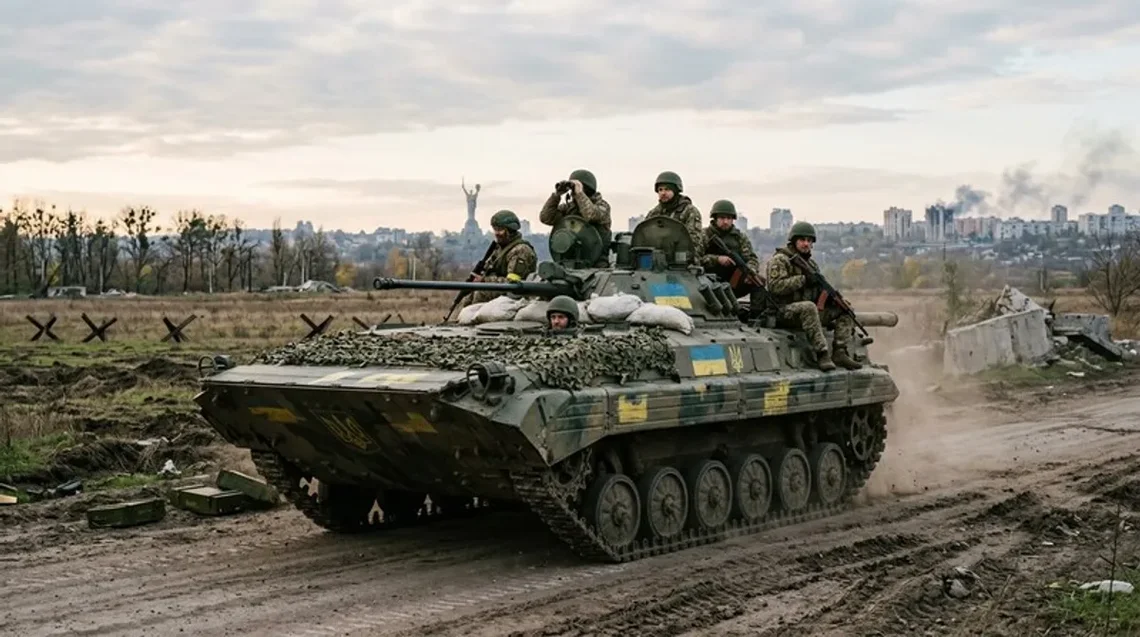
NATO member states have deployed thousands of additional troops and advanced military assets across Poland, the Baltic states, Romania, and Slovakia in one of the alliance's most significant Eastern European reinforcements in decades, as border tensions with Russia continue to simmer along multiple flashpoints. The deployments, confirmed by alliance officials and corroborated by reporting from Reuters and AP, signal a fundamental shift in NATO's posture from deterrence-by-presence to deterrence-by-capability.
Key Context: NATO's Eastern flank stretches more than 2,000 kilometres from the Arctic Circle to the Black Sea. Since Russia's full-scale invasion of Ukraine, the alliance has elevated its battle groups in the region from battalion-level to brigade-level formations — a tripling of effective combat mass at forward positions. Eight multinational battle groups are currently active across the Eastern flank, supported by allied air policing missions and naval patrols in the Baltic and Black Seas. (Source: NATO Headquarters, Brussels)
The Scale of Reinforcement
The current wave of military reinforcements represents the largest sustained buildup on NATO's Eastern flank since the Cold War, according to alliance officials. Rotational troop deployments have been extended and in some cases made semi-permanent, with the United States, United Kingdom, Germany, and Canada among the leading contributors of personnel and equipment.
Troop Numbers and Asset Deployment
The United States currently maintains more than 100,000 troops across Europe, a figure that has held steady following initial surges ordered after the deterioration of security on the continent's eastern borders, officials said. Germany has committed to leading the NATO battle group in Lithuania on a permanent basis — the first time Berlin has stationed combat forces abroad on a persistent footing since the Second World War. Canada leads the multinational battle group in Latvia, while the United Kingdom anchors a reinforced presence in Estonia. (Source: Reuters)
Related Articles
Advanced air defence systems, including Patriot missile batteries and SHORAD platforms, have been repositioned closer to forward positions. According to AP reporting, several allied nations have also pre-positioned armoured vehicles and artillery ammunition stockpiles in Poland and Romania, reducing strategic response times in the event of a crisis.
| Country | NATO Battle Group Host | Lead Nation | Approx. Troop Contribution | Key Assets Deployed |
|---|---|---|---|---|
| Estonia | eFP Battle Group Estonia | United Kingdom | ~1,900 | Armoured infantry, air defence |
| Latvia | eFP Battle Group Latvia | Canada | ~2,200 | Tanks, artillery, engineering units |
| Lithuania | eFP Battle Group Lithuania | Germany | ~3,000 (brigade trajectory) | Leopard 2 tanks, Patriot batteries |
| Poland | eFP Battle Group Poland | United States | ~10,000+ | Abrams tanks, F-35 detachments, Patriot |
| Romania | eFP Battle Group Romania | France | ~2,000 | Armoured vehicles, HIMARS elements |
| Slovakia | eFP Battle Group Slovakia | Czechia | ~1,500 | Infantry, logistics |
Russia's Posture and the Threat Assessment
Western intelligence services and NATO's own assessments have flagged a pattern of Russian military activity along its western borders — including Belarus — that officials describe as deliberate and sustained. While Moscow has characterised the NATO buildup as provocative and destabilising, alliance leaders have consistently framed the deployments as purely defensive in nature.
The Belarus Dimension
Belarus, which shares borders with Poland, Lithuania, and Latvia, has become an increasingly significant variable in NATO's threat calculus. Russian forces have used Belarusian territory previously for operations in Ukraine, and their continued presence there has elevated the strategic risk to the so-called Suwałki Gap — a roughly 100-kilometre land corridor between Poland and Lithuania that represents NATO's most exposed land chokepoint. A closure of this corridor, even temporarily, could sever the Baltic states from the rest of the alliance by land. (Source: Foreign Policy)
For more background on how NATO has been shoring up its defensive posture along this corridor and across its Eastern flank, see our coverage of how NATO bolsters eastern flank amid Russia concerns, which outlines the evolving strategic rationale.
Hybrid Threats and Grey-Zone Activity
Beyond conventional military concerns, NATO officials and European Union analysts have documented a surge in hybrid operations attributed to Russian state or state-adjacent actors. These include cyberattacks on critical infrastructure, interference in democratic processes, the instrumentalisation of migrant flows at the Polish and Finnish borders, and sabotage of undersea cables and pipelines. (Source: UN reports, European External Action Service)
The convergence of conventional and hybrid threats has complicated NATO's response calculus, as many grey-zone activities fall beneath the threshold of Article 5 collective defence triggers while still imposing significant costs on member states, analysts noted.
Implications for the UK
The United Kingdom's role in NATO's Eastern reinforcement is substantial and carries direct strategic, financial, and diplomatic consequences for British policymakers. The UK currently leads the Enhanced Forward Presence battle group in Estonia and has been among the most active contributors of military aid to Ukraine, a posture that successive governments have framed as central to British national security interests.
British Defence Commitments Under Strain
Defence analysts and former military officials have publicly questioned whether the British Army, which has undergone significant force structure reductions in recent years, can sustain its current commitments over the long term without additional investment. The UK government recently pledged to raise defence spending toward 2.5 percent of GDP, but critics argue the timeline is insufficient given the pace of threat evolution. (Source: Reuters)
Our reporting on how NATO bolsters Eastern European defenses amid Russia concerns examines in detail how British and allied defence budgets are being recalibrated against a transformed threat environment.
Furthermore, with the UK outside the European Union, its ability to participate in EU-level defence coordination mechanisms is structurally limited, even as bilateral defence partnerships — particularly with Poland, the Nordic nations, and the Baltic states — have deepened considerably through the Joint Expeditionary Force framework.
European Allies: Rearmament and Political Consensus
Across continental Europe, the shift toward higher defence spending has accelerated, driven by a combination of threat perception and pressure from Washington. Germany's historic Zeitenwende — or policy turning point — has produced commitments to a 100-billion-euro special defence fund, though procurement timelines remain a source of debate. Poland has emerged as perhaps the most energetic defence spender on the continent, committing to defence expenditure exceeding four percent of GDP and signing major procurement contracts for South Korean and American weapons systems. (Source: AP)
Baltic State Vulnerability and Resilience
Estonia, Latvia, and Lithuania — all of which share borders with Russia or Belarus and have significant Russian-speaking minority populations — have long argued for exactly the kind of reinforced NATO presence now materialising. Officials in Tallinn, Riga, and Vilnius have repeatedly called for brigade-level forces to be stationed on their territory on a permanent basis, rather than through rotation, arguing that rotational presence creates gaps in deterrence credibility. (Source: Foreign Policy)
The three Baltic governments have also invested heavily in national resilience measures, including civil defence programmes, reserve force expansions, and critical infrastructure hardening — a model that NATO is increasingly encouraging other allies to replicate.
For a broader assessment of how NATO is restructuring its presence across the region, our analysis of NATO bolsters Eastern Europe presence amid Russia tensions provides essential reading on the political and operational complexities involved.
Diplomatic Channels and the Risk of Escalation
Despite the military buildup, Western officials have consistently stated their preference for diplomatic resolution of the underlying tensions. The NATO-Russia Council, dormant for much of the past several years, has been a vehicle through which limited dialogue has been attempted, though sessions have yielded little concrete progress, officials said.
The United Nations has called on all parties to exercise restraint and pursue dialogue, with the UN Secretary-General's office issuing statements urging de-escalation and respect for the principles of the UN Charter. (Source: UN reports) However, structural distrust between Moscow and Western capitals has made substantive diplomatic breakthroughs elusive.
The Nuclear Dimension
Russia's repeated references to its nuclear arsenal in the context of the conflict in Ukraine and Western support for Kyiv have added a layer of existential risk to alliance calculations. NATO officials have responded by reaffirming the credibility of the alliance's own nuclear deterrent, while seeking to avoid language or actions that Moscow could characterise as escalatory. (Source: Reuters)
Arms control frameworks that once provided guardrails — including the INF Treaty and New START — have either collapsed or been suspended, leaving the European security architecture without key stabilising mechanisms for the first time in four decades, analysts noted.
What Comes Next
NATO's reinforcement of its Eastern flank is not a temporary measure calibrated to a single crisis but rather reflects a structural reassessment of European security that alliance officials describe as generational in scope. Ongoing defence planning cycles, force generation commitments made at recent summits, and the sustained political will demonstrated by key allies suggest that the elevated military posture will persist for the foreseeable future.
For the United Kingdom and Europe broadly, the implications are profound: higher defence budgets, deeper alliance entanglements, a more militarised political culture, and a strategic environment defined by competition rather than cooperation with Russia. The challenge for policymakers will be to sustain public and parliamentary support for these commitments over a timeline measured not in months but in years, while simultaneously managing economic pressures at home and preserving the diplomatic space necessary to prevent miscalculation from becoming catastrophe.
As detailed in our earlier reporting, the trajectory of NATO bolsters eastern defences amid Russia concerns reflects not simply a military response but a fundamental reimagining of what collective security means in a continent that, only recently, believed large-scale conflict had been permanently consigned to history.