
NATO allies bolster Eastern Europe amid Russia tensions
Military reinforcements signal unified alliance response
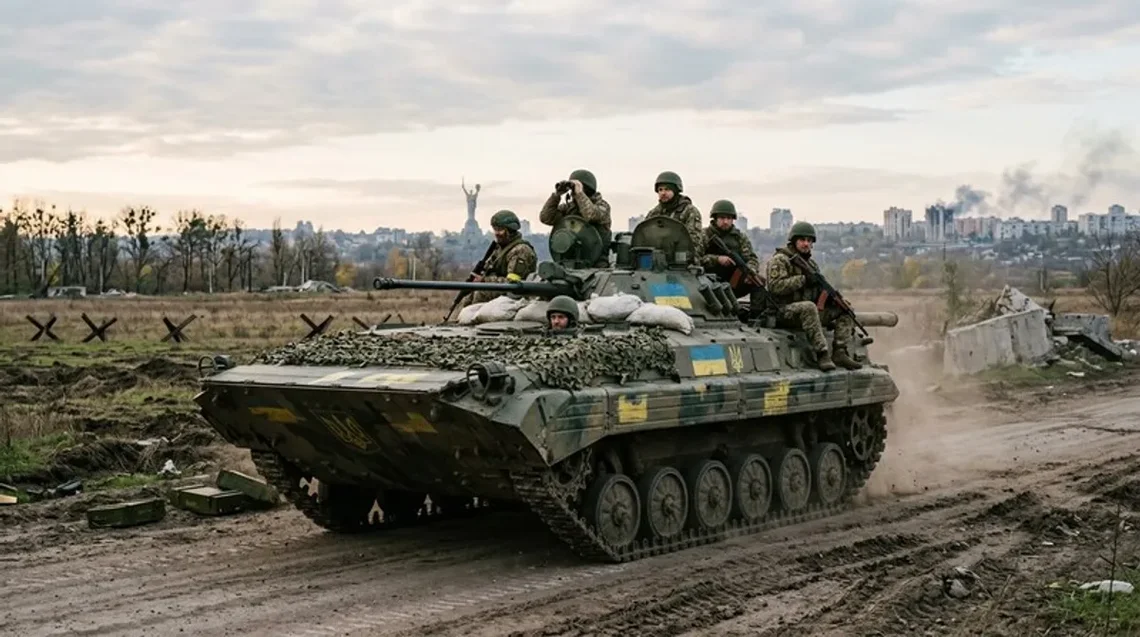
NATO member states have deployed thousands of additional troops, armoured vehicles, and air defence systems to Eastern Europe in a sweeping show of collective resolve, as the alliance responds to sustained Russian military pressure along its eastern flank. The reinforcements, confirmed by alliance officials and corroborated by reporting from Reuters and the Associated Press, represent the most significant repositioning of Western military assets on the continent since the Cold War.
The deployments span multiple member states, including Poland, Romania, the Baltic nations of Estonia, Latvia, and Lithuania, as well as Slovakia and Hungary, with allied commanders describing the move as both a deterrent and a structural transformation of NATO's posture. According to alliance briefings, the reinforcements go beyond rotating battle groups and now include semi-permanent forward basing arrangements, elevated readiness levels, and integrated command structures that did not exist at this scale prior to Russia's full-scale invasion of Ukraine.
Key Context: NATO's collective defence commitments are enshrined in Article 5 of the Washington Treaty, which holds that an armed attack against one ally is considered an attack against all. The alliance currently comprises 32 member states following Sweden's accession. Russia has consistently characterised NATO's eastward expansion as a provocation, while Western governments and international legal scholars maintain that sovereign nations retain the right to choose their own security arrangements. (Source: NATO official communications)
Scale and Composition of the Reinforcements
The breadth of the current deployment underscores how dramatically NATO's operational posture has evolved. Alliance officials confirmed to Reuters that forward-deployed units now include heavy armour, long-range artillery, integrated air and missile defence batteries, and persistent aerial surveillance capabilities. The United States alone has stationed more than 100,000 troops across Europe — a figure not seen since the Cold War era — while Germany, the United Kingdom, France, and Canada have each led or expanded multinational battle groups in frontline member states.
Related Articles
Armoured and Ground Forces
In Poland, which shares a border with both Ukraine and the Russian exclave of Kaliningrad, American M1 Abrams tanks and Bradley infantry fighting vehicles have been pre-positioned alongside Polish armoured units. British Challenger 2 tanks and armoured personnel carriers form the backbone of the UK-led enhanced Forward Presence battle group in Estonia, according to Ministry of Defence statements. Romania, which hosts the alliance's largest air base in the region at Mihail Kogălniceanu, has seen a significant increase in French-led ground forces, officials said.
Air Defence and Electronic Warfare
Complementing ground deployments, NATO has installed Patriot surface-to-air missile systems across Poland and Germany, with additional Hawk and NASAMS batteries distributed along the eastern tier. Officials told the Associated Press that electronic warfare capabilities and counter-drone systems have been quietly integrated into existing forward positions, reflecting lessons drawn directly from the conflict in Ukraine. Allied air forces are conducting continuous combat air patrols over the Baltic states and Poland, a practice that has been maintained without interruption since early this year.
The Strategic Logic Behind the Build-Up
Analysts and senior NATO officials are emphatic that the reinforcements are not merely symbolic. The alliance's adapted posture, formalised at successive summits, reflects a recognition that deterrence by presence — maintaining credible, ready forces at or near potential flashpoints — is more effective than deterrence by reinforcement, which relies on the ability to surge forces rapidly after a crisis has already begun.
According to Foreign Policy, alliance planners have spent considerable effort modelling scenarios in which Russia might test Article 5 commitments through hybrid tactics: cyber operations, disinformation campaigns, or limited incursions designed to exploit ambiguity. The current deployment architecture is intended to eliminate that ambiguity entirely.
The Suwałki Gap Problem
Military strategists have long identified the Suwałki Gap — a roughly 100-kilometre land corridor connecting Poland to Lithuania, flanked by the Russian exclave of Kaliningrad and Belarus — as the alliance's most vulnerable geographic chokepoint. A successful Russian operation to sever this corridor would physically isolate the three Baltic states from the rest of NATO territory. Officials confirmed to Reuters that force disposition along this corridor has been substantially strengthened, with multinational units now conducting joint exercises and maintaining readiness levels far above pre-war norms.
For more background on the evolution of NATO's force posture, see NATO bolsters eastern flank amid Russia tensions, which examines the strategic recalibration that has accelerated across member states.
Member State Contributions and Political Dynamics
The reinforcement effort has exposed both the cohesion and the fault lines within the alliance. Most member states have met or exceeded their pledged contributions to frontline deployments, according to NATO headquarters data. However, questions persist about the pace at which certain members are expanding their defence industrial capacity and whether force generation can be sustained over the medium term.
Germany's Evolving Role
Germany's declared Zeitenwende — a fundamental shift in defence policy — has translated into a formal commitment to permanently station a combat-ready brigade in Lithuania, the first time German forces will be based abroad on a permanent basis since the Second World War. Defence officials in Berlin confirmed the brigade will eventually number approximately 5,000 troops, with supporting infrastructure, family housing, and logistics networks currently under development. Critics have argued that the pace of implementation remains too slow relative to the threat environment, a view shared by some Baltic officials, according to AP reporting.
Poland's Defence Expansion
Poland has emerged as arguably the most consequential actor in NATO's eastern reinforcement. Warsaw is currently spending approximately four percent of its gross domestic product on defence — the highest proportion in the alliance — and is in the process of acquiring F-35 fighter jets, South Korean K2 main battle tanks, K9 self-propelled howitzers, and HIMARS multiple rocket systems. Officials in Warsaw have been explicit that Poland intends to develop the most capable land army in continental Europe, a goal that reflects both its geographic exposure and its reading of the threat from Moscow. (Source: Polish Ministry of National Defence)
| Country | Host Nation / Location | Lead Nation Battle Group | Defence Spending (% GDP, approx.) | Notable Capabilities Deployed |
|---|---|---|---|---|
| Estonia | Baltic Region | United Kingdom | ~3.4% | Challenger 2 tanks, AS90 artillery |
| Latvia | Baltic Region | Canada | ~2.4% | Armoured infantry, air defence |
| Lithuania | Baltic Region | Germany | ~2.9% | Permanent brigade (in development) |
| Poland | Central-Eastern Europe | United States | ~4.0% | M1 Abrams, Patriot SAM, HIMARS |
| Romania | South-Eastern Europe | France | ~2.0% | Air base expansion, ground forces |
| Slovakia | Central Europe | Czech Republic / Multinational | ~2.1% | Rotating armoured units |
Russia's Response and the Escalation Question
Moscow has characterised NATO's military build-up as inherently destabilising, with the Russian Foreign Ministry issuing repeated formal protests and state media amplifying warnings that the presence of Western forces on Russia's borders constitutes an existential threat. Russian officials have threatened unspecified countermeasures, though analysts have noted that Russia's conventional military capacity has been severely degraded by sustained operations in Ukraine, limiting Moscow's ability to respond in kind along the western frontier.
According to United Nations monitoring reports, there has been a marked increase in incidents involving Russian military aircraft conducting aggressive manoeuvres near NATO airspace, as well as a pattern of GPS interference and cyber intrusions attributed by Western intelligence services to Russian state actors. Alliance officials told Reuters these incidents are catalogued, shared across member states, and factored into operational planning.
Related analysis on the depth of NATO's strategic recalibration is available in reporting on how NATO weighs expanded Eastern Europe presence amid Russia tensions, including internal debates over permanent basing versus rotational deployment models.
What This Means for the United Kingdom and Europe
For the United Kingdom, the reinforcement effort carries both strategic and financial weight. Britain leads the enhanced Forward Presence battle group in Estonia and has committed additional forces to Poland, while also deploying Royal Air Force Typhoon jets on Baltic Air Policing missions. The UK government has pledged to increase defence spending to 2.5 percent of gross domestic product, with a stated aspiration to reach three percent over the longer term. Officials at the Ministry of Defence have described the eastern flank as Britain's primary land deterrence commitment, one that has become more operationally demanding with each passing month.
For Europe more broadly, the reinforcement signals a structural shift away from the post-Cold War dividend assumption that conventional large-scale conflict on the continent had been consigned to history. European Union member states are simultaneously navigating the relationship between NATO obligations and EU defence initiatives, with the European Defence Agency reporting that collective defence spending among EU members has risen substantially. The question of long-term sustainability — whether allied publics and parliaments will maintain the political will to fund this posture over years or decades — remains the central strategic uncertainty, according to analysts cited by Foreign Policy.
The Industrial Dimension
A critical and frequently underreported dimension of the reinforcement effort is the state of Western defence industrial capacity. NATO Secretary General officials have repeatedly warned that ammunition production, artillery shell manufacturing, and air defence interceptor supply chains were not calibrated for sustained high-intensity conflict. Efforts to expand production are underway across multiple allied nations, but officials acknowledge that closing the gap between current output and war-reserve requirements will take several years. The UK government has committed funding to expand shell production at domestic facilities, and European partners are exploring joint procurement mechanisms to accelerate rearmament at scale.
For a broader picture of how the alliance has been repositioning its assets, see NATO bolsters Eastern Europe presence amid Russia tensions, as well as ongoing coverage of NATO prepares enhanced eastern flank amid Russia tensions, which tracks the operational timelines and force generation milestones central to the alliance's long-term deterrence architecture.
The Road Ahead
NATO allies show no signs of scaling back their commitment to the eastern flank, with planning cycles now extending years into the future and infrastructure investments — roads, rail, airfields, fuel depots, pre-positioned equipment — being made at a scale that signals permanence rather than temporary reassurance. Upcoming alliance summits are expected to formalise further elements of the adapted posture, including updated regional defence plans that classify the full range of threat scenarios and assign forces to specific contingencies.
The central message that alliance officials are seeking to convey — to Moscow, to allied publics, and to partner nations observing from beyond the Euro-Atlantic area — is one of unified, durable resolve. Whether that message will be sufficient to deter further Russian adventurism, or whether it will need to be tested in more direct confrontation, is a question that no intelligence assessment can answer with certainty. What is unambiguous, according to officials, data, and the weight of observable evidence, is that NATO's eastern flank is more heavily defended today than at any point since the fall of the Berlin Wall — and that the alliance intends to keep it that way. (Sources: Reuters, Associated Press, NATO official communications, United Nations monitoring reports, Foreign Policy)