
NATO allies bolster Ukraine aid amid Russian offensive
Western powers pledge fresh military support as frontline fighting intensifies
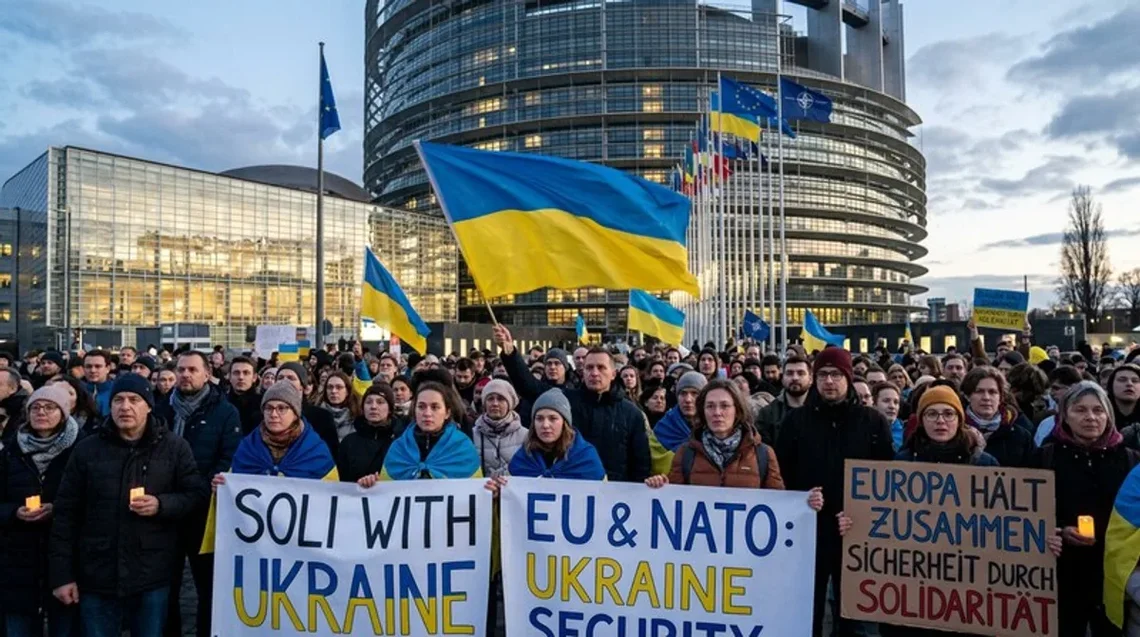
NATO member states have pledged substantial new tranches of military equipment and financial support to Ukraine as Russian forces press forward along multiple sectors of the eastern front, with alliance defence ministers convening in emergency consultations to coordinate a unified response to what officials describe as an intensifying campaign of aerial bombardment and ground assault. The pledges, announced across several allied capitals, include additional air defence systems, artillery ammunition, and armoured vehicles — materiel that Ukrainian commanders say is urgently needed to stabilise deteriorating positions in the Donetsk and Zaporizhzhia regions.
Key Context: Russia currently occupies approximately 18 percent of Ukrainian territory, according to estimates compiled by the Institute for the Study of War. Ukraine's armed forces are fighting on a front line stretching more than 1,000 kilometres, placing severe logistical and manpower demands on Kyiv's military establishment. NATO has collectively committed over $100 billion in security assistance to Ukraine since the full-scale invasion began, though alliance members disagree on the pace and scope of future commitments. (Source: NATO Secretariat)
Alliance Pledges and Strategic Coordination
The latest round of aid commitments follows a pattern documented throughout the conflict: Ukrainian battlefield setbacks triggering renewed urgency among Western partners, followed by pledges that observers at Foreign Policy have described as "reactive rather than strategic." Officials at NATO headquarters in Brussels said the alliance is working to accelerate delivery timelines, acknowledging that the gap between announcement and actual battlefield availability has been a persistent weakness in the support framework.
Germany confirmed the dispatch of an additional Patriot air defence battery, a commitment that German defence ministry officials said had been expedited following a series of Russian missile strikes on Ukrainian energy infrastructure. The United Kingdom announced a further tranche of funding for drone procurement and long-range precision weapons, with the Ministry of Defence stating that total British military aid to Ukraine now exceeds £7 billion since the conflict's escalation. France indicated it would expand its artillery shell production to contribute to joint European stockpile replenishment efforts coordinated through the European Defence Agency. (Source: Reuters)
Related Articles
Air Defence as the Critical Gap
Ukrainian President Volodymyr Zelensky has repeatedly identified air defence as the single most consequential shortfall in his country's arsenal. Russian forces have deployed a combination of ballistic missiles, cruise missiles, and Shahed-series one-way attack drones in mass salvoes designed to overwhelm and exhaust Ukraine's interceptor inventory. NATO officials, speaking on background, acknowledged that the alliance's collective air defence munitions stocks have been significantly depleted by diversions to Ukraine, and that industrial replenishment is not yet keeping pace with expenditure rates. (Source: AP)
For context on the evolving eastern front pressure that makes air defence so critical, see our earlier reporting on how Ukraine reports Russian advances in eastern offensive have changed the calculus for alliance planners.
The Ammunition Production Challenge
European Union officials and NATO logistics planners have identified ammunition — particularly 155mm artillery shells — as a structural bottleneck that no single pledge can resolve. A joint EU-NATO industrial task force has set targets for ramping up production across member states, but industry analysts cited by Reuters note that new manufacturing capacity typically requires 18 to 36 months to come fully online. In the interim, allies have sought to draw on stockpiles from non-traditional sources, including purchases facilitated through South Korea and arrangements brokered with other partner nations. (Source: Reuters)
Frontline Conditions and Russian Operational Tempo
Russian forces have maintained sustained pressure across the eastern front, with particularly intense fighting reported around the town of Pokrovsk in Donetsk Oblast, a logistics hub whose capture would grant Moscow operational advantages across a wide arc of territory. Ukrainian military officials have confirmed that defensive lines have come under severe stress, though they maintain that Russian advances have come at significant cost in personnel and equipment. Independent battlefield monitoring organisations, including the Oryx open-source intelligence project, have documented ongoing Russian armoured vehicle losses that remain among the highest of the conflict. (Source: AP)
Russian Missile and Drone Campaign
The aerial dimension of the conflict has intensified markedly in recent weeks, with Russia conducting some of its largest combined missile and drone attacks against Ukrainian cities and infrastructure. United Nations humanitarian officials have documented widespread displacement of civilian populations from frontline oblasts, with the UN Office for the Coordination of Humanitarian Affairs reporting that internal displacement within Ukraine remains among the largest in the world. The targeting of energy infrastructure — power generation facilities, substations, and heating networks — has been characterised by UN human rights officials as a deliberate strategy to undermine civilian resilience ahead of the winter period. (Source: UN Office for the Coordination of Humanitarian Affairs)
The broader trajectory of this campaign and NATO's eastern repositioning are examined in depth in our analysis of how NATO bolsters eastern flank amid Russian military buildup, which provides essential context for understanding current alliance posture.
What This Means for the UK and Europe
For Britain and its European partners, the stakes of the Ukrainian conflict extend well beyond the immediate theatre of war. Senior officials in London have consistently framed continued support for Kyiv as a matter of direct national security interest, arguing that a Russian military success in Ukraine would embolden revisionist behaviour across the Euro-Atlantic space and place NATO's eastern members — particularly the Baltic states and Poland — under direct strategic pressure.
British Strategic Interests
The United Kingdom, operating outside the European Union since its formal departure, has sought to leverage its Ukraine commitment as a demonstration of continued strategic relevance in European security architecture. British military trainers have prepared tens of thousands of Ukrainian soldiers through programmes conducted on UK soil, and the government has positioned itself as among the most hawkish advocates within the alliance for sustained and escalating support. Defence analysts cited by Foreign Policy note that the UK's posture serves dual purposes: genuine strategic interest in containing Russian power and a diplomatic tool for maintaining influence in European forums from which London is otherwise partially excluded.
Domestically, however, the financial burden of sustained military aid is subject to increasing parliamentary scrutiny, with opposition politicians and some government backbenchers questioning whether commitments can be maintained at current levels without additional defence budget allocations. The UK's own armed forces have faced documented equipment shortfalls, and the Ministry of Defence has acknowledged tensions between donations to Ukraine and the maintenance of domestic military readiness. (Source: Foreign Policy)
European Security Architecture Under Strain
Across the wider European theatre, the conflict has accelerated defence spending increases among NATO members. Finland and Sweden, both of which joined NATO in the most recent enlargement cycle, have moved to integrate their substantial military capabilities into alliance command structures. Poland has continued its ambitious armament programme, committing to defence spending levels well above the NATO target of two percent of gross domestic product. Germany, historically reluctant to take a leading role in European security, has undergone what its officials describe as a generational shift in strategic culture — though critics argue that rhetorical commitments have not always been matched by the speed of practical delivery. (Source: Reuters)
| Country | Recent Commitment | Defence Spending (% GDP) | Total Aid to Ukraine (est.) |
|---|---|---|---|
| United States | Air defence munitions, artillery rounds, armoured vehicles | ~3.5% | $60bn+ (military, financial, humanitarian) |
| United Kingdom | Drone procurement funding, precision weapons | ~2.3% | £7bn+ (military aid) |
| Germany | Additional Patriot battery, armoured vehicles | ~2.1% | €18bn+ (military and financial) |
| France | Artillery shell production expansion | ~2.1% | €3bn+ (declared military aid) |
| Poland | Ammunition and logistics support | ~4.0% | Substantial in-kind, logistics |
| Canada | Armoured vehicles, training continuation | ~1.4% | CAD $2.4bn+ |
Diplomatic Dimensions and Alliance Cohesion
The appearance of allied unity masks real and documented tensions over the scope, pace, and limits of Western support. A recurring fault line concerns the authorisation of long-range Western-supplied weapons systems for use against targets inside Russian territory. Several NATO members, led by Germany and previously the United States, imposed restrictions on such use, citing concerns about escalation. Those restrictions have been partially loosened over time, but the debate continues to expose differing risk tolerances within the alliance. (Source: Foreign Policy)
Hungary's government, under Prime Minister Viktor Orbán, has maintained its distinctive position within the alliance, opposing military aid packages, blocking EU financial instruments, and advocating for a negotiated settlement on terms that Kyiv and most other allies regard as unacceptable. While Hungary's practical ability to obstruct NATO military coordination is limited, its political stance complicates the projection of consensus and provides rhetorical cover for critics of Western policy. (Source: AP)
The Question of Long-Term Commitment
Perhaps the most consequential uncertainty for Kyiv is the durability of Western political will. Electoral cycles across multiple allied nations have introduced variables that Ukrainian officials and Western strategists openly acknowledge as a vulnerability. Shifts in domestic political landscapes — particularly in the United States, where congressional support for Ukraine aid has been subject to significant partisan friction — have forced European allies to consider contingency frameworks in which American contributions are reduced or conditioned. European Commission officials have advanced proposals for long-term financing mechanisms designed to provide Kyiv with greater predictability and insulate aid flows from individual national political fluctuations. (Source: Reuters)
For a deeper examination of how these dynamics have played out along NATO's eastern boundary, our reporting on NATO bolsters eastern defenses amid Ukraine stalemate provides essential background on the alliance's structural repositioning.
Ukraine's Military Position and Prospects
Ukrainian armed forces continue to conduct both defensive and offensive operations, though the strategic initiative has largely rested with Russian forces through the current period. Zelensky's government has pressed allies for accelerated decisions on critical capabilities, including fourth-generation fighter aircraft, which several nations have pledged to supply, and expanded authorisation for strikes on Russian logistics infrastructure. (Source: AP)
Within Ukraine, a contentious debate over mobilisation policy has unfolded, with the government implementing measures to expand the pool of eligible conscripts amid reports of manpower shortfalls. The human cost of the conflict — casualties among both military personnel and civilians — continues to mount at rates that UN monitoring bodies describe as deeply alarming, though precise figures remain difficult to independently verify given wartime information controls on both sides. (Source: UN Human Rights Monitoring Mission in Ukraine)
Earlier reporting on how Ukraine launches major counteroffensive as NATO pledges additional aid illustrated the operational logic that continues to guide Kyiv's battlefield strategy, even as conditions have evolved considerably since that phase of the conflict.
Outlook
The convergence of intensified Russian military pressure, renewed allied pledges, and unresolved questions about strategic depth and political sustainability defines the current moment in Europe's most consequential conflict in generations. Analysts at Foreign Policy and defence research institutions across the alliance caution that materiel support, however substantial, cannot substitute for a coherent long-term political strategy that addresses the conflict's ultimate resolution — a question that allied governments have conspicuously avoided committing to in concrete terms. What is clear, officials across NATO member states maintain, is that the coming months will test both Ukrainian resilience and the durability of Western solidarity in ways that will shape European security for decades. For Britain and its continental partners, the outcome is not a distant geopolitical abstraction — it is a question that will define the strategic environment their armed forces, economies, and citizens must navigate for the foreseeable future.