
NATO allies bolster Ukraine support amid Russian offensive
Western military aid package accelerates as frontline fighting intensifies
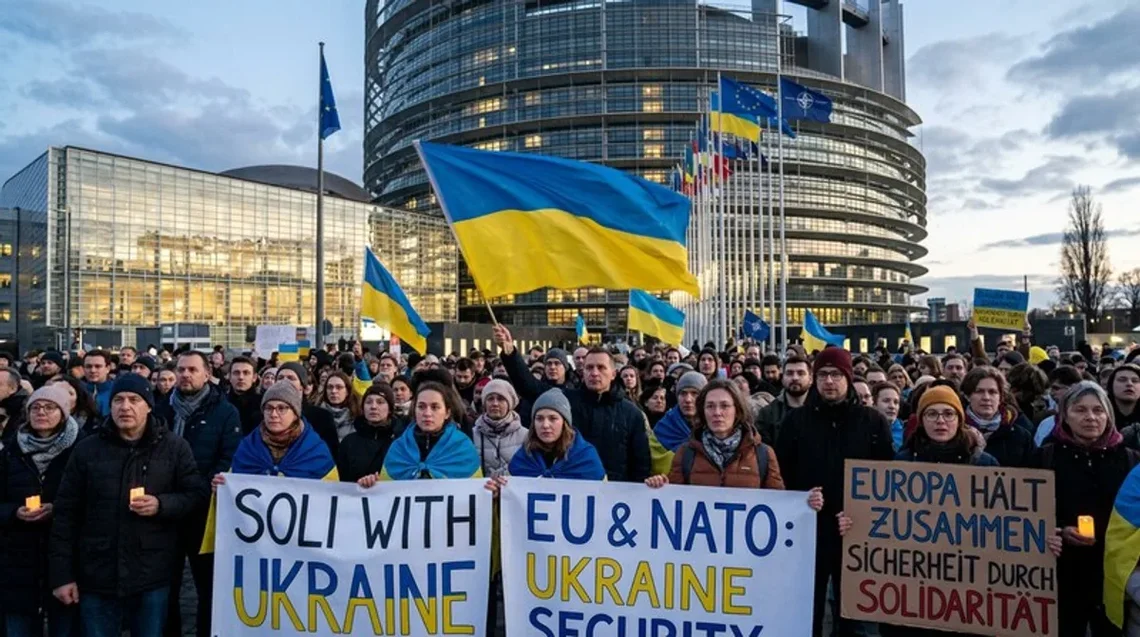
NATO member states have significantly accelerated military aid deliveries to Ukraine as Russian forces press forward along multiple sectors of the eastern front, with alliance officials confirming new weapons packages worth tens of billions of dollars are being fast-tracked to Kyiv amid what military analysts describe as the most intense period of ground combat since the war's opening phase. The coordinated western response, spanning long-range artillery, air defence systems, and armoured vehicles, signals a renewed resolve among allies to prevent a collapse of Ukrainian defensive lines before any potential diplomatic process can take shape.
Key Context: Russia launched its full-scale invasion of Ukraine in February 2022. Since then, NATO allies have collectively committed more than $250 billion in military, financial, and humanitarian support to Kyiv, according to data compiled by the Kiel Institute for the World Economy. Ukraine currently fields one of the largest land armies in Europe, substantially equipped with Western-supplied weapons systems. Russia has made incremental but sustained territorial gains in the Donetsk region over recent months, placing renewed urgency on allied supply chains and political commitments ahead of any future negotiations.
The Scale of the Latest Aid Commitments
Alliance members meeting in Brussels confirmed a new tranche of combined military assistance that includes additional Patriot air defence batteries, extended-range ATACMS munitions, and Leopard 2 main battle tanks pledged by Germany and Poland, officials said. The United States separately confirmed an acceleration of previously approved packages through Pentagon drawdown authority, with a senior defence official describing the deliveries as "front-loaded" to ensure Ukrainian forces maintain operational capacity through the current offensive season, according to reporting by Reuters.
Air Defence at the Centre of the Package
Air defence remains the most critical component of the current aid effort. Ukrainian officials have repeatedly warned that Russian long-range missile and drone strikes are systematically targeting energy infrastructure and civilian supply networks, threatening the country's ability to sustain its war effort into the winter months. The provision of additional Patriot interceptors and NASAMS batteries from Norway and the Netherlands addresses what Kyiv has described as its most urgent operational gap, according to AP. European defence ministers acknowledged that the production bottleneck for interceptor missiles remains a structural challenge, with several manufacturers operating at expanded but still insufficient capacity to meet both NATO stockpile requirements and Ukrainian battlefield demand.
Related Articles
Ground Forces Equipment and Armoured Capability
Beyond air defence, the latest packages include significant quantities of armoured fighting vehicles, self-propelled artillery systems, and anti-tank guided weapons. Sweden has committed additional CV90 infantry fighting vehicles, while France confirmed further deliveries of Caesar self-propelled howitzers. British officials confirmed that deliveries of AS90 artillery systems and additional stocks of Storm Shadow cruise missiles are proceeding on schedule, with the Ministry of Defence declining to specify precise quantities for operational security reasons, officials said. The combined effect of these transfers is to bolster Ukrainian capacity for both defensive holding operations and limited counter-offensive actions along the contact line in eastern and southern Ukraine.
Frontline Situation and Russian Offensive Momentum
Russian ground forces have maintained sustained pressure across a broad front in Donetsk Oblast, with particularly intense fighting reported around Pokrovsk, Kurakhove, and Toretsk, according to battlefield assessments published by the Institute for the Study of War. Ukrainian commanders have acknowledged withdrawals from certain positions while insisting that core defensive lines remain intact. The operational picture is further complicated by Russian deployment of North Korean-supplied artillery ammunition and, according to multiple Western intelligence assessments cited by Reuters and Foreign Policy, the presence of North Korean military personnel in support roles within Russian-controlled territory.
The Role of Long-Range Strike Capabilities
Perhaps the most significant recent development in allied support has been the effective, if still officially cautious, authorisation by the United States and United Kingdom for Ukraine to use Western-supplied long-range missiles to strike targets inside Russian territory. This policy evolution, described by Foreign Policy as a significant shift in escalation management, has allowed Ukrainian forces to conduct strikes on Russian logistics hubs, air bases, and command facilities in Kursk, Belgorod, and Bryansk oblasts. Russia has condemned these strikes as direct NATO involvement in the conflict, a characterisation that Western governments have consistently rejected, officials said. The strikes have complicated Russian rear-area operations and created what US defence officials described, according to AP, as meaningful operational disruption to Moscow's supply chains.
NATO's Broader Strategic Posture
The intensified aid effort takes place against the backdrop of broader alliance-wide defence spending increases. NATO's own data show that the majority of member states are now meeting or exceeding the alliance's two percent of GDP defence spending target, a threshold that had been aspirational for many European members only two years ago. Secretary General Mark Rutte has framed the current moment as a defining test of alliance credibility, warning that any perception of western fatigue or wavering commitment would embolden Russian strategic ambitions beyond Ukraine's borders, according to statements reported by Reuters.
Eastern Flank Reinforcement
Parallel to direct Ukraine support, NATO has continued to strengthen its eastern flank posture. Multinational battlegroups in Poland, the Baltic states, Romania, and Slovakia have been reinforced with additional rotational troops and pre-positioned equipment. The United States maintains a significantly enlarged forward presence in Poland, while Germany has committed to a permanent brigade-level deployment in Lithuania — the first permanent German troop deployment abroad since the Second World War, officials confirmed. These measures reflect allied assessments that Russian military doctrine does not distinguish clearly between Ukraine and the broader European security order, according to analysis published by Foreign Policy.
For further background on the evolution of allied commitments, see our coverage of NATO allies bolster Ukraine defenses as war enters fourth year and earlier reporting on how NATO allies pledge deeper Ukraine military support following successive summits.
Diplomatic Dimensions and the Prospect of Negotiations
Despite the military escalation, diplomatic channels have not entirely closed. UN Special Adviser contacts with both Kyiv and Moscow have continued, though without substantive progress toward a ceasefire framework, according to UN reports. Several non-aligned states, including Brazil, India, and South Africa, have advanced peace proposals that have been received with scepticism by Ukraine and its western partners, who argue that any settlement legitimising Russian territorial gains would set a dangerous precedent for international law and sovereignty norms. Ukrainian President Volodymyr Zelensky has reiterated that negotiations can only proceed from a position of strength and must include a full withdrawal of Russian forces from internationally recognised Ukrainian territory, officials said.
The Sanctions Regime and Economic Pressure
Western governments have also continued to tighten the sanctions architecture targeting Russia's war economy. The European Union's latest package targets the so-called shadow fleet of tankers used to circumvent oil price cap mechanisms, as well as entities in third countries supplying Russia with dual-use goods and microelectronics, according to EU Council statements cited by Reuters. The economic impact of sanctions remains contested among analysts, with some assessments suggesting Russia's defence industrial base has adapted more effectively than initially anticipated, partly through deepened ties with Iran and North Korea, as documented in UN Security Council reports. Nevertheless, the cumulative pressure on Russia's financial system and technology access is assessed by Western intelligence agencies to be degrading long-term military production capacity, according to AP.
| Country | Key Commitments (Current Period) | Aid Category | Notable Systems |
|---|---|---|---|
| United States | Largest single contributor; accelerated drawdown packages | Military, Financial, Humanitarian | ATACMS, Patriot, Abrams tanks, HIMARS |
| United Kingdom | Third-largest bilateral military contributor | Military, Training, Intelligence | Storm Shadow, AS90, Challenger 2, Brimstone |
| Germany | Largest European contributor by total value | Military, Financial | Leopard 2, IRIS-T, PzH 2000, Patriot |
| France | Expanded commitments following political reset | Military, Training | Caesar howitzers, SCALP missiles, AMX-10R |
| Poland | Key logistics hub and frontline NATO state | Military, Equipment Transfer | T-72 tanks, MiG-29, artillery ammunition |
| Sweden | New NATO member with growing contribution | Military | CV90, Archer artillery, Gripen (under discussion) |
| Norway | Significant per-capita contributor | Military, Financial | NASAMS, F-16 support, ammunition stocks |
What This Means for the UK and Europe
For Britain and its European partners, the escalating commitment to Ukraine carries both strategic clarity and significant domestic political complexity. The UK government has been among the most vocal advocates for sustained and expanded military support, framing the conflict explicitly as a matter of European security architecture rather than a distant regional dispute. British officials have consistently argued that a Russian victory, or a settlement perceived as rewarding aggression, would destabilise the entire post-Cold War security order and invite further Russian adventurism toward Baltic and eastern European NATO members, according to Foreign Office statements reported by Reuters.
The financial burden, however, is generating increasing scrutiny in European parliaments and among publics facing the residual pressures of elevated energy costs and public spending constraints. Defence ministries across Europe are being asked to simultaneously increase NATO contributions, replenish stocks donated to Ukraine, and modernise their own forces — a triple demand that strains procurement budgets and industrial capacity in equal measure. The European Defence Agency has warned that the continent's defence industrial base, while expanding, cannot meet current demand without sustained long-term investment commitments from member governments, according to agency reports cited by AP.
The UK's position outside the EU single market also creates friction in coordinated European procurement efforts, even as London maintains close bilateral defence relationships with Warsaw, Stockholm, and the Baltic capitals. Britain's future contribution will depend substantially on the political will of the government to maintain defence spending trajectories and resist any drift toward a more equivocal public posture, analysts have noted, according to reporting by Foreign Policy.
For continuing coverage of developments on the ground and allied responses, readers can follow our reporting on how Ukraine pushes deeper into Russian territory amid NATO support surge and the most recent allied coordination described in our article on NATO allies boost Ukraine aid amid renewed Russian offensive. Earlier analysis of the alliance's evolving posture is available in our piece on NATO allies bolster Ukraine aid amid Russian offensive.
Outlook: Sustaining the Alliance Coalition
The immediate military picture points toward a prolonged attritional conflict with no rapid resolution in sight. Russian forces retain significant manpower reserves and have demonstrated a willingness to absorb catastrophic casualties to achieve incremental territorial objectives. Ukraine, for its part, has shown remarkable institutional resilience and fighting capacity, but faces its own manpower pressures and is critically dependent on western supply chains for ammunition, spare parts, and advanced weapons systems.
The durability of NATO's support coalition will ultimately be tested not on the battlefield alone but in the domestic politics of member states heading into electoral cycles where public appetite for open-ended military expenditure is uncertain. Sustaining political consensus across an alliance of thirty-two nations, each with its own strategic calculus and economic pressures, represents what senior alliance officials privately describe as the defining organisational challenge of the current period, according to diplomatic sources cited by Reuters. The next several months of fighting, and the diplomatic signalling that accompanies them, will determine whether the western commitment to Ukrainian sovereignty remains a strategic priority or begins to fracture under the weight of war fatigue and competing domestic imperatives.
(Sources: Reuters, Associated Press, UN Security Council Reports, Kiel Institute for the World Economy, Foreign Policy, Institute for the Study of War, European Defence Agency, NATO)