
NATO allies boost Ukraine aid amid renewed Russian offensive
Western powers pledge additional military support as fighting intensifies
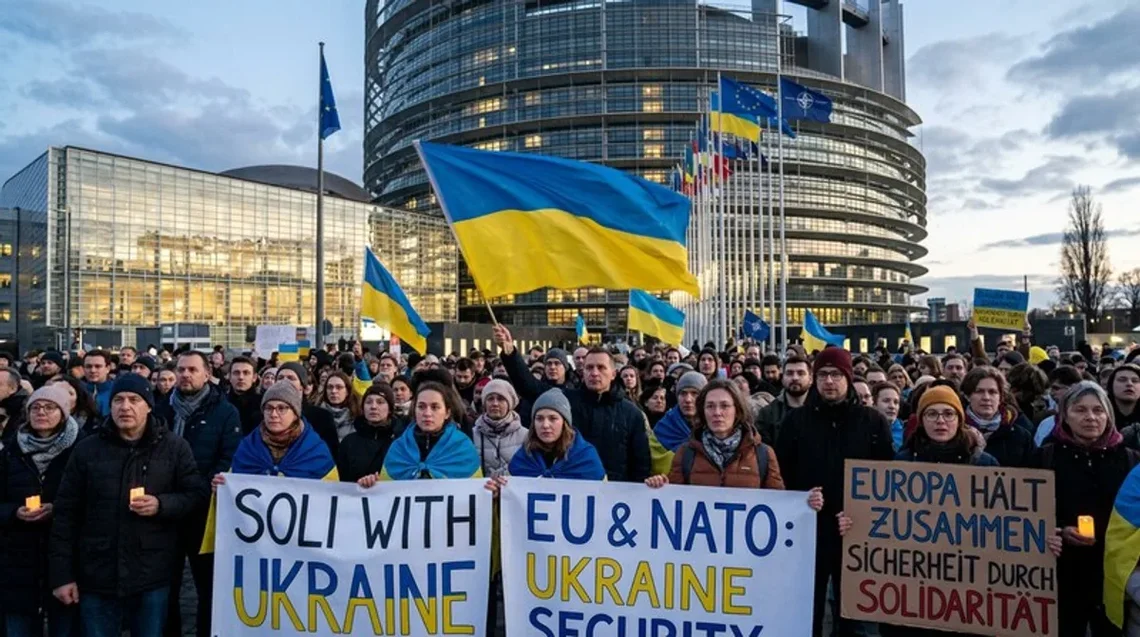
NATO member states have pledged substantial new military aid packages to Ukraine as Russian forces intensify offensive operations along multiple fronts, with alliance defence ministers warning that Western resolve must not waver in the face of sustained battlefield pressure. The commitments, announced following emergency consultations at NATO headquarters in Brussels, represent the largest coordinated surge in military assistance to Kyiv in several months, officials said.
Key Context: Russia launched its full-scale invasion of Ukraine in February 2022. Since then, NATO allies have collectively provided hundreds of billions of dollars in military, financial, and humanitarian aid. The conflict has displaced millions, reshaped European security architecture, and triggered the most significant expansion of NATO membership in a generation, with Finland and Sweden having joined the alliance. Ukrainian forces are currently engaged in defensive operations across the eastern and southern fronts, while simultaneously striking at Russian logistics and supply lines deeper into occupied territory. (Source: NATO, United Nations Office for the Coordination of Humanitarian Affairs)
Scale of New Commitments
The latest round of pledges, coordinated through the Ukraine Defence Contact Group — the multinational forum chaired by the United States that oversees military assistance — includes advanced air defence systems, artillery ammunition, and armoured vehicles, according to alliance officials. The United Kingdom confirmed it would accelerate the delivery of long-range precision munitions already committed under previous packages, while Germany pledged an additional tranche of air defence interceptors and armoured personnel carriers, officials said.
Key Military Pledges by Country
| Country | Announced Commitment | Primary Equipment Category | Status |
|---|---|---|---|
| United Kingdom | Accelerated long-range munitions delivery; additional funding tranche | Precision strike, air defence | Delivery in progress |
| Germany | Additional Patriot interceptors; armoured personnel carriers | Air defence, armoured vehicles | Confirmed, pending dispatch |
| United States | New air defence package; artillery ammunition replenishment | Air defence, artillery | Congressional notification issued |
| France | SCALP cruise missiles; additional Caesar howitzers | Precision strike, artillery | Partially delivered |
| Netherlands | F-16 training support; spare parts logistics | Aviation, maintenance | Ongoing |
| Poland | Artillery shells; anti-tank systems | Artillery, anti-armour | Delivered |
| Canada | Sniper systems; additional financial aid package | Infantry, financial | Confirmed |
Alliance officials emphasised that the pace of delivery, rather than the volume of pledges alone, had become the critical variable in sustaining Ukrainian combat effectiveness. "Speed of delivery is now the defining metric," a senior NATO official said, according to Reuters. Analysts at Foreign Policy have noted that previous gaps between announcement and arrival of equipment have cost Ukrainian forces tactical initiative at key moments on the front line.
Related Articles
The Renewed Russian Offensive
Russian forces have escalated operations across the Donetsk and Zaporizhzhia oblasts, combining mass infantry assaults with intensified drone and missile strikes targeting Ukrainian rear-area logistics, energy infrastructure, and civilian areas, according to reports from the Ukrainian General Staff and independent monitoring organisations. The tempo of attacks has increased markedly in recent weeks, with Ukrainian air defence crews intercepting record numbers of Shahed-series drones in overnight raids, officials said.
Aerial Bombardment and Civilian Impact
The United Nations Human Rights Monitoring Mission in Ukraine has documented a sharp rise in civilian casualties associated with the latest offensive surge, with strikes on residential areas, hospitals, and energy substations recorded across multiple regions. (Source: United Nations) The UN reports that millions of Ukrainians currently face disruptions to electricity and heating as winter operational conditions create additional pressure on an already strained national grid. Humanitarian agencies have warned that sustained infrastructure targeting risks a renewed displacement crisis, with cross-border movements into Poland, Romania, and Slovakia already showing an uptick, AP reported.
For further background on the alliance's response to these attacks, see Ukraine's push for enhanced NATO air defence coverage, which details the specific systems Kyiv has been requesting and the political dynamics around their transfer.
Front-Line Situation in Donetsk
Russian forces have continued to apply sustained pressure around the town of Pokrovsk and in the broader Donetsk front corridor, according to Ukrainian military assessments cited by Reuters. Ukrainian commanders have described the fighting as among the most intense since the early stages of the invasion, with Russian commanders reportedly cycling fresh infantry formations to maintain offensive momentum. Western defence analysts assess that Russian forces are currently accepting high casualty rates in exchange for incremental territorial gains intended to establish stronger negotiating leverage, according to think-tank assessments cited by Foreign Policy.
NATO's Strategic and Political Response
Beyond the immediate military packages, NATO Secretary-General's office has renewed calls for allies to meet the alliance's defence spending benchmarks, with the majority of member states now meeting or exceeding the two percent of GDP target — a significant shift from the alliance's historical posture, officials said. The urgency of the Ukrainian situation has accelerated defence investment timelines across the alliance, with several Eastern European members authorising emergency procurement processes outside normal parliamentary budget cycles.
Political Cohesion Under Pressure
Alliance unity, while broadly maintained, faces ongoing strain from differing national threat perceptions and domestic political pressures, analysts said. Hungary has continued to block certain EU-level coordination measures, while debates within the United States Congress over the scope and duration of aid commitments have introduced periodic uncertainty into the broader Western support architecture. (Source: Reuters, AP) Nevertheless, the most recent contact group session concluded with unanimous reaffirmation of continued support, officials confirmed.
The EU's parallel track of sanctions enforcement and economic pressure has been documented in recent analysis of tightening European Russia sanctions, which outlines how Brussels is attempting to close enforcement gaps that have allowed sanctioned goods to reach Russian industry via third-country intermediaries.
Separate legislative developments within the European Union have also reinforced the bloc's long-term commitment, with new frameworks for defence industrial cooperation and joint ammunition procurement advancing through European Council processes, officials said. Analysis published by Foreign Policy suggests that the EU's defence industrial ramp-up, while slower than initially projected, is beginning to materially increase the supply of critical munitions to Ukrainian forces.
The UK and European Security Dimension
For the United Kingdom, the conflict carries direct and immediate security implications that extend far beyond its stated policy of solidarity with Kyiv. British defence officials have consistently argued that a Russian military success in Ukraine would fundamentally alter the European security environment, emboldening further Russian adventurism against NATO's eastern flank — including the Baltic states, where British troops are deployed as part of NATO's Enhanced Forward Presence mission.
The UK has been among Ukraine's most consistent and significant military supporters since the invasion began, providing tanks, long-range missiles, and extensive training through Operation Interflex, which has processed tens of thousands of Ukrainian recruits. Whitehall officials have signalled that this commitment will be sustained through current and future parliamentary funding cycles, according to the Ministry of Defence.
Economic and Energy Exposure
European energy markets remain structurally exposed to the conflict's duration and outcome. Although the European Union has dramatically reduced its dependence on Russian gas since the invasion began, residual dependencies and the cost of alternative supply routes continue to generate inflationary pressure on European households and industries. British policymakers are acutely aware that any prolonged escalation in Ukrainian energy infrastructure strikes risks secondary market effects that would reach UK consumers, analysts at the Energy Security Council noted. (Source: European Commission, International Energy Agency)
The broader European strategic calculus was examined in detail in recent reporting on NATO's long-term pledge of sustained support to Ukraine, which tracks how alliance commitments have evolved from emergency response toward a structured, multi-year assistance framework.
Diplomatic Tracks and the UN Dimension
Diplomatic efforts to achieve a ceasefire or negotiated settlement remain effectively stalled. The United Nations Security Council continues to be paralysed on Ukraine-related resolutions by the Russian veto, a structural problem that has led to renewed debate about reforming Security Council procedures, diplomats said. (Source: United Nations) Multiple peace initiatives, including those advanced by African Union representatives and various non-aligned states, have failed to generate sufficient traction with both parties to progress toward formal negotiations.
The structural dysfunction at the Security Council level has been examined in reporting on the UN Security Council deadlock over a proposed Ukraine arms embargo, which illustrates the extent to which the multilateral architecture designed to manage great-power conflict has been rendered inoperative by Russian membership of the council's permanent five.
Sanctions Enforcement and Economic Attrition
Western governments have maintained that economic attrition through sanctions, combined with sustained military aid to Ukraine, represents the most viable strategy for compelling a change in Russian calculus. The Russian economy has demonstrated greater resilience than many Western analysts initially projected, supported by elevated hydrocarbon revenues, deepened trade ties with China and India, and a wartime industrial mobilisation that has significantly expanded domestic defence production. (Source: International Monetary Fund, Reuters) However, structural vulnerabilities — including technology access restrictions, declining foreign investment, and demographic pressures from military casualties — are assessed to be accumulating over the medium term, according to Western intelligence assessments cited by AP.
Outlook
The immediate trajectory of the conflict points toward a sustained period of high-intensity fighting, with neither side currently in a position to achieve a decisive strategic breakthrough. NATO officials and Western analysts broadly assess that the outcome of the next several months will significantly shape the conditions under which any future negotiations might occur, making the current pace and composition of military assistance to Ukraine a matter of direct strategic consequence for the entire alliance. For European governments and for the United Kingdom specifically, the cost of sustained engagement — measured in defence budgets, economic exposure, and political capital — is rising. Yet the consensus among Western foreign and defence ministries remains that the cost of disengagement, or of allowing Ukrainian defeat, would be substantially higher. The decisions taken in Brussels, London, Washington, and Berlin in the coming weeks will carry consequences that extend well beyond the Ukrainian front line and into the foundations of the post-Cold War European security order that has defined the continent's stability for a generation.