
NATO bolsters eastern defenses amid Russia tensions
Alliance expands military presence across Eastern Europe
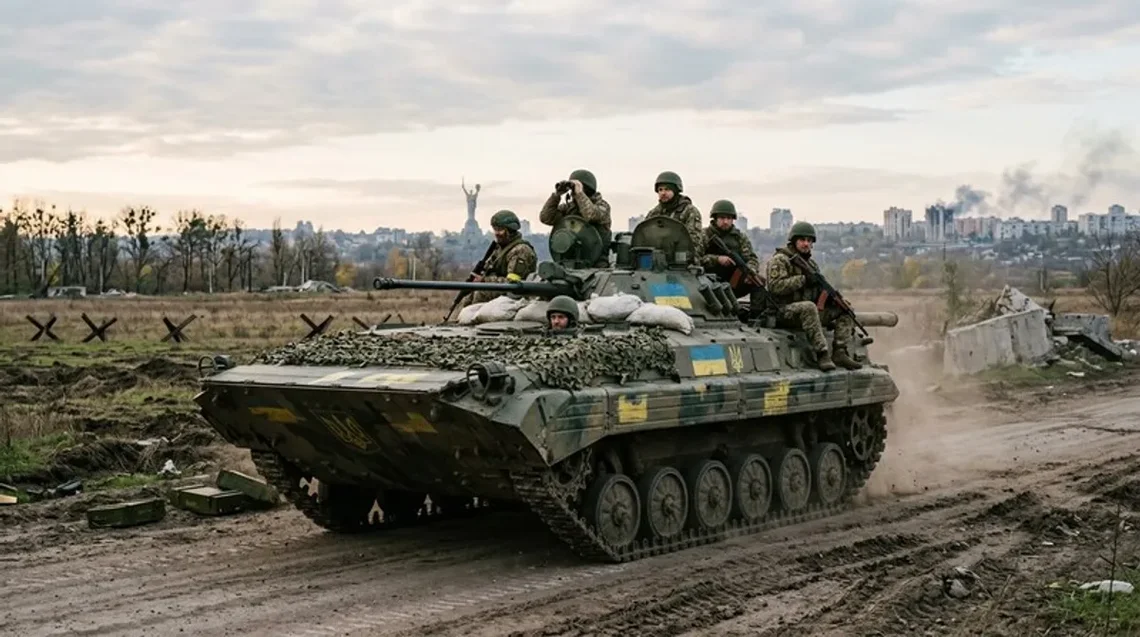
NATO has significantly expanded its military footprint across Eastern Europe, deploying additional battle groups, air defence systems, and naval assets in response to what alliance officials describe as a sustained and deliberate pattern of Russian aggression along its borders. The build-up represents the most substantial repositioning of NATO combat power on the continent in a generation, with member states committing tens of thousands of additional troops to a region that has become the alliance's most strategically contested frontier.
Key Context: NATO's Enhanced Forward Presence (EFP) was established in 2016 following Russia's annexation of Crimea. Since the full-scale invasion of Ukraine, the alliance has transformed those originally rotational battle groups into a persistent, combat-ready force across the Baltic states, Poland, Slovakia, Hungary, Romania, and Bulgaria. Defence spending among NATO's European members has risen sharply, with the alliance's two percent GDP target now met or exceeded by more member states than at any previous point in its history. (Source: NATO Headquarters, Brussels)
The Scale of NATO's Eastern Expansion
The alliance's eastern flank now hosts an unprecedented concentration of multinational military capability. From the Arctic margins of Finland and Norway down through the Baltic corridor, Poland, and into the Black Sea region, NATO has established a near-continuous arc of deterrence infrastructure that would have been unthinkable before the geopolitical rupture triggered by Russia's actions in Ukraine, according to alliance officials.
Germany leads the enhanced battle group in Lithuania, while Canada commands forces in Latvia, the United Kingdom in Estonia, and the United States in Poland — the latter now operating at a brigade-level presence rather than the original battalion framework. France has taken a leading role in Romania, and additional multinational groupings have been reinforced in Bulgaria and Slovakia, officials said.
Related Articles
Force Numbers and Deployment Patterns
According to data compiled by the International Institute for Strategic Studies and corroborated by NATO's own published assessments, the alliance currently maintains well over 100,000 troops in an elevated readiness posture across the eastern member states. This figure excludes the substantial national forces of Poland, which has independently expanded its army to become one of the largest conventional ground forces in Europe, targeting a military establishment of some 300,000 personnel in the near term. (Source: Reuters)
Air policing missions over the Baltic states have intensified, with NATO's integrated air and missile defence architecture receiving continuous investment. Patriot batteries, NASAMS systems, and short-range interceptors have been distributed among frontline allies, addressing what commanders describe as the acute vulnerability exposed by Russian use of ballistic and cruise missiles in the Ukrainian theatre. (Source: AP)
Naval Posture in the Baltic and Black Seas
NATO's maritime presence has been reconfigured to match the land-based build-up. Standing Naval Forces NATO — the alliance's permanently available maritime groups — have conducted continuous rotations through the Baltic Sea, with member states contributing frigates, destroyers, and support vessels on an accelerated schedule. In the Black Sea, access constraints imposed by the Montreux Convention limit the duration of non-littoral state deployments, but Romania, Bulgaria, and Turkey have intensified bilateral and trilateral naval coordination under the NATO umbrella, officials said.
Russia's Response and the Escalation Dynamic
Moscow has characterised NATO's eastward military expansion as a direct provocation and an existential security threat, language the Kremlin has employed consistently to justify its own military posture changes. Russian officials have announced the creation of new military districts in the country's western regions and indicated plans to substantially increase overall troop numbers, according to reporting by Reuters and Foreign Policy.
Analysts at the Carnegie Endowment for International Peace and the Royal United Services Institute have cautioned that the mutual reinforcement dynamic carries escalatory risk, even as they broadly endorse NATO's deterrence rationale. The central argument within the alliance is that a credible, capable forward presence reduces the probability of miscalculation by demonstrating that any territorial incursion would immediately engage multinational allied forces rather than triggering a delayed response. (Source: Foreign Policy)
Hybrid and Non-Kinetic Threats
Beyond the conventional military dimension, NATO member states — particularly the Baltic states, Finland, and Poland — have documented a sustained campaign of hybrid operations attributed to Russian state actors. These include GPS spoofing along commercial air corridors in the Baltic region, sabotage of undersea infrastructure, disinformation campaigns targeting domestic political processes, and what Finnish and Estonian intelligence services have described as systematic efforts to destabilise border communities. (Source: AP)
The alliance has responded by establishing a new NATO Counter Hybrid Support Teams framework and expanding the remit of the Cooperative Cyber Defence Centre of Excellence in Tallinn, which now coordinates allied responses to cyber intrusions across member state critical infrastructure, officials said.
| Country | NATO Lead Nation | Force Level | Key Capability | Status |
|---|---|---|---|---|
| Estonia | United Kingdom | Brigade (scaling) | Armoured infantry, air defence | Enhanced / Persistent |
| Latvia | Canada | Brigade (scaling) | Mechanised ground forces | Enhanced / Persistent |
| Lithuania | Germany | Brigade (scaling) | Armoured, logistics hub | Enhanced / Persistent |
| Poland | United States | Brigade-plus | Armoured, Patriot air defence | Permanent HQ established |
| Romania | France | Multinational battle group | Ground forces, Black Sea access | Enhanced / Active |
| Bulgaria | Italy | Multinational battle group | Ground forces, naval support | Enhanced / Active |
| Slovakia | Czechia / Spain | Multinational battle group | Ground forces, SHORAD | Enhanced / Active |
| Hungary | Hungary (host nation) | National + allied integration | Air base access, logistics | Contributing |
Finland, Sweden, and the Northern Dimension
The accession of Finland and Sweden to the alliance has fundamentally redrawn NATO's strategic geography in the north. Finland's membership in particular has more than doubled the alliance's land border with Russia, transforming what had previously been a relatively stable northern flank into a direct contact zone requiring new planning assumptions and infrastructure investment, officials said.
Strategic Implications of Nordic Accession
Military planners describe the integration of Finnish and Swedish forces as a qualitative as well as quantitative gain for the alliance. Both nations bring high-readiness, well-equipped national forces with deep experience of operating in Arctic and sub-Arctic conditions, terrain that has historically complicated large-scale NATO exercise planning. The Nordic-Baltic region can now be conceived as a single, interconnected operational theatre rather than a collection of isolated national defence challenges, according to analyses published by the European Council on Foreign Relations. (Source: Reuters)
Finland's extensive pre-existing defence posture — including a large trained reserve, considerable artillery stocks, and sophisticated air defence — has required less supplementary allied reinforcement than the Baltic states, though NATO has nonetheless established rotational air policing arrangements over Finnish territory and begun integrating its command structures into the alliance's regional architecture.
Defence Spending: Meeting the Commitment
Funding the expanded eastern posture has accelerated a long-running debate within the alliance over burden-sharing. For many years, the United States voiced frustration that European members were not meeting the agreed two percent of GDP defence spending target, a figure that critics noted had been treated more as aspiration than obligation by several major allies. That picture has shifted substantially in recent periods, driven in large part by the changed threat perception following Russia's actions in Ukraine. (Source: NATO Headquarters)
Poland currently leads European NATO members in defence expenditure as a share of GDP, with estimates placing its commitment well above three percent and rising. The Baltic states, previously among the most vocal advocates for a stronger allied presence, have also substantially exceeded the threshold. Germany, after years of persistently low military investment relative to its economic size, has committed a special defence fund and is on a trajectory toward sustained two percent compliance, officials confirmed. (Source: AP)
For a wider analysis of how the alliance is repositioning its resources and strategy, see our coverage of how NATO bolsters eastern flank amid Russia tensions and the broader context of NATO bolsters Eastern Europe presence amid Russia tensions — both of which examine the strategic decisions underpinning the current deployment framework.
What This Means for the UK and Europe
For the United Kingdom, the expansion of NATO's eastern posture carries both strategic and financial consequences. Britain leads the Enhanced Forward Presence battle group in Estonia and has committed to scaling that presence to brigade level, a commitment that requires sustained investment in transport, logistics, and pre-positioned equipment. UK forces have participated extensively in NATO exercises across the Baltic region, and British air power has contributed regularly to Baltic air policing missions, officials said.
UK Strategic Interests on the Eastern Flank
Beyond the direct military commitment, British policymakers have consistently argued that stability on NATO's eastern flank is inseparable from wider European security and, by extension, from the UK's own national security calculus. A failure of deterrence in the Baltic states or Poland would constitute a catastrophic breakdown of the post-Cold War security architecture from which Britain continues to derive structural benefit, regardless of its departure from the European Union, according to assessments cited by the House of Commons Defence Committee. (Source: Foreign Policy)
The financial dimension is not trivial. The United Kingdom's defence budget, while one of the largest in Europe in absolute terms, has faced persistent pressure from competing domestic demands. The commitment to reach 2.5 percent of GDP in defence spending — announced by the government in recent months — reflects, in part, the recognition that the alliance's eastern requirements have materially changed what an adequate national contribution looks like.
For the broader European picture, the transformation of NATO's eastern flank from a tripwire deterrence concept into a genuinely warfighting-capable forward defence posture has implications that extend well beyond military planning. Energy security, infrastructure resilience, supply chain continuity, and the political cohesion of the alliance itself are all components of a deterrence framework that military force alone cannot sustain, analysts argue. The European Union's own defence spending initiatives — including the European Defence Fund and coordinated procurement frameworks — are increasingly being developed in alignment with NATO's capability targets rather than as parallel or competing structures. (Source: UN reports, European Council)
Ongoing reporting on the alliance's evolving strategic posture can be followed through our related coverage of NATO bolsters eastern flank amid Russia concerns, as well as forward-looking analysis on NATO prepares enhanced eastern flank amid Russia tensions and the longer-term trajectory examined in NATO eyes further eastern expansion amid Russia tensions.
The Path Ahead
Alliance officials and independent analysts largely concur that the current elevated posture on NATO's eastern flank is not a temporary response to a defined crisis but rather a structural adjustment to a permanently altered security environment. Russia's demonstrated willingness to use large-scale conventional military force to alter internationally recognised borders has, in the assessment of most Western governments, removed the assumptions of restraint on which the post-Cold War European order was constructed.
The central question facing NATO is therefore not whether to maintain a strengthened eastern presence but how to sustain it financially, politically, and operationally over a prolonged period. Recruiting shortfalls in several member states, industrial base constraints limiting ammunition and equipment production, and the potential for domestic political shifts in key alliance members all represent variables that strategic planners are required to account for in ways that were not pressing considerations a decade ago, according to assessments by Foreign Policy and the IISS. (Source: Reuters, Foreign Policy)
What is beyond serious dispute is that NATO's eastern flank has been fundamentally transformed. The alliance that emerged from the Cold War as a collective defence structure anchored in Western Europe has repositioned its centre of strategic gravity decisively eastward — and the officials, governments, and populations that inhabit that frontier show little indication of expecting that to change.