
NATO bolsters Eastern Europe presence amid Russia tensions
Alliance deploys additional forces to Poland, Baltic states
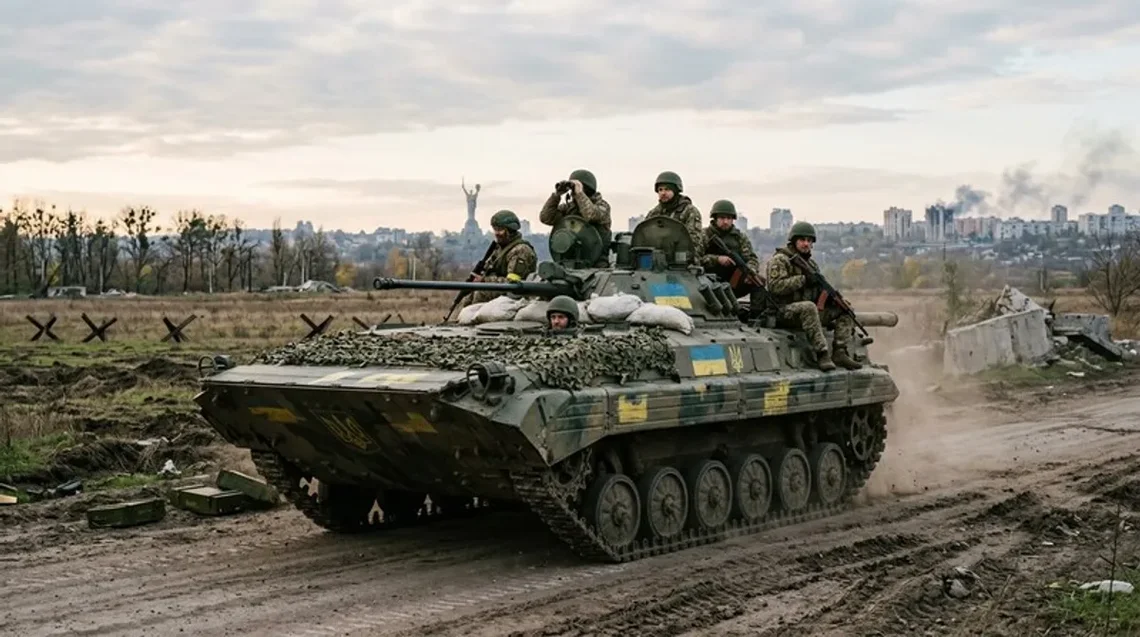
NATO has significantly expanded its military footprint across Eastern Europe, deploying thousands of additional troops to Poland and the Baltic states in one of the alliance's most substantial eastern flank reinforcements since the Cold War. The move comes as tensions with Russia remain elevated following the prolonged conflict in Ukraine, with alliance commanders describing the deployments as a necessary shift from a purely deterrence-based posture to a robust forward defence strategy.
Key Context: NATO's eastern flank stretches from Estonia in the north to Romania in the south, encompassing eight front-line member states. Since the outbreak of full-scale conflict in Ukraine, the alliance has more than doubled its forward-deployed battlegroups in the region, transitioning from multinational battalion-sized units to brigade-level formations capable of sustained combat operations. The alliance currently maintains approximately 500,000 troops at varying readiness levels across all member states, with around 40,000 under direct NATO command on the eastern flank, according to alliance figures.
Scale and Scope of the Deployments
Alliance officials confirmed this week that additional armoured units, air defence batteries, and logistics support elements have been positioned in Poland, Estonia, Latvia, and Lithuania, reinforcing existing multinational battlegroups that have been in place since the post-Crimea surge in alliance activity. The deployments include main battle tanks, self-propelled artillery systems, and advanced surface-to-air missile platforms, officials said.
Poland as the Eastern Anchor
Poland has emerged as the strategic centrepiece of NATO's eastern strategy, hosting the alliance's largest single troop concentration outside of major allied home territory. American forces form the backbone of the deployment there, with the United States having established a permanent headquarters near Poznań and rotational armoured brigade combat teams operating continuously throughout the country. Polish defence officials have described the current force posture as the strongest the country has maintained in the post-communist era (Source: Polish Ministry of National Defence).
Related Articles
Warsaw has simultaneously committed to raising its own defence spending above four percent of gross domestic product, a figure that would make it the highest-spending NATO ally by proportion of national output. This domestic investment is directly linked to the alliance's expanded presence, with Polish officials arguing that robust host-nation capability is essential to sustaining NATO's operational tempo in the region.
Baltic States: Elevated to Brigade Level
The transformation of NATO's presence in Estonia, Latvia, and Lithuania represents a doctrinal shift of considerable significance. What were once battalion-sized battlegroups — designed primarily to serve as a tripwire force — have been elevated to brigade-level formations, each capable of conducting independent defensive operations for an extended period before reinforcement arrives, according to alliance planners (Source: NATO Allied Command Operations).
In Estonia, a British-led battlegroup now forms the core of an expanded multinational brigade, with contributions from France, Denmark, Iceland, and several other allies. Latvia hosts a Canadian-led formation, while Lithuania's brigade is anchored by German forces — a deployment that Berlin regards as a defining commitment of its broader strategic realignment following the outbreak of war in Ukraine.
The Strategic Logic Behind the Reinforcement
Alliance planners and independent analysts have repeatedly pointed to the so-called Suwałki Gap — a roughly 65-kilometre land corridor connecting Poland to Lithuania between the Russian exclave of Kaliningrad and Belarus — as the single most operationally vulnerable point on NATO's eastern flank. Control of this narrow passage would effectively sever the Baltic states from the rest of the alliance by land, making its defence a central planning priority.
Kaliningrad and the Hybrid Threat Calculus
Russia's Kaliningrad exclave is home to the Baltic Fleet headquarters and is believed to host nuclear-capable Iskander ballistic missile systems, according to assessments cited by the International Institute for Strategic Studies. Western intelligence agencies have also reported ongoing Russian efforts to reinforce garrison strength in Kaliningrad, a development that alliance officials say directly informs the current deployment decisions (Source: International Institute for Strategic Studies).
Beyond conventional military considerations, NATO commanders have highlighted the persistent threat of hybrid operations — including cyberattacks, disinformation campaigns, and the instrumentalisation of migration flows — as tools that Russia is assessed to deploy in parallel with conventional military signalling. Baltic state governments have been among the most vocal in demanding that the alliance treat these hybrid dimensions as a core part of its deterrence framework.
Diplomatic Context and Russia's Response
Moscow has consistently characterised NATO's eastward military build-up as a provocation and a violation of the spirit of post-Cold War security agreements, particularly the NATO-Russia Founding Act of 1997. Russian officials have stated that the deployments represent an existential challenge to their country's strategic interests and have warned of unspecified "military-technical" responses (Source: Reuters).
Western governments reject this framing, arguing that NATO's expansion of its eastern posture is entirely consistent with the alliance's defensive mandate and represents a proportionate response to Russian aggression in Ukraine. Alliance Secretary General representatives have stated publicly that NATO poses no offensive threat to Russia and that all deployments are conducted in accordance with international law (Source: NATO).
The Ukraine Conflict as Catalyst
The trajectory of the war in Ukraine has served as the principal driver of alliance decision-making on the eastern flank. As detailed in related coverage on how NATO bolsters eastern defenses amid Ukraine stalemate, the prolonged nature of the conflict has shifted alliance thinking from crisis response toward long-term structural adaptation. The prospect of a frozen conflict or extended war of attrition has reinforced arguments in favour of permanent rather than rotational deployments.
NATO's Broader Posture Shift: From Deterrence to Defence
The conceptual evolution underlying the current deployments is as significant as the physical reinforcements themselves. For much of the post-Cold War period, NATO's eastern posture was explicitly designed around deterrence by punishment — maintaining forces sufficient to signal that aggression would be met with overwhelming allied response, rather than forces capable of denying Russian advances from the outset.
That calculus has fundamentally changed. As explored in earlier analysis of how NATO prepares enhanced eastern flank amid Russia tensions, the alliance's current planning framework explicitly prioritises forward defence — the ability to hold ground and deny territorial gains from the first hours of any potential conflict — over the previous reliance on reinforcement timelines that critics argued were operationally unrealistic.
| Country | Lead Nation | Formation Level | Key Capabilities Deployed | NATO Spending (% GDP) |
|---|---|---|---|---|
| Poland | United States | Division HQ + Rotational Brigade | Armoured, Artillery, Air Defence | ~4.0% |
| Estonia | United Kingdom | Brigade | Armoured Infantry, Air Defence | ~2.3% |
| Latvia | Canada | Brigade | Mechanised Infantry, Logistics | ~2.4% |
| Lithuania | Germany | Brigade | Armoured, Combat Support | ~2.5% |
| Romania | France | Battlegroup | Light Armour, Reconnaissance | ~1.7% |
| Slovakia | Czechia | Battlegroup | Infantry, Engineering | ~2.1% |
What This Means for the United Kingdom and Europe
For the United Kingdom, the reinforcement of NATO's eastern flank carries direct strategic, financial, and political consequences. Britain leads the alliance's enhanced Forward Presence battlegroup in Estonia and has committed to maintaining and expanding that contribution, with officials indicating that the formation's elevation to brigade level will require additional personnel, armoured vehicles, and enabling assets drawn from British Army reserves and regular formations (Source: UK Ministry of Defence).
British Defence Spending Under Scrutiny
The commitment comes against a backdrop of sustained pressure on the British defence budget, with analysts at the Royal United Services Institute and in parliamentary testimony repeatedly warning that the United Kingdom's ability to sustain its NATO commitments is being strained by equipment shortfalls, recruitment challenges, and competing fiscal priorities (Source: Royal United Services Institute). London has announced plans to increase defence spending to 2.5 percent of GDP, a figure that alliance partners welcome but which independent analysts describe as the minimum required given current threat assessments.
The broader European picture reflects a continent undergoing a genuine strategic reorientation. Germany's announced intent to permanently station a brigade in Lithuania, France's increased activity across the southern flank, and the integration of Sweden and Finland into the alliance structure have collectively shifted NATO's centre of gravity eastward in ways that would have been difficult to imagine a decade ago. As documented in assessments of how NATO bolsters eastern flank amid Russia tensions and how NATO eyes further eastern expansion amid Russia tensions, the alliance's structural evolution shows no signs of reversing course regardless of the outcome of the current conflict in Ukraine.
Long-Term Sustainability and Alliance Cohesion
Sustaining the current deployment levels over the long term presents logistical, financial, and political challenges that alliance planners acknowledge are significant. Rotating forces, maintaining equipment readiness, and securing consistent political support across 32 member states with divergent national priorities requires ongoing diplomatic management that analysts at Foreign Policy describe as one of NATO's most complex internal challenges in the post-Cold War era (Source: Foreign Policy).
Questions of burden-sharing — a perennial source of intra-alliance friction — have become more acute as the deployments expand. Smaller member states have contributed proportionally significant forces relative to their size, a fact acknowledged in recent assessments from the UN Office for Disarmament Affairs, which noted that the current European security environment represents one of the most significant tests of multilateral defence architecture in the post-1991 international order (Source: UN Office for Disarmament Affairs).
Associated Press reporting from Brussels indicates that alliance officials are cautiously optimistic about sustaining political cohesion among member states, but acknowledge that domestic political shifts in several capitals — including Washington — represent the single greatest variable in long-term planning (Source: AP). The reinforcement of NATO's eastern flank is, in this context, both a military signal and a political statement: that the alliance regards its collective defence commitments as binding obligations, not discretionary positions. Whether that signal is sufficient to stabilise a volatile strategic environment along Europe's eastern edge remains the defining question of the current security moment.