
NATO bolsters eastern flank amid Russia concerns
Alliance deepens defense posture along Ukrainian border
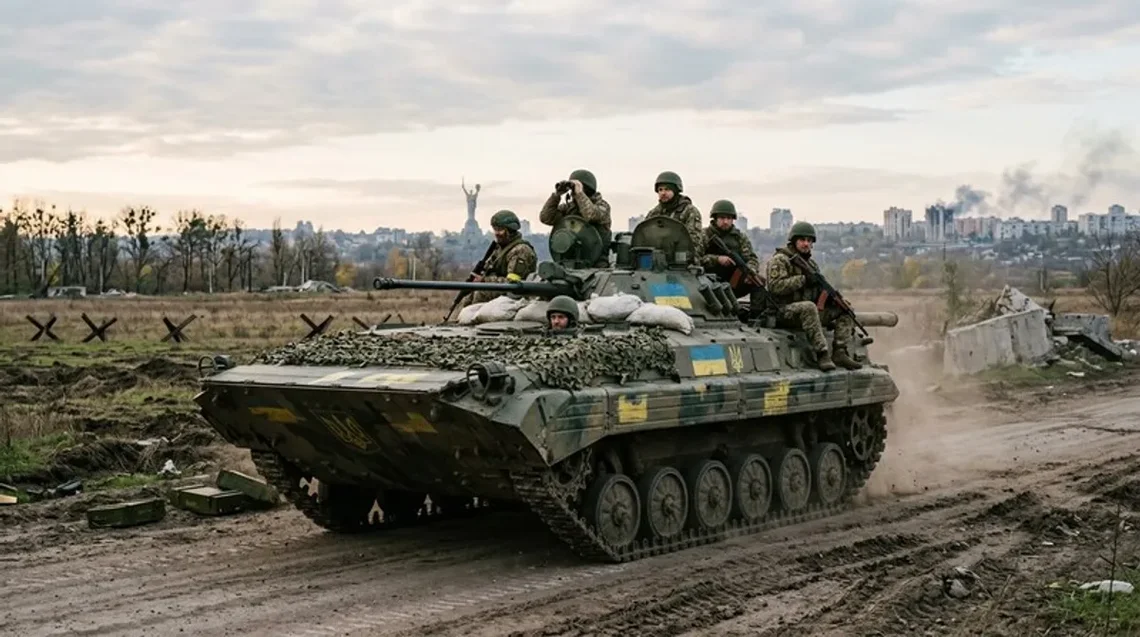
NATO has significantly expanded its military presence along its eastern flank, deploying additional battle groups, air defence systems, and rapid-reaction forces to member states bordering Ukraine and Russia, as the alliance signals a long-term shift in its collective defence posture. Senior alliance officials confirmed the deployments represent the most substantial repositioning of NATO forces in Europe in decades, underlining deep and enduring concern over Russian military ambitions on the continent.
Key Context: NATO's eastern flank stretches approximately 2,500 kilometres from the Baltic Sea to the Black Sea, encompassing Estonia, Latvia, Lithuania, Poland, Slovakia, Hungary, Romania, and Bulgaria. Following Russia's full-scale invasion of Ukraine, the alliance formally moved from a forward-presence model of battalion-sized units to combat-capable brigade-level deployments. The shift marks a fundamental recalibration of European collective security architecture not seen since the Cold War's end. (Source: NATO Headquarters, Brussels)
Scale and Scope of the Deployments
The reinforcement of NATO's eastern flank has proceeded on multiple simultaneous tracks — ground forces, air power, maritime assets, and intelligence infrastructure — according to alliance communiqués and reporting by Reuters and the Associated Press. Battle groups previously operating at battalion strength, typically 1,000 to 1,500 personnel, are being expanded to full brigade formations of between 3,000 and 5,000 troops in several of the most exposed member states.
Ground Forces and Brigade-Level Expansion
Poland, which shares a border with both Russia's Kaliningrad exclave and Belarus — itself functioning effectively as a forward staging ground for Russian forces — has seen the largest concentration of allied troops on its soil since the country joined NATO. The United States, the United Kingdom, and Germany have all contributed additional armoured and mechanised units to the Polish theatre, officials said. Romania, strategically positioned on the Black Sea coast, has similarly received enhanced multinational battlegroups under the alliance's Enhanced Forward Presence framework.
Related Articles
The Baltic states — Estonia, Latvia, and Lithuania — remain among the most acutely exposed members given their geographic proximity to Russian territory and the relative thinness of their own national forces. Germany has taken the lead nation role for Lithuania's enhanced battle group, with Berlin committing to a permanent brigade presence in the country, a deployment of this scale involving German forces on allied soil not seen in the post-war era, according to German Defence Ministry statements cited by Reuters.
Air and Missile Defence Integration
Beyond ground forces, NATO has accelerated the integration of layered air and missile defence systems across the eastern theatre. Patriot missile batteries, SHORAD systems, and allied fighter aircraft rotations have been multiplied, with the alliance's integrated air and missile defence network undergoing real-time updates to reflect evolving threat assessments, officials said. (Source: NATO Allied Air Command, Ramstein)
The Strategic Logic Behind the Posture Shift
Military analysts and senior officials argue that the reinforcement is not merely reactive but constitutes a deliberate strategic signal to Moscow that the costs of any adventurism against alliance territory would be immediate and prohibitive. Foreign Policy has reported extensively on the doctrinal evolution inside NATO headquarters, noting that the alliance's deterrence posture has moved decisively from "tripwire" to "denial" — meaning allied forces are now positioned not simply to trigger Article 5 automatically but to credibly contest and repel an incursion from the outset.
Deterrence Theory in Practice
The distinction matters enormously from a strategic standpoint. Under the older forward-presence model, a small allied contingent in a frontline state served primarily as a political guarantee — its destruction would automatically invoke collective defence. Critics had long argued this arrangement placed too much faith in nuclear escalation as the ultimate backstop. The new brigade-level deployments, by contrast, are designed to impose immediate conventional costs on any attacking force, reducing reliance on the nuclear threshold as the primary deterrent, according to analysis published by Foreign Policy.
This evolution aligns with longstanding concerns about Russia's so-called "escalate to de-escalate" doctrine, which posits that Moscow might use limited nuclear signalling to coerce a halt to conflict on favourable terms. By building a more credible conventional deterrent, NATO strategists argue the alliance reduces the utility of such threats. (Source: Foreign Policy; Reuters analysis)
Ukraine's Role and the Alliance's Support Framework
Although Ukraine remains outside NATO's formal membership, the alliance's eastern flank reinforcement is inextricably linked to the ongoing conflict. Military logistics, intelligence sharing, and training pipelines connecting NATO territory to Ukraine have deepened considerably, Western officials acknowledged. The sustained NATO commitment to Ukrainian defence capabilities has become a central pillar of the alliance's broader eastern strategy.
Alliance members have used eastern flank infrastructure — airfields, rail hubs, depots, and command facilities — as conduits for equipment transfers to Kyiv, a role that has itself driven much of the investment in military logistics capacity in Poland and Romania in particular. The United Nations has separately noted that the humanitarian consequences of the conflict continue to place pressure on regional governments hosting displaced Ukrainian civilians, with border states carrying a disproportionate burden. (Source: UN Office for the Coordination of Humanitarian Affairs)
The Ukraine Membership Question
Ukraine's aspirations for NATO membership remain formally unresolved, a source of persistent tension between Kyiv and some alliance members. While summit communiqués have affirmed Ukraine's "irreversible path" toward membership, no concrete timeline has been established, leaving a strategic ambiguity that some defence analysts argue inadvertently incentivises Russian pressure. The deadlock at the UN Security Council over arms supply arrangements further complicates the multilateral framework surrounding the conflict's management. (Source: AP; UN Security Council records)
Sanctions Architecture and Economic Pressure
The military reinforcement does not operate in isolation. It forms one strand of a broader Western strategy that includes sustained economic pressure on Moscow through successive sanctions packages. The European Union has moved to close loopholes in existing measures while targeting new sectors of the Russian economy, with each round of restrictions designed to compound the cumulative impact on the Kremlin's war-financing capacity.
The trajectory of EU sanctions tightening in response to the Ukraine offensive reflects a sustained political commitment among member states to maintain economic pressure in parallel with military support for the alliance's eastern posture. Further refinements to the sanctions architecture have addressed issues of circumvention, with third-country routing of restricted goods emerging as a significant enforcement challenge, officials said. (Source: European Commission; Reuters)
| Country | Lead NATO Nation | Force Level (Approx.) | Key Capability | Strategic Exposure |
|---|---|---|---|---|
| Poland | United States / UK | ~10,000+ allied troops | Armoured / logistics hub | Kaliningrad, Belarus border |
| Estonia | United Kingdom | ~2,000 allied troops | Mechanised infantry | Direct Russian land border |
| Latvia | Canada | ~2,000 allied troops | Mixed multinational | Direct Russian land border |
| Lithuania | Germany | Brigade (permanent, in progress) | Armoured / air defence | Suwalki Gap corridor |
| Romania | France | ~3,000 allied troops | Air power / Black Sea assets | Black Sea, Moldova proximity |
| Slovakia | Czechia / multinational | ~1,500 allied troops | Air defence | Ukrainian border state |
What This Means for the UK and Europe
For the United Kingdom, the NATO eastern flank reinforcement carries direct operational, financial, and strategic implications. The British Army maintains a lead-nation role in Estonia and contributes substantially to Poland's allied contingent, commitments that have expanded in scope and permanence since Russia's full-scale invasion began. The UK's defence posture in the east is now embedded into long-term planning cycles rather than treated as a temporary rotational arrangement, senior British defence officials indicated, according to reporting by the Associated Press.
UK Defence Spending and Commitment Pressures
Britain's sustained forward deployments come alongside a broader debate within government about the long-term trajectory of defence expenditure. Pressure from NATO allies — and from domestic defence analysts — to meet or exceed the alliance's two percent of GDP spending benchmark has intensified as the eastern flank's requirements grow. The financial architecture of sustained deterrence, including infrastructure investment, pre-positioned equipment, and readiness costs, represents a substantial and open-ended fiscal commitment. (Source: UK Ministry of Defence; Reuters)
For continental Europe, the implications are equally significant. Germany's decision to station a permanent brigade in Lithuania marks a generational shift in German strategic culture, overcoming decades of post-war reticence about projecting military power beyond national borders. France's lead role in Romania and its broader European Defence Initiative signal Paris's ambition to position itself as the continent's foremost conventional military power amid continuing questions about the durability of American commitment. The ongoing EU policy recalibration in response to the Ukraine stalemate reflects how deeply the conflict has reshaped European strategic calculations across the board. (Source: Foreign Policy; European Council)
Regional Flashpoints and Broader Risk Calculus
Defence planners warn that the eastern flank cannot be evaluated in isolation from other potential pressure points. Moldova, which hosts a frozen conflict in its Transnistria region where Russian troops are stationed without Chișinău's consent, represents a secondary vulnerability that allied planners factor into regional threat assessments. Finland and Sweden's accession to NATO has substantially extended the alliance's northern exposure while simultaneously closing the strategic gap around the Baltic Sea theatre.
The Suwalki Gap: Europe's Most Watched Corridor
The approximately 100-kilometre land corridor between Poland and Lithuania — bordered on one side by Russia's Kaliningrad exclave and on the other by Belarus — remains the most analysed potential chokepoint in European security planning. A Russian or Belarusian move to sever this corridor would physically separate the Baltic states from the rest of NATO territory, making it a primary planning scenario for alliance commanders. Lithuania's brigade-level reinforcement is partly designed to address precisely this vulnerability, officials and analysts said. (Source: NATO Strategic Communications Centre of Excellence, Riga; Reuters)
Wider geopolitical entanglements also factor into the alliance's risk calculus. Western governments have monitored with concern the deepening relationship between Moscow and Tehran, a dynamic that intersects with separate European deliberations over stricter EU measures on Iran's nuclear programme, given the reported supply of Iranian-manufactured drones to Russian forces for use in Ukraine. (Source: UN reports; AP)
The Road Ahead
Alliance officials and independent analysts broadly concur that the eastern flank reinforcement represents not a temporary crisis response but a structural reconfiguration of European security that will define the continent's strategic landscape for years to come. The investment in infrastructure, pre-positioned stocks, command arrangements, and bilateral host-nation agreements is designed explicitly for durability rather than improvisation.
Whether the accumulated weight of NATO's conventional deterrent, economic pressure on Moscow, and sustained support for Ukraine's defence proves sufficient to stabilise the security environment along Europe's eastern edge remains the central and unanswered question. What is no longer in doubt, senior officials across the alliance affirm, is that the era of assuming a benign security environment in Europe's east — the foundational assumption of the post-Cold War settlement — is definitively over. The alliance's actions reflect a hard-won and sobering consensus: deterrence must now be demonstrated, not merely declared.