
NATO bolsters eastern flank amid Russian military buildup
Alliance deploys additional troops to Poland and Baltic states
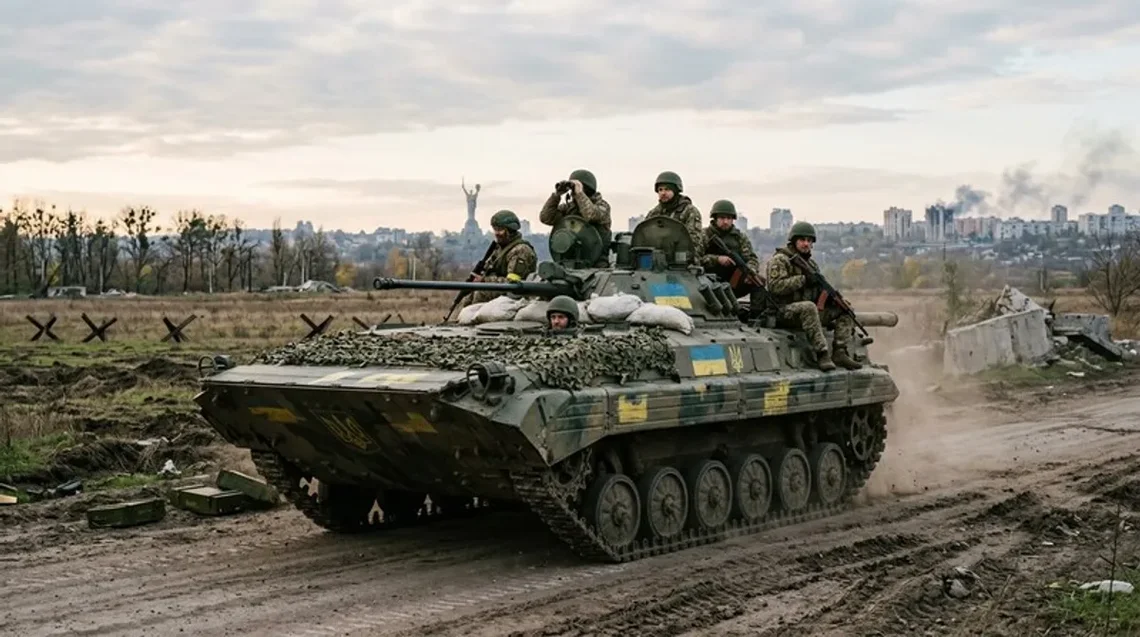
NATO has deployed thousands of additional troops to Poland and the Baltic states in response to what alliance commanders describe as a significant and sustained Russian military buildup along Europe's eastern frontier, marking one of the most substantial reinforcements of the alliance's eastern flank since the Cold War. The move underscores deepening concern among Western governments that Moscow's posture represents a long-term strategic challenge rather than a temporary escalation.
Key Context: NATO's eastern flank stretches from Estonia in the north through Latvia, Lithuania, and Poland to Romania and Bulgaria in the south — a combined frontier of more than 2,000 kilometres bordering Russia and Belarus. Since Russia's full-scale invasion of Ukraine, the alliance has shifted from a "tripwire" deterrence model, relying on small multinational battlegroups, toward a more robust forward-defence posture involving heavier armour, pre-positioned equipment, and expanded command structures. The alliance currently maintains eight multinational battlegroups across its eastern members. (Source: NATO)
Scale and Scope of the Deployment
Alliance officials have confirmed the redeployment of additional armoured and mechanised units to Poland, Estonia, Latvia, and Lithuania, augmenting battlegroups that were already enlarged following Russia's invasion of Ukraine. The reinforcements include main battle tanks, self-propelled artillery, air defence batteries, and supporting logistics elements, according to NATO's Allied Land Command. The United States, United Kingdom, Germany, Canada, and France are among the contributing nations, officials said.
Poland as the Strategic Anchor
Poland has emerged as the central hub of NATO's eastern reinforcement effort. The country currently hosts a permanent US Army garrison at Camp Kosciuszko, near Poznań, as well as a rotating presence of additional American brigades. Warsaw has simultaneously increased its own defence spending to approximately four percent of gross domestic product — the highest proportion of any NATO member — and is in the process of acquiring a large inventory of South Korean K2 main battle tanks and K9 howitzers, alongside American Abrams tanks and HIMARS rocket artillery systems. Polish officials have publicly called for the transformation of NATO battlegroups across the eastern flank into full brigade-sized formations. (Source: Reuters)
Related Articles
Baltic Vulnerability and Force Posture
The three Baltic states — Estonia, Latvia, and Lithuania — present a particular strategic concern for alliance planners. The so-called Suwalki Gap, a roughly 100-kilometre land corridor between Belarus and the Russian exclave of Kaliningrad, represents a potential chokepoint that could theoretically sever Baltic NATO members from the rest of the alliance by land. NATO planners have prioritised closing that vulnerability through pre-positioned equipment, expanded exercises, and the forward stationing of UK, German, and Canadian-led battlegroups. According to analysis published by Foreign Policy, the reinforcement of the Suwalki corridor area is among the alliance's highest operational priorities.
The Russian Military Buildup: What Intelligence Suggests
Western intelligence agencies and independent analysts have documented a Russian military buildup along several axes, including near the Finnish border, in the Leningrad Military District, and in Belarus — where Russian forces conducted the large-scale Zapad exercise series and have maintained a periodic presence since the early phase of the Ukraine war. (Source: AP)
Reconstitution and Rearmament
Despite significant losses in Ukraine, Russian ground forces have been reconstituting at a rate that has surprised some Western analysts. Russia has drawn on extensive Soviet-era stockpiles of stored armoured vehicles, refurbishing and redeploying older T-62 and T-72 platforms, while simultaneously accelerating domestic production of artillery shells, guided munitions, and drones. Russian defence industry output has reportedly increased substantially, according to assessments cited by multiple European governments. NATO's Secretary General has stated publicly that the alliance must plan on the assumption that Russia could reconstitute a capable conventional threat within the next several years, officials said. (Source: Reuters)
NATO's Strategic Shift: From Tripwire to Forward Defence
The alliance's shift in posture reflects a broader doctrinal reassessment that gained momentum following Russia's full-scale invasion of Ukraine. Prior to that watershed moment, NATO's eastern battlegroups were explicitly described as tripwire forces — small enough to trigger Article 5 collective defence obligations if attacked, but not large enough to mount a sustained defence on their own. That model has been superseded, at least in declared policy, by what NATO calls "regional defence plans" — detailed, classified operational blueprints for the defence of specific alliance territories.
New Regional Defence Plans
NATO's regional defence plans, adopted at the Vilnius Summit and expanded upon at subsequent ministerial meetings, assign specific national forces to specific sectors of the alliance's eastern front. Each plan is underpinned by force generation commitments — pledges by member states to provide specific units at specific readiness levels. The plans represent the most detailed conventional defence architecture the alliance has developed in decades, officials said. For the Baltic states in particular, the plans envisage a much higher density of allied forces in the event of a crisis, with pre-positioned equipment intended to reduce the time needed to deploy reinforcements. (Source: NATO)
For readers following the broader trajectory of alliance policy, earlier reporting on NATO bolsters eastern flank amid Russia concerns and NATO bolsters eastern flank amid Russia tensions provides essential context for understanding how the current deployment fits into a sustained strategic reorientation rather than a single reactive measure.
Ukraine's Role in the Broader Equation
The situation on NATO's eastern flank cannot be separated from the trajectory of the war in Ukraine, which continues to exert gravitational pull on the alliance's political and military calculus. Ukraine is not a NATO member, but its resistance to Russian forces has consumed significant Russian military capacity that might otherwise be oriented toward other objectives. At the same time, the war has clarified the nature of modern high-intensity conflict for alliance planners — particularly in terms of artillery consumption rates, drone warfare, logistics requirements, and the speed at which armoured formations can be degraded.
Weapons Supplies and Alliance Cohesion
Alliance members have collectively provided Ukraine with artillery systems, air defence missiles, armoured vehicles, and financial assistance running into hundreds of billions of dollars, according to figures compiled by the Kiel Institute for the World Economy. The continuation of that support has become a marker of alliance cohesion, even as some member governments face domestic political pressure over the scale of contributions. The question of whether and how Ukraine might eventually be integrated into NATO — or offered credible security guarantees short of full membership — remains unresolved and politically sensitive, officials said. (Source: AP)
Analysis of NATO bolsters eastern defenses amid Ukraine stalemate examines in detail how the protracted nature of the conflict has reshaped alliance assumptions about deterrence timelines and resource commitments.
What This Means for the United Kingdom and Europe
For Britain, the reinforcement of NATO's eastern flank carries direct military and financial implications. The UK currently leads NATO's enhanced Forward Presence battlegroup in Estonia, a commitment that has been expanded in both personnel and capability since the invasion of Ukraine. British Challenger 2 tanks, AS90 self-propelled guns, and supporting infantry elements are among the assets deployed in-country. The Ministry of Defence has confirmed that the UK's commitment to Estonia is enduring rather than rotational, representing one of the most significant forward basing decisions British forces have made in recent decades, officials said.
Financially, the UK government has pledged to increase defence spending to 2.5 percent of GDP, with a stated ambition to reach higher levels over the longer term. Defence Secretary officials have framed this increase explicitly in terms of the deteriorating European security environment. Within Europe more broadly, the eastern flank reinforcement has accelerated a continent-wide recalibration of defence priorities. Germany, long criticised within the alliance for under-investment, has committed a Zeitenwende — or historic turning point — in its defence policy, pledging a 100-billion-euro special fund for the Bundeswehr, though the pace of actual capability improvement has drawn scrutiny. France has advanced its own national strategic autonomy agenda while simultaneously deepening contributions to NATO's collective structures. (Source: Reuters)
The economic dimension is substantial. Sustaining higher readiness levels, expanding pre-positioned equipment, funding new infrastructure at forward bases, and meeting force generation commitments all impose costs that European governments are managing against a backdrop of fiscal constraint and competing domestic spending demands. According to analysis from Foreign Policy, the gap between declared commitments and actual force generation capacity remains one of the alliance's most pressing internal challenges.
| Host Country | Lead Framework Nation | Approximate Deployed Strength | Key Capabilities |
|---|---|---|---|
| Estonia | United Kingdom | ~1,800 troops | Challenger 2 tanks, AS90 artillery, infantry |
| Latvia | Canada | ~2,000 troops | Armoured vehicles, artillery, engineering |
| Lithuania | Germany | ~1,600 troops (expanding to brigade) | Leopard 2 tanks, Panzerhaubitze 2000 |
| Poland | United States | ~10,000+ troops (permanent + rotational) | Abrams tanks, HIMARS, air defence, logistics hub |
| Romania | France | ~1,000 troops | Armoured vehicles, rotary wing, logistics |
| Slovakia | Czech Republic | ~1,100 troops | Infantry, engineering, support elements |
Diplomacy, Deterrence, and the Risk of Escalation
Alliance officials have been careful to frame the eastern flank reinforcements as defensive and deterrent in nature, consistent with NATO's longstanding posture of not seeking confrontation with Russia. Diplomatic channels between NATO members and Moscow have been limited but not entirely severed; the NATO-Russia Council, dormant for extended periods, has been used sporadically for risk-reduction communication, officials said.
The risk of miscalculation nonetheless remains a concern among analysts. High volumes of military activity along the contact zone between Russian and NATO-adjacent forces, combined with reduced transparency and collapsed arms control architecture — the Conventional Armed Forces in Europe Treaty has effectively collapsed, and the Open Skies Treaty no longer functions as intended — create conditions in which accidents or misreadings of intent carry elevated risks. (Source: UN Office for Disarmament Affairs)
The broader strategic picture continues to evolve rapidly. Detailed examination of NATO prepares enhanced eastern flank amid Russia tensions and the expanding alliance footprint across NATO bolsters Eastern Europe presence amid Russia tensions illustrates the extent to which current deployments represent not an improvised response but the culmination of a deliberate, multi-year effort to reposition the alliance for an era of sustained strategic competition with Russia.
The reinforcement of NATO's eastern flank is, in the judgment of alliance officials and independent analysts alike, the most consequential repositioning of Western military power in Europe since the end of the Cold War. Whether it functions as effective deterrence — persuading Moscow that military adventurism against a NATO member carries unacceptable costs — or whether it contributes to a cycle of competitive military posturing that heightens rather than reduces risk, remains the defining question for European security in the years ahead. The answer will be shaped not only by the hardware deployed along the Suwalki Gap or the plains of Poland, but by the political will of alliance members to sustain commitments that are expensive, enduring, and existentially important. (Source: Reuters, AP, Foreign Policy)