
NATO Bolsters Eastern Flank as Russia Tests Borders
Alliance stages largest deployment since Cold War
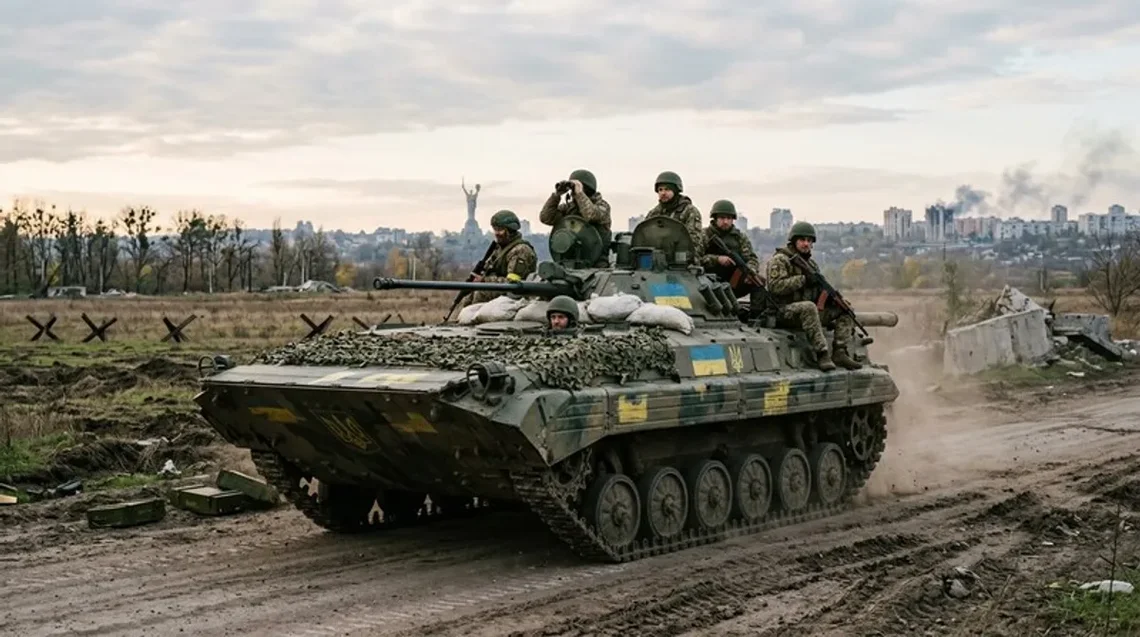
NATO has launched its largest coordinated military deployment along Europe's eastern frontier since the end of the Cold War, stationing tens of thousands of additional troops across Poland, the Baltic states, Romania, and Slovakia as Russian forces continue to probe alliance boundaries through a combination of conventional military activity, airspace violations, and hybrid operations. The move signals a fundamental, potentially permanent restructuring of NATO's defensive posture on the continent.
Key Context: NATO's eastern flank stretches approximately 4,000 kilometres from the Arctic Circle to the Black Sea. Prior to Russia's full-scale invasion of Ukraine, the alliance maintained only rotational "tripwire" battalions in frontline states under the Enhanced Forward Presence framework established at the 2016 Warsaw Summit. The current deployment represents a doctrinal shift from deterrence-by-punishment to deterrence-by-denial — meaning NATO now aims to stop an attack outright rather than merely promise retaliation after the fact. (Source: NATO Headquarters, Brussels)
The Scale of the Deployment
Alliance officials confirmed that more than 500,000 NATO troops are currently on various levels of readiness across Europe, with the bulk of newly repositioned forces concentrated in Poland and the three Baltic republics — Estonia, Latvia, and Lithuania — which share direct land or sea borders with Russia or its close ally Belarus. According to Reuters, NATO's Allied Reaction Force has been brought to its highest state of readiness since the Cold War era concluded, with response times cut dramatically from what had previously been measured in days to hours in some contingencies.
Forward Presence Becomes Forward Defence
The conceptual change underpinning the deployment is as significant as the raw numbers. Under the previous Enhanced Forward Presence model, battalion-sized groups of roughly 1,000 to 1,500 troops per host nation were understood to function primarily as a symbolic deterrent — a guarantee that any Russian incursion would immediately draw in NATO member states. Military planners now acknowledge that model was insufficient given the demonstrated speed and scale of Russian offensive operations, according to assessments cited by Foreign Policy magazine. The new posture moves brigade-sized formations — typically three to five thousand troops — into fixed positions, supported by pre-positioned armour, artillery, and air defence assets.
Related Articles
For broader background on the evolution of the alliance's posture, see NATO bolsters Eastern flank amid Russian military buildup, which details the incremental force increases that preceded the current surge.
Where Russian Pressure Is Being Felt
Western defence officials and analysts have documented a sustained pattern of Russian activity designed to test alliance cohesion and response times. According to AP reporting, NATO intercepts of Russian military aircraft operating near alliance airspace have reached their highest frequency in recent memory, with Baltic airspace requiring allied quick-reaction aircraft scrambles on dozens of occasions this year alone. Separately, incidents in the Black Sea involving Russian naval vessels shadowing NATO warships have intensified.
The Baltic Corridor Problem
Perhaps the single most strategically sensitive pressure point along the entire eastern flank is the Suwalki Gap — a roughly 100-kilometre land corridor connecting Poland to Lithuania, sandwiched between the Russian exclave of Kaliningrad to the west and Belarus to the east. Military planners have long identified this strip of territory as NATO's most vulnerable geographic chokepoint. A successful Russian interdiction of the Suwalki Gap would physically sever the Baltic states from the rest of the alliance. According to data published by the International Institute for Strategic Studies, NATO has significantly reinforced ground forces capable of defending this corridor, with additional anti-tank and air defence units now permanently positioned in the region. (Source: International Institute for Strategic Studies)
Additional analysis of how the alliance is adapting to this threat environment is available at NATO prepares enhanced eastern flank amid Russia tensions.
Romania and the Southern Flank
While much Western media attention has focused on the Baltic states and Poland, NATO's southern flank along the Black Sea has emerged as a secondary area of concern. Romania hosts a significant NATO naval presence as well as the Deveselu ballistic missile defence installation, which Russia has repeatedly cited as a provocation. French-led multinational battlegroups stationed in Romania have been reinforced, according to French defence ministry statements, and joint naval exercises in the Black Sea — now conducted without the presence of non-littoral NATO vessels under the terms of the Montreux Convention following Turkey's restrictions on warship passage — have taken on greater urgency.
| Country | Lead Framework Nation | Approximate Force Level | Key Assets | Proximity to Russian/Belarus Forces |
|---|---|---|---|---|
| Estonia | United Kingdom | Brigade-level (enhanced) | Armour, air defence, cyber units | Direct border with Russia |
| Latvia | Canada | Brigade-level (enhanced) | Infantry, artillery, logistics | Direct border with Russia/Belarus |
| Lithuania | Germany | Brigade-level (in deployment) | Armour, engineering, Suwalki coverage | Borders Kaliningrad and Belarus |
| Poland | United States | Multi-divisional presence | Patriot systems, F-35s, Abrams tanks | Borders Belarus; near Kaliningrad |
| Romania | France | Multinational battlegroup | Naval assets, missile defence | Black Sea coastline |
| Slovakia | Czech Republic (coordinated) | Battlegroup | Air defence, infantry | Flanking Ukraine border |
The Ukraine Factor
NATO's deployment cannot be understood in isolation from the ongoing war in Ukraine, which has functioned simultaneously as a brutal empirical test of Russian military capability and as the primary catalyst for alliance cohesion. The conflict has demonstrated both the limitations and the resilience of Russian conventional forces, while compelling NATO members to draw down their own stockpiles of ammunition and equipment to supply Kyiv — a factor that several alliance members have acknowledged creates its own readiness challenges in the short term.
Intelligence Sharing and Escalation Management
According to UN monitoring reports and allied government statements, NATO member states have substantially deepened intelligence-sharing arrangements along the eastern flank, with real-time sensor data from a network of ground-based radar installations, satellite assets, and signals intelligence platforms now feeding into a common operational picture accessible to all frontline allies. This architecture is designed not only to accelerate response times but to manage escalation thresholds — ensuring that a localised incident does not spiral into broader conflict due to misidentification or miscommunication. (Source: United Nations Office for Disarmament Affairs) The challenge, officials caution, is that Russia has demonstrated a willingness to operate in deliberate grey zones where clear attribution is difficult.
For a detailed chronological account of how NATO's eastern presence reached its current configuration, NATO bolsters eastern flank amid Russia concerns traces the key decision points from the 2014 Crimea annexation to the present surge.
What This Means for the UK and Europe
For the United Kingdom, the eastern flank deployment carries direct and concrete implications. Britain leads NATO's Enhanced Forward Presence battlegroup in Estonia and has committed to maintaining and expanding that presence. The British Army's contribution — currently anchored around an armoured infantry battalion supported by Challenger tanks and AS90 self-propelled artillery — is being reinforced with additional engineering and air defence elements, according to UK Ministry of Defence statements. The financial burden is significant. The UK government has pledged to raise defence spending toward three percent of GDP over the coming years, a target driven in substantial part by NATO commitments and the perceived need to sustain credible deterrence on the eastern flank.
For continental Europe, the implications are even more structural. Germany's decision to permanently station a brigade in Lithuania — rather than rotate units — represents one of the most significant reversals of post-Cold War German defence policy on record. France has stepped up both its bilateral defence agreements with eastern European states and its multilateral contributions through the NATO command structure. European defence spending has risen sharply across the alliance, with Poland now allocating the highest proportion of GDP to defence of any NATO member, exceeding four percent, according to data cited by Reuters.
The economic costs extend beyond defence budgets. Energy security — restructured at considerable cost following European dependence on Russian gas — remains a vulnerability, particularly for Central and Eastern European economies still mid-transition toward diversified supply chains. NATO's military posture and European energy policy are now explicitly linked in alliance strategic documents, officials said. (Source: NATO Strategic Concept)
Analysis of the longer-term diplomatic implications of NATO's expanded footprint can be found at NATO bolsters Eastern Europe presence amid Russia tensions, which examines host-nation agreements and the legal frameworks governing permanent basing.
Russian Response and Diplomatic Calculus
Moscow has characterised NATO's eastern deployments as inherently destabilising and in violation of the spirit, if not the letter, of the 1997 NATO-Russia Founding Act, which contained provisions — subject to significant interpretive dispute — regarding substantial combat forces on the territory of new member states. Russian officials have publicly threatened unspecified countermeasures and have conducted their own large-scale military exercises, including drills simulating tactical nuclear weapons use, which Western analysts and officials have described as deliberate signalling designed to deter deeper NATO engagement rather than a genuine indicator of imminent escalation. (Source: Foreign Policy)
The diplomatic channel between NATO and Russia, suspended in the wake of the full-scale Ukraine invasion, has not been formally restored. Alliance officials have stated that meaningful dialogue remains a long-term objective but cannot be pursued under present conditions, particularly while Russian forces continue active combat operations in Ukraine.
The Road Ahead: Sustainability and Strategic Patience
The central question facing NATO planners is not whether the current deployment is sufficient to deter an immediate Russian conventional attack — most assessments suggest it is — but whether the alliance can sustain the financial, industrial, and political commitment required to maintain the posture indefinitely. Ammunition production across NATO member states is scaling up, with several governments authorising multi-year procurement contracts specifically to rebuild stockpiles drawn down in support of Ukraine, according to AP reporting. Defence industrial capacity, neglected throughout the post-Cold War "peace dividend" era, is being urgently reconstituted.
Political sustainability presents perhaps the sharper challenge. Alliance unity — which has proven more durable than many analysts predicted in the immediate aftermath of the Ukraine invasion — will face continued pressure from domestic economic concerns, electoral cycles, and Russian influence operations targeting public opinion in key NATO states. Maintaining coherence across 32 member nations with divergent economic conditions and threat perceptions requires continuous diplomatic management, officials said.
For further analysis of how these tensions are playing out within the alliance, see NATO bolsters eastern flank amid Russia tensions, which examines internal alliance debates over burden-sharing and strategic priorities.
What is no longer seriously in dispute within NATO's institutional structures is the foundational premise driving the current posture: the post-Cold War security architecture in Europe has collapsed, and a new equilibrium — one built on credible military deterrence rather than cooperative security assumptions — is now the operating reality for the foreseeable future. Whether that equilibrium proves stable depends on decisions being made simultaneously in Brussels, Washington, Berlin, London, and Moscow, with consequences extending well beyond the continent's eastern borders.