
NATO calls emergency summit as Russia masses troops
Alliance reviews eastern border security posture
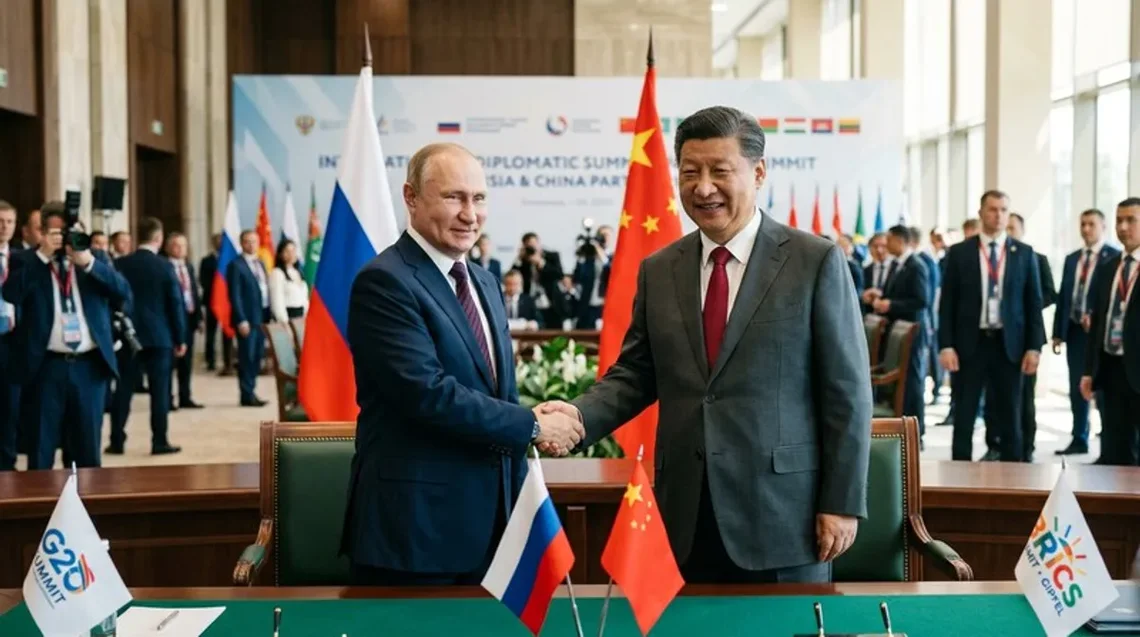
NATO has convened an emergency summit of alliance defence ministers following intelligence assessments indicating a significant Russian military build-up along the eastern European frontier, with senior officials describing the concentration of forces as among the most substantial seen in recent months. The development has placed alliance capitals on high alert and triggered an urgent review of the collective defence posture stretching from the Baltic Sea to the Black Sea.
Key Context: NATO's eastern flank encompasses eight member states — Estonia, Latvia, Lithuania, Poland, Slovakia, Hungary, Romania and Bulgaria — all of which share either a land or maritime border with Russia or Belarus. The alliance's Enhanced Forward Presence (EFP) mission, established following Russia's annexation of Crimea, currently deploys multinational battlegroups across these countries. Any significant Russian troop concentration near alliance territory triggers mandatory consultations under Article 4 of the NATO founding treaty, which obliges members to consult when any party believes its territorial integrity, political independence or security is threatened. (Source: NATO)
The Summit: What Triggered the Emergency Call
Alliance defence ministers gathered at NATO headquarters in Brussels at short notice after satellite imagery and signals intelligence — shared across allied intelligence communities — confirmed unusually large formations of Russian ground forces, armoured units and logistical supply chains massing within striking distance of alliance territory, officials said. The build-up, described by multiple senior alliance figures as "deliberate and sustained," has been assessed as exceeding routine training exercises in both scale and positioning, according to diplomatic sources familiar with the briefings.
Article 4 Consultations Formally Invoked
Three Baltic member states formally requested Article 4 consultations ahead of the summit, a procedural step that carries considerable diplomatic weight within the alliance framework. The invocation signals that the requesting nations believe a credible threat to their security exists and demands collective discussion at the highest level. It is among the more serious mechanisms available to alliance members short of triggering Article 5, the mutual defence clause, officials noted. (Source: Reuters)
Related Articles
The emergency session is expected to produce a package of immediate reassurance measures, including the acceleration of existing rotational deployments, enhanced air policing missions across Baltic airspace and increased naval activity in the Baltic and Black Seas. Alliance planners are also reviewing the readiness timelines of the NATO Response Force, which provides a rapid-reaction capability for exactly this kind of contingency, according to senior defence officials briefed on the agenda.
The Russian Build-Up: Scale and Composition
Western military analysts assessing the intelligence picture describe a concentration involving combined arms formations — infantry, armour, artillery and air defence systems — positioned across multiple staging areas. The geographic spread of the deployment suggests it is not oriented toward a single corridor but rather presents a broad-front pressure posture designed to stretch alliance planning and resources simultaneously, according to assessments cited by Foreign Policy.
Logistical Indicators Point to Sustained Presence
Beyond troop numbers, the logistical footprint accompanying the Russian deployment has drawn particular attention from NATO planners. Fuel depots, field hospitals, ammunition pre-positioning and engineering equipment indicate a force structured not merely for short-duration exercises but for potentially prolonged operations, military officials said. The AP reported that allied surveillance aircraft have significantly increased sortie rates over recent weeks in direct response to the evolving picture on the ground.
Moscow has characterised the military movements as routine training activities conducted within sovereign Russian territory and has rejected NATO's characterisation of the deployments as provocative. The Russian defence ministry, in a statement carried by state media, accused the alliance of "escalatory rhetoric" and pointed to NATO's own military exercises in eastern Europe as evidence of Western aggression. (Source: AP)
Belarus as a Strategic Variable
Analysts have flagged the continued presence of Russian forces on Belarusian territory as a compounding factor in the alliance's threat calculus. Belarus shares a border with three NATO members — Poland, Lithuania and Latvia — and the combination of Russian deployments in Belarus alongside the broader eastern build-up creates what one senior NATO official described, without attribution, as a "multi-axis complexity" for alliance defence planners. The geographic reality places Warsaw, Vilnius and Riga within relatively short operational distances of Russian-aligned forces. (Source: Foreign Policy)
Eastern Flank Security: Current Posture and Gaps
NATO's current defensive architecture along the eastern flank has been significantly reinforced since the full-scale invasion of Ukraine began, with battlegroups expanded from battalion to brigade strength in several locations and additional national contributions flowing from allies including the United Kingdom, Germany, Canada and the United States. However, military planners have consistently identified gaps in pre-positioned heavy equipment, missile defence coverage and logistics depth that remain unresolved. For broader context on how the alliance has been addressing these structural challenges, see NATO bolsters eastern flank amid Russia concerns and the evolving operational picture covered in NATO prepares enhanced eastern flank amid Russia tensions.
Air Defence Remains the Critical Vulnerability
The summit agenda is expected to devote significant time to air and missile defence integration across the eastern flank. Alliance systems currently deployed in the region include Patriot batteries, NASAMS and legacy Soviet-era platforms operated by some newer member states, but coverage remains uneven and interoperability between national systems has been identified as a persistent challenge, defence officials said. The difficulty of extending effective air defence architecture is compounded by the demands simultaneously being placed on allied inventories by Ukraine's requirements — an issue directly relevant to ongoing discussions about Ukraine seeks new NATO air defense as Russia intensifies strikes.
| Country | NATO Battlegroup Lead Nation | Shared Border With | Key Capability Contribution | Assessment Status |
|---|---|---|---|---|
| Estonia | United Kingdom | Russia | Cyber defence, infantry | Enhanced alert |
| Latvia | Canada | Russia, Belarus | Armoured infantry | Enhanced alert |
| Lithuania | Germany | Belarus, Kaliningrad (RU) | Mechanised infantry, air defence | Enhanced alert |
| Poland | United States | Belarus, Kaliningrad (RU) | Armour, logistics hub, Patriot | High readiness |
| Romania | France | Black Sea, Ukraine border | Naval access, NASAMS | Elevated posture |
| Slovakia | Multinational | Ukraine | Transit corridor, air base access | Monitoring |
Ukraine and the Broader Strategic Context
The emergency summit takes place against a backdrop of continued intense fighting across Ukrainian territory, where Russian forces have maintained pressure along multiple frontline segments. Alliance members have been navigating the dual challenge of sustaining military aid flows to Kyiv while simultaneously reinforcing their own collective defences — a tension that has become more acute as stockpiles of certain munitions and air defence interceptors have been drawn down across contributing nations, according to UN monitoring reports. (Source: United Nations)
The interconnection between the Ukrainian theatre and NATO's own defensive requirements is central to deliberations at the Brussels summit. Several allied nations have argued that Ukraine's continued resistance constitutes, in effect, a forward defence of NATO's eastern flank, and that accelerating military assistance serves a dual purpose of both supporting a partner nation and relieving direct pressure on alliance territory. For the latest on how allies are calibrating that support, analysis of NATO allies boost Ukraine aid amid renewed Russian offensive provides relevant context on the resource and political trade-offs involved.
The Long-Term Question of Alliance Expansion
Beyond the immediate crisis, the summit is also likely to generate discussion of the alliance's longer-term strategic posture and the geopolitical logic of its boundaries. Russia's persistent opposition to NATO's geographic footprint remains a core driver of the current tensions, and questions about the alliance's future shape — including which nations may seek or be offered membership — are inseparable from the current security environment. Those longer-term structural debates are examined in depth through the lens of NATO eyes further eastern expansion amid Russia tensions.
What This Means for the United Kingdom and Europe
For the United Kingdom, the emergency summit carries direct and immediate implications. Britain leads the NATO battlegroup deployed in Estonia and has made substantial financial and military commitments to the eastern flank over the past several years, positioning itself as one of the alliance's most active contributors in the region. Any escalation of Russian military pressure would place additional demands on British armed forces already managing significant commitments globally, defence analysts noted.
The UK government has repeatedly stated that European security is a core national interest, regardless of the country's departure from the European Union, and London is expected to be among the more hawkish voices at the summit in pushing for robust and immediate alliance responses. British intelligence agencies have been among those contributing to the shared assessment of Russian military movements, officials said. (Source: Reuters)
For Europe more broadly, the summit represents a stress test of the political cohesion NATO member governments have worked to maintain since the full-scale invasion of Ukraine. Divergences over energy policy, defence spending timelines and the appropriate level of risk tolerance have created internal frictions that adversarial actors have historically sought to exploit. The ability of alliance capitals to present a unified posture — backed by credible military deployments rather than communiqué language — will be closely observed in Moscow, Beijing and beyond, analysts said.
European defence budgets, many of which spent years below the NATO target of two percent of gross domestic product, have been on an upward trajectory, but the pace of actual capability delivery — the procurement of equipment, the training of personnel, the building of logistics infrastructure — remains considerably slower than the political commitments suggest. That gap between declared intent and operational reality is one that Russian strategic planners are well aware of, and it underlies much of the urgency felt in Brussels as ministers convene. (Source: Foreign Policy)
Outlook: Escalation Risks and Diplomatic Channels
Senior NATO officials have consistently emphasised that the alliance seeks no conflict with Russia and that its defensive posture is oriented entirely toward deterrence rather than offensive action. Diplomatic channels between Washington and Moscow, as well as between European capitals and the Kremlin, remain nominally open, though substantive dialogue on the core security disputes has produced no measurable progress in recent months, according to diplomatic sources. (Source: AP)
The risk of miscalculation — a military incident, a technical failure, or a misread of intentions during a period of heightened tension and dense military activity — is assessed as the most immediate danger, rather than deliberate escalation, officials said. That assessment shapes the alliance's emphasis on maintaining direct military-to-military communication lines and ensuring that enhanced deployments are accompanied by clear public messaging about their defensive character.
What emerges from Brussels in the coming days will signal to allies and adversaries alike whether NATO's political unity is capable of translating into credible, sustained military commitment along its most exposed frontier — or whether the gap between rhetoric and resources will continue to define the limits of collective defence in an era of renewed great-power confrontation. The coming weeks, as further intelligence assessments are processed and allied parliaments are briefed, will provide a clearer picture of whether the current moment represents a manageable pressure spike or the opening phase of a more profound European security crisis.