
NATO eyes expanded presence as Ukraine conflict deepens
Alliance considers strategic deployments amid Russian advances
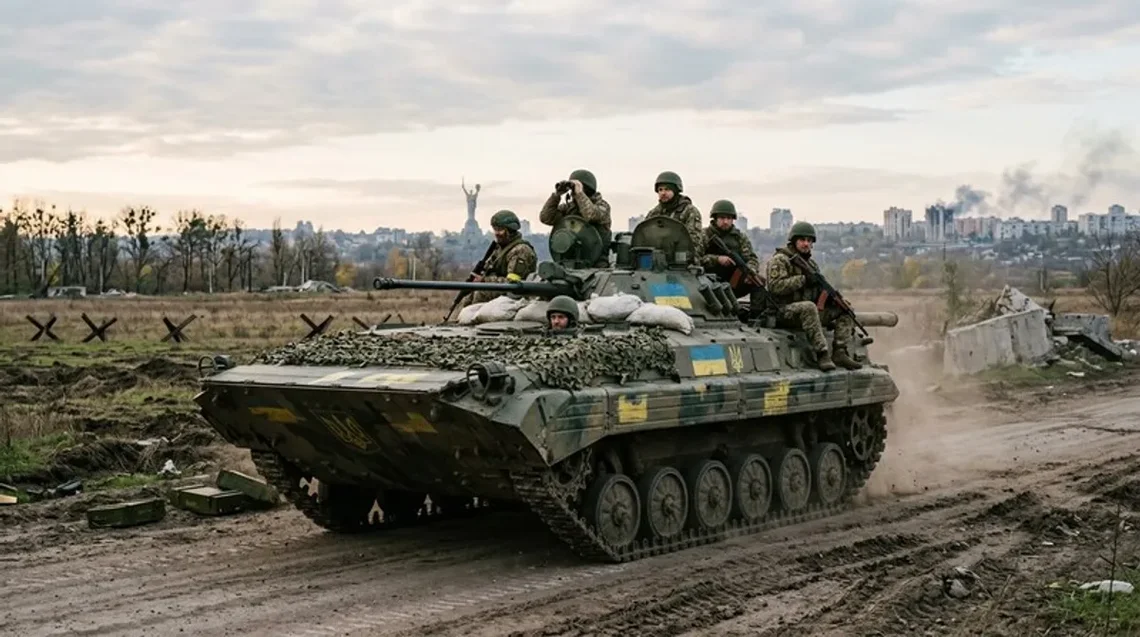
NATO member states are actively weighing a significant expansion of military deployments along the alliance's eastern flank as Russian forces continue to press forward in Ukraine, with senior officials signalling that the strategic calculus in Brussels has shifted materially in recent weeks. The discussions, confirmed by multiple diplomatic and defence sources cited by Reuters and AP, reflect growing anxiety among allied governments that the conflict's trajectory demands a more robust deterrence posture before any negotiated settlement can take hold.
Key Context: NATO currently maintains Enhanced Forward Presence (EFP) battlegroups in eight eastern member states, including Poland, Estonia, Latvia, Lithuania, Romania, Bulgaria, Hungary, and Slovakia. These multinational formations were originally established following Russia's annexation of Crimea and have since been reinforced following the full-scale invasion of Ukraine. The alliance's collective defence guarantee under Article 5 underpins all deployment decisions, though the scope, scale, and permanence of those forces remain subject to ongoing political negotiation among the alliance's 32 member states.
The Strategic Calculus Behind Expanded Deployments
Senior NATO officials have confirmed in briefings to allied governments that planning documents now under review include options for rotating force increases in the Baltic states, an enhanced air policing regime over Romania and Bulgaria, and the pre-positioning of heavy equipment in forward logistics hubs close to Ukraine's western borders. According to AP, the alliance's Military Committee has presented defence ministers with a tiered menu of options ranging from modest capability enhancements to a more sweeping restructuring of eastern command authorities.
Baltic Vulnerabilities and the Suwalki Gap
Central to alliance planning is the so-called Suwalki Gap — the roughly 100-kilometre land corridor between Poland and Lithuania that represents NATO's most exposed geographic vulnerability on its eastern flank. Defence analysts and officials cited by Foreign Policy note that any escalation involving Kaliningrad, Russia's Baltic exclave, could place this corridor under threat, effectively severing land access to the three Baltic NATO members. Reinforcing the gap with additional armour and air defence assets has emerged as a priority consideration, officials said.
Related Articles
Air Defence as the Critical Shortfall
Multiple allied governments have identified integrated air and missile defence as the single most urgent capability gap across the eastern flank. Germany's deployment of Patriot air defence batteries to Slovakia, and the United States' periodic positioning of Terminal High Altitude Area Defense (THAAD) systems in the region, represent steps taken in recent periods, but alliance planners assess that density and coverage remain insufficient against a full-spectrum threat, according to reporting by Reuters. The conflict in Ukraine has demonstrated the operational demands that sustained air defence operations place on both equipment and trained personnel.
Russia's Advances and Their Strategic Implications
Russian forces have sustained pressure across multiple sectors of the Ukrainian front, making incremental territorial gains in the Donetsk region while attempting to consolidate logistical lines in areas previously seized. According to UN reports and monitoring data compiled by international observers, the pace of advance has been slow but consistent, placing Ukrainian defensive lines under sustained attrition. It is this grinding quality of the conflict — rather than any dramatic breakthrough — that NATO planners say has sharpened allied concern about long-term deterrence requirements.
The Attritional Dimension
The war has consumed military stockpiles across multiple allied nations at rates that defence procurement systems were not designed to sustain, officials said. Artillery ammunition, air defence interceptors, and armoured vehicle components have all been drawn down significantly by allied support programmes for Ukraine. This consumption has, paradoxically, heightened the urgency of NATO's own force posture debate: an alliance that has depleted its stocks to support Ukraine must simultaneously calculate what forces it needs ready for its own collective defence obligations. According to Foreign Policy analysis, several member states have requested allied burden-sharing reviews to address the inventory gaps this has created.
Political Dynamics Within the Alliance
The prospect of permanently stationing — rather than rotating — NATO combat forces in eastern member states remains politically contentious. The 1997 NATO-Russia Founding Act contained language, now widely regarded as politically defunct among allied governments, that spoke to limiting the permanent stationing of substantial combat forces in new member states. Senior officials have been careful in public language, but in practice the distinction between large-scale rotation and permanent presence has narrowed considerably, according to diplomatic sources cited by Reuters.
Poland has been among the most vocal proponents of a permanent allied presence, with Warsaw having invested heavily in its own national defence expansion, including one of the largest conventional force build-ups in Europe. The Baltic states, Finland, and Sweden — the latter two having joined the alliance in the current period — have similarly pressed for increased allied commitments. By contrast, some western European members have urged caution, mindful of escalation risks and domestic political constraints on defence spending.
For a broader assessment of how the alliance has been recalibrating its presence, see our coverage of NATO bolsters eastern defences amid ongoing Ukraine conflict, which traces the operational steps taken since the early phase of the war, and our analysis of NATO strengthens Eastern flank with expanded presence, examining the command and force structure implications of recent reinforcements.
What This Means for the United Kingdom
For the United Kingdom, the alliance debate carries direct and significant implications. British forces currently form the framework nation of the NATO EFP battlegroup in Estonia, a commitment that has been progressively expanded since the full-scale invasion began. The UK has additionally contributed naval assets to Baltic Sea patrols, air policing missions, and joint exercises across the eastern flank. Defence officials in London have signalled willingness to extend and deepen these commitments, though budget constraints at the Ministry of Defence remain a structural limitation on ambition, officials said.
UK Defence Spending and NATO Targets
The United Kingdom currently meets the NATO target of spending two percent of GDP on defence, and senior government figures have indicated an aspiration to move toward two-and-a-half percent over the medium term. How quickly and substantially that increase is delivered will shape the UK's practical capacity to fulfil enhanced allied commitments, analysts note. The British Army's overall size — reduced significantly through successive restructuring programmes — means that any sustained increase in eastern deployments would place real demands on force generation and readiness pipelines, according to assessments cited by AP.
Europe more broadly faces an equivalent dilemma. The continent's defence industrial base, long calibrated for a lower-threat environment, is operating under pressure to increase production capacity across multiple equipment categories. The European Defence Agency has issued assessments indicating that the timeline for meaningful production increases in key munitions categories extends well beyond near-term operational requirements (Source: European Defence Agency). This structural lag between political commitment and industrial capacity represents one of the alliance's most consequential challenges.
| Host Nation | Framework Nation | Current Force Level (approx.) | Key Capability | Recent Development |
|---|---|---|---|---|
| Estonia | United Kingdom | ~1,900 troops (battlegroup) | Armoured infantry, air defence | UK announced brigade-level aspiration |
| Latvia | Canada | ~2,000 troops (battlegroup) | Armoured, engineer elements | Canada increasing contribution |
| Lithuania | Germany | ~1,600 troops (battlegroup) | Armoured infantry | Germany committed to permanent brigade by mid-decade |
| Poland | United States | ~10,000+ US troops (bilateral + EFP) | Armoured, aviation, logistics | V Corps HQ established in Poznań |
| Romania | France | ~1,000 troops (battlegroup) | Infantry, air defence | Black Sea air policing enhanced |
| Slovakia | Czechia | ~1,100 troops (battlegroup) | Infantry, CBRN | Patriot battery deployed by Germany |
Diplomatic Dimensions and the Path Forward
The expanded presence debate sits within a broader diplomatic context in which the prospects for a negotiated settlement to the conflict remain deeply uncertain. UN-mediated contacts and various third-party initiatives have not produced a framework for ceasefire discussions that both Kyiv and Moscow have accepted, according to UN reports and diplomatic sources. NATO's position, articulated consistently by Secretary General Mark Rutte and his predecessor, has been that Ukraine must be in a position of strength for any eventual negotiations, and that allied support — military, financial, and diplomatic — is essential to achieving that condition.
For context on how the alliance has framed its support commitments, our earlier reporting on Ukraine pushes forward as NATO vows sustained support outlines the political commitments made at recent summits and the mechanisms through which they are being delivered.
The Long-Term Architecture Question
Beyond the immediate operational questions, NATO faces a structural decision about the permanent architecture of its eastern defence. The alliance's regional plans — updated following the Madrid and Vilnius summits — represent the most comprehensive revision of NATO's defence posture since the Cold War, officials said. Whether those plans are resourced adequately, and whether the political will to sustain them endures across successive electoral cycles in member states, will ultimately determine their operational credibility. Analysts cited by Foreign Policy note that Russia's own calculus about escalation risk is substantially shaped by its assessment of NATO's seriousness and staying power.
For a fuller picture of how these deliberations have evolved over recent months, readers can refer to our reporting on NATO eyes expanded eastern presence amid Ukraine stalemate and the strategic overview provided in NATO weighs expanded Eastern Europe presence amid Russia tensions.
Outlook
The convergence of Russian operational pressure in Ukraine, allied stockpile depletion, and a deteriorating European security environment has created conditions in which doing less is no longer a politically or strategically defensible option for most NATO capitals. Whether the alliance translates the current intensity of planning discussions into concrete, sustained deployments — with the funding and political commitment those require — remains the central question. For the United Kingdom and its European partners, the answer to that question will define the continent's security landscape for a generation. The decisions made in Brussels and allied capitals in the coming months, officials and analysts alike suggest, carry consequences that will outlast the conflict that has prompted them. (Sources: Reuters, Associated Press, UN Office for the Coordination of Humanitarian Affairs, Foreign Policy, European Defence Agency)