
NATO prepares enhanced eastern flank amid Russia tensions
Alliance considers expanded military presence in Baltic states
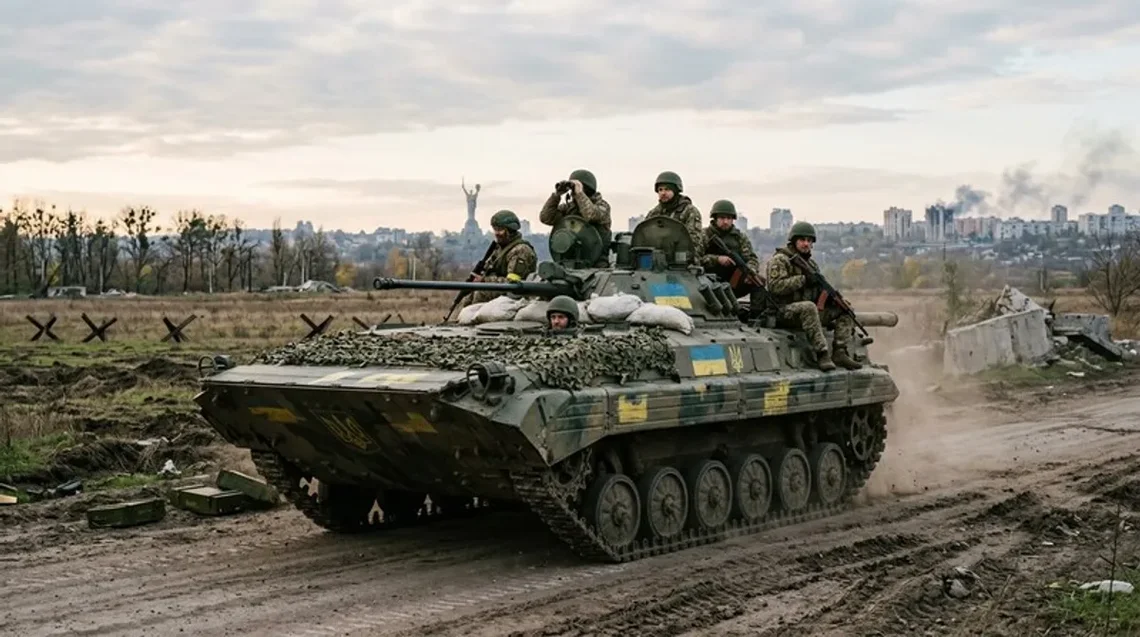
NATO allies are accelerating plans to significantly expand their military footprint across the eastern flank, with alliance defence ministers signalling broad agreement on deploying additional battalion-sized battle groups to Estonia, Latvia, Lithuania and Poland as tensions with Russia remain elevated. The shift represents the most substantial repositioning of NATO conventional forces in Europe in decades, driven by persistent concerns over Russian military posture and doctrine following the full-scale invasion of Ukraine.
Key Context: NATO currently maintains eight multinational battle groups across its eastern flank under the Enhanced Forward Presence framework, established after Russia's annexation of Crimea. Each group numbers roughly 1,000 to 1,500 troops. Alliance planners are now examining whether to upgrade those deployments to brigade-level formations — up to 5,000 personnel per country — representing a threefold increase in combat power. The United Kingdom leads the battle group in Estonia; Canada leads in Latvia; Germany in Lithuania; and the United States in Poland. (Source: NATO)
The Strategic Calculus Driving the Build-Up
For nearly two years, NATO's eastern members have pressed the alliance's political leadership to transform what were originally described as tripwire forces into credible combat formations capable of defending territory without waiting for reinforcements from the alliance's interior. That argument has gained decisive traction among defence ministries in Washington, London, Berlin and Paris, officials said.
According to assessments cited by Reuters, Russian ground forces, though severely degraded in Ukraine, retain significant reconstitution capacity. NATO's own internal modelling, referenced by Foreign Policy, projects that Russian conventional capacity could recover sufficiently to pose a renewed threat to alliance territory within three to five years, depending on the trajectory of the conflict in Ukraine and Western sanctions enforcement.
Related Articles
The alliance's military committee has presented defence ministers with several options ranging from modest reinforcement of existing battle groups to a full-scale permanent basing arrangement — the latter option long resisted by Germany and France on the grounds that it would constitute a breach of the spirit, if not the letter, of the 1997 NATO-Russia Founding Act. That objection is increasingly marginalised, officials said, as the Founding Act itself is regarded by many within the alliance as effectively void following Moscow's conduct in Ukraine.
Baltic States Lead the Push
Estonia, Latvia and Lithuania have been the most vocal advocates for an upgraded NATO presence. Estonian officials have publicly stated that battalion-sized groups are "insufficient" as a deterrent given Russian military geography, particularly the vulnerability of the so-called Suwalki Gap — the roughly 100-kilometre land corridor connecting Poland and Lithuania that separates the Russian exclave of Kaliningrad from Belarus. Control of that corridor would effectively sever the Baltic states from the rest of the alliance in the event of a military contingency, according to analyses cited by AP.
Latvia's defence ministry has confirmed it is in active negotiations with Canada — its NATO battle group lead nation — on the structure and legal basis for a permanent garrison rather than a rotational deployment. Lithuania, meanwhile, has reached a bilateral agreement with Germany to station a full brigade on its territory on a permanent basis, the first such commitment by a major NATO ally since the Cold War, officials said.
Force Structure and Composition
The proposed expansion goes beyond troop numbers. Alliance planners are examining a comprehensive enhancement package that includes pre-positioned heavy equipment, expanded ammunition stockpiles, improved logistics infrastructure and upgraded air and missile defence coverage across the Baltic littoral.
Air and Missile Defence Gaps
Among the most significant vulnerabilities identified in recent NATO assessments is the relative thinness of integrated air and missile defence in the Baltic region. The alliance currently relies heavily on rotational air policing missions flown from bases in Lithuania and Estonia, supplemented by Patriot and NASAMS batteries deployed on a semi-permanent basis. Internal reviews, referenced by Foreign Policy, have concluded that coverage remains insufficient against a full-spectrum Russian aerospace threat including ballistic missiles, cruise missiles and drone swarms of the type employed extensively over Ukraine.
Several alliance members, including the Netherlands and the United States, have pledged additional air defence assets, though the precise timeline and basing arrangements remain under negotiation, officials said. The UK has separately committed to maintaining and potentially expanding its contribution to Baltic air policing through the RAF's rotational deployment.
Naval Presence in the Baltic Sea
NATO's Standing Maritime Groups have increased the frequency and duration of patrols in the Baltic Sea, with particular attention to the protection of undersea communications cables and energy infrastructure following a series of incidents, the causes of which remain under investigation. According to AP, the alliance has also expanded intelligence-sharing arrangements with Finland and Sweden, both of which acceded to NATO recently, substantially improving the alliance's strategic depth in the northern theatre and transforming the Baltic Sea into what NATO officials have privately described as an "alliance lake."
What This Means for the UK and Europe
For Britain, the enhanced eastern flank carries direct strategic and financial implications. The UK's role as the framework nation for the Estonia battle group places it at the centre of NATO's most politically sensitive forward deployment. London has consistently signalled willingness to upgrade that commitment to brigade level and has conducted preliminary planning exercises for a larger permanent garrison, according to officials cited by Reuters.
Domestically, however, the expansion raises hard questions about defence spending sustainability. The British Army currently operates at a reduced headcount following years of post-Cold War restructuring, and senior military officials have publicly acknowledged the tension between alliance commitments and available force structure. The UK government has stated an ambition to raise defence spending toward 2.5 percent of GDP, though no binding legislative timeline has been established.
For continental Europe, Germany's commitment to permanent basing in Lithuania is the most symbolically and practically significant development. Berlin has historically been the most cautious of the major NATO powers on questions of permanent eastern deployments, and the shift reflects a broader transformation in German strategic culture accelerated by the war in Ukraine. (Source: Reuters)
France has separately increased its contributions to NATO's eastern flank activities in Romania and is understood to be considering additional contributions to the Baltic theatre, though French officials have been more guarded in public statements, officials said.
The broader European security architecture is also shaped by developments at EU level. Readers following the financial dimensions of the response to Russian aggression can find further analysis in coverage of how EU Tightens Russia Sanctions Over Ukraine Escalation has reshaped Moscow's access to Western capital markets and dual-use technologies, as well as the earlier measures detailed in reporting on EU Tightens Russia Sanctions Over Ukraine Offensive.
Russia's Response and Escalation Risks
Moscow has condemned the planned expansion in terms consistent with its longstanding position that NATO enlargement and military build-up near Russian borders constitutes an existential provocation. Russian officials have warned of "symmetrical and asymmetrical" countermeasures, language that has previously presaged deployments of additional forces to Kaliningrad and Belarus, as well as increased frequency of air and naval provocations near alliance territory.
The Escalation Management Challenge
Alliance officials and independent analysts agree that managing escalation risk is among the most complex elements of the enhanced forward presence strategy. The logic of deterrence holds that a credible conventional defence capability reduces the probability that Russia would risk a military move against NATO territory. Critics, including a minority of academic voices cited in Foreign Policy, contend that large-scale permanent deployments could shorten crisis decision timelines and reduce the space for diplomatic de-escalation.
NATO's position, consistently articulated by the Secretary General and supported by the alliance's political guidance, is that deterrence and dialogue are complementary rather than contradictory. The alliance has maintained communication channels with Moscow through military hotlines and has indicated willingness to discuss risk-reduction measures, though substantive arms control dialogue has been effectively frozen since before the full-scale invasion of Ukraine. (Source: UN reports)
UN Special Political Affairs reports have flagged the deterioration in European security architecture, noting the suspension of key bilateral and multilateral arms control instruments and calling for renewed engagement on confidence-building measures, without offering a specific pathway given current political conditions. (Source: UN)
Timeline of NATO Eastern Flank Developments
| Period | Development | Key Nations Involved | Force Level |
|---|---|---|---|
| Post-Crimea annexation | Enhanced Forward Presence established; four battle groups deployed | UK, Canada, Germany, USA | ~4,000–6,000 troops total |
| Full-scale Ukraine invasion | Battle groups reinforced; four additional groups added in southeastern flank | Multiple allies; France in Romania | ~40,000 high-readiness troops across flank |
| NATO Vilnius Summit | New regional defence plans approved; brigade-level ambition stated | All 32 allies | Brigade-level planning targets set |
| Germany-Lithuania agreement | Permanent German brigade committed to Lithuania | Germany, Lithuania | ~5,000 troops (phased) |
| Current period | Alliance-wide review of permanent basing options; expanded air and missile defence discussions | All eastern flank nations | Under negotiation |
The Road Ahead: Political and Budgetary Constraints
Translating political commitments into deployed capability requires resolving significant financial and logistical questions. Several NATO members are under domestic pressure to balance defence spending increases against competing social and infrastructure priorities. Alliance burden-sharing remains a point of friction, with American officials periodically pressing European allies to accelerate spending growth toward and beyond the two percent of GDP guideline — a threshold a majority of members now meet, according to NATO data.
The intersection of military planning and broader alliance solidarity is examined in detail in reporting on how NATO bolsters eastern flank amid Russia concerns and in analysis of the conflict's operational dimension in coverage of how Ukraine Pushes Forward as NATO Vows Sustained Support. The sanctions dimension, which directly affects the resources available to Moscow for military reconstitution, is further contextualised in analysis of EU Tightens Russia Sanctions Over Ukraine Stalemate.
The coming months will test whether the political consensus visible at recent ministerial meetings translates into firm national implementation plans, legal basing agreements and funded capability programmes. For the Baltic states and Poland, the stakes are existential. For Britain and the broader alliance, the decisions taken now will shape the security architecture of Europe for a generation — and the credibility of collective defence as a deterrent concept for decades beyond that, officials and analysts said.