
NATO reinforces eastern flank amid Russia concerns
Alliance deploys additional forces to Poland, Baltics
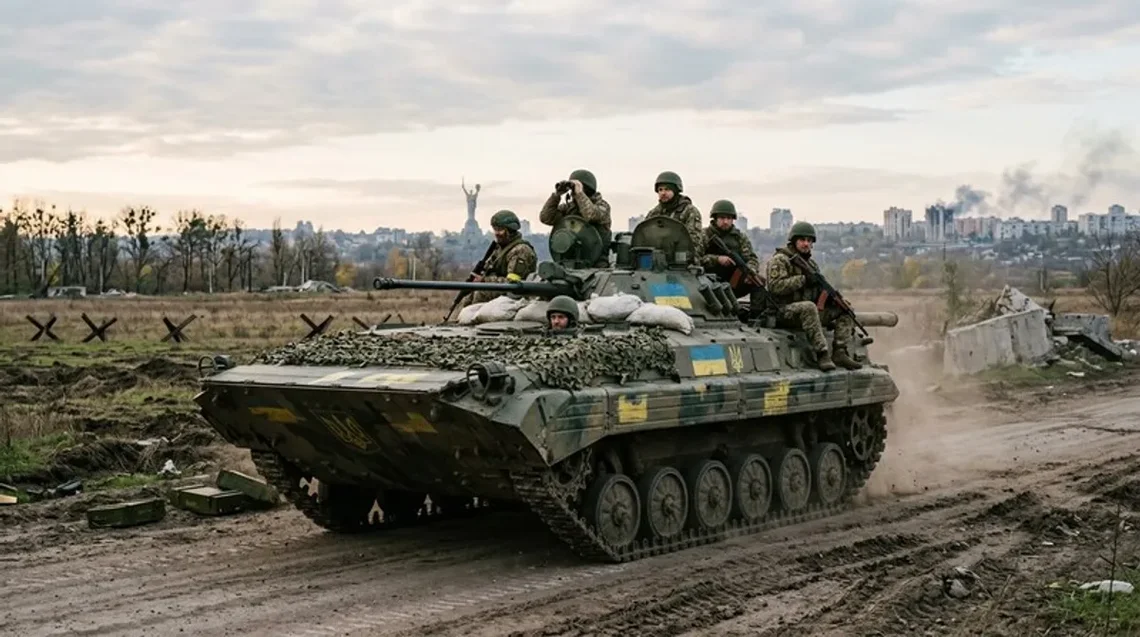
NATO has deployed thousands of additional troops, tanks, and air defence systems to Poland and the Baltic states in one of the alliance's most significant reinforcements of its eastern flank in decades, as concerns over Russian military posture and sustained aggression in Ukraine continue to reshape the security architecture of the European continent. The move signals a structural shift in how the alliance views deterrence — from a tripwire model to a forward defence posture designed to hold ground from the first moment of any potential conflict.
Key Context: NATO's eastern flank stretches from Estonia in the north to Romania in the south — a frontier of roughly 1,700 kilometres bordering Russia and Belarus. Since Russia's full-scale invasion of Ukraine, the alliance has activated its defence plans for the first time in its history, placed over 300,000 troops on high readiness, and elevated its battlegroups in the eastern member states to brigade-level strength. Finland and Sweden's accession to NATO has further extended the alliance's northern perimeter, adding over 1,300 kilometres of new border with Russia. (Source: NATO)
Scale and Scope of the Deployment
The latest reinforcement package includes armoured brigades, additional air defence batteries, and rotational fighter jet deployments across multiple eastern member states, according to NATO officials. Poland, which shares borders with both the Russian exclave of Kaliningrad and Belarus, has emerged as the central hub for the buildup, hosting multinational forces that include American, British, German, and other allied contingents.
Ground Forces and Armour
Allied ground forces in Poland have been reinforced with additional Abrams main battle tanks from the United States and Challenger 2 units from the United Kingdom, officials said. The deployments form part of a broader strategy to ensure that any hostile advance would encounter credible, combat-ready resistance rather than lightly armed tripwire units dependent on rapid reinforcement from western Europe. NATO's Supreme Allied Commander Europe has described the current posture as a "deterrence by denial" framework — making the cost of any aggression prohibitively high from the outset. (Source: NATO)
Related Articles
Air and Missile Defence
Baltic airspace has seen increased allied air policing missions, with additional F-35 and Eurofighter deployments rotating through Estonia, Latvia, and Lithuania. Patriot air defence systems and NASAMS batteries have been positioned to address the threat of ballistic missiles and cruise missile salvoes, a capability gap that the war in Ukraine has demonstrated carries immediate tactical consequences. (Source: Reuters)
The Strategic Rationale
The reinforcements come against a backdrop of sustained Russian military activity along NATO's perimeter. Reconnaissance flights, electronic warfare operations, and increased submarine activity in the Baltic and North Sea have all been documented by allied intelligence services in recent months, officials said. The alliance's intelligence assessment, shared with member governments, concluded that Russia retains both the intent and residual capability to threaten NATO territory beyond the current theatre of operations in Ukraine, according to reporting by Foreign Policy.
Lessons from Ukraine
Military planners have drawn extensively on the tactical and operational lessons emerging from the conflict in Ukraine, particularly around the vulnerability of unprotected logistics lines, the decisive role of air defence in denying adversary air superiority, and the importance of pre-positioned munitions stocks. NATO's logistics and sustainment framework on the eastern flank has been redesigned accordingly, with fuel, ammunition, and medical supplies pre-positioned at forward operating bases rather than held in central depots further west. (Source: AP)
Poland and the Baltic States: Frontline Perspectives
For Poland and the three Baltic republics — Estonia, Latvia, and Lithuania — the deployment is not merely a strategic reassurance measure but a direct response to geography and history. All four nations share land or maritime borders with Russia or its close ally Belarus, and all have pressed consistently within NATO councils for a shift from rotational presence to permanent basing of allied forces on their soil.
Baltic Concerns Over Suwalki Gap
The Suwalki Gap — the roughly 65-kilometre land corridor connecting Poland to Lithuania, flanked on one side by Russia's Kaliningrad exclave and on the other by Belarus — remains one of the most strategically sensitive chokepoints in Europe. Allied planners regard its potential closure as a scenario requiring immediate and overwhelming response. Recent exercises have rehearsed allied reinforcement of this corridor under contested conditions, officials said. The latest troop deployments significantly increase the defensive depth available in this sector. (Source: Foreign Policy)
For further context on how the alliance has progressively adapted its posture, see our earlier coverage: NATO bolsters eastern flank amid Russian military buildup, which examined the initial stages of the alliance's strategic reconfiguration.
Implications for the United Kingdom and Europe
Britain's role in the eastern flank reinforcement is both military and political. The UK currently leads the enhanced Forward Presence battlegroup in Estonia, one of four multinational battlegroups deployed across the Baltic states and Poland. The deployment of additional Challenger 2 tanks and Royal Artillery air defence units represents a tangible commitment that government officials have described as central to Britain's post-Brexit security identity — demonstrating that London remains an indispensable European security actor outside EU frameworks, officials said.
For the broader European Union, the NATO buildup carries significant economic as well as military implications. Defence spending across the continent has risen sharply, with multiple member states now meeting or exceeding the alliance's two percent of GDP benchmark — a target that was aspirational for many members only a few years ago. Germany, historically cautious about large-scale military expenditure, has committed to establishing a permanent brigade in Lithuania, a decision that marks a generational shift in German strategic culture. (Source: Reuters)
The energy dimension of European security also cannot be separated from the military picture. Europe's accelerated decoupling from Russian gas and oil has reduced the economic leverage Moscow once held over allied decision-making, analysts note, strengthening the political will within NATO capitals to sustain and expand the eastern reinforcement over the long term. (Source: AP)
Related analysis is available in our ongoing coverage: NATO reinforces eastern flank amid Russia tensions and NATO prepares enhanced eastern flank amid Russia tensions.
Alliance Cohesion and Political Dynamics
While the military picture reflects unprecedented allied unity, the political landscape within NATO is not without friction. Questions over burden-sharing, the pace of defence spending increases, and the long-term sustainability of rotational deployments continue to generate debate within alliance councils, officials said. Some eastern member governments have pressed for formal permanent basing agreements that would supersede the alliance's existing commitments under the NATO-Russia Founding Act — a document many argue has been rendered obsolete by Russian conduct since the annexation of Crimea.
The NATO-Russia Founding Act Question
The NATO-Russia Founding Act, signed in 1997, placed political constraints on the permanent stationing of substantial allied combat forces in eastern member states. Legal and political interpretations of what constitutes "substantial" have evolved considerably, with several allied governments arguing that current threat levels justify a formal revision or suspension of the act's relevant provisions. No formal decision has been taken, but the practical effect of rotating brigades that maintain continuous presence has effectively blurred the distinction, officials said. (Source: Foreign Policy)
NATO Deployment Overview: Eastern Flank
| Country | Lead Nation (Battlegroup) | Key Assets Deployed | Approximate Force Level | Status |
|---|---|---|---|---|
| Estonia | United Kingdom | Armoured infantry, air defence | ~1,500+ | Enhanced; brigade-level planned |
| Latvia | Canada | Armoured vehicles, artillery | ~2,000+ | Enhanced; expansion underway |
| Lithuania | Germany | Tanks, air defence, combat support | ~5,000 (incl. permanent brigade commitment) | Permanent brigade framework confirmed |
| Poland | United States | Abrams tanks, Patriot, F-35s, logistics hub | ~10,000+ | Major hub; continuously reinforced |
| Romania | France | Armoured units, Black Sea air policing | ~2,000+ | Active; Aegis Ashore missile defence operational |
Note: Force levels are approximate and reflect publicly available information. Actual deployments may vary. (Source: NATO, Reuters, AP)
Looking Ahead: Deterrence or Escalation?
Critics of the reinforcement strategy, including a minority of voices within European academic and policy circles, argue that the scale of the buildup risks escalatory signalling to Moscow at a moment when diplomatic channels remain largely closed. Proponents counter that the alliance's failure to deter the 2022 invasion of Ukraine demonstrated conclusively that weakness and ambiguity invite aggression, and that robust forward presence is the only posture Russia's strategic calculus responds to. (Source: UN reports, Foreign Policy)
The UN Secretary-General has called for renewed diplomatic engagement between major powers to reduce the risk of miscalculation, while acknowledging the legitimate security concerns of eastern NATO members. (Source: UN)
For the United Kingdom, the stakes are immediate and concrete. Britain's troops on the ground in Estonia are not a symbolic gesture — they are combat-ready forces whose presence is designed to make any adversary calculation of easy gains against a NATO member state impossible to sustain. As the alliance continues its most consequential military transformation since the Cold War, the question is no longer whether NATO will defend its eastern frontier, but whether the deterrent signal is sufficient to ensure that defence remains theoretical rather than tested. Further background on the alliance's evolving strategy is available in our analysis piece: NATO bolsters eastern flank amid Russia concerns.