
NATO reinforces eastern flank amid Ukraine stalemate
Alliance deploys additional forces as fighting persists
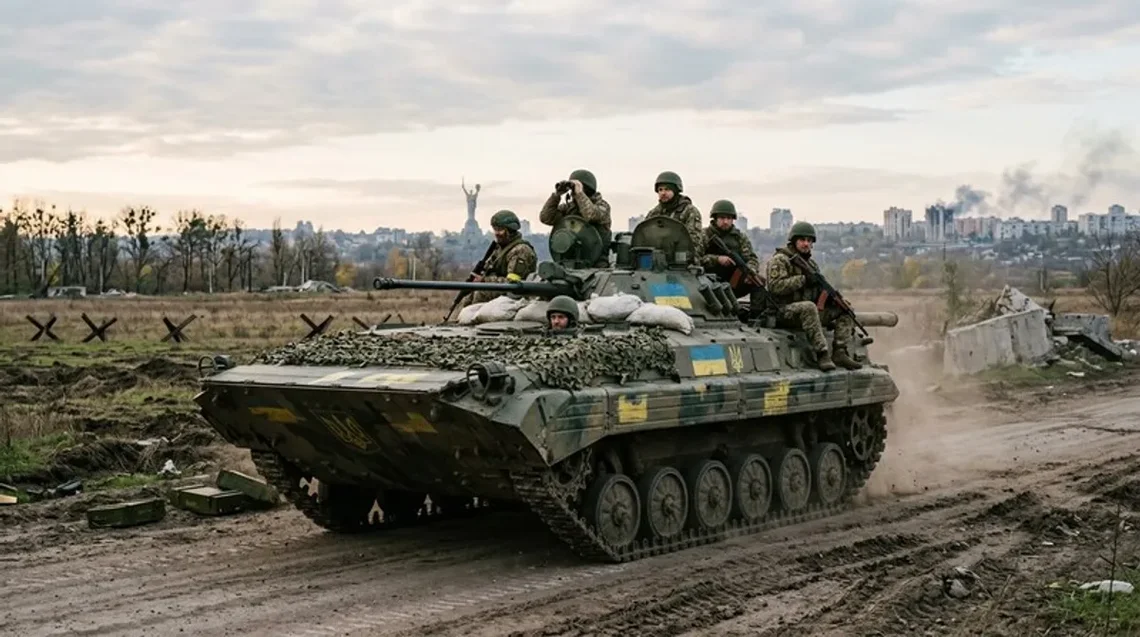
NATO has deployed additional troops and military assets to its eastern flank as the war in Ukraine shows no sign of a negotiated resolution, with alliance officials confirming a significant expansion of rotational forces across Poland, the Baltic states, and Romania. The move underscores a fundamental shift in NATO's strategic posture — one that analysts say now reflects a near-permanent forward presence rather than a temporary deterrence measure.
Key Context: NATO's eastern flank stretches from Estonia in the north to Bulgaria in the south, encompassing eight frontline member states that border either Russia, Belarus, or the Black Sea. Since Russia's full-scale invasion of Ukraine began, the alliance has activated its defence plans for the first time in its history, more than doubled the number of multinational battle groups on its eastern perimeter, and significantly increased air policing operations. The alliance currently fields over 500,000 troops at high readiness, according to NATO's own figures.
Expanded Deployments Across the Eastern Flank
Alliance defence ministers meeting in Brussels confirmed the latest round of reinforcements, which include additional armoured units from the United States, United Kingdom, Germany, and France, officials said. The deployments are structured as rotational forces, though several member states have signalled their intention to make brigade-level presences effectively permanent through long-term basing agreements.
Baltic States and Poland Lead Demand for Presence
Estonia, Latvia, Lithuania, and Poland have been the most vocal advocates for heavier NATO footprints on their soil, citing the proximity of Russian and Belarusian forces and the lingering threat of hybrid operations. Poland, which has invested heavily in its own military expansion, is currently hosting one of the largest concentrations of allied forces in European history, according to NATO officials. The United States alone maintains tens of thousands of troops in Poland on a rotational basis, a number that has grown substantially since the invasion of Ukraine escalated.
Related Articles
For more background on the alliance's evolving strategy, see NATO bolsters eastern flank amid Russia concerns, which examined earlier phases of this repositioning.
Romania and the Southern Flank
Romania has also emerged as a critical node in NATO's southern strategy, with the Mihail Kogălniceanu air base expanding its capacity to receive allied aircraft and personnel. The Black Sea dimension of the conflict has added urgency to southern flank deployments, as naval tensions between Russian and Ukrainian forces have repeatedly spilled into waters adjacent to NATO territory. Alliance planners are reported to be reviewing options for enhanced maritime patrol operations, according to sources familiar with internal discussions cited by Reuters.
The Ukraine Stalemate and Its Strategic Implications
The operational situation inside Ukraine remains deeply entrenched. Front lines in the Donetsk and Zaporizhzhia regions have shifted only marginally in recent months, with neither side able to achieve a decisive breakthrough despite ongoing attritional warfare. Ukrainian forces continue to receive Western weapons systems, including long-range artillery and air defence platforms, while Russian forces have pressed incremental advances through sheer weight of personnel and munitions, according to assessments from the Institute for the Study of War and corroborated by AP reporting from the region.
Western Military Assistance Under Review
Several NATO members are currently reassessing the pace and composition of military aid packages to Kyiv, with debates intensifying over the provision of longer-range strike systems and advanced fighter aircraft. The United Kingdom and France have been among the most forward-leaning in expanding the categories of permitted equipment, while other allies have maintained more cautious positions to avoid direct escalation with Moscow, officials said. The political dynamics within the alliance over aid levels remain a defining tension, according to Foreign Policy analysis of recent consultations.
Discussions around the alliance's long-term commitment are detailed further in NATO prepares enhanced eastern flank amid Russia tensions, which traces the diplomatic groundwork laid over the past several months.
Russian Response and Escalation Calculus
Moscow has responded to NATO's eastern reinforcement with a combination of rhetorical escalation and military repositioning of its own. Russian officials have repeated warnings that the deployment of allied forces near Russian borders constitutes a provocation, framing the moves as evidence of what they describe as Western aggression. Analysts and NATO officials have consistently rejected this characterisation, noting that the deployments are defensive in nature and explicitly authorised under the alliance's collective defence commitments under Article 5.
Nuclear Signalling and Alliance Cohesion
Russian nuclear signalling has continued to surface periodically in official statements, a pattern that Western governments have publicly assessed as coercive rather than indicative of genuine operational intent. NATO's Nuclear Planning Group has met to review alliance posture in light of these statements, though officials have declined to provide specifics on any adjustments made. The United Nations Secretary-General has called for restraint from all parties and the resumption of direct diplomatic channels, according to UN communications reviewed by Reuters. (Source: United Nations)
Alliance cohesion — a recurring question among observers — has largely held despite political turbulence in several member states. NATO Secretary General Jens Stoltenberg repeatedly emphasised unity as a strategic asset throughout his tenure, and his successor has continued that messaging framework, officials said.
What This Means for the UK and Europe
For the United Kingdom, the reinforcement of NATO's eastern flank carries significant defence, financial, and political weight. The UK has been among the leading contributors of military aid to Ukraine and has expanded its bilateral security commitments to Kyiv through a formal long-term agreement, officials confirmed. British troops are deployed as part of the enhanced Forward Presence battle group in Estonia, and the UK has committed to meeting NATO's two percent of GDP defence spending target — a benchmark that remains politically sensitive domestically given pressures on public finances.
European Defence Integration Accelerates
Across the European continent, the war in Ukraine has functioned as an accelerant for defence integration efforts that were previously moving at a glacial pace. Germany's Zeitenwende — its declared policy of defence reinvestment — has translated into concrete procurement decisions and troop increases, though implementation has faced bureaucratic and industrial bottlenecks, according to reporting by Reuters and AP. France has advocated for a stronger European strategic autonomy dimension, a position that sometimes creates friction with allies who prefer to keep defence planning anchored firmly within the NATO command structure.
The financial burden of sustained eastern deployments is becoming an increasingly prominent political issue in several European capitals. Governments must balance domestic spending pressures against alliance obligations and the long-term cost of sustaining deterrence, analysts note. European Commission officials have flagged defence industrial capacity as a structural vulnerability that will require coordinated investment over the coming decade. (Source: European Commission)
For analysis of how the alliance has evolved its thinking on permanent basing, readers can also consult NATO eyes expanded eastern presence amid Ukraine stalemate, which examines the internal debates around long-term stationing agreements.
| Host Nation | Lead Framework Nation | Approx. Allied Troops | Key Assets Deployed |
|---|---|---|---|
| Poland | United States | ~20,000+ | Armoured brigades, air defence, logistics |
| Estonia | United Kingdom | ~2,000 | Battle group, armoured vehicles, artillery |
| Latvia | Canada | ~2,000 | Battle group, infantry, logistics |
| Lithuania | Germany | ~2,000 | Battle group, mechanised infantry |
| Romania | France | ~3,000+ | Air assets, armoured units, naval support |
| Slovakia | Czechia | ~1,000 | Battle group, air policing rotation |
Diplomatic Pathways and Negotiation Prospects
Despite the military build-up on both sides of the conflict, diplomatic activity has not ceased entirely. Several rounds of back-channel communications have been reported by multiple outlets, though no formal negotiating framework has been established between Kyiv and Moscow. Ukraine has maintained its position that any ceasefire must be predicated on a full Russian withdrawal from occupied territories, a condition Moscow has consistently rejected, according to AP reporting from diplomatic contacts in Geneva and Vienna.
The Role of International Institutions
The United Nations has been largely sidelined from direct mediation efforts due to Russia's permanent Security Council membership and its ability to veto binding resolutions. However, UN agencies continue to play a vital humanitarian role, documenting civilian casualties and facilitating limited prisoner exchanges, according to UN reports reviewed for this article. (Source: United Nations Office for the Coordination of Humanitarian Affairs)
The Organisation for Security and Co-operation in Europe, meanwhile, has maintained monitoring functions where access is permitted, though its operational scope inside conflict zones has been severely constrained since the full-scale invasion, officials said.
Looking Ahead: A New Strategic Baseline
What is increasingly clear from the current trajectory is that NATO's eastern posture has fundamentally reset from a crisis-response mode to a structural long-term commitment. The alliance's regional plans, once classified and cautiously discussed, are now openly referenced by member state governments as the basis for national defence planning cycles. Finland and Sweden's recent accession to NATO has extended the alliance's northern flank in ways that significantly alter the strategic geometry Russia must contend with, military analysts have noted. (Source: Foreign Policy)
For the UK and its European partners, the implications are generational. Defence budgets, industrial planning, and diplomatic strategy will all be calibrated against a threat environment that is no longer regarded as exceptional but as the new baseline. The cost of that recalibration — financial, political, and human — is only beginning to be fully calculated in European capitals.
Further reporting on the broader context of alliance repositioning can be found in NATO bolsters eastern defenses amid Ukraine stalemate and in the earlier assessment NATO bolsters eastern flank amid Russia tensions, both of which provide detailed context for the current deployment picture.