
NATO strengthens eastern flank amid Russia tensions
Alliance deploys additional forces to Baltic region
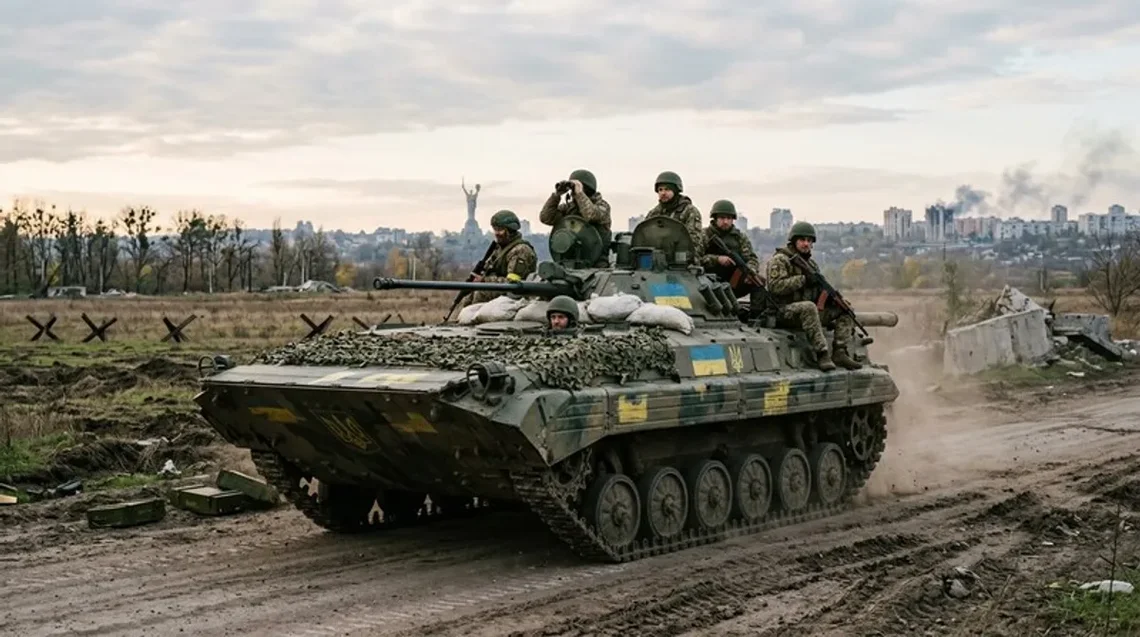
NATO has deployed thousands of additional troops to its eastern flank, reinforcing positions across the Baltic states and Poland as the alliance responds to what senior officials describe as a sustained and escalating pattern of Russian military aggression along Europe's eastern border. The deployments mark one of the most significant westward-facing security expansions the alliance has undertaken in decades, according to officials cited by Reuters and the Associated Press.
Key Context: NATO's eastern flank stretches from Estonia in the north to Romania in the south, covering roughly 1,300 kilometres of border territory that alliance planners consider the most exposed frontier in Europe. Following Russia's full-scale invasion of Ukraine, NATO formally elevated its eastern force posture from an Enhanced Forward Presence model to a more robust combat-ready deployment structure. The alliance currently operates multinational battlegroups in all eight eastern flank nations, with the Baltic states — Estonia, Latvia, and Lithuania — receiving the most concentrated reinforcements due to their geographic exposure and shared borders with Russia and its close ally Belarus. (Source: NATO Headquarters)
Deployment Scale and Strategic Objectives
The latest reinforcement wave involves armoured units, air defence batteries, and logistical support elements drawn from across the alliance, according to officials cited by Reuters. The United States, United Kingdom, Germany, and Canada — the four framework nations leading battlegroups in Poland and the Baltic states — have each committed to expanding their force contributions beyond previous levels.
Ground Forces and Armoured Assets
American armoured brigades have bolstered their permanent rotational presence in Poland, while British forces have deepened their commitment to Estonia, where the UK serves as the framework nation for NATO's Enhanced Forward Presence battlegroup. German-led forces in Lithuania are undergoing a structural transformation that officials say will eventually see a full combat brigade stationed in the country on a near-permanent basis — a significant doctrinal shift from what had previously been a rotational, lighter footprint. According to AP reporting, the German Bundeswehr has already begun forward-deploying heavy equipment including tanks and infantry fighting vehicles to expedite readiness timelines.
Related Articles
Air and Maritime Dimensions
NATO's air policing mission over the Baltic region has been significantly reinforced, with allied aircraft conducting round-the-clock sorties from bases in Lithuania, Romania, and Estonia. Maritime forces in the Baltic Sea have also intensified patrol schedules, with frigate deployments and mine countermeasure vessels operating at elevated tempo, according to alliance communications reviewed by AP. The North Atlantic Council has authorised expanded naval exercises in the region to demonstrate what officials described as "persistent deterrence capability." (Source: AP)
The Strategic Rationale Behind the Build-Up
NATO's decision to accelerate its eastern deployment posture is rooted in a comprehensive threat reassessment conducted by the alliance's Military Committee and Supreme Headquarters Allied Powers Europe, according to officials cited by Reuters. That assessment concluded that Russia's military ambitions extend beyond Ukraine, with particular concern focused on the Suwalki Gap — a roughly 100-kilometre land corridor between Poland and Lithuania that represents the only land connection between the Baltic states and the rest of NATO territory.
The Suwalki Gap and Kaliningrad
Military analysts and NATO planning documents have long identified the Suwalki Gap as one of the alliance's most strategically vulnerable chokepoints. The corridor is flanked on one side by Belarus — which has deepened its military integration with Russia — and on the other by the Russian exclave of Kaliningrad, home to Russia's Baltic Fleet and a significant arsenal of Iskander short-range ballistic missiles. According to Foreign Policy analysis, a coordinated Russian operation to sever this corridor would functionally isolate the three Baltic states from allied reinforcement by land, making rapid NATO response to any attack in those countries exponentially more difficult. The latest deployments are partly designed to complicate any such scenario by ensuring a credible allied presence is already in place before any potential conflict.
Russia's Response and Diplomatic Posture
Moscow has condemned the deployments as "destabilising" and "provocative," with the Russian Foreign Ministry issuing formal diplomatic protests to several NATO member states, according to Reuters. Russian officials have repeatedly characterised the alliance's eastern posture as evidence of Western aggression rather than defensive deterrence, framing their own military activity as a proportionate response to encirclement. The Kremlin has warned of "symmetrical measures" in response to further NATO expansion along Russia's borders, without specifying what those measures would entail.
Belarus as a Force Multiplier
NATO planners have expressed particular concern about the deepening military alignment between Russia and Belarus, officials said. Reports reviewed by the alliance indicate that Russian tactical nuclear weapons have been repositioned to Belarusian territory — a development that NATO Secretary General Jens Stoltenberg previously described as "dangerous and irresponsible." Belarus's armed forces have also participated in joint exercises with Russian units in configurations that alliance analysts assess as rehearsals for combined operations rather than routine training. (Source: UN reports)
What This Means for the UK and Europe
For the United Kingdom, the NATO build-up represents both a strategic obligation and a significant financial and operational commitment. Britain serves as the framework nation for the Estonia battlegroup, and its obligations there have expanded materially over recent months. The British Army has deployed additional Challenger 2 tanks, artillery units, and air defence personnel to the region, according to the UK Ministry of Defence, committing resources that compete directly with domestic readiness requirements.
UK Defence Spending Under Pressure
The intensified eastern flank posture has reignited debate within Westminster about the trajectory of UK defence spending. Officials and analysts interviewed by Reuters have noted that Britain's military commitments now extend simultaneously to the Baltic, the Atlantic, the Indo-Pacific, and continued support for Ukraine — a combination that strains a defence budget still subject to broader fiscal pressures. NATO's internal benchmarks call for members to spend at least two percent of GDP on defence, a target the UK government has reaffirmed its commitment to meeting, though critics argue the current threat environment may necessitate spending closer to three percent.
For continental Europe, the implications are equally significant. Germany's decision to station a permanent brigade in Lithuania would, if fully realised, mark the first time German soldiers have been permanently based in a foreign country since the Second World War — a symbolically loaded development that has been welcomed by Baltic governments and noted with concern by Moscow. France, meanwhile, has reinforced its contributions to NATO's multinational presence in Romania, expanding its footprint in the southern portion of the eastern flank.
European Union member states that overlap with NATO — the vast majority of the bloc — are simultaneously grappling with how to coordinate EU defence initiatives with the alliance's operational planning. The EU's Strategic Compass, the bloc's own defence policy framework, identifies Russia as a direct security threat and calls for accelerated capability development. However, analysts writing in Foreign Policy have cautioned that without tighter EU-NATO coordination at the operational level, parallel structures risk creating redundancy rather than genuine added capacity.
For a broader perspective on how alliance planning has evolved, see earlier reporting on how NATO prepares enhanced eastern flank amid Russia tensions, as well as coverage of the specific capability investments involved in how NATO bolsters Eastern Europe presence amid Russia tensions.
Baltic State Perspectives
Estonia, Latvia, and Lithuania have been among the most vocal advocates for a permanent, heavier NATO presence on their soil, arguing that a rotational model — however well-resourced — does not constitute the same deterrent as a standing force. Baltic defence ministers have made this case repeatedly at NATO summits and in direct bilateral negotiations with framework nations, officials told Reuters.
Estonia and Latvia's Strategic Vulnerability
Estonia and Latvia share direct land borders with Russia. Estonia's second-largest city, Narva, sits on the Russian border and has a majority Russian-speaking population — a demographic fact that Russian state media has exploited in information operations mirroring the narratives used ahead of earlier interventions elsewhere. NATO's presence in Estonia is therefore not only a military signal but a political one, reinforcing the credibility of Article 5 collective defence guarantees to populations that have direct historical experience of Soviet occupation.
| Country | Framework Nation | Estimated Battlegroup Size | Key Assets Deployed | Border with Russia/Belarus |
|---|---|---|---|---|
| Estonia | United Kingdom | ~1,800 troops | Challenger 2 tanks, air defence | Russia |
| Latvia | Canada | ~2,000 troops | Armoured vehicles, artillery | Russia |
| Lithuania | Germany | ~1,600 troops (expanding) | Infantry fighting vehicles | Belarus, Kaliningrad |
| Poland | United States | ~10,000+ troops | Abrams tanks, Patriot batteries | Belarus, Kaliningrad |
| Romania | France | ~1,500 troops | Leclerc tanks, CAESAR artillery | Black Sea border |
(Source: NATO Headquarters; Reuters; AP)
Long-Term Implications and Alliance Cohesion
The sustainability of NATO's enhanced eastern posture depends heavily on alliance cohesion — a quality that analysts and officials alike describe as under increasing strain from domestic political pressures within member states. Debates over burden-sharing, procurement priorities, and the appropriate level of support for Ukraine continue to surface at alliance ministerials, according to officials cited by Reuters.
UN reports on European security have noted that the continent is experiencing its highest level of sustained military tension since the Cold War, with the current deployments reflecting a fundamental shift in how alliance planners assess the long-term Russian threat — not as a residual or theoretical risk, but as an active, present-tense strategic challenge requiring permanent structural adaptation rather than episodic responses.
Analysts tracking the evolution of alliance strategy have previously noted the iterative nature of this build-up — for earlier context, see reporting on how NATO bolsters eastern flank amid Russia tensions and on broader strategic questions explored in analysis of how NATO eyes further eastern expansion amid Russia tensions.
Whether the current deployments prove sufficient to deter further Russian adventurism — or whether they represent only an intermediate step toward a more permanent wartime footing — will depend in large part on developments in Ukraine, the durability of Western political will, and Russia's own calculus about the costs of continued confrontation with the alliance. What is clear, officials and analysts agree, is that the security architecture of Europe has been fundamentally and, for the foreseeable future, irreversibly altered. (Source: Reuters; AP; Foreign Policy)