
NATO weighs expanded Eastern Europe presence amid Russia tensions
Alliance considers permanent troop deployments to Baltic states
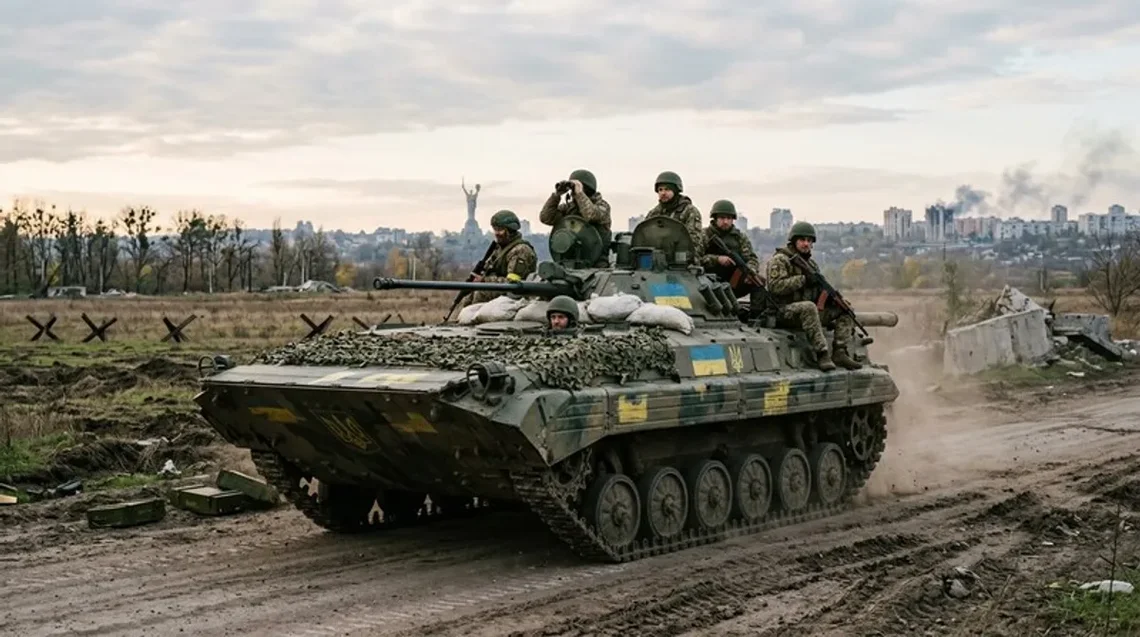
NATO allies are actively weighing a significant expansion of permanent troop deployments across the Baltic states and Eastern Europe, as the alliance confronts what senior officials describe as a fundamentally altered security landscape on the continent's eastern edge. The deliberations, confirmed by multiple diplomatic sources and reported by Reuters and the Associated Press, represent the most consequential repositioning of alliance strategy since the Cold War's end.
Key Context: NATO currently operates on a rotational troop model in its eastern member states, established under the 2016 Warsaw Summit framework, which was designed to avoid triggering clauses in the NATO-Russia Founding Act of 1997. The shift toward permanent basing would mark a formal departure from that posture, signalling that the alliance no longer considers the Founding Act politically operative in the current security environment. The Baltic states — Estonia, Latvia, and Lithuania — share direct borders or proximity to Russian territory, making them strategically central to any enhanced eastern flank strategy.
The Strategic Calculus Behind Permanent Basing
For years, NATO's deployment model in Eastern Europe rested on a deliberate ambiguity: battalions rotated through allied territory in numbers sufficient to demonstrate solidarity, but structured to avoid the optics of permanent garrisoning. That architecture is now under acute pressure, according to reporting by Reuters and Foreign Policy, as alliance planners assess that rotational forces cannot provide the deterrence credibility needed in the current threat environment.
Why the Rotational Model Is Under Review
Alliance defence ministers and senior officials have signalled in recent months that the distinction between "rotational" and "permanent" forces has become increasingly untenable on strategic grounds. Officials said the rotational framework, while politically convenient at its inception, introduces logistical gaps and reaction-time vulnerabilities that adversaries can calculate and potentially exploit. According to AP reporting, internal NATO assessments have concluded that a credible deterrent in the Baltic region requires a more robust and predictable physical presence, one that cannot be read as temporary or reversible in the event of a crisis.
Related Articles
The Baltic states themselves — Estonia, Latvia, and Lithuania — have been among the most vocal advocates for this transition, with their governments formally requesting enhanced permanent-style deployments at successive NATO summits. Officials said Tallinn, Riga, and Vilnius have each presented threat assessments to alliance structures emphasising that geographic proximity to Russian territory leaves them with narrow decision windows in any conflict scenario.
Military Architecture: What an Expanded Presence Would Look Like
The proposals under discussion range from brigade-level permanent deployments to enhanced pre-positioning of heavy equipment, air defence systems, and command infrastructure, according to sources cited by Reuters. A brigade-level commitment would typically represent between three thousand and five thousand troops per country — a substantial escalation from current battalion-strength rotational groups of roughly one thousand personnel per nation.
Pre-Positioned Equipment and Air Defence
Beyond ground troop numbers, alliance planners are examining the expansion of pre-positioned armour, artillery, and logistics stockpiles that could enable rapid reinforcement from Western Europe and North America. Officials said the emphasis on pre-positioning reflects lessons drawn from recent conflicts, where the speed of the initial phase of operations proved decisive. Enhanced Patriot missile battery deployments and expanded NATO air policing missions over Baltic airspace are also reported to be under active consideration (Source: Reuters, AP).
Foreign Policy has reported that Poland, which already hosts a significant allied presence and serves as the eastern flank's logistical backbone, is central to the expanded architecture under review. Warsaw has invested heavily in its own defence capacity and has positioned itself as the alliance's principal forward hub, a role that stands to deepen considerably if permanent basing decisions proceed.
The Command and Control Question
Alliance officials are also examining the strengthening of NATO's multinational corps headquarters in the east, particularly the structures based in Szczecin and Multinational Corps Northeast in Szczecin, Poland, according to AP. Officials said robust command infrastructure is considered as important as troop numbers, since effective deterrence depends on the credible ability to coordinate a rapid, multi-national response across a dispersed theatre.
Russia's Response and the Diplomatic Dimension
Moscow has characterised any move toward permanent NATO basing in Eastern Europe as a provocative escalation, with Russian officials and state media framing such deployments as evidence of Western aggression. Russia has consistently maintained that NATO's eastward expansion since the 1990s constitutes a strategic encirclement, a position the alliance and its member states categorically reject.
The NATO-Russia Founding Act of 1997, which established the framework for post-Cold War relations, committed the alliance to refraining from permanent substantial combat force deployments in new member states "in the current and foreseeable security environment." Senior NATO officials have increasingly argued, on the record and in briefings, that the security environment has been so fundamentally altered by events in Ukraine and broader Russian military activity that the act's political basis no longer holds (Source: Foreign Policy, Reuters).
UN Framework and Multilateral Positions
The broader diplomatic context is one of fractured multilateralism. UN reports on European security have documented the collapse of several Cold War-era arms control frameworks, including the Intermediate-Range Nuclear Forces Treaty and the Open Skies Treaty, eroding the institutional architecture that once provided guardrails for military competition on the continent. UN Secretary-General statements have repeatedly called for a return to dialogue, though officials said there is currently no active diplomatic channel between NATO structures and Moscow on security architecture questions of this magnitude.
Implications for UK and European Security
For the United Kingdom, the debate over permanent deployments carries both strategic and political significance. Britain already contributes substantially to NATO's Enhanced Forward Presence, leading the battlegroup in Estonia, and has signalled willingness to deepen that commitment. Officials said London views a strengthened eastern flank as directly aligned with its post-Brexit foreign policy positioning as a security actor of first resort within the Euro-Atlantic framework.
A permanent British contribution to Baltic basing would represent a long-term defence commitment of considerable consequence, requiring sustained Treasury allocation at a moment when domestic defence budgets face competing pressures. The Ministry of Defence has not publicly confirmed specific plans, though senior officials have indicated that the UK's commitment to Baltic security is not contingent on EU membership or any bilateral European arrangement.
For the broader European security architecture, the shift toward permanent basing would functionally redraw the alliance's forward defence perimeter. Countries such as Germany, the Netherlands, Canada, and the United States — all contributors to the Enhanced Forward Presence — would face parallel decisions about the scope and duration of their commitments. Officials said there is broad internal consensus within the alliance that the eastern flank must be reinforced; the disagreements, where they exist, are primarily about sequencing, cost-sharing, and the degree to which the change should be framed explicitly as permanent versus "persistent and substantial."
For further context on how these deliberations have evolved, see earlier reporting on how NATO bolsters Eastern Europe presence amid Russia tensions and the alliance's longer-term planning detailed in analysis of how NATO prepares enhanced eastern flank amid Russia tensions.
| Country | Current NATO Presence | Proposed Enhancement | Framework Lead Nation |
|---|---|---|---|
| Estonia | ~1,000 rotational (battalion) | Brigade-level (~3,000–5,000) | United Kingdom |
| Latvia | ~1,000 rotational (battalion) | Brigade-level + pre-positioned armour | Canada |
| Lithuania | ~1,000 rotational (battalion) | Brigade-level + air defence | Germany |
| Poland | ~10,000+ (US-led, multinational) | Expanded command HQ, logistics hub | United States |
| Romania | Multinational battlegroup + US presence | Expanded air and naval components | France |
Alliance Cohesion and Internal Tensions
Despite broad agreement on the need for a stronger eastern posture, the deliberations are not without internal friction. Burden-sharing remains a perennial fault line within NATO, with officials from smaller member states expressing concern that commitments to the eastern flank must be matched by equitable contributions across the alliance. The target of two percent of GDP allocated to defence spending, reaffirmed at successive summits, remains unmet by a significant number of member states, a gap that complicates the political sustainability of expanded deployments over the long term (Source: AP, Reuters).
Domestic Political Variables
In several key alliance capitals, domestic political dynamics add a layer of uncertainty to long-term defence commitments. Officials said that while governmental positions across the alliance currently favour strengthened eastern deployments, electoral cycles and shifting public opinion on defence spending in countries such as Germany, Italy, and Hungary introduce variables that alliance planners must account for. The durability of commitments — particularly those framed as permanent — depends on legislative and budgetary processes that extend well beyond individual administrations.
Outlook: What Comes Next
NATO foreign ministers and defence chiefs are expected to advance these discussions at upcoming alliance meetings, with a formal decision framework anticipated ahead of the next NATO summit. Officials said the alliance is unlikely to use the explicit language of "permanent" basing in public communiqués, given the sensitivities involved, but that the substance of any agreed enhancement would represent a de facto permanent posture regardless of the terminology employed.
The broader trajectory — toward a more robust, enduring NATO presence on Europe's eastern edge — appears set, even as the precise contours of that presence remain under negotiation. As reporting on the alliance's evolving posture has documented, the question is increasingly not whether NATO will expand its eastern presence, but how rapidly and at what scale. Analysis of how NATO eyes further eastern expansion amid Russia tensions and the strategic context explored in coverage of how NATO bolsters eastern flank amid Russia tensions provide essential background to the current deliberations, as does ongoing reporting on how NATO eyes expanded eastern presence amid Ukraine stalemate shapes alliance thinking.
For Europe, and for the United Kingdom in particular, the outcome of these deliberations will define the continent's security posture for a generation — carrying financial, strategic, and political consequences that extend far beyond the immediate crisis that gave rise to them.