
NATO weighs expansion as Russia reasserts Ukraine pressure
Alliance considers membership bids amid renewed military threats
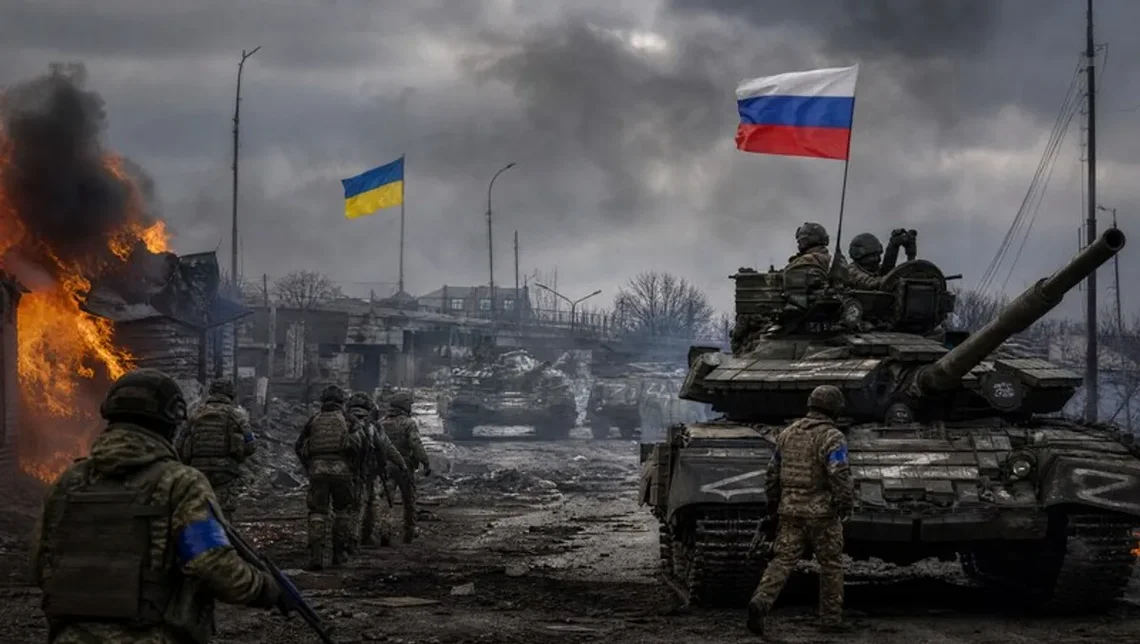
NATO is actively weighing membership bids from several aspirant nations as Russia intensifies military pressure along the Ukrainian front line, forcing the alliance to confront a fundamental strategic question: whether accelerated expansion will deter further Russian aggression or deepen the risk of direct confrontation. With alliance foreign ministers convening to assess the security architecture across the European continent, the geopolitical stakes have rarely been higher since the end of the Cold War.
Key Context: NATO currently has 32 member states following Sweden's accession earlier this year, making it the largest expansion of the alliance in two decades. Russia has repeatedly stated that NATO enlargement constitutes an existential threat to its security, a position Western governments categorically reject as a pretext for territorial aggression. Ukraine formally applied for NATO membership and holds candidate status, though full accession remains politically contested among key alliance members including the United States and Germany. (Source: NATO Secretariat)
The Membership Question at the Heart of Alliance Politics
Few issues have proved as divisive within NATO's internal deliberations as the question of whether to extend a firm membership timeline to Ukraine and other aspirant nations, including Georgia and Bosnia-Herzegovina. Alliance officials are currently navigating a delicate balance between the moral and strategic case for open-door expansion and the practical risks of triggering a broader escalation with a nuclear-armed adversary.
Ukraine's Bid: Symbolism Versus Substance
Ukraine's membership application remains the single most consequential item on NATO's expansion agenda. Kyiv has made formal accession a central pillar of its war aims, arguing that only the security guarantee embedded in Article 5 — the collective defence clause — can provide lasting deterrence against future Russian attack. Alliance diplomats, speaking on condition of anonymity, told Reuters that while political sympathy for Kyiv's position is near-universal among member states, consensus on a concrete accession timeline remains elusive.
Related Articles
The core obstacle is the precedent of admitting a state currently at war, which would theoretically activate the alliance's collective defence obligations from the moment of accession. Senior officials in Berlin and Washington have repeatedly signalled that any formal invitation must await a ceasefire or stable security arrangement, according to diplomatic reporting by AP. Critics of this position, including the Baltic states and Poland, argue that withholding membership is itself a strategic failure that emboldens Moscow's calculus.
For deeper context on how the alliance is weighing its commitments, see our coverage of NATO weighing deeper Ukraine commitment amid Russian advances, which examines the internal fault lines shaping this debate.
Georgia and Bosnia: The Wider Expansion Calculus
Beyond Ukraine, Georgia continues to press its long-standing membership aspirations despite a domestic political crisis that has complicated its relationship with Western institutions. Georgia has held NATO candidate status since the Bucharest Summit, and alliance officials have reiterated that the country's path to membership remains open in principle, according to Foreign Policy. However, the country's recent political trajectory has raised governance concerns among key member states that could delay any formal progress.
Bosnia-Herzegovina, meanwhile, faces a different set of obstacles rooted in its own constitutional architecture and the obstructionist role played by Republika Srpska's leadership, which has aligned itself increasingly closely with Moscow's political messaging. (Source: European External Action Service)
Russia's Military Pressure: A Deliberate Strategic Signal
Russia's renewed military pressure along the Ukrainian front line is not occurring in a vacuum. Defence analysts and Western intelligence assessments described to Reuters indicate that Moscow is deliberately timing its escalatory actions to coincide with periods of political uncertainty within the alliance, seeking to exploit any gap in resolve or unity.
Front Line Developments and Force Posture
Russian forces have maintained sustained offensive pressure in the eastern Donetsk region, grinding forward in a strategy of attrition that is designed to exhaust Ukrainian manpower and munitions reserves. According to data from the UK Ministry of Defence's daily intelligence updates, Russian tactical gains have been modest but consistent across several key sectors, with significant casualties recorded on both sides.
The intensity of missile and drone strikes targeting Ukrainian civilian infrastructure has also increased in recent weeks, a pattern that Ukrainian officials and human rights monitors have characterised as deliberate collective punishment. A recent UN Office for the Coordination of Humanitarian Affairs report documented widespread disruption to energy supply networks, heating systems, and water infrastructure across multiple oblasts. (Source: OCHA/United Nations)
Our reporting on Ukraine seeking new NATO air defence as Russia intensifies strikes provides a detailed account of Kyiv's urgent requests for additional interceptor systems and the alliance's response to date.
Russian Strategic Objectives
Western defence analysts broadly assess that Russia's current military strategy serves a dual purpose: to achieve maximalist territorial objectives in Ukraine where possible, and simultaneously to demonstrate to the wider European audience that NATO expansion comes with prohibitive costs. Foreign Policy has reported that Russian military doctrine has increasingly incorporated the threat of tactical nuclear use as a coercive instrument, a development that Western governments are monitoring with acute concern.
Alliance Cohesion Under Pressure
The question of NATO unity is inseparable from the expansion debate. The alliance operates by consensus, meaning that any single member state can block a membership invitation. This structural reality has placed enormous weight on individual capitals, each of which must weigh domestic political considerations alongside strategic imperatives.
The Eastern Flank's Urgency
Countries on NATO's eastern flank — Estonia, Latvia, Lithuania, Poland, Romania, and Slovakia — have been the most vocal advocates for accelerated expansion and more robust support for Ukraine. Their historical experience of Soviet occupation lends a particular urgency to their assessments that appeasement of Russian demands is both morally wrong and strategically counterproductive. Polish officials, speaking to AP, have described the current moment as a potential inflection point that could define European security for a generation.
These eastern member states have also been at the forefront of bilateral military assistance to Ukraine, providing artillery systems, armoured vehicles, and training capacity at a scale that has stretched their own defence inventories. The situation is explored in our coverage of NATO allies boosting Ukraine aid amid renewed Russian offensive.
What the Expansion Debate Means for Britain and Europe
For the United Kingdom and its European partners, the NATO expansion question carries profound and immediate implications that extend well beyond the diplomatic conference table. Britain has positioned itself as one of Ukraine's most committed backers since the full-scale invasion began, providing significant quantities of long-range missiles, armoured vehicles, and financial assistance, according to the UK Foreign, Commonwealth and Development Office. (Source: FCDO)
A failure to provide Ukraine with a credible membership pathway — or conversely, a decision to extend an invitation that triggers further Russian escalation — would force London to make rapid strategic recalculations about its defence commitments, troop deployments in eastern Europe, and its broader role within the alliance. The British government has publicly supported Ukraine's eventual membership while stopping short of demanding an immediate timeline, a position that has drawn criticism from some defence analysts who argue it offers the worst of both worlds.
For European economies, the continued conflict and associated energy market disruptions represent a significant structural risk. The International Monetary Fund has documented the disproportionate economic burden carried by Central and Eastern European states, many of which have also absorbed the largest share of Ukrainian refugees relative to their population size. (Source: International Monetary Fund)
The broader pattern of Russian pressure along NATO's periphery — including hybrid operations in the Baltic states, election interference, and infrastructure sabotage — has accelerated European defence spending commitments. NATO's own data show that a record number of member states currently meet or exceed the two percent of GDP defence spending benchmark, a figure that stood in stark contrast to the situation a decade ago. (Source: NATO)
| Country | Application Status | Primary Obstacle | Alliance Assessment |
|---|---|---|---|
| Ukraine | Formal applicant; candidate status | Active armed conflict; consensus gap among members | Accession post-conflict widely favoured; timeline disputed |
| Georgia | Long-standing aspirant; Bucharest commitment | Domestic political crisis; Russian-occupied territories | Path open in principle; governance concerns raised |
| Bosnia-Herzegovina | Membership Action Plan holder | Republika Srpska obstruction; constitutional constraints | Stalled; dependent on internal political resolution |
| Kosovo | Aspirant; not formally applied | Non-recognition by five NATO members including Spain | Unlikely in near term; membership prerequisite unmet |
The Strategic Logic of Expansion — Contested Ground
Proponents of rapid NATO expansion argue that the alliance's deterrence credibility depends on demonstrating that Russian coercion cannot permanently block the sovereign choices of European nations. Every year that Ukraine's membership bid remains in formal limbo, this argument holds, validates Moscow's strategy of using military force as a veto over its neighbours' security arrangements.
The Counter-Arguments
Sceptics within the alliance — including voices in Washington's foreign policy establishment — counter that expansion under current conditions risks transforming a regional conflict into a direct NATO-Russia confrontation with catastrophic potential. Foreign Policy has published extensive analysis suggesting that the deterrence logic of expansion, while theoretically sound, depends on a set of assumptions about Russian decision-making that may not hold under conditions of severe domestic pressure on the Kremlin.
There is also the question of what Article 5 membership would actually mean in practical terms for a country the size of Ukraine, with the longest front line in Europe and ongoing active combat operations. The military infrastructure investment required to integrate Ukraine into alliance command structures, interoperability standards, and collective defence planning would be substantial and long-term. (Source: RAND Corporation)
Further analysis of the territorial and strategic dimensions of this debate is available in our report on NATO eyeing further eastern expansion amid Russia tensions, which examines the broader regional security architecture.
The Road Ahead: Summits, Signals, and Stalemates
Alliance planners are currently focused on the sequencing of upcoming NATO summit gatherings as the key political moments at which membership language could be sharpened or a new framework for Ukraine's security relationship with NATO formally articulated. Diplomatic sources cited by Reuters indicate that several member states are pushing for an enhanced "bridge" arrangement that would provide Ukraine with concrete military integration short of full membership — a position that Kyiv has thus far resisted as insufficient.
The underlying tension is unlikely to be resolved quickly. Russia's military strategy is explicitly calibrated to outlast Western political attention and institutional willingness to sustain costly commitments. NATO's institutional response — however carefully calibrated — will be scrutinised by Moscow, by aspirant members, and by the populations of alliance states who are increasingly being asked to absorb the economic and security costs of a conflict with no defined endpoint.
What is clear from the current trajectory, as reported across Reuters, AP, and detailed analytical work in Foreign Policy, is that the decisions taken in NATO capitals over the coming months will shape the European security order for decades. The expansion question is not merely procedural or symbolic — it is the defining strategic contest of the present era, and its resolution or prolonged deferral will carry consequences that extend far beyond the borders of Ukraine.