
NATO weighs expansion as Russia reinforces Ukraine border
Alliance considers new membership amid rising tensions
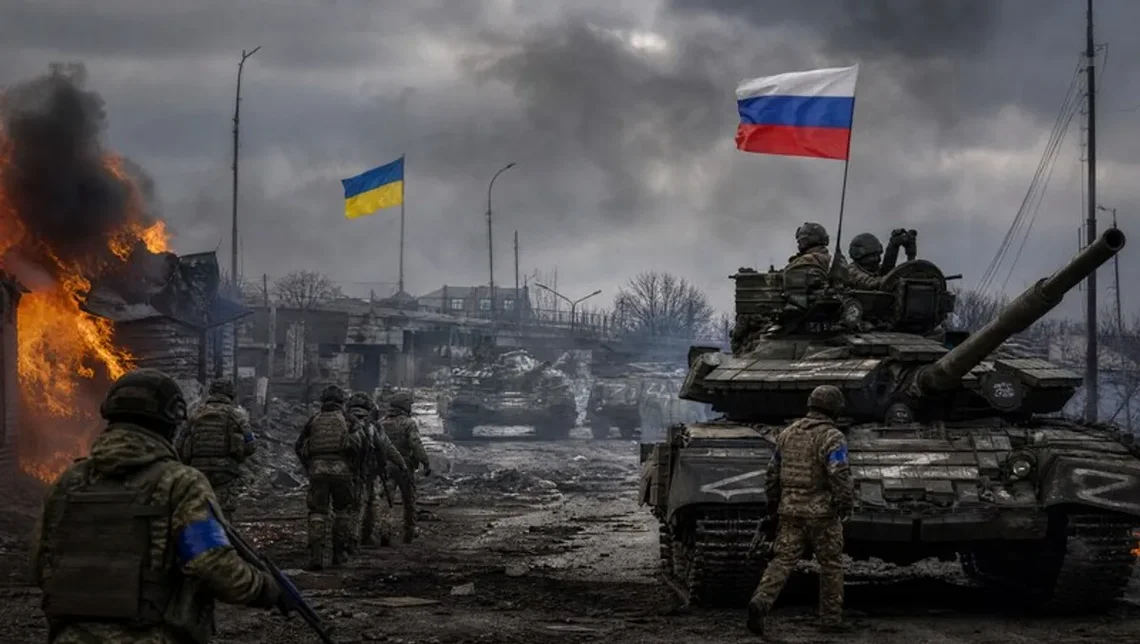
NATO is actively weighing the prospect of further alliance enlargement as Russian forces continue to mass along the Ukrainian border, with Western intelligence officials warning that Moscow's military posture represents one of the most significant threats to European security in decades. The deliberations, confirmed by multiple senior alliance officials according to Reuters, come as member states grapple with how to balance deterrence against the risk of direct escalation with a nuclear-armed adversary.
Key Context: NATO currently comprises 32 member states following Sweden's accession earlier this year. The alliance's collective defence clause — Article 5 — obligates all members to treat an armed attack against one as an attack against all. Russia has consistently framed NATO enlargement as an existential threat, citing it as a central justification for its full-scale invasion of Ukraine. Ukraine and Georgia hold formal aspirant status but have not been offered a concrete membership roadmap. (Source: NATO)
The Strategic Calculus Behind Expansion Talks
Senior NATO diplomats convening in Brussels have renewed discussions around potential membership timelines for Ukraine and Georgia, two nations that received alliance aspirant status years ago but have seen their accession paths stalled by both geopolitical caution and active conflict. According to AP, alliance foreign ministers have been briefed on a range of scenarios, including accelerated integration frameworks that fall short of full Article 5 membership but provide meaningful security guarantees.
Ukraine's Complicated Path
Ukraine's case is uniquely complex. Admitting a country actively engaged in armed conflict with Russia would, by definition, trigger the collective defence clause — a step that Western capitals, including Washington and Berlin, have been reluctant to take. Instead, alliance planners are examining interim arrangements, including long-term bilateral security compacts that mirror NATO commitments without triggering formal treaty obligations, officials said. The discussions echo frameworks already established by individual member states, including the United Kingdom, which signed a bilateral security agreement with Kyiv earlier this year.
Related Articles
For context on how the alliance is already supporting Kyiv militarily, see our coverage of NATO allies boost Ukraine aid amid renewed Russian offensive, which details the latest tranche of weapons, ammunition, and financial commitments flowing to Ukrainian forces.
Georgia and the South Caucasus Dimension
Georgia presents a separate but related challenge. Tbilisi's government has oscillated in recent years between pro-European and pro-Russian alignments, complicating alliance confidence in its political trajectory. Nevertheless, NATO planners regard the South Caucasus as increasingly critical to broader Black Sea security architecture, particularly given Russia's demonstrated willingness to use military force to redraw borders, as seen in Georgia in 2008 and Ukraine from 2014 onwards, according to Foreign Policy analysis.
Russia's Military Build-Up: What the Intelligence Shows
Western defence ministries have painted a consistent picture in recent weeks: Russian ground forces are engaged in sustained reinforcement of positions along the Ukrainian border, with logistics chains — including fuel depots, ammunition stores, and field hospital infrastructure — being expanded at a pace inconsistent with routine exercises, according to assessments cited by Reuters. Satellite imagery reviewed by multiple open-source intelligence analysts corroborates these assessments.
Order of Battle and Force Composition
According to data compiled by the UK Ministry of Defence and published in its regular intelligence updates, Russia has rotated and reconstituted several armoured and mechanised units that suffered significant attrition during earlier phases of the conflict. These reconstituted formations, while not yet at pre-war readiness levels, represent a meaningfully enhanced offensive capability compared to the degraded force structure observed at several points during the past two years of fighting, officials said.
The reinforcement effort is not limited to ground forces. Russia has reportedly expanded its air defence footprint in border-adjacent regions and increased the tempo of drone and missile production, a trend that directly shapes the battlefield equation for Ukrainian defenders. Readers following the aerial dimension of this conflict can find detailed reporting in our article on Ukraine seeks new NATO air defense as Russia intensifies strikes.
Alliance Unity: Strength and Fractures
NATO's public posture projects solidarity, but behind closed doors, member states hold meaningfully different views on the pace and scope of both Ukrainian support and enlargement, according to multiple diplomatic sources cited by AP. Eastern flank members — Poland, the Baltic states, Romania — consistently advocate for the most assertive posture, including accelerated membership timelines and heavier weapons transfers. Western European members, particularly those with larger economic exposures to Russia or historically closer political ties to Moscow, have tended toward greater caution.
The Role of the United States
American policy remains the gravitational centre of alliance decision-making. The current US administration has maintained robust military and financial support for Ukraine while stopping short of endorsing a near-term membership invitation. According to Foreign Policy, senior State Department officials have privately indicated that any formal NATO membership offer to Ukraine during active hostilities would require a level of domestic and allied consensus that does not currently exist. This position has frustrated Kyiv and some Eastern European allies, who argue that strategic ambiguity emboldens rather than deters Moscow.
What This Means for the UK and Europe
For the United Kingdom, the stakes of this debate are direct and substantial. Britain has positioned itself as one of Ukraine's most consequential bilateral supporters, providing Storm Shadow cruise missiles, military training through Operation Interflex, and the bilateral security agreement signed earlier this year. A failure of NATO deterrence or a collapse of Ukrainian resistance would place Russian forces closer to NATO's eastern perimeter and dramatically increase the alliance's defensive burden — a burden the UK, as a major defence contributor, would share disproportionately.
UK defence spending debates have taken on fresh urgency against this backdrop. The government has committed to reaching 2.5 percent of GDP in defence expenditure, a target that analysts at the International Institute for Strategic Studies (IISS) note would still fall below what several Eastern European allies already spend relative to their economies. (Source: IISS)
For continental Europe, the implications are equally pressing. Germany, historically cautious on military matters, has undergone a significant doctrinal shift — the so-called Zeitenwende — committing to sustained increases in defence investment and the supply of heavy weapons to Ukraine. France has signalled openness to the deployment of European military trainers on Ukrainian soil, a step that several allies have yet to endorse. The broader European security architecture is, by most assessments, undergoing its most fundamental reordering since the end of the Cold War.
The economic dimension of the conflict continues to weigh heavily on European households and governments alike. Energy prices, supply chain disruptions, and the costs of hosting millions of Ukrainian refugees have placed sustained pressure on public finances. For a detailed look at how economic measures are being wielded as a strategic tool, see our reporting on EU tightens Russia sanctions over Ukraine offensive.
Diplomatic Channels: Open or Closed?
Despite the military and political temperature, back-channel diplomatic activity has not ceased entirely. UN special envoys and several neutral-country mediators have maintained contact with both Russian and Ukrainian counterparts, according to UN reports, though the gap between the parties' stated positions on territorial integrity and security guarantees remains vast. Russia has consistently demanded that Ukraine renounce NATO membership aspirations as a precondition for any ceasefire — a demand Kyiv and its Western backers have categorically rejected.
The Role of International Law and the UN
The United Nations General Assembly has passed multiple non-binding resolutions demanding Russian withdrawal from Ukrainian territory, with broad majority support. Russia and a small number of aligned states have voted against or abstained. UN human rights monitoring bodies have documented extensive alleged violations of international humanitarian law by Russian forces on Ukrainian territory, findings Moscow disputes. (Source: United Nations Human Rights Monitoring Mission in Ukraine)
These legal and normative battles matter beyond Ukraine's borders. If territorial conquest is seen to succeed without prohibitive cost, the precedent for other revisionist actors globally — from the South China Sea to the Western Balkans — would be deeply destabilising, according to analysts cited by Foreign Policy.
Looking at the Broader Picture: A Continent at a Crossroads
The NATO enlargement debate cannot be separated from the wider question of what kind of European security order emerges from this conflict. Two broad visions are in competition: one in which the post-Cold War institutional architecture — NATO, the EU, the OSCE — is preserved and strengthened; and one in which great-power competition normalises the use of military force to revise borders and sphere-of-influence boundaries.
For a longer-term analytical view of where alliance expansion trajectories may lead, our feature on NATO eyes further eastern expansion amid Russia tensions provides essential background on the political and strategic considerations shaping alliance decisions.
| Country | NATO Status | Troops/Forces at Ukrainian Border | Defence Spend (% GDP) | Key Position |
|---|---|---|---|---|
| Ukraine | Aspirant (no roadmap) | Active conflict zone | Est. 35%+ (wartime) | Seeking accelerated membership |
| Russia | Non-member (adversary) | Sustained reinforcement ongoing | Est. 6%+ (wartime) | Opposes any NATO enlargement |
| Poland | Full member | Hosts NATO eastern flank forces | 4.0%+ | Advocates rapid Ukraine accession |
| Germany | Full member | Contributes to NATO battle groups | 2.1% | Cautious, increased support post-Zeitenwende |
| United Kingdom | Full member | Training, bilateral security agreement | 2.3% | Strong Ukraine supporter, bilateral guarantees |
| Georgia | Aspirant (stalled) | Not applicable | 1.7% | Membership ambitions complicated by domestic politics |
| United States | Full member (founding) | Rotational forces in Eastern Europe | 3.5% | Supports Ukraine, cautious on membership timeline |
The coming weeks and months will be critical. NATO's internal discussions on enlargement, Russia's military posture, and the trajectory of fighting in eastern and southern Ukraine are all in motion simultaneously, creating a period of exceptional strategic uncertainty. What is clear, according to assessments from Reuters, AP, and the UN, is that the decisions taken — or deferred — by alliance members now will shape European security for a generation. For the United Kingdom and its European partners, there is no neutral position in that calculus.