
Net Zero Goals Face Reality Check at COP30
Nations struggle to bridge emissions targets with climate action
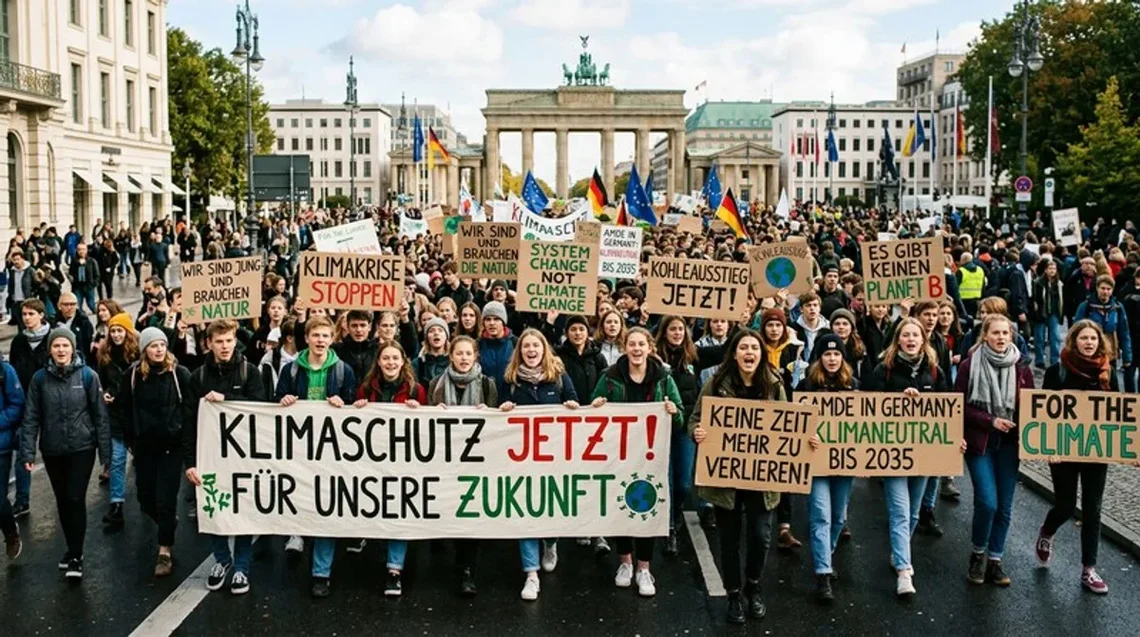
With global average temperatures now tracking more than 1.2 degrees Celsius above pre-industrial levels and national climate pledges still falling far short of what scientists say is necessary, delegations arriving in Belém for COP30 face an increasingly stark arithmetic problem: the gap between stated ambition and measurable action has not closed — it has widened. The conference, held in the Brazilian Amazon amid record deforestation pressure, is testing whether the international framework built around the Paris Agreement can survive contact with political and economic reality.
Climate figure: Current nationally determined contributions (NDCs), if fully implemented, would limit warming to approximately 2.5–2.7°C above pre-industrial levels by 2100, according to the UN Environment Programme's Emissions Gap Report. The IPCC has confirmed that limiting warming to 1.5°C requires global emissions to fall by roughly 43% by 2030 compared to 2019 levels — a trajectory that current policy does not support. Global CO₂ emissions from energy combustion reached a record high recently, topping 37 billion tonnes, according to IEA data.
The Emissions Gap Remains Unresolved
The central tension at COP30 is not new, but it is more acute. Countries representing the vast majority of global emissions have enshrined net zero targets in law or policy — yet independent analysis consistently shows that near-term emissions reduction plans do not align with long-term pledges. The IPCC's Sixth Assessment Report, the most comprehensive scientific synthesis to date, makes clear that the next decade of action is disproportionately important: delayed cuts now require steeper, costlier reductions later, or reliance on carbon removal technologies that do not yet exist at scale.
NDC Ambition and the 2030 Milestone
This year's conference was supposed to be the moment countries submitted substantially strengthened nationally determined contributions, the climate pledges that form the operational backbone of the Paris Agreement. Progress has been uneven. Several major economies submitted updated NDCs ahead of the deadline, but analysis from Carbon Brief indicates that many of these plans contain conditional elements tied to international finance flows that have not materialised, or rely on accounting methodologies that independent researchers have questioned. The result is that headline figures often overstate the actual emissions reductions that domestic policy will deliver in practice, officials familiar with the negotiating texts said.
Related Articles
The Role of Carbon Markets
Article 6 of the Paris Agreement, which governs international carbon trading, remains one of the most contested areas of the negotiations. After years of incomplete rulebooks, delegates at COP30 are again attempting to finalise mechanisms that would allow countries to trade emissions reductions across borders. Proponents argue that functional carbon markets could lower the overall cost of hitting global targets by directing finance toward the cheapest abatement opportunities. Critics, including researchers cited in Nature, argue that without rigorous accounting standards and independent verification, carbon markets risk enabling the double-counting of emissions reductions — allowing two countries to claim credit for a single tonne of CO₂ avoided. The IEA has noted that high-integrity carbon markets could play a role in the clean energy transition, but only if governance frameworks are robust.
For deeper background on how finance bottlenecks are shaping the negotiating dynamic, see COP30 talks stall over net zero finance gaps.
Fossil Fuel Phase-Down: Language and Leverage
The agreement reached at COP28 in Dubai — which called for a "transition away" from fossil fuels — was historic in that it marked the first time an explicit reference to fossil fuels appeared in a COP decision text. At COP30, the question is whether that language can be translated into binding commitments or accompanied by credible timelines. So far, the diplomatic signals are mixed.
Oil and Gas Producers Push Back
Several major oil-producing nations have indicated they will resist language that sets firm phase-out deadlines for fossil fuels, arguing that energy security and development priorities must be balanced against climate goals. This position has support from some emerging economies that contend they should not be asked to forgo the same development pathways that industrialised nations used over the past century. The tension between historical responsibility and current emissions trajectories — a divide that has structured climate negotiations for decades — remains unresolved at Belém, according to observers tracking the negotiating sessions.
The Guardian Environment has reported extensively on the lobbying presence of fossil fuel industry representatives at successive COP conferences, a dynamic that civil society groups argue undermines the integrity of the process.
Sectoral Breakdown: Where Emissions Are Rising and Falling
| Sector | Share of Global Emissions | Current Trajectory | Net Zero Requirement by 2050 |
|---|---|---|---|
| Energy (power generation) | ~25% | Declining in OECD; rising in parts of Asia | Near-full decarbonisation; rapid renewables scale-up |
| Transport | ~16% | Slowly declining in Europe; rising globally | Electrification of road transport; low-carbon aviation/shipping |
| Industry (steel, cement, chemicals) | ~24% | Broadly flat; hard-to-abate sectors lagging | Hydrogen, CCS, and process electrification at scale |
| Agriculture and land use | ~18% | Rising in some regions due to deforestation | Reduced methane from livestock; halt to deforestation |
| Buildings | ~6% | Modest efficiency gains; offset by rising demand | Deep retrofit of existing stock; low-carbon heating |
| Waste | ~3% | Stable in developed nations; rising elsewhere | Methane capture; circular economy policies |
(Sources: IPCC Sixth Assessment Report, IEA World Energy Outlook, Carbon Brief sector analysis)
Finance: The Persistent Fault Line
If emissions targets represent the ambition side of the ledger, climate finance represents the delivery mechanism — and it is here that trust between developed and developing nations is most visibly eroding. The commitment made at Copenhagen to channel 100 billion dollars annually from wealthy nations to developing countries to support mitigation and adaptation was only recently met, years after its original deadline, and many recipient nations argue the figure is far below what is actually needed. Negotiations in Belém are focused on a New Collective Quantified Goal — the successor finance target — but agreement on its size, composition, and governance structure remains elusive.
Loss and Damage: From Agreement to Implementation
The establishment of a Loss and Damage fund at COP27 and its operationalisation at COP28 represented a significant political breakthrough, acknowledging for the first time that some climate impacts are now unavoidable and that those least responsible for historical emissions are often bearing the heaviest costs. However, the actual capitalisation of that fund remains far below what vulnerable nations are requesting. Island states and least-developed countries have made clear that loss and damage finance is a precondition for their continued engagement in the broader negotiating process, according to statements from coalition spokespeople at the conference.
Analysis of the structural finance challenges underpinning these negotiations is available in coverage of how COP30 talks stall over net zero targets and the broader question of whether net zero targets face a global setback at COP30.
National Profiles: Leaders, Laggards, and the Middle Ground
The picture across major economies is neither uniformly bleak nor uniformly encouraging. The European Union has legislated a 55% emissions reduction target for this decade relative to 1990 levels and is pursuing implementation through its Fit for 55 legislative package. The United Kingdom, having achieved significant reductions in power sector emissions through coal phase-out, is now grappling with the harder task of decarbonising heating, heavy industry, and surface transport. For an examination of how domestic grid infrastructure policy is intersecting with climate commitments, see UK accelerates net zero grid overhaul amid climate targets.
The United States Position
The United States arrived at COP30 in a complex political posture. Executive branch climate policy has faced significant legislative and judicial constraints domestically, and international observers have questioned whether current federal commitments will survive the next electoral cycle. Despite this, sub-national actors — including a coalition of states, cities, and major corporations — continue to implement emissions reduction programmes that analysts argue are materially significant even absent comprehensive federal legislation, according to Carbon Brief tracking of US climate action.
China and the Developing World
China, now the world's largest single-country emitter, has committed to peaking its emissions before the middle of this decade and achieving carbon neutrality by mid-century. Independent analysts have noted that China's renewable energy deployment — particularly solar and wind capacity additions — has outpaced projections in recent years, creating genuine uncertainty about the future trajectory of its emissions curve. However, coal-fired power generation continues to expand in absolute terms, and the IEA notes that coal's role in China's energy mix remains the single largest variable in near-term global emissions forecasts. India, meanwhile, has resisted binding net zero timelines while arguing that per-capita equity must be central to any fair accounting of global responsibility.
The stalling effect of these divergent national positions on the overall negotiations is traced in detail in reporting on how net zero targets face pressure as emissions stall.
Technology and the Transition Pathway
One area where there has been unambiguous progress is the cost trajectory of clean energy technologies. Solar photovoltaic costs have fallen by more than 90% over the past decade, and wind energy has followed a broadly similar curve, according to IEA data. Battery storage costs have declined sharply enough to begin transforming the economics of grid management. These technology shifts are now sufficiently entrenched to have materially altered the energy investment landscape, with clean energy drawing the majority of new global power sector capital in recent years.
However, the IEA's own modelling makes clear that technology availability is a necessary but not sufficient condition for a successful transition. Policy frameworks, grid infrastructure, permitting regimes, skilled labour availability, and critical mineral supply chains all represent potential constraints that could slow deployment even when the underlying economics favour clean energy. Nature has published peer-reviewed work indicating that system integration challenges — the difficulty of managing electricity grids with high proportions of variable renewable generation — are receiving insufficient attention in national energy planning.
What Belém Must Deliver
The minimum threshold for COP30 to be judged a success by most independent analysts involves three outcomes: a substantial strengthening of the collective NDC ambition in line with updated IPCC guidance; agreement on a credible and adequately resourced New Collective Quantified Goal for climate finance; and finalisation of Article 6 carbon market rules that can command confidence across the scientific and civil society communities. Whether the political will exists to achieve all three remains, as of this conference, genuinely uncertain. What is not uncertain is the underlying science: every fraction of a degree of warming avoided translates into measurable reductions in physical risk, economic disruption, and human harm. That calculus has not changed, even as the politics around it continue to shift.