
Net Zero Targets Face Pressure as Emissions Rise
Global climate goals slip further as major economies miss interim benchmarks
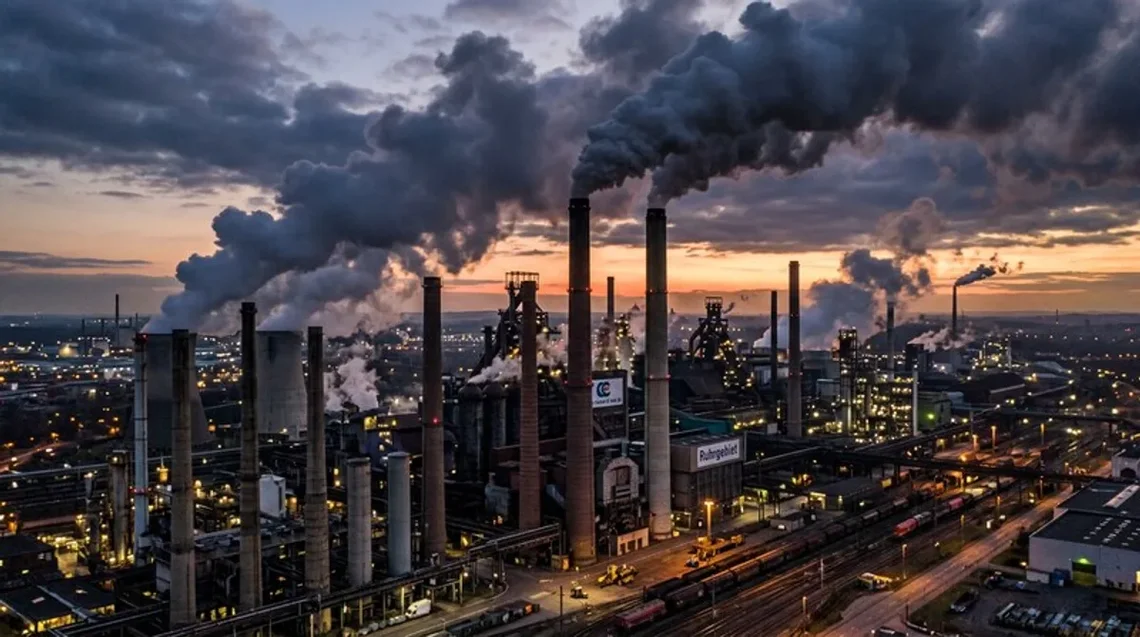
Global greenhouse gas emissions have risen for the third consecutive year, pushing the world further from the trajectory needed to limit warming to 1.5 degrees Celsius above pre-industrial levels, according to the latest data from the International Energy Agency. Major economies including the United States, India, and several European Union member states have missed key interim emissions benchmarks, raising urgent questions about the credibility of net zero commitments made under the Paris Agreement.
Climate figure: Global CO₂ emissions from energy combustion reached a record 37.4 billion tonnes in the most recently reported full year, according to IEA data. The IPCC has determined that to limit warming to 1.5°C, global emissions must fall by approximately 43% by 2030 compared to 2019 levels. Current national pledges, if fully implemented, are projected to deliver only around 9% reduction over the same period. (Source: IEA, IPCC Sixth Assessment Report)
A Growing Gap Between Pledges and Performance
The divergence between what governments have committed to on paper and what emissions data actually show has become one of the defining tensions in international climate diplomacy. Analysis by Carbon Brief indicates that fewer than a third of G20 nations are currently on track to meet their nationally determined contributions — the formal climate pledges submitted under the Paris Agreement.
The IEA has noted that while renewable energy capacity is being added at record pace, overall energy demand continues to grow, particularly in emerging economies, offsetting gains in the power sector. Coal consumption, widely regarded as the single largest source of energy-related CO₂, remains stubbornly high across Asia, despite commitments to phase it down made at successive COP summits.
Related Articles
The 1.5°C Threshold Under Strain
Scientists affiliated with the IPCC have consistently warned that the 1.5°C target requires immediate, deep, and sustained reductions across all sectors simultaneously. Research published in Nature has shown that the remaining global carbon budget — the total amount of CO₂ that can still be emitted while keeping warming below 1.5°C — could be exhausted within the current decade at present emission rates. Policy analysts have described this as a narrowing window that is now approaching closure rather than opening. Officials at the UN Environment Programme have said the emissions gap between current trajectories and Paris-aligned pathways remains "critically large." (Source: IPCC, Nature, UN Environment Programme)
Sectoral Breakdown: Where Emissions Are Rising
Transport, heavy industry, and agriculture collectively account for sectors where decarbonisation has proven most resistant. Aviation and shipping, in particular, have seen demand rebound strongly in the post-pandemic period, with both sectors still lacking credible, scalable zero-emission alternatives at commercial scale. The IEA data show that road transport emissions also rose, driven by expanding vehicle ownership in South and Southeast Asia. Meanwhile, methane emissions from agricultural sources — primarily livestock and rice cultivation — have attracted renewed scrutiny following research suggesting they may have been systematically underreported in national inventories. (Source: IEA, Carbon Brief)
| Country / Region | Net Zero Target Year | Current Emissions Trend | On Track for NDC? |
|---|---|---|---|
| United States | 2050 | Marginally declining | Uncertain |
| European Union | 2050 | Declining moderately | Partially |
| China | 2060 | Still rising | No |
| India | 2070 | Rising significantly | No |
| United Kingdom | 2050 | Declining | Under review |
| Brazil | 2050 | Mixed (deforestation rising) | No |
| Russia | 2060 | Stable to rising | No |
Source: IEA, Climate Action Tracker, Carbon Brief. Trends based on most recently available reported data.
The United Kingdom's Position
The United Kingdom presents a mixed picture within this global context. Domestic territorial emissions have fallen substantially over recent decades, primarily driven by the near-complete phase-out of coal from electricity generation and improvements in energy efficiency. However, the Climate Change Committee — the independent statutory body that advises the UK government — has previously flagged that progress across key sectors including buildings, surface transport, and agriculture has fallen behind the pace required to meet legislated carbon budgets. For more on domestic policy pressures, see our ongoing coverage of how UK faces pressure to strengthen net zero targets.
Grid Decarbonisation and Industrial Policy
One area where the UK has moved with relative urgency is electricity grid transformation. The government has set an ambitious target for a fully clean power system, and investment in offshore wind, solar, and grid infrastructure has accelerated. Analysis from the Guardian Environment desk has highlighted both the scale of the challenge and the employment and supply-chain opportunities attached to the transition. Detailed reporting on this structural shift is available in coverage of how UK accelerates net zero grid overhaul amid climate targets. Nevertheless, analysts have cautioned that decarbonising the grid alone is insufficient without parallel progress in heat, transport, and land use. (Source: Climate Change Committee, Guardian Environment)
International Finance and the Emerging Economy Divide
A persistent fault line in global climate negotiations concerns the flow of finance from wealthier nations to lower-income countries that face the steepest development pressures and the greatest vulnerability to climate impacts. The pledge made by developed nations to mobilise $100 billion per year in climate finance for developing countries was only recently fulfilled — years late — and many economists and policy analysts argue the figure is in any case far below what is actually required.
Loss and Damage: A New Front
The establishment of a loss and damage fund — designed to compensate nations suffering irreversible climate impacts — marked a political breakthrough at recent COP negotiations. However, the fund remains severely under-capitalised relative to the scale of damages being documented across the Global South, from intensified tropical storms to accelerating sea-level rise affecting low-lying island states. Research published in Nature has estimated that economic losses attributable to climate change are already running into hundreds of billions of dollars annually, with poorer nations disproportionately affected despite having contributed least to cumulative emissions. (Source: Nature, Carbon Brief, UN Framework Convention on Climate Change)
The political dynamics around finance have increasingly coloured technical negotiations on emissions reductions, with several developing-nation blocs conditioning more ambitious mitigation targets on firmer financial guarantees from historically high-emitting nations. Diplomats familiar with the negotiations have described the impasse as one of the most structurally difficult in the history of the UNFCCC process. Our analysis of what this means for upcoming multilateral talks is covered in depth in reporting on net zero targets face global setback at COP30. (Source: IPCC, IEA)
Carbon Markets and Offset Integrity
Voluntary carbon markets have expanded rapidly as corporations and some governments have sought to offset residual emissions, but the sector has faced mounting scrutiny over the integrity of the credits being traded. Investigations reported by Carbon Brief and the Guardian Environment have identified significant methodological weaknesses in several large forest-protection schemes, with independent researchers concluding that claimed emissions reductions were substantially overstated. This has prompted calls for much tighter regulation and independent verification of carbon credits under both voluntary and compliance frameworks.
Article 6 Negotiations: Markets Under the Paris Rulebook
Negotiations under Article 6 of the Paris Agreement — the provisions governing international carbon trading — have made incremental progress but remain contested. A central concern among scientific advisors and civil society groups is that poorly governed offset mechanisms could allow countries and corporations to delay genuine domestic emissions reductions while purchasing credits of questionable environmental value. The IPCC has been explicit in its guidance that carbon markets cannot substitute for structural transformations in energy, land use, transport, and industry. (Source: IPCC, Carbon Brief)
What the Data Signal for Near-Term Policy
The trajectory mapped out by current emissions data and policy commitments presents a stark challenge for governments heading into the next major assessment cycle. The IEA's modelling indicates that without a rapid acceleration in clean energy deployment and simultaneous phase-down of fossil fuels, the world is on course for warming well in excess of 2°C above pre-industrial levels by the end of the century — an outcome that scientists have described as carrying severe and widespread risks to human systems, biodiversity, and geopolitical stability.
For context on where recent trends have led, see earlier ZenNewsUK analysis of how global emissions rise despite net-zero pledges has unfolded over successive reporting periods. The structural pressures driving emissions — population growth, rising living standards in the developing world, the capital intensity of energy transitions, and the political difficulty of pricing carbon — have not receded. Whether the international framework established under the Paris Agreement retains the political and institutional capacity to respond at the necessary speed remains, according to multiple analysts and scientists consulted by ZenNewsUK, the central question of the coming decade.
Previous ZenNewsUK coverage has examined how net zero targets face pressure as emissions stall has become a recurring pattern in the reporting cycle, raising questions about whether current accountability mechanisms are fit for purpose. The evidence base, from the IPCC's assessment reports to IEA energy statistics and peer-reviewed research in journals including Nature, consistently points in the same direction: the pace of decarbonisation remains well below what the physics of the climate system demands. (Source: IPCC Sixth Assessment Report, IEA World Energy Outlook, Nature, Carbon Brief)