
Net Zero Targets Face Pressure as Emissions Stall
Global climate goals questioned amid investment gaps
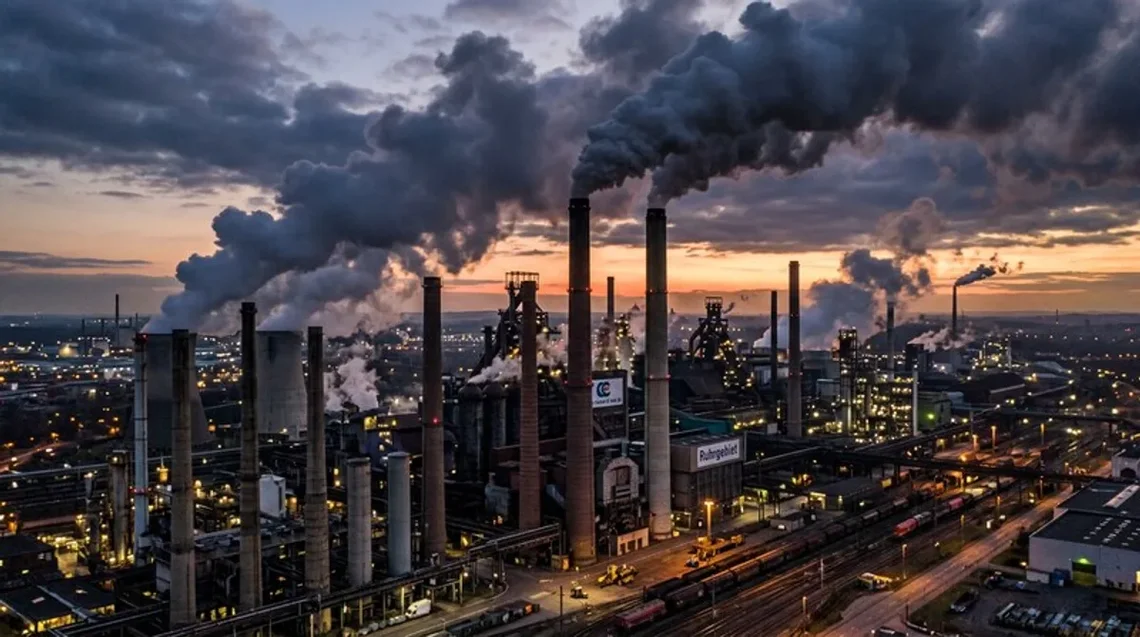
Global greenhouse gas emissions have failed to decline at the pace required to meet internationally agreed climate targets, according to data from the International Energy Agency and the Intergovernmental Panel on Climate Change, raising urgent questions about the viability of net zero commitments made by governments and corporations alike. The gap between policy ambition and measurable progress is widening at a critical moment, with financing shortfalls, geopolitical pressures, and an uneven energy transition compounding an already fraught picture.
Climate figure: Global CO₂ emissions from energy combustion reached approximately 37.4 billion tonnes in the most recently reported year, broadly flat compared with the prior period — a trajectory that the IPCC says is wholly inconsistent with limiting warming to 1.5°C above pre-industrial levels. The IEA projects that current national policies, without significant reinforcement, would result in warming of around 2.4°C by the end of the century. (Source: IEA, IPCC)
Emissions Plateau Falls Short of Climate Benchmarks
The flattening of global emissions is often cited in policy circles as evidence of progress, yet scientists and analysts are emphatic that stabilisation at current levels is insufficient. The IPCC's Sixth Assessment Report is unambiguous: deep, rapid, and sustained reductions across all sectors are required this decade to preserve any credible pathway to 1.5°C. A plateau, in this context, is not a milestone — it is a missed turning point.
What the Data Actually Show
Analysis published by Carbon Brief and corroborated by IEA tracking data indicates that while electricity sector emissions in several high-income economies have declined — partly as a result of renewable energy deployment — these gains are being offset by rising demand in transport, industry, and, critically, in rapidly developing economies. The net effect is a global emissions curve that has bent only marginally from its historical trajectory. (Source: Carbon Brief, IEA)
Related Articles
Research published in the journal Nature has highlighted that carbon dioxide removal technologies, widely cited in integrated assessment models as a means of compensating for near-term overshoot, remain unproven at the scale required. This creates what analysts describe as a growing "carbon budget" problem: the amount of CO₂ that can still be emitted while keeping warming below agreed thresholds is diminishing faster than emissions themselves are falling.
Investment Gaps Threaten the Clean Energy Transition
The IEA's World Energy Outlook — one of the most closely watched annual assessments of global energy flows — has consistently found that clean energy investment, while growing, remains structurally below what is required to align with net zero scenarios. The organisation estimates that clean energy investment globally currently runs at roughly 1.8 trillion dollars annually, against a requirement closer to 4.5 trillion dollars by the early 2030s to stay on a 1.5°C pathway. (Source: IEA)
The Financing Divide Between Economies
The investment shortfall is not distributed equally. Advanced economies, which account for the bulk of historical cumulative emissions, have broadly mobilised domestic capital and policy frameworks — green industrial strategies, carbon pricing mechanisms, and subsidy regimes — to accelerate clean energy deployment. The picture in lower-income and emerging market economies is starkly different. According to the IEA and independent analysis cited by Guardian Environment, many such countries face higher capital costs, limited access to concessional finance, and competing development priorities that make the energy transition structurally more difficult without substantial international support. (Source: IEA, Guardian Environment)
The pledge made at successive COP summits to mobilise 100 billion dollars annually in climate finance from developed to developing nations has repeatedly fallen short, eroding trust and complicating multilateral negotiations. Ahead of net zero targets facing a global setback at COP30, analysts expect financing architecture to be among the most contentious agenda items.
The UK's Position: Ambition Meets Accountability
The United Kingdom presents an instructive case study in the divergence between legislative ambition and operational delivery. The UK was among the first nations to enshrine net zero by 2050 in statute, and its electricity grid decarbonisation has been cited internationally as a model for rapid structural change. Yet scrutiny of interim performance tells a more complicated story.
Interim Targets and Accountability Failures
Independent assessments have found that the UK has not met several of its own interim carbon budgets — the legally binding five-year emissions limits set by the Climate Change Act and overseen by the Climate Change Committee. Reporting on the UK missing its interim net zero emissions target has highlighted persistent gaps in areas including heating, surface transport, and agriculture, where decarbonisation has proven structurally harder than in the power sector. Further analysis on the UK missing interim net zero targets underscores that these are not one-off shortfalls but indicative of a systemic delivery gap.
The government has simultaneously pursued the UK's accelerated net zero grid overhaul amid climate targets, committing to a clean power system by the end of the decade — an ambitious timeline that requires not only new generation capacity but extensive grid infrastructure upgrades and demand-side flexibility. Whether these parallel tracks can be reconciled with the pace demanded by the carbon budget trajectory remains an open question, as detailed in coverage of UK delays to net zero targets amid grid transition challenges.
Sectoral Breakdown: Where Emissions Are Rising and Falling
| Sector | Emissions Trend | Key Driver | Policy Status |
|---|---|---|---|
| Electricity & Heat (Advanced Economies) | Declining | Renewable deployment | Policies broadly aligned |
| Road Transport (Global) | Broadly flat / slight rise | EV growth offset by demand increase | Policy gaps in emerging markets |
| Industry (Steel, Cement, Chemicals) | Slow decline in some regions | Limited low-carbon alternatives at scale | Early-stage; significant investment needed |
| Aviation & Shipping | Rising | Demand recovery, limited fuel alternatives | Regulatory frameworks nascent |
| Agriculture & Land Use | Stable to rising | Deforestation, livestock emissions | Weak policy coverage globally |
| Buildings | Slow decline (variable) | Efficiency gains offset by cold snaps / growth | Highly variable by country |
(Source: IEA, IPCC, Carbon Brief)
Political Economy of Net Zero: The Pressure Points
Beyond the technical and financial dimensions, the political economy of decarbonisation has grown considerably more complex. In several major economies, net zero commitments have become contested in electoral politics, with scepticism about transition costs, energy security concerns exacerbated by recent geopolitical disruption, and distributional concerns about who bears the burden of adjustment all feeding into a volatile policy environment.
Corporate Commitments Under Scrutiny
The corporate net zero landscape has also come under increased scrutiny. Analysis published in Nature and reviewed by Carbon Brief has found that a significant proportion of corporate net zero pledges rely heavily on carbon offsets — many of which have been found, upon independent review, to represent questionable or non-additional emissions reductions. Regulators in the UK, EU, and US have begun tightening rules around green claims, and several high-profile companies have quietly revised or withdrawn ambitious climate targets under the weight of legal and reputational risk. (Source: Nature, Carbon Brief)
The Science Based Targets initiative, which independently validates corporate climate commitments, has reported a notable increase in companies pausing or abandoning target-setting processes, citing costs, complexity, and uncertainty about future policy environments. This retreat, if sustained, would further widen the gap between aggregate corporate commitments and the emissions reductions required by science. (Source: Carbon Brief)
What the Science Requires: The Path That Remains
The IPCC is clear that the window for action has narrowed but has not closed. Limiting warming to 1.5°C remains physically possible under scenarios involving rapid, deep emissions cuts across all sectors, alongside scaled-up deployment of carbon removal. However, the organisation's most recent synthesis notes with high confidence that without immediate strengthening of policies and a step-change in the pace of implementation, the 1.5°C threshold will be breached within this decade on current trajectories. (Source: IPCC)
Technology, Policy, and the Pace Question
The IEA's analysis of clean energy deployment indicates that solar photovoltaic installation and electric vehicle sales are tracking ahead of even optimistic projections made earlier this decade — a genuine source of encouragement. Yet the same organisation notes that the pace and scale of fossil fuel phase-down has not matched the growth in clean alternatives. New oil and gas field approvals, continued coal use in several major economies, and the persistence of fossil fuel subsidies — estimated by the IEA at over one trillion dollars globally — represent structural barriers to the transition that technology deployment alone cannot resolve. (Source: IEA)
The scientific and policy consensus, as reflected across IPCC reports, IEA analysis, and peer-reviewed literature in Nature, points to the same conclusion: the emissions trajectory must bend sharply downward this decade. The architecture for doing so — in terms of finance, technology, international cooperation, and political will — exists in outline. Whether it can be operationalised at the pace and scale demanded by the remaining carbon budget is the defining policy question of this period. The data, as they currently stand, offer no grounds for either complacency or despair, but they leave no room for ambiguity about the scale of the task ahead.