
Net Zero Targets Face Scrutiny as Nations Miss Emissions Goals
Latest carbon data shows widening gap between pledges and reality
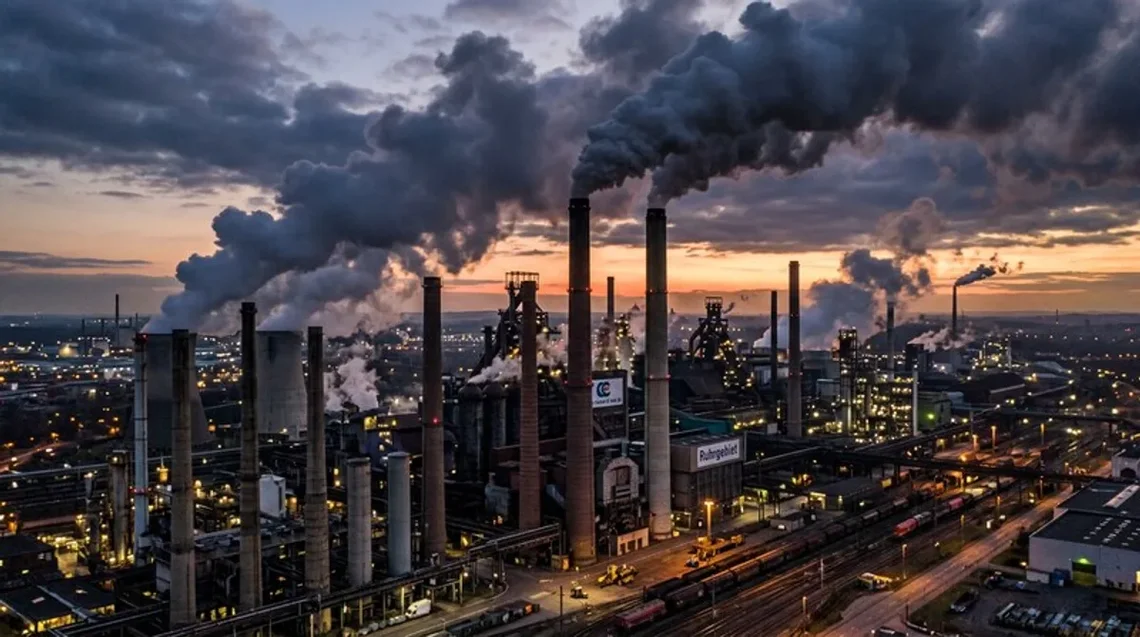
Global greenhouse gas emissions remain stubbornly above levels consistent with international climate targets, with the latest data revealing a widening gulf between what governments have pledged and what national policies are actually delivering. According to the International Energy Agency (IEA), carbon dioxide emissions from energy combustion and industrial processes reached a record high recently, underscoring the structural difficulty of translating net zero commitments into measurable reductions on the ground.
Climate figure: Global CO₂ emissions from energy and industry currently stand at approximately 37.4 billion tonnes per year, according to IEA data. The Intergovernmental Panel on Climate Change (IPCC) has determined that limiting warming to 1.5°C above pre-industrial levels requires emissions to fall by roughly 43% by the middle of this decade compared with recent baselines — a trajectory that current national policies fall significantly short of achieving.
The Gap Between Pledges and Policy
When world leaders convene to reaffirm their nationally determined contributions (NDCs) under the Paris Agreement, the language is invariably one of ambition and urgency. The data, however, tell a more complicated story. Analysis published by Carbon Brief and corroborated by IPCC working group assessments indicates that even if every current NDC were fully implemented — which itself remains uncertain — the world would still be on course for warming well above the 1.5°C threshold that scientists consider a critical boundary for limiting the worst climate impacts.
Understanding the Ambition Gap
Researchers distinguish between two overlapping shortfalls: the ambition gap, which refers to the difference between what governments have pledged and what climate science demands; and the implementation gap, which measures the distance between pledges and actual policies in place. According to the United Nations Environment Programme's annual Emissions Gap Report, both gaps have persisted and, in several regions, grown wider in recent years. The IPCC's Sixth Assessment Report — its most comprehensive synthesis to date — found that policies currently in force globally would result in warming of approximately 3°C by the end of this century, absent significant course correction. (Source: IPCC)
Related Articles
Fossil Fuels Still Dominating the Energy Mix
Despite rapid growth in renewable energy capacity, coal, oil and natural gas continue to supply the overwhelming majority of global primary energy demand. IEA data show that fossil fuels account for more than 80% of total energy supply, a proportion that has declined only marginally over the past decade even as solar and wind deployment has accelerated sharply. The persistence of fossil fuel use reflects deeply embedded infrastructure, long-lived capital assets such as coal-fired power stations and gas pipelines, and continuing demand growth in emerging economies where energy access remains a development priority. (Source: IEA)
Country-Level Performance: A Mixed Picture
National emissions trajectories vary considerably, with some advanced economies achieving genuine reductions while others have seen output rise or stagnate. The European Union has recorded meaningful falls in greenhouse gas output over the past two decades, driven by the phasing out of coal in several member states and the rollout of renewable energy under the bloc's Green Deal framework. The United Kingdom has similarly cut its territorial emissions substantially since the early 1990s, though critics and independent assessors note that consumption-based accounting — which includes emissions embedded in imported goods — shows a less flattering picture.
For further context on domestic shortfalls, see our earlier reporting: UK misses interim net zero emissions target, which details the Climate Change Committee's assessment of the government's record against its own legally binding carbon budgets.
| Country / Region | Current Annual CO₂ Emissions (Gt) | NDC Target (Year) | Policy Gap Assessment |
|---|---|---|---|
| China | ~12.0 | Peak before 2030 | On track for peak; post-peak trajectory uncertain |
| United States | ~5.0 | 50–52% reduction by 2030 | Significant shortfall projected under current policy |
| European Union | ~3.4 | 55% reduction by 2030 | Progress on track but pace needs to accelerate |
| India | ~2.9 | 45% emissions intensity cut by 2030 | Renewable build accelerating; coal phase-down unclear |
| United Kingdom | ~0.4 | 68% reduction by 2030 | Interim carbon budgets being missed, advisers warn |
| Russia | ~1.8 | Net zero by 2060 | Near-term targets widely seen as insufficient |
(Source: IEA, Carbon Brief, Climate Action Tracker)
Emerging Economies and the Equity Dimension
Any serious assessment of the global emissions picture must account for the profound inequity embedded in it. Countries across sub-Saharan Africa, South and Southeast Asia collectively account for a small fraction of cumulative historical emissions yet face disproportionate exposure to climate risks including extreme heat, flooding and disrupted agricultural systems. Development economists and climate negotiators alike have argued that wealthy nations bear a greater moral and financial responsibility to cut emissions faster and to fund the energy transitions of lower-income countries. The contentious issue of climate finance — specifically the commitment by developed nations to mobilise substantial funds for developing country mitigation and adaptation — has remained unresolved across multiple COP summits, according to Guardian Environment reporting. (Source: Guardian Environment)
Sectoral Challenges: Where Emissions Are Proving Hardest to Cut
While the electricity sector has seen the most rapid decarbonisation progress in several regions, other sectors present far more intractable challenges. Heavy industry — including steel, cement and chemicals — accounts for roughly a quarter of global emissions, and many of the processes involved are technically difficult and costly to decarbonise. Transport, particularly aviation and shipping, has also proven resistant to rapid cuts, given the absence of commercially scalable zero-emission alternatives for long-haul operations at the scale required.
The Role of Carbon Removal
Virtually all credible pathways to net zero — including those modelled by the IPCC — rely on some degree of carbon dioxide removal (CDR) from the atmosphere, whether through natural sinks such as forests and soils, or through engineered approaches such as direct air capture and bioenergy with carbon capture and storage (BECCS). Scientists and policy analysts warn, however, that an over-reliance on CDR as a future fix risks creating a moral hazard, allowing governments and industries to defer emissions cuts in the near term on the assumption that carbon removal technologies will compensate later. Research published in Nature has highlighted the significant land, water and energy requirements of large-scale CDR deployment, and cautioned that it should complement — not substitute — deep and rapid emissions reductions. (Source: Nature)
Methane and Non-CO₂ Emissions
The policy focus on carbon dioxide, though warranted given its dominant share of the greenhouse effect, has at times obscured the urgency of tackling shorter-lived but potent greenhouse gases. Methane, with a warming potential roughly 80 times that of CO₂ over a 20-year period, is emitted in large quantities from oil and gas operations, agriculture and waste management. The Global Methane Pledge, signed by over 150 countries, committed signatories to a collective reduction in methane emissions of at least 30% by the end of this decade compared with recent levels. Progress in implementing that pledge has been uneven, according to analysis from Carbon Brief and the IEA. (Source: Carbon Brief, IEA)
Policy Mechanisms Under Review
The policy landscape for emissions reduction spans a wide range of instruments — carbon pricing schemes, regulatory standards, public investment in clean energy, and the phased removal of fossil fuel subsidies. Carbon markets in particular have come under scrutiny following investigations by journalists and academics that raised questions about the integrity of some voluntary carbon offset credits. Regulators in the European Union and elsewhere have moved to tighten standards, though the broader voluntary carbon market continues to operate without unified international oversight.
Earlier analysis of stalling momentum in national programmes is available in our coverage of net zero targets face pressure as emissions stall, which examined why several major economies have seen their emissions reduction rates slow despite strong political rhetoric.
Carbon Pricing and Its Limits
Economists across the political spectrum broadly endorse carbon pricing as an efficient mechanism for internalising the social cost of emissions. In practice, however, the carbon prices currently in force across major economies remain far below the levels that the IPCC and IEA consider necessary to drive rapid decarbonisation. The EU's Emissions Trading System — the world's largest carbon market — has seen price volatility that complicates long-term investment planning for industry. Meanwhile, many high-emitting sectors and jurisdictions operate with no meaningful carbon price at all. (Source: IEA, IPCC)
The Road to COP30 and Beyond
International climate diplomacy continues to operate under the framework of the Paris Agreement's so-called ratchet mechanism, which requires nations to submit progressively more ambitious NDCs on a five-year cycle. The next major deadline is fast approaching, with countries expected to submit updated pledges ahead of the forthcoming COP30 summit in Belém, Brazil. Expectations among analysts are mixed: some point to a window of political opportunity created by falling renewable energy costs and growing public awareness; others caution that geopolitical tensions, energy security concerns and economic pressures have pushed climate ambition down the political agenda in several major emitting nations.
Our correspondent's preview of the multilateral negotiations explores these dynamics in detail: net zero targets face global setback at COP30 outlines the fault lines that delegates will need to navigate if a meaningful outcome is to be secured.
Additional context on the cumulative trajectory of national commitments can be found in our earlier piece on net zero targets face pressure as emissions rise, which documents the aggregate effect of multiple countries failing to meet their own stated milestones.
What the Science Demands
The IPCC's synthesis report is unambiguous: the window for limiting warming to 1.5°C above pre-industrial levels is narrow and closing rapidly. Achieving that goal requires global emissions to fall steeply within the current decade, reaching net zero for carbon dioxide around mid-century. Even the less stringent 2°C target demands transformational change across every major sector of the global economy — energy, transport, buildings, industry, land use and food systems — at a pace and scale without historical precedent.
For domestic readers following the United Kingdom's specific obligations and record, our detailed briefing — UK misses interim net zero targets, report warns — provides a thorough account of where British policy currently stands against the legally binding framework set out in the Climate Change Act.
The data, assessed dispassionately, point to a system under strain. Renewable energy is expanding at record speed, electric vehicle adoption is accelerating in key markets, and the economics of clean technology have shifted dramatically in favour of decarbonisation. Yet the aggregate emissions trajectory has not yet turned the corner that the underlying physics of the climate system demands. The challenge facing policymakers, regulators, investors and civil society is not, at this stage, a deficit of solutions — it is a deficit of implementation speed, political will and coordinated action at the scale the science consistently identifies as necessary. Whether the mechanisms now in place can close that gap in time remains, according to the best available evidence, an open and pressing question.