
NHS tackles record GP surgery closures amid access crisis
Rural practices shutter as staffing pressures mount
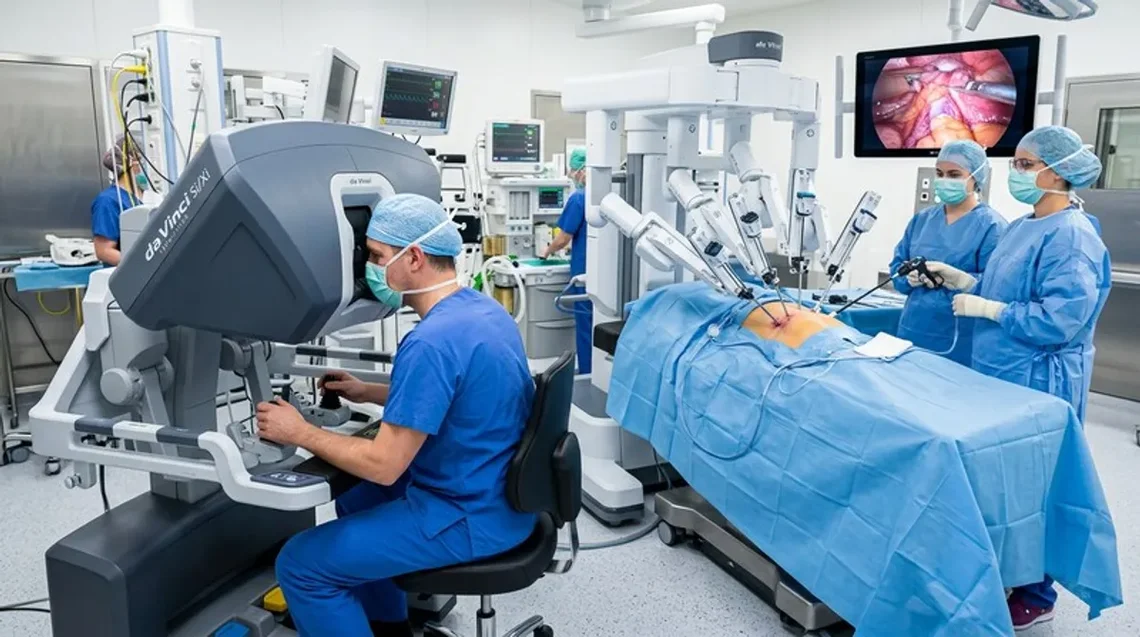
More than 300 GP surgeries have closed across England in recent years, with rural and coastal communities bearing the sharpest impact as a deepening workforce crisis forces practices to merge, downsize, or shut their doors entirely, according to NHS England data. The closures represent the most significant contraction of primary care infrastructure in a generation, leaving millions of patients facing longer journeys, reduced appointment availability, and heightened pressure on already-strained emergency departments.
Health analysts warn that the trend is accelerating. Data published by NHS England show that the number of fully registered GP practices has fallen by more than 1,700 over the past decade, with independent contractor practices — the backbone of community healthcare — disproportionately affected. The consequences extend far beyond inconvenience, with evidence linking poor primary care access to delayed diagnoses, higher hospital admission rates, and widening health inequalities between urban and rural populations. (Source: NHS England)
Evidence base: A BMJ analysis found that areas with the fewest GPs per head of population had significantly higher rates of avoidable emergency hospital admissions. The Nuffield Trust reports that the number of fully qualified, full-time equivalent GPs fell by approximately 4.7% between 2015 and recently, even as the patient population grew by several million. NHS Digital data show that more than 620 patients are now registered per full-time equivalent GP in England, compared with around 520 a decade ago. NICE guidance recommends that continuity of care with a named GP is associated with reduced mortality and lower hospital utilisation, yet structural closures make this increasingly difficult to guarantee. A Lancet study found that patients in deprived rural areas face up to a 30% longer wait for a routine appointment than those in urban centres. (Sources: BMJ, Nuffield Trust, NHS Digital, NICE, The Lancet)
The Scale of the Crisis
NHS England's primary care statistics confirm that the rate of practice closures has not been uniform. Mergers — where two or more struggling practices combine under a single contract — account for a significant proportion of the headline figures, but critics argue that consolidation frequently results in reduced access for patients rather than improved efficiency. When a practice closes in a rural village and its patient list is transferred to a surgery eight miles away, the operational metric of "no net list loss" masks a practical barrier for elderly, disabled, or transport-dependent patients.
Related Articles
Rural Communities Disproportionately Affected
The Rural Services Network, working alongside NHS data, has repeatedly highlighted that rural GP practices operate under structural disadvantages that urban equivalents do not face. Smaller list sizes mean lower global sum payments under the GP contract, yet the overhead costs of maintaining a building, retaining locum cover, and travelling to visit housebound patients remain fixed or higher per capita. The result, officials said, is a financial model that makes rural practice economically unviable for many GP partners.
In counties including Somerset, Lincolnshire, Norfolk, and parts of Wales and Scotland, the closure of a single practice can leave several thousand patients with no realistic local alternative. NHS England has acknowledged the disparity and committed to reviewing the rurality weighting applied to GP contract payments, though critics from the British Medical Association say any review must translate into substantive funding reform. (Source: British Medical Association)
Coastal and Deprived Areas Hardest Hit
Coastal communities present a particular challenge. Characterised by older, often more complex patient populations, high seasonal fluctuation, and longstanding difficulties in recruiting GPs who may prefer urban professional environments, coastal towns have seen some of the most acute closures. NHS data show that several practices in coastal areas of Kent, Yorkshire, and the South West have closed without a permanent replacement being established, forcing patients onto lists of practices already operating beyond comfortable capacity. (Source: NHS England)
For the full context of how the funding model underpins these closures, see our related coverage: NHS funding pressures and GP surgery closures explained.
Workforce: The Central Driver
Behind every closure statistic is a workforce equation that the NHS has struggled to balance. The number of GPs entering training has risen modestly in recent years, with Health Education England expanding GP training places. However, the pipeline effect means newly qualified doctors take several years to reach the workforce in meaningful numbers, and the attrition of experienced GPs through early retirement, emigration, and career changes to portfolio or salaried roles continues to outpace recruitment at the partner level.
The Partnership Model Under Strain
The independent contractor model — whereby GPs take on personal financial liability for their practice as business partners — has historically been the foundation of general practice in England. Increasingly, newly qualified GPs are reluctant to take on that risk, preferring salaried positions or locum roles that offer greater flexibility and no financial exposure to property, equipment, and staff costs. NHS England data indicate that the proportion of GPs working as partners, rather than in salaried or other roles, has declined markedly over the past decade. Without partners willing to hold contracts, practices cannot sustain themselves and are returned to the Integrated Care Board, which must then either find a new contractor or formally close the practice. (Source: NHS England)
The government's efforts to address the recruitment pipeline are examined in detail in our coverage of NHS plans to expand GP training and address the primary care shortage.
Impact on Patients and the Wider NHS
The downstream effects of GP surgery closures are measurable and significant. When patients lose access to their local practice, attendance at minor injury units and emergency departments rises. NHS England's own modelling, as well as independent analysis from the King's Fund, confirms that primary care acts as a brake on acute hospital demand, and that erosion of that capacity has a multiplier effect across the system. (Source: King's Fund)
Appointment availability has emerged as the most immediate concern for patients. NHS Digital data show that a record number of appointments were delivered in general practice recently, yet patient satisfaction surveys consistently indicate that difficulty getting timely access remains the single most cited concern. The apparent paradox — more appointments being delivered alongside declining patient experience — reflects the rising complexity of demand, an ageing population, and the reduction in continuity caused by patients being seen by an ever-rotating roster of locums and clinical staff rather than a named GP.
Knock-On Effects for Cancer and Urgent Care Pathways
General practice is the primary gateway to cancer diagnosis. GPs refer patients for urgent investigation under the two-week-wait pathway, and evidence consistently shows that practices with greater continuity and capacity generate earlier referrals and, consequently, earlier diagnoses. Where practices are understaffed, overstretched, or have recently merged and lost institutional knowledge of their patient population, referral rates can suffer. The Lancet has published evidence linking GP access to cancer stage at diagnosis, with patients in underserved areas more likely to present at a later, less treatable stage. (Source: The Lancet)
For context on how NHS cancer services are responding to these pressures, see: how the NHS is working to improve cancer treatment access and waiting times.
Government and NHS Response
NHS England and the Department of Health and Social Care have outlined several measures intended to slow and eventually reverse the trend in closures. The Additional Roles Reimbursement Scheme, which funds the employment of pharmacists, physiotherapists, social prescribing link workers, and other allied health professionals within GP practices under Primary Care Networks, is central to the government's strategy. Officials said the scheme is intended to free GP time for the most complex clinical consultations, improving both capacity and the sustainability of practices. (Source: Department of Health and Social Care)
Critics, including NHS Confederation and the Royal College of General Practitioners, argue that while additional roles provide genuine value, they do not substitute for the clinical decision-making, diagnostic reasoning, and patient relationship functions performed by a fully qualified GP. The RCGP has called for a comprehensive workforce plan with binding targets rather than aspirational commitments. (Source: Royal College of General Practitioners)
The broader pressures on NHS appointment availability and waiting times are covered in our analysis of record NHS waiting lists and the deepening GP crisis, and in our reporting on NHS waiting times at their highest level amid staff shortages.
What Patients Can Do: Navigating a Changed Landscape
While systemic change requires political and institutional action, patients facing reduced GP access can take practical steps to manage their healthcare effectively. NHS 111 and local pharmacy consultation services offer alternatives for non-emergency concerns, and the NHS App increasingly enables patients to request repeat prescriptions, view medical records, and book appointments without telephone contact.
- Register with a GP practice as soon as possible if you have recently moved — practices in some areas have open lists despite local pressures
- Use NHS 111 online or by phone for urgent medical advice when your GP surgery is closed or unavailable
- Pharmacists can assess and treat a range of common conditions under the Pharmacy First scheme without a GP appointment
- Request a named GP or preferred clinician where possible to support continuity of care, which NICE guidance links to better health outcomes
- Use the NHS App to manage repeat prescriptions, reducing the need for routine appointments
- If you are in a rural area, ask your Integrated Care Board whether patient transport or remote consultation services are available
- Contact your local Healthwatch organisation if you believe your area has been left without adequate primary care provision — Healthwatch bodies report directly to NHS commissioners
- For chronic conditions, ask your practice about structured annual reviews, which can consolidate multiple concerns into a single, planned appointment
Outlook: A Structural Problem Requiring Structural Solutions
Health economists and NHS analysts broadly agree that incremental measures, however well-intentioned, will not be sufficient to reverse a trend driven by decades of underinvestment in primary care infrastructure, an increasingly unattractive partnership business model, and a workforce pipeline that has consistently failed to match demand growth. The WHO has noted in its primary care frameworks that health systems which invest less than a defined threshold of total health expenditure in community and primary services consistently face higher long-term costs through acute care utilisation. England's ratio of primary to secondary care spending has long been a subject of debate, with primary care advocates arguing it remains insufficient relative to the workload carried. (Source: World Health Organization)
NHS England's Long Term Workforce Plan, published recently, sets ambitious targets for expanding the GP workforce over the next decade. Whether those targets will be met — and whether they will arrive in time to prevent further closures in the communities most acutely affected — remains the defining question for primary care policy in the years ahead. For the millions of patients whose local surgery has already closed, the immediate priority is ensuring that no further gaps in coverage are allowed to develop without a credible, funded, and time-bound plan to fill them.