
Russia Faces New Western Sanctions Over Ukraine
Fresh economic measures target energy sector
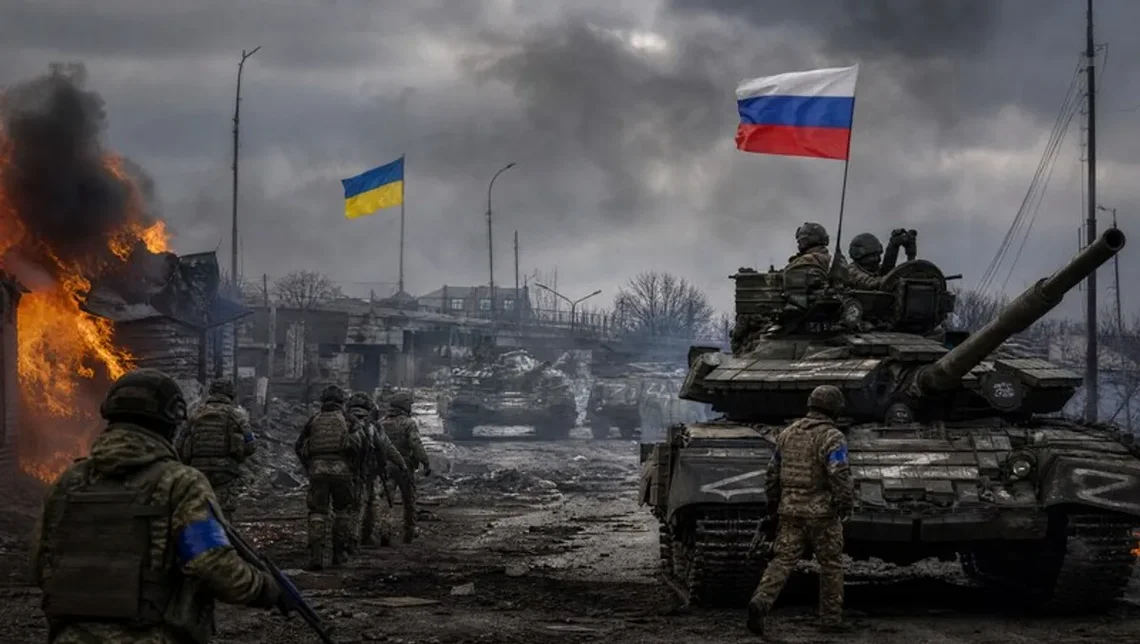
Western nations have unveiled a sweeping new package of sanctions against Russia targeting its energy sector, financial institutions, and defence supply chains, in what officials describe as the most comprehensive economic pressure campaign since the full-scale invasion of Ukraine began. The measures, coordinated between the United States, the European Union, and the United Kingdom, are designed to accelerate the erosion of Russia's capacity to finance and sustain its military operations, according to senior officials briefed on the package.
Key Context: Russia's energy exports — principally crude oil, natural gas, and refined petroleum products — have historically accounted for between 40 and 50 percent of federal budget revenues, making the sector the central nervous system of Moscow's war financing. Previous rounds of Western sanctions have progressively tightened around Russian crude through price caps, shipping restrictions, and import bans, yet significant revenue streams have persisted through workaround mechanisms involving third-country buyers in Asia, the Middle East, and Africa. The new measures seek to close those gaps with greater precision and legal reach than earlier packages. (Source: International Energy Agency; Reuters)
What the New Sanctions Package Contains
The latest round of measures targets several overlapping layers of the Russian economy simultaneously. At its core, the package extends restrictions on Russian seaborne oil exports, tightening the existing price cap mechanism to reduce the ceiling at which Russian crude can be traded using Western financial services, insurance, and shipping infrastructure. Officials said the revised cap is intended to further compress the margin Russia earns per barrel, cutting into the budget transfers that fund military procurement and troop salaries.
Energy Sector Restrictions
Beyond the price cap adjustment, the sanctions introduce new designations against specific Russian energy companies, including entities involved in liquefied natural gas production and export. European officials have long debated whether to extend restrictions to Russian LNG, given that several EU member states — particularly in southern and central Europe — have continued to purchase the fuel to compensate for the near-total loss of Russian pipeline gas. The new designations stop short of a blanket LNG import ban but place a significant number of trading intermediaries, vessel operators, and insurance underwriters on restricted lists, according to documents reviewed by Reuters.
Related Articles
Banking and financial infrastructure restrictions have also been widened. A tranche of additional Russian commercial banks and their international subsidiaries have been added to asset-freeze and transaction-prohibition lists in both the United States and the European Union, officials said. The measures also expand secondary sanctions exposure for non-Western financial institutions found to be facilitating prohibited transactions on Russia's behalf — a mechanism that has already prompted a degree of self-policing among banks in Turkey, the United Arab Emirates, and China, according to data cited in a Foreign Policy analysis of sanctions compliance trends.
Defence Supply Chain Targeting
A parallel strand of the package focuses specifically on disrupting Russia's access to components required for weapons manufacturing and battlefield maintenance. Western intelligence assessments, according to officials briefed on the matter, have identified persistent flows of dual-use electronics, microchips, and precision-engineering equipment reaching Russian defence contractors through intermediary jurisdictions. The new measures designate dozens of companies in third countries — including entities registered in Central Asia and the South Caucasus — that officials allege have served as transshipment nodes for controlled goods. (Source: AP)
The European Dimension: Energy Dependency and Political Cohesion
The impact of tightened energy sanctions on Europe remains the most politically contested aspect of the broader Western strategy. While the EU has formally committed to reducing its dependence on Russian fossil fuels, the pace of that transition has varied sharply across member states, creating internal tensions that Moscow has historically sought to exploit.
Diverging National Interests Within the EU
Countries in Western Europe — particularly Germany, France, and the Netherlands — have made significant strides in diversifying their gas and oil imports, increasing liquefied natural gas purchases from the United States, Norway, and Qatar, and accelerating renewable energy deployment. However, landlocked central and eastern European states without access to LNG import terminals face a structurally more difficult transition, and several have lobbied for extended exemption periods within successive sanctions packages, according to EU council documents reviewed by the Financial Times.
The question of unanimity has repeatedly shaped — and constrained — the ambition of EU sanctions rounds. Because sanctions require agreement among all member states, individual governments retain significant leverage to seek carve-outs or delay implementation. Analysts cited in Foreign Policy have described this structural constraint as one of the principal limitations on European sanctions effectiveness, noting that it creates opportunities for diplomatic pressure from Moscow on vulnerable member states.
For a detailed look at how previous rounds have navigated these tensions, see EU policy responses to the Ukraine stalemate and the broader trajectory of European sanctions during periods of escalation.
What This Means for the United Kingdom
The United Kingdom, operating its own post-Brexit sanctions regime through the Office of Financial Sanctions Implementation (OFSI) and the Foreign, Commonwealth and Development Office, has closely aligned its measures with those of the EU and United States while retaining the legal autonomy to move independently. British officials have consistently argued that close coordination — rather than full harmonisation — allows for greater flexibility in targeting.
UK Energy Market Exposure
Britain's direct exposure to Russian energy is now minimal. The UK phased out Russian oil imports and ceased purchasing Russian coal early in the conflict, and it had already been substantially less dependent on Russian pipeline gas than continental European peers. However, the UK economy remains exposed to the broader European energy market, meaning that price volatility triggered by supply disruptions or sanctions-related uncertainty on the continent continues to flow through to British consumers and businesses.
The Bank of England and the Office for Budget Responsibility have both flagged elevated energy price uncertainty as an ongoing macroeconomic risk factor in their recent outlooks. UK energy bills, while having fallen from their crisis-era peaks, remain structurally higher than pre-conflict levels, a reality that economists attribute in part to the persistent repricing of global energy markets following the rupture of European-Russian energy integration. (Source: Office for Budget Responsibility)
UK financial institutions have also faced compliance costs associated with successive sanctions rounds, as the City of London — a major centre for commodity trading, shipping insurance through Lloyd's of London, and structured finance — has had to implement and monitor increasingly granular restrictions. Industry bodies have reported ongoing operational expenditure increases related to sanctions screening, transaction monitoring, and legal review. (Source: Reuters)
Russia's Response and Countermeasures
Moscow has consistently characterised Western sanctions as economically counterproductive and politically motivated, arguing that the measures harm Western consumers and developing economies more than they constrain Russian policy. Russian officials have pointed to continued economic activity and GDP figures — disputed by independent analysts — as evidence of sanctions resistance.
The Shadow Fleet and Sanctions Evasion
The most significant documented countermeasure has been Russia's expansion of what analysts and Western governments term the "shadow fleet" — a large and growing collection of tankers operating outside Western insurance and regulatory frameworks to carry Russian crude to buyers in Asia and beyond. Estimates from independent maritime tracking firms suggest the shadow fleet now numbers several hundred vessels, many of them older tankers transferred from conventional markets and registered under flags of convenience in jurisdictions with limited oversight capacity.
The UN Panel of Experts monitoring sanctions compliance has documented extensive use of ship-to-ship transfers, flag changes, and falsified cargo documentation as methods of obscuring the origin and destination of Russian oil cargoes. The new sanctions package includes additional vessel designations and measures designed to increase the cost and complexity of operating shadow fleet logistics, though analysts note that enforcement at sea remains inherently difficult. (Source: UN Panel of Experts report)
Russia has also deepened economic ties with China, India, and several Middle Eastern states, redirecting energy exports that previously flowed west and securing imports of manufactured goods and components in the opposite direction. This reorientation has partially cushioned the impact of Western measures, though at a cost — Russian crude trades at a persistent discount to Brent, and access to advanced technology, particularly in semiconductors and aerospace components, has been meaningfully degraded, according to assessments cited by AP.
Ukraine's Military and Strategic Position
Western officials have been explicit in framing the new sanctions package as a complement to continued military and financial support for Ukraine. The underlying logic — that degrading Russia's revenue base will progressively constrain its ability to sustain high-intensity warfare — has remained consistent across successive rounds of measures, even as the battlefield situation has evolved.
Ukraine's own leadership has consistently called for stronger and faster sanctions action, arguing that delays in implementation and enforcement gaps have allowed Russia to adapt and compensate. Ukrainian officials have also pressed Western partners to accelerate the release of frozen Russian sovereign assets — totalling approximately 300 billion dollars held in Western jurisdictions — arguing that the interest generated should be directed more rapidly toward Ukrainian reconstruction and defence needs. (Source: AP; Reuters)
For context on how air defence requirements intersect with the broader sanctions and military support picture, see the latest reporting on how Ukraine is seeking new NATO air defence systems as Russian strikes intensify.
| Sanctions Round | Key Energy Measure | Led By | Assessed Impact |
|---|---|---|---|
| Initial post-invasion package | Coal import ban (EU); Russian bank exclusions from SWIFT | EU, US, UK | Significant short-term price disruption; coal trade redirected east |
| Oil price cap introduction | $60/barrel cap on Russian seaborne crude using Western services | G7 + EU | Partial compression of Russian oil revenues; shadow fleet expansion accelerated |
| LNG intermediary designations | Restrictions on LNG trading entities and vessel operators | EU, UK | Increased transactional friction; some EU buyers sought alternative suppliers |
| Shadow fleet vessel designations | Designation of tankers operating outside Western insurance frameworks | US, EU, UK | Elevated operating costs for designated vessels; limited enforcement at sea |
| Current package | Revised price cap; expanded LNG and bank designations; dual-use supply chain targeting | US, EU, UK (coordinated) | Under assessment; analysts project further revenue compression if enforced |
Analytical Outlook: Will the Measures Achieve Their Objectives?
Independent economists and sanctions specialists are divided on the likely effectiveness of the new package. Proponents argue that the cumulative weight of successive rounds has already imposed substantial costs on Russia — pointing to documented falls in the value of the rouble, elevated domestic inflation, rising interest rates set by the Russian central bank, and growing constraints on military procurement of advanced components. They contend that continued and tightening pressure, combined with enforcement measures targeting third-country facilitators, will eventually force meaningful strategic adjustments in Moscow. (Source: Foreign Policy)
The Enforcement Gap Problem
Critics, however, point to a persistent gap between the stated ambition of successive sanctions packages and their real-world implementation. The shadow fleet has grown faster than vessel designation lists. Third-country trade corridors have expanded more rapidly than secondary sanctions enforcement has been applied. And the political will to penalise major trading partners — most notably China and India — for facilitating sanctions evasion has remained limited, constrained by broader strategic and economic considerations in Washington and Brussels alike.
The trajectory of these measures can be traced through earlier reporting on how the EU responded to Russia's initial offensive, the subsequent tightening targeting Russian supply lines, and the iterative escalation of economic pressure measures as the conflict has prolonged.
What is clear is that the economic war running in parallel to the military conflict in Ukraine has become structural — a long-term feature of the international landscape rather than a short-term pressure tool. For the United Kingdom and Europe, the consequences extend well beyond foreign policy: elevated energy costs, financial sector compliance burdens, supply chain adjustments, and the broader reconfiguration of global commodity markets are now embedded realities, regardless of how or when the conflict ultimately resolves. The new sanctions round adds further architecture to that reality, but its ultimate significance will be determined less by the list of designations than by the consistency and resolve with which the measures are enforced in the months ahead.