
Senate Republicans Block New Immigration Bill
Democratic proposal fails procedural vote in chamber
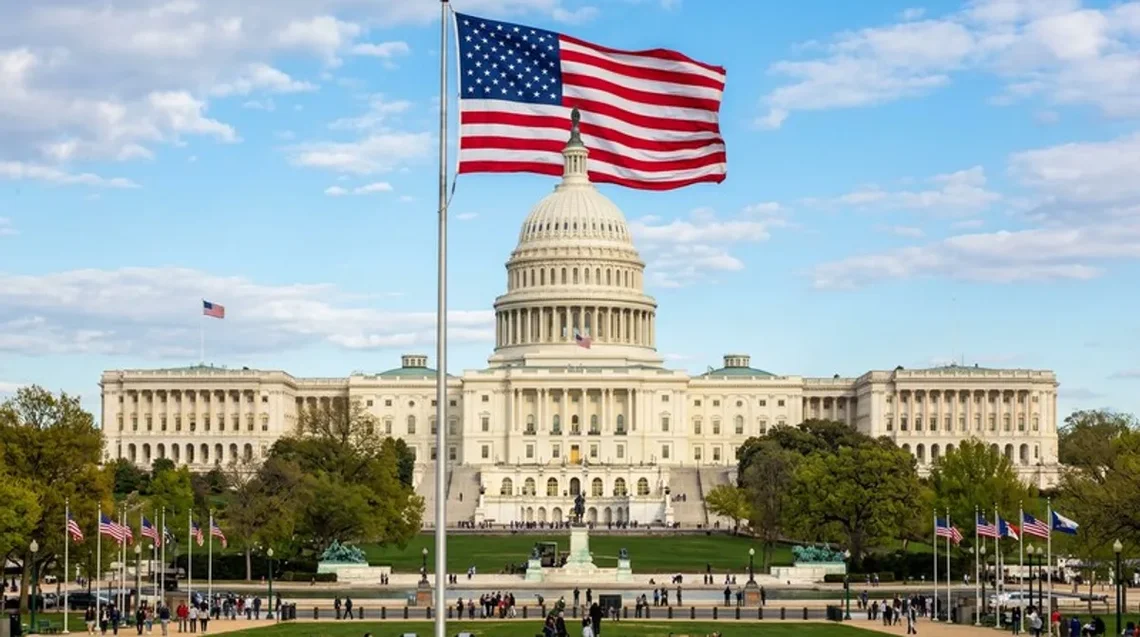
Senate Republicans have blocked a Democratic-backed immigration reform package from advancing to a full floor vote, defeating the measure on a procedural motion in a result that underscored the deep partisan divisions in Congress over border security and immigration policy. The bill, which would have expanded pathways to legal residency and introduced new protections for undocumented migrants already living in the United States, failed to clear the 60-vote threshold required to overcome a Republican-led filibuster.
Key Positions: Republicans argue the bill fails to address border enforcement, would incentivise further illegal crossings, and should not proceed without significant amendments tightening asylum rules and increasing deportation powers. Democrats contend the legislation represents a necessary and long-overdue modernisation of the immigration system, providing stability for millions of people and addressing structural failures in the current framework. The White House has expressed strong support for the Democratic proposal, with officials indicating the administration views comprehensive immigration reform as a legislative priority, though it has acknowledged the difficult arithmetic in the Senate.
The Vote: A Predictable But Consequential Defeat
The procedural vote, a cloture motion required to end debate and advance to a final vote on the bill, fell largely along party lines. Not a single Republican senator voted in favour of proceeding with the legislation, according to reports from AP and Reuters. The result was widely anticipated by Senate watchers, but Democrats insisted on forcing the vote to draw a clear political contrast ahead of upcoming electoral contests.
Vote Tally and Margin
| Vote Outcome | In Favour | Against | Not Voting / Present |
|---|---|---|---|
| Cloture Motion (Immigration Bill) | 49 | 51 | 0 |
| Threshold Required to Advance | 60 votes | ||
| Shortfall | 11 votes | ||
Senate Majority Leader Chuck Schumer moved to bring the bill to a vote as part of a broader Democratic strategy to highlight Republican opposition to immigration reform in advance of November contests. The move follows a pattern of procedural votes on contentious legislation that Democrats have used to build a legislative record, officials said. For further background on this recurring dynamic, see our earlier coverage of how Senate Republicans blocked an immigration bill in a party-line vote during a previous congressional session.
Related Articles
What the Bill Proposed
The Democratic immigration package contained several major provisions that had been under negotiation for months. According to congressional aides and documentation reviewed by reporters, the bill included a pathway to legal permanent residency for undocumented individuals who have resided in the United States for a specified number of years, reforms to the asylum processing system designed to reduce backlogs, expanded guest worker visa programmes for agricultural and service industries, and additional funding for immigration courts to address the significant backlog of pending cases.
Congressional Budget Office Assessment
The Congressional Budget Office estimated that the legislation would reduce the federal deficit over a ten-year window, primarily through increased tax revenues generated by bringing undocumented workers into the formal economy. The CBO also projected that the bill would add millions of workers to the legal labour force, with macroeconomic modelling suggesting a modest but measurable boost to gross domestic product over the same period (Source: Congressional Budget Office). Republicans disputed this framing, arguing that the CBO analysis did not adequately account for increased social service costs and the potential pull factor on future illegal immigration.
Asylum and Border Provisions
A central point of contention was the bill's approach to the southern border. Democratic sponsors argued that the legislation contained meaningful enforcement provisions, including additional resources for Customs and Border Protection and streamlined processes for adjudicating asylum claims. Republican senators countered that these measures were insufficient and that the bill's legalisation components would serve as a magnet for further unauthorised crossings. This debate has defined the legislative impasse on immigration for over a decade, and the latest failure reflects the continued inability of both parties to reach a durable compromise, according to congressional analysts.
Republican Opposition: Strategy and Substance
Senate Minority Leader Mitch McConnell and his Republican colleagues maintained that the Democratic proposal represented a fundamentally flawed approach to immigration, prioritising what they described as "amnesty" over border security. Senior Republican senators argued in floor speeches that any credible immigration legislation must begin with a significant tightening of entry requirements, expanded use of detention for those who cross the border illegally, and a reduction in the categories of individuals eligible to claim asylum.
Republican Counter-Proposals
Several Republican senators have put forward alternative frameworks in recent months, most of which centre on enhanced border wall construction funding, mandatory E-Verify employment verification, and sweeping restrictions on humanitarian parole programmes. None of these proposals has attracted sufficient Democratic support to advance, leaving the legislative situation in a state of persistent gridlock. This pattern is consistent with what observers noted in coverage of how Senate Republicans blocked a Democratic immigration bill on previous occasions, with the fundamental disagreements remaining essentially unchanged across multiple congressional sessions.
Democratic Response and Political Calculations
Democratic senators expressed frustration but not surprise following the vote. Several appeared before reporters to argue that the result demonstrated the Republican Party's unwillingness to address what they characterised as a humanitarian and administrative crisis at the southern border. Senators from states with large Hispanic and Latino populations were particularly vocal, framing the defeat as evidence of Republican obstruction on an issue of direct concern to millions of American families.
Midterm and Electoral Implications
Political strategists in both parties acknowledge that immigration remains one of the most potent issues in American electoral politics. According to Gallup polling data, immigration has consistently ranked among the top concerns for American voters in recent surveys, with significant pluralities citing it as an extremely or very important issue when deciding how to cast their votes (Source: Gallup). Pew Research Center data similarly indicate that views on immigration policy are among the most sharply polarised by party affiliation of any major policy area, with Democrats and Republicans holding divergent positions not only on undocumented immigration but also on legal immigration levels and the treatment of asylum seekers (Source: Pew Research Center).
Democrats are betting that forcing Republicans to take on-the-record votes against immigration reform will mobilise Latino voters and immigration advocates heading into competitive races. Republicans, conversely, believe that a tough-on-the-border posture energises their base and appeals to working-class voters in swing states who associate unauthorised immigration with labour market competition and public safety concerns, strategists from both parties said.
White House Position and Executive Action
The Biden administration expressed disappointment at the vote's outcome through official statements, reiterating its call on Congress to pass comprehensive immigration legislation. White House officials argued that the legislative failure left the executive branch in an untenable position, forced to manage a complex and underfunded immigration system without the statutory tools necessary to do so effectively.
The administration has in recent months expanded its use of executive authority on immigration matters, including modifications to parole programmes for nationals of specific countries and administrative changes to asylum processing procedures. These actions have themselves been challenged in federal courts, with mixed results, and Republicans have used them as a further argument that the administration is acting beyond its constitutional authority in the absence of congressional action, officials said. Our earlier report on how Senate Republicans blocked immigration reform legislation provides additional context on the administration's evolving response to congressional inaction.
Public Opinion and the Broader Landscape
National polling suggests the American public holds nuanced views on immigration that do not map neatly onto either party's position. Pew Research Center surveys indicate that majorities support both stricter border enforcement and pathways to legal status for long-term undocumented residents, a combination that in theory could form the basis of a bipartisan compromise but has proved impossible to legislate in practice (Source: Pew Research Center). Gallup data show that public concern about immigration has risen sharply in recent years, tracking increased encounters at the southern border and elevated media coverage of migration from Central America and elsewhere (Source: Gallup).
Economic and Fiscal Dimensions
| Metric | Estimate / Finding | Source |
|---|---|---|
| 10-Year Federal Deficit Impact (CBO) | Projected reduction | Congressional Budget Office |
| Share of voters rating immigration "very important" | Approx. 52% (recent polling) | Gallup |
| Partisan gap on immigration policy (favourable/unfavourable) | Among widest of any policy issue | Pew Research Center |
| Pending immigration court cases (backlog) | Over 3 million cases | AP / Reuters |
Reuters and AP have both reported extensively on the scale of the immigration court backlog, documenting a system that immigration judges and legal advocates describe as overwhelmed beyond its functional capacity. Asylum seekers in some jurisdictions are receiving hearing dates years into the future, a situation that all sides acknowledge is unsustainable, according to reporting from both wire services (Source: Reuters; Source: AP).
What Comes Next
With the bill now effectively dead for this congressional term, attention turns to whether any bipartisan framework can be assembled before the next major electoral cycle. A small group of senators from both parties has periodically convened informal negotiations on a narrower package that might attract enough Republican support to cross the 60-vote threshold, though these talks have repeatedly stalled over the same enforcement-versus-legalisation trade-off that has defined the debate for years, congressional aides said.
Senate Democratic leadership has not ruled out bringing additional immigration-related measures to the floor, potentially including standalone bills addressing specific populations such as recipients of Deferred Action for Childhood Arrivals, a programme protecting from deportation individuals brought to the country as children. Any such measure would face the same procedural obstacles as the broader bill. For a comprehensive overview of how this cycle of legislative failure has repeated itself across multiple congressional terms, readers can consult our detailed analysis of how Senate Republicans blocked an immigration bill in a partisan vote in an earlier session, a pattern that shows little sign of breaking in the near term.
The failure of the latest Democratic immigration bill leaves the status quo intact: millions of undocumented individuals remain in legal limbo, immigration courts continue to struggle under an unprecedented caseload, and the border remains a defining fault line in American political life. With no bipartisan deal in sight and both parties showing little appetite for the kind of compromise that would be necessary to reach 60 votes in the Senate, the legislative gridlock on immigration shows every indication of persisting well into the next Congress.