
Senate Splits on Immigration Reform Bill
Bipartisan effort faces GOP resistance over border enforcement
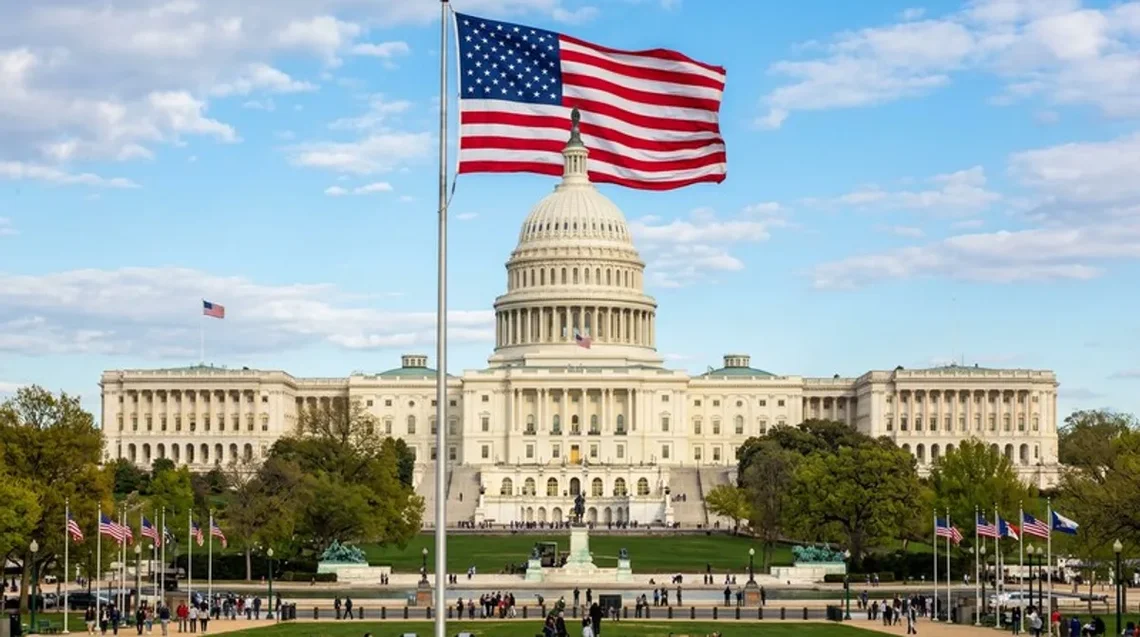
A sweeping immigration reform bill that cleared a key Senate committee with rare bipartisan support has stalled on the chamber floor, as Republican lawmakers demand significantly stronger border enforcement language before agreeing to advance the legislation. The deadlock marks the latest chapter in a years-long congressional struggle to overhaul the United States immigration system, and it threatens to collapse one of the few genuine cross-party negotiations on the issue in recent memory.
Key Positions: Republicans are demanding stricter mandatory detention provisions, expanded deportation authority, and higher thresholds for asylum eligibility before supporting the bill. Democrats argue the existing enforcement measures already represent major concessions and insist that a path to legal status for undocumented long-term residents must remain in the final text. The White House has expressed support for the bill's framework but has stopped short of pressuring Republican senators to back the legislation, leaving the negotiations in an uncertain state.
The Bill and What It Proposes
The legislation, which draws on frameworks developed by a small group of senators from both parties, would reshape multiple pillars of US immigration policy simultaneously. It includes provisions to modernise the asylum adjudication process, increase the number of immigration judges, raise caps on certain employment-based visas, and create a conditional legal status pathway for undocumented individuals who have resided continuously in the country for a qualifying period, according to congressional summaries reviewed by reporters.
Pathway to Legal Status
The bill's most politically sensitive provision would extend a form of protected legal status to an estimated eight to ten million undocumented individuals who meet residency, criminal background, and tax compliance requirements, according to projections reviewed by Senate aides. The Congressional Budget Office has assessed similar legislative proposals in recent years, consistently finding that legalisation provisions carry long-term fiscal benefits through increased payroll tax contributions and reduced administrative enforcement costs. (Source: Congressional Budget Office)
Related Articles
Democrats have argued this provision is non-negotiable, describing it as a basic acknowledgement of the reality of long-established immigrant communities. Several Democratic senators from border states have nonetheless signalled willingness to accept stricter enforcement additions, provided the legalisation pathway survives intact.
Border Enforcement Provisions
On the enforcement side, the bill already contains substantial measures, including funding for additional Customs and Border Protection personnel, expanded use of expedited removal procedures, and new technology investments along the southern border. Supporters of the legislation argue these components represent the most significant border security investment written into statute in over a decade.
Republican critics, however, have characterised those measures as insufficient. A group of conservative senators has circulated a list of additional demands, including mandatory detention for all individuals crossing the border without authorisation pending adjudication, reduced access to humanitarian parole, and a hard cap on annual asylum grants. According to reporting by AP, the group believes the bill's current enforcement framework leaves too many administrative discretions with executive branch agencies rather than codifying stricter standards in law. (Source: AP)
The Political Arithmetic
Senate leadership faces a difficult procedural path. The chamber's filibuster rules require sixty votes to advance most legislation, meaning the bill's Democratic sponsors need to secure the support of at least eight Republican senators to move it forward. As of the most recent whip count, fewer than five Republicans have indicated they would vote to proceed to debate, according to congressional aides familiar with the count.
The Narrow Path to Sixty
The gap between the current vote count and the required sixty-vote threshold reflects the degree to which immigration remains one of the most politically charged issues in American federal politics. For context on how similar dynamics have played out, readers can review coverage of the Republican procedural blocking of earlier immigration reform legislation and reporting on previous rounds of Senate negotiations that collapsed as border talks stalled.
Several moderate Republican senators have expressed sympathy for targeted elements of the bill but have declined to commit to a floor vote while their party's conference remains divided. Advisers to those senators have said privately that a vote for cloture on a bill perceived as insufficiently tough on enforcement could expose them to primary challenges, according to Reuters. (Source: Reuters)
| Metric | Figure | Source |
|---|---|---|
| Votes needed to advance (cloture) | 60 | Senate Rules |
| Estimated Republican votes currently committed | Fewer than 5 | Congressional aides |
| Undocumented individuals eligible under legalisation provision | 8–10 million (est.) | Congressional Budget Office |
| US adults who support a path to legal status for long-term undocumented residents | 68% | Gallup |
| US adults who say immigration is an "extremely important" policy issue | 52% | Pew Research Center |
| Proposed additional immigration judges funded under the bill | 1,000+ | Bill text summary, Senate Judiciary Committee |
Public Opinion and the Polling Landscape
National polling consistently shows a public that holds complex and sometimes contradictory views on immigration policy. Gallup data show that roughly 68 percent of American adults support providing a pathway to legal status for undocumented individuals who have lived and worked in the country for an extended period, a figure that has remained relatively stable over the past several years. At the same time, polling also shows strong public concern about unauthorised border crossings and support for more stringent enforcement measures. (Source: Gallup)
Partisan Divergence in the Electorate
Pew Research Center data illustrate the depth of the partisan divide. Among self-identified Republicans, a clear majority say immigration enforcement is a higher priority than creating legal pathways for undocumented residents. Among Democrats and independents, that preference is reversed, with most placing greater weight on reform and humanitarian considerations. (Source: Pew Research Center)
This partisan split in the electorate maps almost exactly onto the Senate impasse. Republican senators facing re-election in competitive or right-leaning states have little incentive to be seen supporting legislation that their own voters view primarily through an enforcement lens, even when other elements of the bill align with business community priorities such as expanded work visas.
White House Positioning
The administration has engaged with the negotiations but has avoided applying direct public pressure on Republican holdouts, a posture that some Democratic senators have found frustrating. White House officials have described the bill as broadly consistent with administration priorities and have praised the bipartisan effort, while stopping short of explicit vote-whipping on the Republican side, according to officials familiar with internal discussions.
Executive Action as a Fallback
Should the legislative effort fail, administration officials have not ruled out executive actions to address portions of the immigration system that fall within executive authority, according to officials cited by Reuters. However, both Democratic and Republican immigration policy analysts have noted that executive measures are inherently limited in scope, reversible by future administrations, and cannot substitute for the statutory changes that only Congress can enact. (Source: Reuters)
The legislative failure of earlier bipartisan proposals offers a cautionary precedent. This current standoff echoes patterns documented in earlier reporting on Democratic opposition to earlier Republican-drafted immigration legislation and subsequent Democratic blocking of GOP-led reform attempts, illustrating how both parties have, at different moments, found themselves on the opposing side of procedural defeats.
The Broader Context: A System Under Strain
The urgency behind the current negotiations is partly driven by what immigration courts, federal agencies, and border communities have described as an administrative system operating beyond its functional capacity. Immigration court backlogs have grown substantially, with pending cases numbering in the millions and average wait times stretching across multiple years before a final hearing, according to data compiled by the Department of Justice's Executive Office for Immigration Review.
Border processing facilities have faced repeated reports of overcrowding, and the patchwork of temporary administrative measures used to manage arrivals has generated ongoing legal challenges. Advocates on both sides of the immigration debate have argued, from their respective positions, that the absence of comprehensive legislative action leaves the system in a state of managed dysfunction.
Economic Dimensions of the Debate
The Congressional Budget Office has repeatedly found that immigration, including undocumented immigration, contributes positively to gross domestic product, payroll tax revenues, and Social Security funding over the long term. Business groups, including those traditionally aligned with the Republican Party, have lobbied in favour of expanded legal immigration pathways and reform of the employment visa system, arguing that labour shortages in sectors including agriculture, construction, and technology cannot be adequately addressed without legislative action. (Source: Congressional Budget Office)
Those economic arguments have so far made limited headway with the Republican senators whose votes are needed to reach sixty. For those lawmakers, the enforcement dimension of the immigration debate carries greater political salience than fiscal projections, and that calculus has defined the outer boundary of what bipartisan negotiation has been able to achieve.
What Comes Next
Senate leadership has not yet scheduled a floor vote, and negotiations between the bill's sponsors and Republican holdouts are described as ongoing but unresolved. Several Republican senators have indicated they are waiting to see whether the bill's authors will accept additional enforcement amendments before deciding on their votes, according to AP. (Source: AP)
If those amendments are incorporated, the bill risks losing support from progressive Democrats who have already accepted significant concessions in the current text. The narrow zone of potential agreement — enough enforcement language to bring Republicans to sixty, while retaining enough of the legalisation and humanitarian framework to keep Democrats unified — remains, for now, an unoccupied political space.
Analysts tracking the bill have noted that the window for legislative action may be limited. Prior experience, including the collapse of earlier comprehensive reform efforts documented in coverage of Republican party-line blocking of immigration legislation, suggests that immigration bills which do not advance within a defined negotiating window tend not to recover momentum. Whether the current effort can navigate that history remains the central question facing both chambers as debate continues.