
UK Accelerates Grid Overhaul Ahead of 2030 Net Zero Push
Government pledges £40bn renewable energy investment
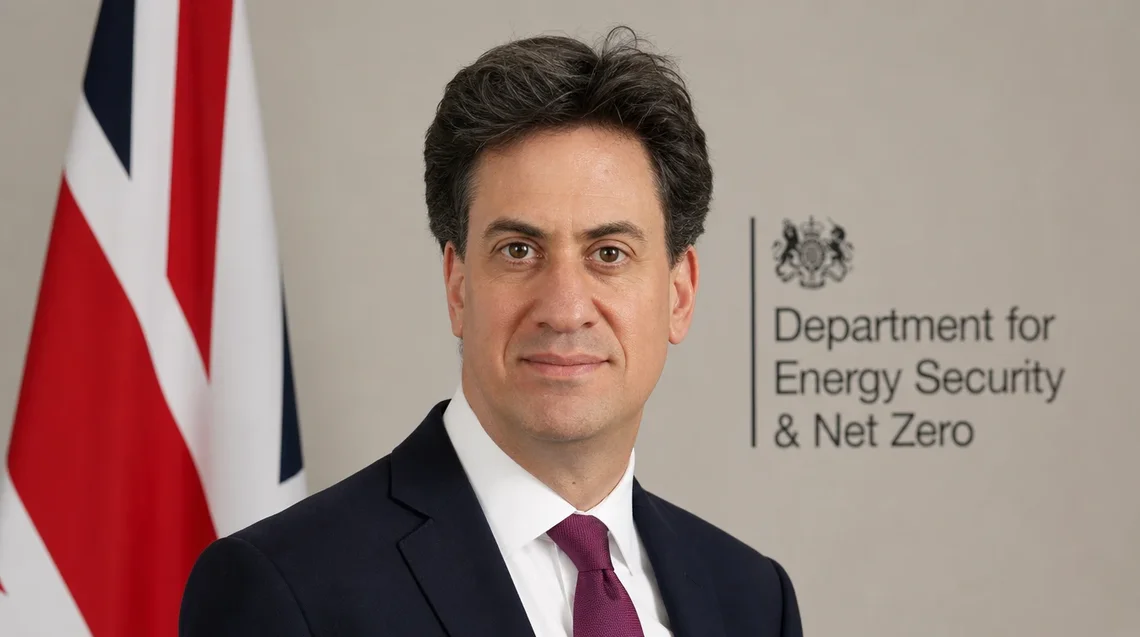
The UK government has committed £40 billion toward overhauling the national electricity grid and accelerating the deployment of renewable energy infrastructure, in what officials describe as the most significant energy investment programme in a generation. The pledge, announced as part of a broader clean power strategy, positions Britain to decarbonise its electricity system by the end of the decade — a target that independent analysts say is technically achievable but will require sustained political will and regulatory reform at unprecedented speed.
Climate figure: The UK's electricity sector currently accounts for approximately 13% of total national greenhouse gas emissions, down from over 30% a decade ago. The International Energy Agency projects that full grid decarbonisation in advanced economies could reduce global power-sector emissions by up to 4 gigatonnes of CO₂ equivalent annually by mid-century — equivalent to eliminating the entire current annual output of the European Union. The IPCC's Sixth Assessment Report identifies rapid electricity grid transformation as one of the most cost-effective mitigation pathways available to high-income nations. (Source: IPCC, IEA)
The Scale of the Investment
The £40 billion commitment encompasses offshore and onshore wind expansion, large-scale solar deployment, grid storage infrastructure, and the modernisation of transmission and distribution networks across England, Scotland, and Wales. Officials at the Department for Energy Security and Net Zero confirmed that roughly £12 billion of the total is earmarked specifically for transmission grid upgrades — the network of pylons, cables, and substations that carry electricity from generation sites to homes and businesses.
Transmission Infrastructure Bottlenecks
Grid infrastructure has emerged as a critical constraint on renewable deployment. According to industry data published by National Grid ESO, the UK currently has a queue of projects representing over 700 gigawatts of potential generation capacity seeking grid connection — a figure that dwarfs total current installed capacity of around 100 gigawatts. Many approved wind and solar projects have faced connection delays of up to a decade, effectively stalling private investment regardless of planning permission. The government's investment package aims to fast-track connections reform and fund new transmission routes, particularly from wind-rich northern Scotland to demand centres in England. (Source: National Grid ESO)
Related Articles
Analysis published by Carbon Brief indicates that resolving grid connection delays alone could unlock an estimated £30 billion in stranded private renewable investment currently waiting on approvals. Officials said streamlining the connection queue is now a priority as central to the clean power timeline as any generation target.
Storage and Flexibility
Alongside transmission, the investment package includes substantial funding for battery storage and flexible demand technologies. The IEA's most recent World Energy Outlook identifies grid-scale storage as the decisive variable in whether high-renewable power systems can maintain reliability without fossil fuel backup. The UK currently has approximately 4.7 gigawatts of battery storage installed, but modelling cited by the government suggests the system will require between 20 and 30 gigawatts of flexible storage capacity to support a grid drawing more than 95% of electricity from renewables. (Source: IEA)
Policy Architecture and Regulatory Reform
Financial commitments alone will not determine whether the clean power target is met. The investment package is accompanied by a package of regulatory and planning reforms that officials say are designed to compress timelines without removing environmental protections.
Planning and Consenting Changes
The government has moved to reinstate onshore wind to the Nationally Significant Infrastructure Projects framework, reversing restrictions that had effectively blocked large onshore wind development in England for nearly a decade. Officials said the change is expected to re-open a pipeline of projects that developers had mothballed due to planning uncertainty. Scotland and Wales, which have operated under different planning regimes, have continued onshore wind development throughout this period and collectively account for the majority of new UK wind capacity added recently.
Offshore wind consenting timelines are also under review. The Guardian Environment has reported that the average time from application to consent for major offshore wind projects in the UK currently stands at over four years — roughly double the rate in Denmark, which has maintained faster consenting through dedicated maritime spatial planning. The government has committed to reducing average offshore consenting to under two years, though independent planning lawyers cited in sector briefings have described that target as ambitious given existing statutory consultation requirements.
The Contracts for Difference Mechanism
The primary financial instrument supporting renewable deployment remains the Contracts for Difference scheme, through which developers bid for long-term revenue guarantees that reduce investment risk. The scheme has been credited by economists at the London School of Economics Energy Policy Group with driving offshore wind costs down by more than 70% over the past decade. However, the most recent auction round produced a mixed outcome: while solar and onshore wind saw strong participation, the offshore wind pot attracted no bids after a price cap was set below the level developers said was commercially viable, reflecting recent increases in supply chain and financing costs. Officials said the strike price framework will be revised to reflect current market conditions. (Source: Carbon Brief)
International Context and Comparative Progress
Britain's clean power ambitions sit within a global policy environment in which major economies are simultaneously scaling up grid investment, creating both supply chain competition and opportunities for technology cost reduction.
| Country | Clean Power Target Year | Renewable Share of Electricity (current) | Annual Grid Investment |
|---|---|---|---|
| United Kingdom | 2030 | ~42% | £40bn (multi-year pledge) |
| Germany | 2035 | ~59% | €65bn (grid plan) |
| United States | 2035 | ~23% | $73bn (federal allocation) |
| Denmark | 2030 | ~88% | DKK 40bn (national plan) |
| France | 2035 | ~28% (excl. nuclear) | €100bn (multi-sector) |
Data compiled by the IEA show that global clean energy investment surpassed fossil fuel investment for the first time recently, with roughly $1.7 trillion directed toward low-carbon technologies. Analysts note, however, that grid infrastructure remains systematically underfunded relative to generation — a pattern described by IEA Executive Director Fatih Birol as "the missing middle" of the energy transition. The UK's emphasis on transmission and storage investment alongside generation targets has been noted by energy economists as a more comprehensive approach than many comparable national plans. (Source: IEA)
Industrial and Economic Dimensions
Supply Chain and Jobs
Officials said the investment programme is expected to support up to 300,000 jobs in the clean energy sector over the course of the decade, drawing on projections prepared by the government's industrial strategy unit. The offshore wind sector, centred on manufacturing and servicing hubs in northeast England, Scotland, and South Wales, is expected to be a primary beneficiary. However, trade bodies have warned that the UK risks losing manufacturing contracts to lower-cost competitors in Europe and Asia unless domestic content requirements are introduced into future CfD auction design — a proposal the government has so far declined to formalise, citing World Trade Organization compatibility concerns.
Research published in the journal Nature Energy found that countries with explicit industrial policies tying renewable deployment to domestic manufacturing saw significantly stronger job creation outcomes than those relying on market mechanisms alone. The findings are informing ongoing debate within Whitehall about whether the UK's current approach is sufficient to capture the full economic benefit of its clean energy transition. (Source: Nature)
Consumer Energy Prices
The relationship between grid investment and household energy costs is a politically sensitive dimension of the policy. Officials have argued that a fully decarbonised grid will reduce long-term exposure to volatile global gas prices, which drove the most acute cost-of-living pressures seen in recent years. Independent analysis by Carbon Brief suggests that a high-renewables grid, once built, would deliver electricity at consistently lower marginal cost than a gas-dependent system over the long run. In the near term, however, network charges required to fund infrastructure upgrades are expected to add modestly to bills, a dynamic the government has not disputed but says will be offset by lower generation costs as the transition matures. (Source: Carbon Brief)
Scientific Consensus and the 2030 Timeline
The IPCC's Sixth Assessment Report is unambiguous that accelerated decarbonisation of electricity systems in high-income countries is necessary to keep the global average temperature rise to 1.5°C above pre-industrial levels. The report identifies the 2030s as a critical window in which decisions made now will largely determine emissions trajectories for the remainder of the century. (Source: IPCC)
Whether the UK's specific clean power target is met by the end of the decade is less scientifically determined than it is a function of regulatory delivery, supply chain resilience, and political continuity. Analysis reviewed by ZenNewsUK from independent climate modellers suggests the 2030 target is feasible under a best-case scenario in which planning reform takes full effect within the next two years, CfD pricing is recalibrated rapidly, and no major macroeconomic disruption interrupts investment flows. A more cautious central scenario places full clean power delivery at two to three years beyond the stated target — still representing a substantial acceleration relative to historical trajectories.
For readers tracking the broader infrastructure and policy context, related coverage includes our reporting on UK Accelerates Net Zero Grid Overhaul Amid Investment Push, which examines the financing structures underpinning the programme. Further analysis of regulatory timelines is available in UK Accelerates Grid Overhaul Amid Net Zero Push, and the international climate agreement context is explored in UK Accelerates Net Zero Grid Overhaul Amid Climate Targets. Those following the longer-term planning horizon may also find relevant detail in coverage of UK Accelerates Electric Grid Overhaul Amid Renewable Push.
Outlook
The £40 billion commitment represents a substantive escalation of the UK's energy transition agenda, but officials and independent analysts alike caution that investment pledges are a necessary rather than sufficient condition for delivering clean power at the speed and scale required. The next twelve months are expected to be determinative: planning reform legislation is scheduled for parliamentary scrutiny, revised CfD auction parameters are due, and the first major transmission infrastructure contracts under the new programme will be tendered. The degree to which those processes proceed on schedule will provide the clearest early indication of whether the 2030 clean power target is a credible delivery commitment or an aspirational deadline in need of revision. What is not in question, according to the scientific literature and independent economic modelling, is the direction of travel — or the cost of delay.