
UK Accelerates Grid Overhaul Amid Net Zero Push
Investment in renewable infrastructure faces supply chain delays
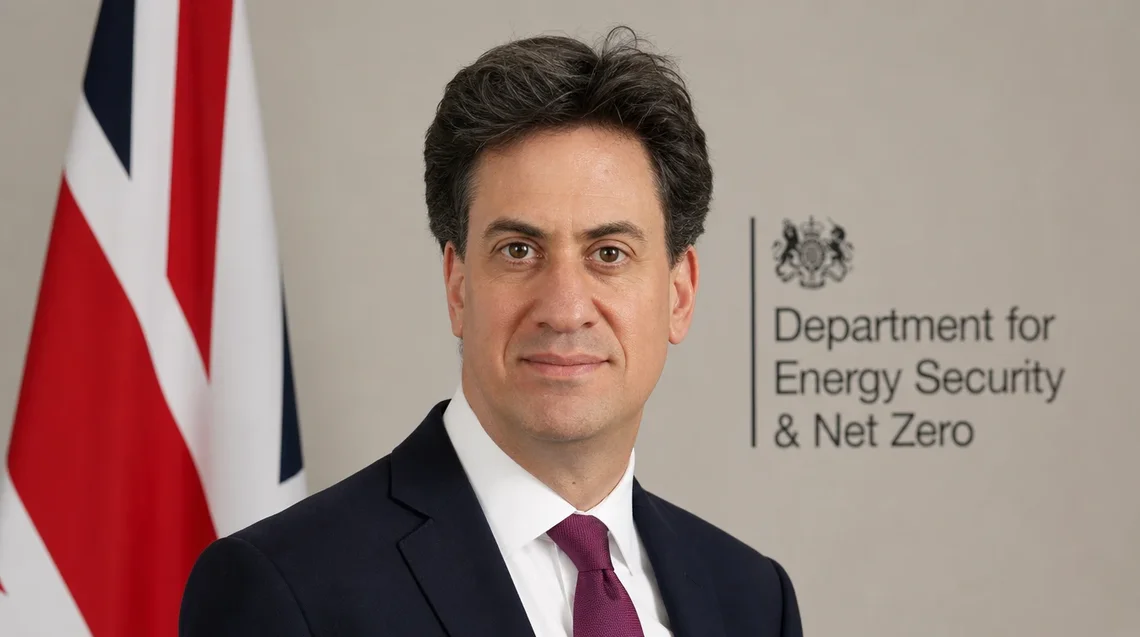
Britain's electricity grid is undergoing its most significant structural transformation in decades, with the government committing tens of billions of pounds to renewable infrastructure as it races to decarbonise the power sector by 2035. Yet industry analysts and energy officials warn that chronic supply chain bottlenecks — from transformer shortages to a limited pool of specialist engineers — risk undermining the pace of deployment that net zero legally requires.
Climate figure: The UK's power sector currently accounts for approximately 12% of total national greenhouse gas emissions, down from over 30% a decade ago. The International Energy Agency projects that fully decarbonising electricity generation by the mid-2030s could eliminate up to 55 million tonnes of CO₂-equivalent annually — a reduction critical to keeping global temperature rise within 1.5°C above pre-industrial levels, as outlined in the IPCC Sixth Assessment Report. (Source: IEA, IPCC)
The Scale of the Grid Challenge
National Grid's recently published electricity transmission plan identifies more than 4,600 kilometres of new and upgraded cabling required across England, Scotland and Wales to connect offshore wind farms, solar arrays and battery storage facilities to demand centres. The financial commitment runs into the tens of billions, with National Grid Electricity System Operator estimating that transmission investment must more than double compared to the previous decade's rate to meet 2035 clean power targets.
What the Numbers Demand
The scale of ambition is striking when set against historical precedent. Industry data compiled by Carbon Brief show that the UK added roughly 4 gigawatts of offshore wind capacity over a recent five-year period; current government planning assumes that rate must accelerate by a factor of three or more to meet legislated targets. To put that in context, each gigawatt of offshore wind capacity requires not just turbines but substations, undersea cables, grid connection infrastructure and skilled labour — supply chains that analysts say are already showing signs of severe strain. (Source: Carbon Brief)
Related Articles
For broader context on the investment landscape, see our coverage of UK Accelerates Net Zero Grid Overhaul Amid Investment Push, which examines the financial mechanisms underpinning this buildout.
Supply Chain Bottlenecks: A Systemic Problem
Manufacturers of high-voltage transformers — the large steel-and-copper units essential to grid substations — currently operate on lead times of between three and five years, according to industry procurement data. British and European factories that once held spare capacity were scaled back following the post-financial crisis slowdown in infrastructure investment, and re-expanding that manufacturing base takes years of capital commitment.
Critical Components Under Pressure
Offshore wind developers have reported difficulty securing specialist cable-laying vessels, inter-array cables and offshore substation platforms within commercially viable timeframes. The situation is compounded by parallel demand from Germany, France, the Netherlands and the United States, all of which are pursuing comparable grid expansion programmes. The IEA's Clean Energy Supply Chain report warns that global demand for grid-scale transformers and high-voltage cables may outstrip manufacturing capacity by as much as 40% before the end of this decade unless major new investment in fabrication facilities materialises. (Source: IEA)
Skills represent an equally pressing constraint. Energy UK, the industry trade body, estimates a shortfall of tens of thousands of electrical engineers, cable jointers and offshore technicians over the coming decade. Training pipelines — from apprenticeships to university-level engineering programmes — have historically been calibrated for a far slower pace of transition.
Planning Permission and Grid Connection Queues
Beyond manufacturing, the administrative architecture presents its own delays. The grid connection queue maintained by National Grid ESO held projects totalling over 700 gigawatts of prospective capacity at last count — far exceeding anything that could realistically be built or connected within current legislative timeframes. Reform of the connections process is underway following government intervention, but developers and legal analysts caution that improvements will take several years to translate into meaningful acceleration on the ground.
Our related report on UK Accelerates Grid Overhaul to Meet 2035 Net Zero provides a detailed examination of the connection queue reforms currently being implemented by Ofgem and National Grid.
Government Policy Response
The government's Clean Power Action Plan, published by the Department for Energy Security and Net Zero, sets out a series of policy interventions designed to address both supply chain and planning constraints. These include accelerated planning consents for nationally significant infrastructure projects, new contracts for difference allocation rounds with adjusted strike prices, and a fledgling industrial strategy targeting domestic manufacturing of grid components.
Contracts for Difference and Market Design
The contracts for difference mechanism — which provides developers with a guaranteed price for the electricity they generate, insulating them from market volatility — has been cited by the Nature Energy journal as one of the most effective policy instruments deployed by any government for stimulating renewable investment at scale. However, the most recent allocation round produced limited results for offshore wind after developers argued the maximum strike prices on offer were insufficient to cover elevated construction costs driven in part by supply chain inflation. (Source: Nature)
Officials subsequently adjusted strike prices upward, and a forthcoming allocation round is expected to attract stronger participation. The government has also indicated it will reform the way grid connection costs are allocated between generators and network companies — a change industry bodies say could unlock billions in stalled private investment.
International Comparisons
The UK's challenges are not unique, but its particular combination of ambitious targets, island geography and an ageing transmission network creates a distinctive set of pressures. The table below offers a comparative overview of grid investment and clean power targets across selected economies.
| Country | Clean Power Target | Est. Grid Investment (Current Decade) | Offshore Wind Capacity (Operational) | Primary Supply Chain Constraint |
|---|---|---|---|---|
| United Kingdom | Clean power by 2035 | £50bn+ | ~15 GW | Transformers, cable vessels, engineers |
| Germany | 80% renewables by 2030 | €65bn+ | ~9 GW | Grid planning approval, onshore routing |
| United States | 100% clean electricity by 2035 | $200bn+ (IRA-backed) | ~0.2 GW (rapidly expanding) | Domestic content requirements, permitting |
| Denmark | 100% renewable power by 2027 | €20bn+ | ~2.6 GW | Labour and interconnector capacity |
| Japan | 36–38% renewables by 2030 | ¥20trn+ | ~0.14 GW | Seabed leasing, grid access reform |
(Sources: IEA, Carbon Brief, national government policy documents)
Consumer Costs and Equity Considerations
The question of who bears the cost of grid transformation is increasingly prominent in policy debate. Network infrastructure costs are typically recovered through standing charges and transmission cost components embedded in consumer electricity bills. Ofgem data indicate that network costs currently represent approximately 20–25% of a typical household's electricity bill, and analysts expect that proportion to rise as large-scale capital projects are financed and recovered over coming decades.
Protecting Lower-Income Households
Consumer advocates and academic researchers — including economists cited in Guardian Environment reporting — have argued that the current tariff structure, which applies flat standing charges regardless of usage, places a disproportionate burden on low-income and low-consumption households. (Source: Guardian Environment) The government has commissioned a review of standing charges through Ofgem, with outcomes expected to inform the next price control period. Meanwhile, the Warm Homes Plan — a flagship programme of insulation and low-carbon heating upgrades — is intended to reduce household energy demand, which would theoretically moderate the absolute bill impact of any infrastructure cost pass-through.
Analysis of how climate policy intersects with consumer energy costs is covered further in our feature on UK Accelerates Electric Grid Overhaul Amid Renewable Push.
What Comes Next
Regulators, developers and government officials broadly agree that the 2035 clean power objective is technically achievable — but only if supply chain constraints are addressed with the same urgency applied to policy design. The IEA's latest World Energy Outlook identifies grid modernisation as the single largest bottleneck to clean energy deployment globally, a finding that carries particular weight for an island nation whose grid was largely designed for large centralised fossil fuel generators rather than a dispersed, variable renewable fleet. (Source: IEA)
Parliament's Energy Security and Net Zero select committee has called for a dedicated supply chain industrial strategy with binding milestones, arguing that voluntary commitments from manufacturers have been insufficient. Officials in the Department for Energy Security and Net Zero have signalled that further policy announcements — including potential public co-investment in transformer manufacturing facilities — are under active consideration.
For the latest on how legislative and regulatory frameworks are shaping delivery timelines, see UK Accelerates Net Zero Grid Overhaul Amid Climate Targets and our detailed explainer at UK Accelerates Grid Overhaul to Meet Net Zero Goals.
The trajectory of the UK's grid transformation will serve as a closely watched test case for whether advanced economies can reconcile the pace of clean energy ambition with the practical realities of industrial capacity. The evidence to date suggests the policy framework is largely sound; the execution risks are real, material and unresolved.