
UK Accelerates Grid Overhaul to Meet 2035 Net Zero
Investment surge targets renewable capacity expansion
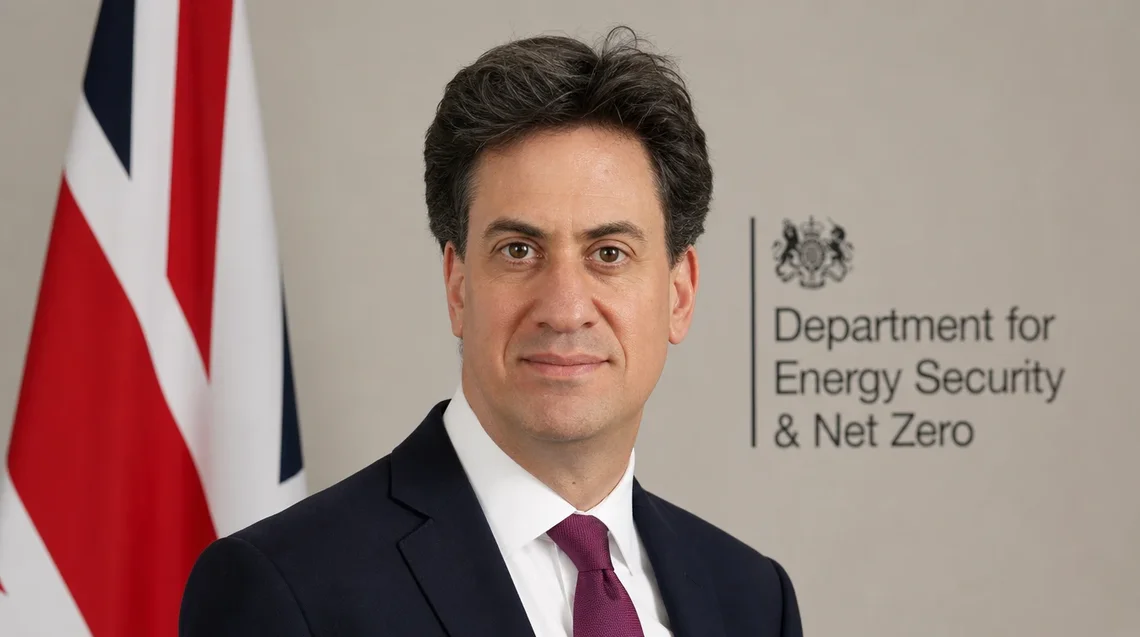
Britain is accelerating a multibillion-pound overhaul of its national electricity grid, with the government committing to decarbonise the power sector by the middle of the next decade — a target that energy analysts describe as among the most ambitious of any major economy. The programme, which encompasses new transmission infrastructure, expanded offshore wind capacity, and reformed planning rules, is being watched closely as a test case for whether wealthy industrialised nations can move fast enough to keep global heating within the limits set by the Paris Agreement.
Climate figure: The Intergovernmental Panel on Climate Change (IPCC) has determined that global greenhouse gas emissions must fall by roughly 43 percent by 2030 relative to 2019 levels to maintain a plausible pathway to limiting warming to 1.5°C above pre-industrial temperatures. The United Kingdom's electricity sector currently accounts for approximately 13 percent of domestic territorial emissions, down from nearly 30 percent a decade ago, making the grid the single largest near-term lever available to policymakers. (Source: IPCC Sixth Assessment Report; Department for Energy Security and Net Zero)
The Scale of the Infrastructure Challenge
The National Energy System Operator, which assumed its statutory functions recently, has identified the need to add and upgrade thousands of kilometres of high-voltage transmission lines to carry power from offshore wind farms concentrated in northern and Scottish waters to population centres in the Midlands and south of England. Officials said the backlog of grid connection requests — at one point exceeding 700 gigawatts of proposed capacity waiting in a queue — had become a structural bottleneck threatening the entire decarbonisation schedule.
The International Energy Agency has noted in successive annual reports that grid infrastructure, rather than the cost or availability of renewables technology, now represents the binding constraint on clean energy deployment across much of Europe and North America. The IEA's most recent World Energy Outlook assessed that transmission investment globally must roughly double by the end of this decade to keep net-zero scenarios on track. Britain's situation mirrors that broader finding. (Source: International Energy Agency)
Related Articles
Planning Reform and the Approval Pipeline
Ministers have moved to streamline the planning consent process for nationally significant infrastructure projects, reducing the statutory timeframe for major grid decisions. The government confirmed that reforms to the Nationally Significant Infrastructure Project regime are intended to cut approval timelines from an average of several years to under one year for priority grid schemes. Environmental groups have broadly welcomed the acceleration, while urging that ecological impact assessments not be weakened in the process, according to statements from campaign organisations cited by the Guardian Environment desk. (Source: Guardian Environment)
National Grid Electricity Transmission has outlined capital expenditure plans running into tens of billions of pounds over the current decade, covering subsea interconnectors, onshore upgrades, and new substations. For background on how those financial commitments have evolved, see the coverage of UK government funding for renewable energy grid infrastructure, which details the funding structures underpinning the current programme.
Connection Queue Reform
Ofgem, the sector regulator, has introduced a queue management system designed to prioritise projects that can demonstrably connect to the network within a defined window, removing speculative applications that had inflated waiting lists and delayed viable generators. Data published by Ofgem show the reforms have already cleared a substantial portion of the legacy backlog, though analysts at Carbon Brief have noted that the reforms must be sustained over multiple years to deliver their intended effect. (Source: Ofgem; Carbon Brief)
Offshore Wind: The Cornerstone of the Strategy
The government's clean power action plan places offshore wind at the centre of the generation mix, targeting a capacity of up to 50 gigawatts by the middle of the decade. The United Kingdom currently hosts more installed offshore wind capacity than any other country in Europe, a position built over two decades of successive auction rounds and falling technology costs. Developers and analysts have cautioned, however, that delivery depends critically on resolving grid connection delays and ensuring that port and manufacturing supply chains can scale in parallel.
Contracts for Difference and Investment Certainty
The Contracts for Difference auction mechanism, which guarantees generators a fixed strike price for electricity over fifteen years, remains the primary instrument for de-risking private capital deployment. The most recent allocation round attracted record developer interest following reforms that raised the administrative strike prices, correcting what the industry had identified as a fundamental mismatch between auction prices and actual project costs. Officials said the adjusted parameters had restored investor confidence after an earlier auction round returned no offshore wind bids — a widely noted setback discussed in detail in the context of the investment gap constraining UK net zero delivery.
Research published in the journal Nature Energy has found that long-term revenue certainty of the kind provided by CfD mechanisms is statistically the strongest predictor of offshore wind deployment speed across comparable jurisdictions, outweighing factors including resource quality and proximity to load centres. (Source: Nature)
International Comparisons: How the UK Stands
| Country | Power Sector Decarbonisation Target | Offshore Wind Installed (GW, approx.) | Grid Investment Commitment |
|---|---|---|---|
| United Kingdom | Clean power by mid-2030s | ~15 GW | £50bn+ committed over decade |
| Germany | 80% renewables by 2030 | ~8.5 GW | €65bn grid expansion plan |
| United States | Carbon-free electricity by 2035 | ~0.05 GW (rapidly expanding) | $73bn under Infrastructure Law |
| Denmark | 100% renewable electricity by 2030 | ~2.6 GW | Significant relative to GDP |
| France | Nuclear and renewables mix to 2035 | ~0.07 GW (nascent sector) | Multi-year RTE investment programme |
The comparison underscores that the United Kingdom's grid decarbonisation timeline is among the earliest of any G7 economy, though the IEA has noted that Denmark, proportionate to its size, remains the global benchmark for the pace of clean power integration. (Source: International Energy Agency)
Storage, Flexibility, and System Stability
A grid running predominantly on variable renewables requires a fundamentally different approach to system balancing than one anchored by dispatchable fossil fuel plant. The National Energy System Operator has published modelling suggesting that Britain will need between 20 and 30 gigawatts of flexible capacity — encompassing battery storage, hydrogen-ready gas peakers, interconnection, and demand-side response — to maintain security of supply as coal and unabated gas exit the system.
Battery Storage Deployment
Grid-scale battery storage has expanded rapidly in the United Kingdom, with installed capacity growing by a factor of several times over the past few years, according to data cited by Carbon Brief in its tracking of low-carbon infrastructure deployment. Longer-duration storage technologies, including compressed air, flow batteries, and green hydrogen, remain at earlier stages of commercial scale-up. Officials at the Department for Energy Security and Net Zero said the Longer Duration Energy Storage Demonstration programme is intended to accelerate the commercialisation of those technologies, though analysts have noted that timelines remain uncertain. (Source: Carbon Brief; Department for Energy Security and Net Zero)
Risks to the Timeline and Ongoing Scrutiny
Despite the policy momentum, independent assessments consistently identify risks that could disrupt delivery. The Climate Change Committee, in its most recent progress report to Parliament, found that while the direction of travel was positive, the pace of execution on grid infrastructure, heat pump deployment, and industrial decarbonisation remained insufficient relative to legislated carbon budgets. That assessment aligns with broader concerns documented in earlier coverage of whether missed interim milestones undermine confidence in the 2035 commitment.
Supply chain pressures present a particular vulnerability. The specialist vessels needed to install offshore turbines, the high-voltage cable manufacturing capacity in Europe, and the skilled engineering workforce required for substation construction are all operating near capacity across multiple competing national programmes simultaneously. Industry bodies have called on the government to provide longer-term contract pipelines to incentivise domestic supply chain investment, arguing that short auction cycles alone are insufficient to anchor manufacturing capacity in the United Kingdom.
Geopolitical and Economic Headwinds
Energy economists have also flagged the risk that elevated interest rates, which increase the cost of capital-intensive long-life infrastructure, could erode project economics even when strike prices are set at adequate levels. The IEA has noted this dynamic across multiple jurisdictions, describing it as one of the most significant macroeconomic risks to clean energy investment globally at the present time. For a detailed examination of how these pressures have contributed to delays in the broader transition, the analysis of grid transition challenges affecting UK net zero timelines provides relevant policy context. (Source: International Energy Agency)
What the Next Phase Requires
Energy analysts and policy researchers broadly agree that the acceleration of grid infrastructure is necessary but not sufficient. Demand-side transformation — through the electrification of heat, transport, and industrial processes — must proceed in parallel for the investment in generation and transmission to translate into actual emissions reductions at the scale required. The Climate Change Committee has repeatedly emphasised that consumer-facing policies, including support for heat pump adoption and the managed phase-out of new gas boilers, have lagged behind the supply-side measures.
The government's capacity to sustain political and financial commitment through what is likely to be a period of rising consumer bills, contested planning decisions, and visible construction disruption will be tested repeatedly over the coming years. Independent observers, including researchers whose work has appeared in Nature and submissions tracked by Carbon Brief, have noted that public acceptance of the physical infrastructure of the energy transition — pylons, substations, onshore cable routes — represents as significant a governance challenge as any technical or financial obstacle. (Source: Nature; Carbon Brief)
Britain's grid overhaul is, at its core, a decades-long infrastructure project being executed against a shortened political timeline. Whether the current acceleration represents a durable shift in delivery capacity, or an optimistic target that will require further revision, is a question that the evidence will answer over the next several years — as it has answered similar questions before, documented in the record of the evolving ambition underpinning UK grid decarbonisation policy. The international and scientific consensus, as reflected in IPCC guidance and IEA modelling, is clear that the window for action is narrowing. Whether institutional delivery can match that urgency remains the defining question of UK energy policy.