
UK Accelerates Net Zero Push Ahead of COP30
New renewable investment targets aim to meet 2035 carbon goals
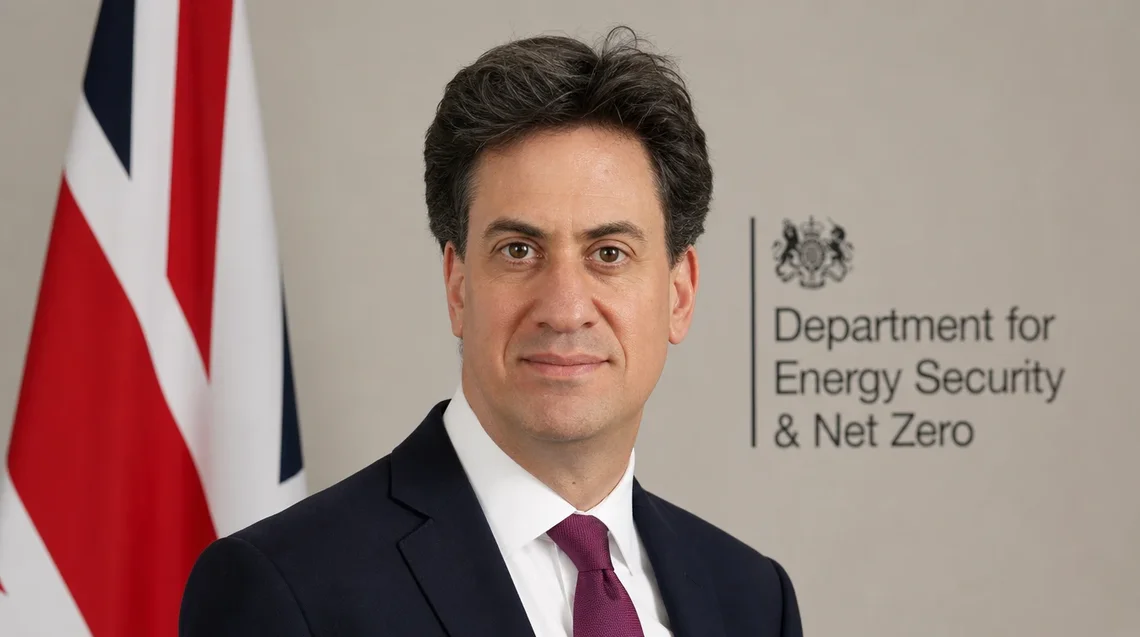
The United Kingdom has announced an ambitious package of renewable energy investment targets designed to decarbonise the electricity grid by the middle of the next decade, placing Britain among the most aggressive signatories heading into COP30 negotiations in Belém, Brazil. The measures, which include expanded offshore wind capacity, accelerated grid modernisation, and new financial frameworks for clean energy transition, represent what government officials describe as a pivotal step toward legally binding net zero commitments under the Climate Change Act.
Climate figure: The UK's electricity sector currently accounts for approximately 11% of total national greenhouse gas emissions, down from over 30% a decade ago. The IPCC's Sixth Assessment Report states that limiting global average temperature rise to 1.5°C above pre-industrial levels requires global CO₂ emissions to reach net zero by around 2050, with electricity systems in developed economies needing to decarbonise significantly earlier — the IEA places this target no later than the mid-2030s for OECD members. The UK's current Nationally Determined Contribution commits to reducing emissions by 68% against a 1990 baseline by the end of this decade. (Source: IPCC, IEA)
A Pivotal Moment for UK Climate Policy
Britain's push to accelerate its net zero trajectory arrives at a moment of considerable international scrutiny. COP30 is widely regarded by climate scientists and policy analysts as a defining checkpoint for the Paris Agreement's long-term viability, with countries expected to submit updated Nationally Determined Contributions that align more closely with the 1.5°C pathway. The UK, which hosted COP26 in Glasgow, has positioned itself as a leader in clean energy transition, and officials have indicated that the new investment framework is intended to reinforce that standing on the global stage.
According to analysis published by Carbon Brief, the UK has reduced its greenhouse gas emissions by more than 50% since 1990, making it one of the fastest-decarbonising major economies in the world. However, researchers and independent advisors have noted that the pace of reduction needs to accelerate substantially in the power, transport, and heating sectors if statutory targets are to be met without reliance on speculative carbon removal technologies.
Related Articles
What the New Investment Package Contains
The investment framework outlined by government officials centres on three primary pillars: a tripling of offshore wind capacity from current operational levels, a new sovereign green bond structure to attract private capital into grid infrastructure, and a reformed planning regime intended to cut approval timelines for large-scale solar and onshore wind projects. Energy ministers have framed the package as responding directly to the IEA's finding that global clean energy investment must reach $4 trillion annually by the early 2030s to stay on a credible path to net zero. (Source: IEA World Energy Outlook)
The grid modernisation component is particularly significant. Analysts at Carbon Brief and the Energy and Climate Intelligence Unit have long argued that the UK's transmission infrastructure represents a critical bottleneck — new renewable generation capacity is being approved at pace, but the physical means to deliver that electricity to homes and businesses has lagged behind. For deeper coverage of the grid investment dimension, see our reporting on the UK Accelerates Net Zero Grid Overhaul Amid Investment Push and UK Accelerates Net Zero Grid Overhaul Amid Climate Targets.
The 2035 Decarbonisation Goal in Context
The target of a fully decarbonised electricity system by 2035 is not new in principle — it was enshrined in government policy documents and endorsed by the Climate Change Committee — but the mechanisms to achieve it have remained contested. Critics, including independent advisors and energy economists, have pointed to persistent gaps between stated ambition and actual deployment rates for clean technologies, particularly in offshore wind supply chains and grid connection queues.
How the UK Compares Internationally
International comparison is instructive. While the UK has made notable progress, peer economies are also accelerating their renewable programmes, and the global picture is uneven. The table below presents a cross-country overview of electricity decarbonisation targets and current renewable share, drawing on data from the IEA and national energy agencies.
| Country | Clean Power Target Year | Current Renewable Share (%) | Offshore Wind Installed (GW) | NDC Emissions Reduction Target |
|---|---|---|---|---|
| United Kingdom | 2035 | ~42% | ~15 | 68% vs 1990 baseline |
| Germany | 2035 | ~56% | ~8.5 | 65% vs 1990 baseline |
| United States | 2035 (clean electricity) | ~23% | ~0.2 | 50–52% vs 2005 baseline |
| Denmark | Already exceeds 2035 equivalent | ~80% | ~2.3 | 70% vs 1990 baseline |
| Australia | 2030 (82% renewables) | ~35% | ~0.1 | 43% vs 2005 baseline |
| Japan | 2050 carbon neutral | ~22% | ~0.14 | 46% vs 2013 baseline |
(Source: IEA Renewables Report, national government submissions to UNFCCC)
The data show that while the UK's renewable share remains below that of leading European peers such as Denmark and Germany, it holds a significant advantage in offshore wind deployment relative to most non-European economies — a sector where geography, industrial capacity, and policy continuity have historically converged. Research published in Nature Energy has highlighted offshore wind as one of the most cost-competitive and scalable low-carbon technologies available to temperate maritime nations. (Source: Nature Energy)
COP30 and the Diplomatic Stakes
The timing of the UK's announcement is clearly calibrated to the COP30 calendar. With negotiations in Belém expected to focus heavily on the so-called Global Stocktake — an assessment of collective progress against Paris Agreement targets — countries that can demonstrate concrete policy delivery, rather than aspirational pledges, will carry greater weight in the diplomatic process, according to observers familiar with UNFCCC negotiating dynamics.
Finance Gaps Remain a Central Obstacle
Despite the ambition on display, the international climate finance picture remains troubled. Developed nations have repeatedly fallen short of the $100 billion annual climate finance commitment made over a decade ago, and the successor framework — the New Collective Quantified Goal — remains unresolved heading into COP30. The UK's updated investment package does include a bilateral clean energy financing component targeting emerging economies, but the scale is unlikely to satisfy developing nation negotiating blocs who have made finance a precondition for more ambitious NDC submissions of their own.
For broader analysis of how these financial shortfalls are shaping the COP30 agenda, see COP30 Talks Stall Over Net Zero Finance Gaps and our overview of Net Zero Targets Face Global Setback at COP30.
The Guardian Environment desk has reported extensively on how small island states and climate-vulnerable nations in the Global South are pressing for a loss-and-damage finance mechanism with enforceable disbursement timelines, a demand that remains politically sensitive for major emitters including the UK. (Source: Guardian Environment)
Domestic Implementation Challenges
Translating the headline investment figures into operational infrastructure is where many previous UK clean energy programmes have encountered difficulty. The offshore wind sector, in particular, experienced a significant setback recently when the government's Contracts for Difference auction round attracted no bids from developers, citing insufficient strike prices against surging supply chain costs. Officials have since revised the financial parameters, and industry bodies have indicated that pipeline confidence is recovering.
Planning Reform and Community Acceptance
Onshore wind — one of the cheapest forms of electricity generation available, according to Lazard's widely cited levelised cost analysis — remains politically contentious in parts of rural England, where planning restrictions that effectively banned new projects for nearly a decade have only recently been eased. The revised National Policy Statement for Energy is expected to streamline the consenting process for projects above 50 megawatts, though community opposition and grid connection delays are expected to remain material constraints in the near term, according to energy sector analysts.
Solar deployment on agricultural land has also become a contested policy area, with some MPs and farming organisations raising concerns about land use competition. Government officials have sought to draw a distinction between ground-mounted solar on lower-grade agricultural land and food-producing farmland, framing the two as largely compatible rather than mutually exclusive.
Scientific Community's Assessment
Independent scientific bodies have broadly welcomed the direction of UK policy while maintaining measured assessments of sufficiency. The Climate Change Committee — the UK's statutory advisory body — has consistently found that current plans are insufficient to meet the country's own legally binding carbon budgets without additional action in heating, transport, and land use. Its most recent progress report noted that the number of policies rated as "on track" across the economy remains a minority of what is required.
Research published in journals including Nature Climate Change has reinforced the view that the window for avoiding the most severe climate outcomes is narrowing, and that the credibility of net zero commitments increasingly depends on near-term deployment rates rather than long-dated pledges. The IPCC's Sixth Assessment Report was similarly unambiguous: the decisions taken this decade will determine the long-term trajectory of global temperature rise to a greater degree than any subsequent period. (Source: IPCC AR6, Nature Climate Change)
The Role of Carbon Removal
Government projections for meeting the 2035 electricity target assume a residual role for greenhouse gas removal technologies, including bioenergy with carbon capture and storage and direct air capture. Critics within the scientific community have questioned the prudence of banking on technologies that remain expensive, unproven at scale, and potentially land-intensive. The IEA's scenarios acknowledge a role for carbon removal but consistently flag that deploying it as a substitute for near-term emissions reductions would significantly increase both cost and risk. (Source: IEA)
What Comes Next
The immediate legislative calendar will see several of the new investment measures pass through parliamentary scrutiny, with the Energy Bill providing the primary vehicle for regulatory and market reforms. Industry groups, environmental organisations, and local authorities are all expected to submit evidence during committee stages, with debate likely to focus on the pace of grid buildout, the adequacy of community benefit provisions, and the treatment of gas peaking plants during the transition period.
For further coverage of how the UK's renewable ambitions are being translated into infrastructure delivery, see UK Accelerates Renewable Energy Push Ahead of COP30.
The broader international test will come in Belém, where the UK's revised NDC and its associated domestic policy package will be assessed alongside contributions from the world's largest emitters. Whether the new investment targets represent a credible acceleration or an incremental adjustment to existing ambition will ultimately be judged not by the language of ministerial announcements, but by the volume of clean electricity flowing through a modernised national grid — and the speed at which the country's remaining fossil fuel dependency is brought to a close.