
UK Delays Net Zero Deadline Amid Grid Capacity Fears
Infrastructure challenges threaten 2050 carbon target
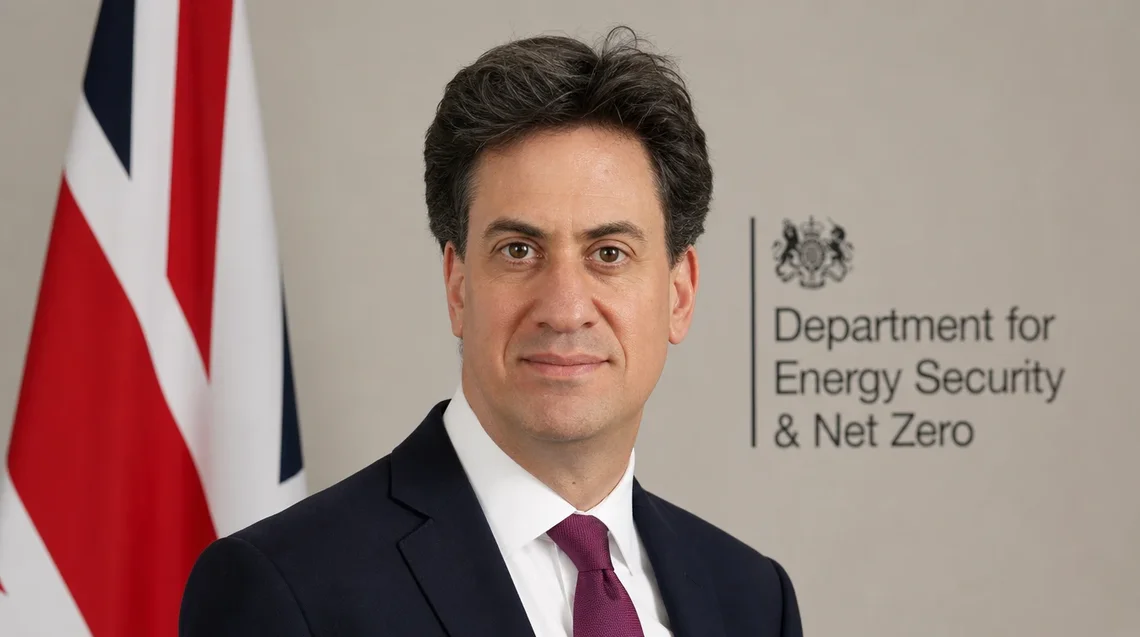
The United Kingdom government has signalled it may push back key milestones on the path to its legally binding net zero target, as mounting concerns over electricity grid capacity, supply chain bottlenecks, and the pace of renewable deployment cast doubt on the feasibility of the current timeline. Ministers and energy regulators are under increasing pressure to reconcile ambitious climate commitments with the practical realities of one of the most complex infrastructure overhauls in the country's post-war history.
Climate figure: The UK's electricity grid currently carries approximately 40 gigawatts of peak demand capacity, but the Climate Change Committee estimates that demand could double by mid-century as heating, transport, and industry electrify. Global average temperatures have already risen by approximately 1.1°C above pre-industrial levels, according to IPCC Sixth Assessment Report data, underscoring the urgency of decarbonisation efforts even as domestic policy faces delays. (Source: IPCC, Climate Change Committee)
The Scale of the Grid Challenge
At the heart of the current policy uncertainty lies a straightforward but deeply consequential engineering problem: the United Kingdom's electricity transmission and distribution network was not designed for the volumes, patterns, or sources of power that a fully decarbonised economy demands. Offshore wind capacity has grown substantially in recent years, but the grid infrastructure required to move that power from generation sites — concentrated in the North Sea and Scottish waters — to population centres in the South and Midlands remains critically underdeveloped.
Transmission Bottlenecks and Planning Delays
National Grid ESO, the electricity system operator, has publicly acknowledged that planning and consenting processes for new transmission lines can take between ten and fourteen years from initial proposal to energisation. Ofgem, the energy regulator, has described the current backlog of grid connection applications as "unprecedented," with projects representing hundreds of gigawatts of potential renewable capacity sitting in a queue that stretches well into the next decade. Officials at the Department for Energy Security and Net Zero have said the government is reviewing planning reform options, but no binding legislative changes have yet been enacted. (Source: National Grid ESO, Ofgem)
Related Articles
Storage and Flexibility Deficits
Beyond transmission capacity, analysts and engineers point to a parallel problem in storage and grid flexibility. A renewables-heavy system generates power intermittently, requiring either long-duration energy storage, demand-side response programmes, or backup capacity to maintain system stability. Battery storage deployment in the UK has accelerated in recent periods, according to data published by the IEA, but the scale currently installed represents a fraction of what modelling suggests will be necessary by the time offshore wind and solar reach their projected installed capacities. Grid-scale hydrogen storage and compressed-air energy storage remain largely pre-commercial in a UK context. (Source: IEA)
Government Policy and the Net Zero Timeline
The UK's net zero target — the legal obligation to reduce greenhouse gas emissions to near-zero on a net basis — was enshrined in law following an amendment to the Climate Change Act, making the United Kingdom one of the first major economies to place such a commitment on a statutory footing. The Climate Change Committee, the independent advisory body that monitors progress, has repeatedly warned in recent annual reports that the UK is not on track to meet its legally binding carbon budgets, let alone the overarching long-term goal. (Source: Climate Change Committee)
Carbon Budget Performance
Analysis published by Carbon Brief indicates that while UK territorial emissions have fallen significantly over the past three decades — driven primarily by the phase-out of coal-fired electricity generation — the rate of reduction has slowed, and progress in so-called "hard-to-decarbonise" sectors including heating, heavy industry, aviation, and agriculture has been minimal. The sixth carbon budget, which covers the period leading into the early part of the next decade, requires steeper annual reductions than any previous budget, according to the Climate Change Committee's own projections. Officials have acknowledged that current policy packages do not yet add up to the emissions cuts required. (Source: Carbon Brief, Climate Change Committee)
International Context and Comparative Progress
The UK's difficulties are not unique. A number of comparator economies are grappling with the same tension between stated decarbonisation ambitions and the physical and financial constraints of grid transformation. The table below illustrates how several major economies currently stand against their own declared climate targets, drawing on publicly available government and international agency data.
| Country | Net Zero Target Year | Current Renewables Share of Electricity (%) | Grid Investment Status | On Track (CCC/IEA Assessment) |
|---|---|---|---|---|
| United Kingdom | 2050 | ~42% | Significant backlog; reform underway | Partial — gaps in heating, industry |
| Germany | 2045 | ~52% | North-South transmission constraints | Partial — industrial transition lagging |
| France | 2050 | ~25% (ex-nuclear ~92%) | Nuclear refurbishment; grid modernisation | Partial — transport electrification slow |
| United States | 2050 | ~22% | IRA-backed expansion; grid fragmented | Uncertain — policy continuity risk |
| Denmark | 2050 | ~80% | Advanced; offshore wind hub strategy | On track for electricity; other sectors pending |
(Source: IEA World Energy Outlook, national government reports, Climate Change Committee)
The Economics of Delay
Critics of any timeline extension argue that delay carries its own economic costs, and that the framing of grid investment as a constraint rather than an opportunity misrepresents the fiscal picture. Research published in Nature Climate Change and cited by the Guardian Environment desk has found that the costs of inaction — in terms of physical climate damages, health impacts from air pollution, and stranded asset risk in fossil fuel infrastructure — substantially outweigh the upfront capital requirements of accelerated grid build-out. The IEA has estimated that clean energy investment globally needs to reach approximately three times its current level by the early part of the next decade to remain consistent with limiting warming to 1.5°C. (Source: Nature Climate Change, IEA, Guardian Environment)
Financing the Transition
In the UK specifically, Ofgem's RIIO-T2 and upcoming RIIO-T3 price control frameworks govern the revenue that transmission companies can earn, and by extension the level of grid investment that is financed through network charges. Analysts and developers have argued that the current framework does not adequately incentivise the anticipatory investment — building grid capacity ahead of confirmed generation — that would be necessary to accelerate the connection queue. HM Treasury has launched consultations on green financing instruments, but the scale of public or publicly-backed investment committed to grid transformation remains, according to industry bodies, well short of what modelling suggests is required. (Source: Ofgem, HM Treasury)
Sector Voices and Scientific Consensus
The scientific consensus on the urgency of emissions reduction is unambiguous. The IPCC's Sixth Assessment Report concluded that limiting warming to 1.5°C above pre-industrial levels requires global CO2 emissions to reach net zero around the middle of this century, with deep cuts required across all sectors this decade. Within that global framework, developed economies including the UK are expected, on the basis of historical emissions and economic capacity, to move faster than the global average. (Source: IPCC)
Industry and Civil Society Responses
Energy developers and climate campaigners have broadly welcomed the government's stated commitment to the net zero target while expressing concern that administrative and regulatory delays are creating a de facto slowdown in delivery. Renewable energy trade bodies have pointed to the grid connection queue as the single largest barrier to new project development, arguing that viable projects with secured financing are being held back not by market failure but by systemic planning and regulatory bottlenecks. Environmental organisations have warned that any formal revision to interim milestones risks signalling reduced ambition to international partners and financial markets. Officials at the Department for Energy Security and Net Zero have said the government remains committed to the overarching legal target. (Source: RenewableUK, DESNZ)
For further coverage of the UK's evolving energy infrastructure strategy, see our reporting on UK grid overhaul plans and net zero delivery. Analysis of how rising energy costs are intersecting with climate policy is available in our coverage of net zero delays driven by energy cost pressures. For the broader regulatory and legislative context, our earlier investigation into grid transition challenges and target-setting provides detailed background on the policy trajectory.
What Happens Next
The government is expected to publish an updated energy strategy document in the coming months, which will set out revised trajectories for offshore wind, solar, grid investment, and demand-side measures. The Climate Change Committee is scheduled to deliver its next progress report to Parliament, which will formally assess whether current policies are sufficient to meet carbon budgets. Independent analysts say the report is likely to identify significant gaps, particularly in buildings decarbonisation and agricultural emissions, while acknowledging genuine progress in the power sector.
The fundamental tension — between the pace at which physical infrastructure can be planned, consented, financed, and built, and the pace at which the climate requires emissions to fall — will not be resolved by any single policy announcement. What officials, developers, regulators, and scientists broadly agree on is that the decisions taken in the near term about grid architecture, planning reform, and investment frameworks will shape the trajectory of UK emissions for decades. The cost of getting those decisions wrong, in either direction, is not abstract: it is measured in gigatonnes, in degrees, and in the long-term economic and social stability of a low-carbon economy. For the latest on how the UK is accelerating its infrastructure response, see our coverage of net zero grid overhaul progress and climate targets, as well as detailed analysis of the grid overhaul programme aligned to the 2035 clean power objective.