
UK Delays Net Zero Deadline as Energy Costs Soar
Government extends 2035 carbon reduction target amid economic pressures
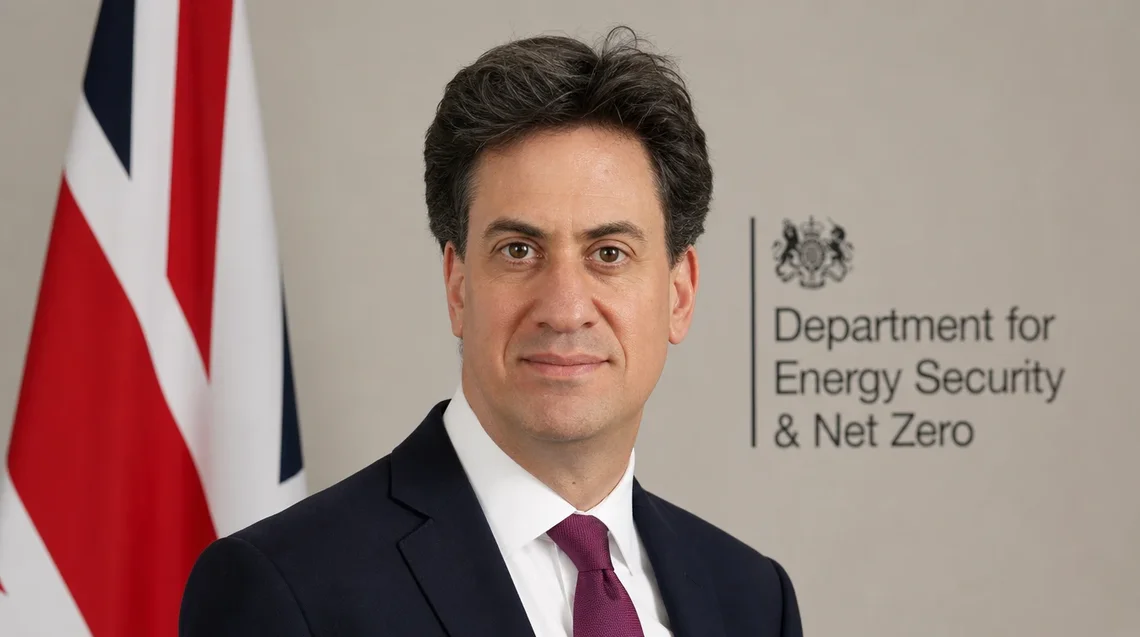
The UK government has extended its flagship carbon reduction deadline, pushing back the target for decarbonising the electricity grid beyond the previously legislated date of 2035, as ministers cite mounting energy costs and economic pressures as justifications for the policy retreat. The decision has drawn sharp criticism from climate scientists and green economy advocates, while energy industry figures have offered cautious support, arguing that grid stability must take precedence over symbolic deadlines.
The move marks one of the most significant shifts in UK climate policy in recent years, raising questions about Britain's credibility as a global leader on emissions reduction ahead of forthcoming international climate negotiations. For ongoing coverage of the policy landscape surrounding this decision, see our reporting on UK Delays Net Zero Target Review Amid Energy Costs Row, which tracks the political fallout across Westminster.
Climate figure: The UK's greenhouse gas emissions have fallen by approximately 50% since 1990, according to the Climate Change Committee — but the pace of reduction must roughly double over the coming decade to remain consistent with the legally binding carbon budgets enshrined in the Climate Change Act. Global average surface temperatures are currently running at approximately 1.2°C above pre-industrial levels, according to data published by the IPCC, leaving the internationally agreed 1.5°C threshold within reach only under the most aggressive mitigation scenarios.
What the Government Has Announced
Officials confirmed that the 2035 clean power target — which aimed to eliminate fossil fuels from electricity generation by that date — is under formal review. The government has not specified a revised deadline but indicated that flexibility may be introduced to allow gas-fired power stations to continue operating beyond 2035 in limited circumstances, particularly as backup capacity during periods of high demand or low renewable output.
Related Articles
The Policy Mechanism Under Review
The original 2035 target was not simply aspirational. It formed a central plank of the government's legally binding sixth carbon budget, which covers the period through to the mid-2030s and commits the UK to reducing emissions by 78% relative to 1990 levels. Climate analysts at Carbon Brief have noted that delaying or softening the electricity sector target creates a knock-on problem for all downstream sectors — including transport, heating and industry — that depend on a decarbonised grid to make their own transitions viable.
The Climate Change Committee, the statutory advisory body that monitors UK progress, has previously warned that the power sector must lead the transition. Any delay here, officials at the committee have stated, risks locking in fossil fuel infrastructure at precisely the moment when clean alternatives are becoming cost-competitive at scale.
Energy Costs and the Economic Argument
Ministers have pointed to sustained elevated energy prices across Europe as the primary driver of the policy reassessment. Wholesale gas prices, while lower than their peak, remain structurally above pre-crisis levels, and household energy bills continue to place significant pressure on living standards. The Treasury has reportedly raised concerns about the pace of capital expenditure required to build out grid infrastructure, including transmission upgrades and long-duration storage, within the existing timeline.
Industry Responses
Electricity generators and network operators have offered a mixed reaction. Several major renewable energy developers have argued that regulatory uncertainty caused by the policy delay is itself a source of economic risk, discouraging long-term investment commitments. The logic, they argue, is straightforward: investors price in policy stability, and a government that revises its own legislated targets introduces a risk premium that ultimately raises the cost of capital for clean energy projects.
This concern is underscored by data from the International Energy Agency, which has consistently found in its annual World Energy Outlook that countries maintaining stable and predictable clean energy policy frameworks attract disproportionately higher volumes of private investment relative to those with shifting regulatory environments. (Source: IEA)
For the latest data on how private capital is responding to UK targets, our earlier analysis of UK Renewable Energy Investment Hits Record as Net Zero Deadline Looms provides essential context on where the market stood before this announcement.
Scientific Context and Climate Risk
The IPCC's most recent synthesis report is unambiguous: limiting global warming to 1.5°C above pre-industrial levels requires global carbon dioxide emissions to reach net zero by around the middle of this century, with deep cuts across all sectors by the early 2030s. Advanced economies, including the UK, are expected by climate scientists to move faster than the global average, given their historical contribution to cumulative emissions and their greater capacity to finance the transition. (Source: IPCC)
What a Delay Means in Emissions Terms
Every year of delay in eliminating unabated gas from the power sector translates into additional carbon dioxide entering the atmosphere that cannot later be removed at equivalent cost or certainty. Research published in Nature has demonstrated that carbon lock-in — the phenomenon whereby infrastructure investments in fossil fuels create long-lived emissions commitments — is one of the most significant structural risks to achieving international climate goals. Power stations authorised or extended under a revised 2035 deadline could remain operational into the 2040s or beyond, depending on their financing terms and operational economics. (Source: Nature)
The Guardian Environment desk has also reported that the cumulative carbon cost of extending gas generation by five years in the UK electricity sector alone could amount to hundreds of millions of additional tonnes of CO₂-equivalent, depending on how much capacity is retained and at what utilisation rate. (Source: Guardian Environment)
International Comparisons
The UK's position sits alongside a broader set of national commitments that vary considerably in ambition, timeline and policy mechanism. The table below illustrates where major economies currently stand on power sector decarbonisation targets.
| Country | Power Sector Target | Primary Policy Mechanism | Current Renewable Share (approx.) |
|---|---|---|---|
| United Kingdom | 2035 (under review) | Contracts for Difference, Grid Review | ~45% |
| Germany | 80% renewables by 2030 | Renewable Energy Act (EEG) | ~55% |
| United States | 100% clean electricity by 2035 | Inflation Reduction Act incentives | ~22% |
| France | Net zero power by 2050 | Nuclear expansion plus renewables | ~25% renewables, ~70% low-carbon |
| Denmark | 100% renewable electricity by 2030 | Wind auction programme | ~80% |
| Japan | 46% emissions reduction by 2030 | Green Transformation programme | ~22% |
The comparison illustrates that the UK's original 2035 target placed it among the most ambitious economies globally for power sector decarbonisation. A meaningful delay would narrow that gap with slower-moving major economies, though the UK would still sit ahead of several G7 peers in terms of current renewable penetration.
Political and Legal Dimensions
The decision carries significant legal risk. The Climate Change Act places a statutory duty on the government to meet its carbon budgets, and the sixth budget was accepted by the previous administration following advice from the Climate Change Committee. Legal experts have noted that softening the 2035 electricity target without compensating measures elsewhere in the economy could leave the government vulnerable to judicial review, a route that environmental law groups have successfully used in the past to challenge ministerial decisions on climate policy.
Parliamentary Scrutiny
Opposition parties and several backbench MPs from the governing party have called for a full parliamentary debate on any revised timeline, arguing that changes of this magnitude should not be introduced through executive discretion alone. The Environmental Audit Committee is understood to be considering a formal inquiry, officials said. Shadow ministers have accused the government of using energy prices as political cover for a retreat from commitments made at international summits.
Related background on the political timeline of this debate is available in our earlier piece on UK Delays Net Zero Target Review Amid Energy Crisis, which traces how the issue moved from technical review to front-bench policy.
The Path Forward: Options and Constraints
Policy analysts suggest there are several routes by which the government could attempt to reconcile the delay with its legal obligations. One option involves accelerating emissions reductions in other sectors — notably surface transport and buildings — to compensate for the additional carbon generated by extended gas generation. Another involves committing to specific carbon capture and storage capacity attached to any retained gas plants, effectively converting them to low-carbon assets over time.
Neither option is straightforward. The uptake of electric vehicles, while growing, remains heavily dependent on public charging infrastructure investment that has itself faced repeated delays. And carbon capture at scale remains commercially unproven in most applications, a point acknowledged by the IEA in its clean energy technology assessments. (Source: IEA)
Carbon Brief analysis has previously shown that the UK's trajectory on home heating — including the heat pump rollout — is running significantly behind the pace required by the carbon budgets. Asking the built environment sector to compensate for power sector slippage would require a step-change in installation rates that current supply chains and workforce capacity cannot readily support. (Source: Carbon Brief)
For a broader examination of how this decision fits within the UK's evolving net zero strategy, our coverage of UK Delays Net Zero Target Amid Energy Costs and the parallel discussion documented in UK Delays Net Zero Target Review Amid Energy Costs provide a comprehensive record of how the government's position has shifted over successive months.
The immediate consequence of this announcement is uncertainty — for investors, for grid planners, and for the broader coalition of industries that have built forward business cases around a firm 2035 clean power date. Whether the government can demonstrate that any revised timeline remains consistent with its legal carbon obligations, and credible to international partners watching the UK's climate leadership, will define the political and economic legacy of this decision for years to come.