
UK Delays Net Zero Emissions Target to 2050
Government pushes back climate goals amid economic pressure
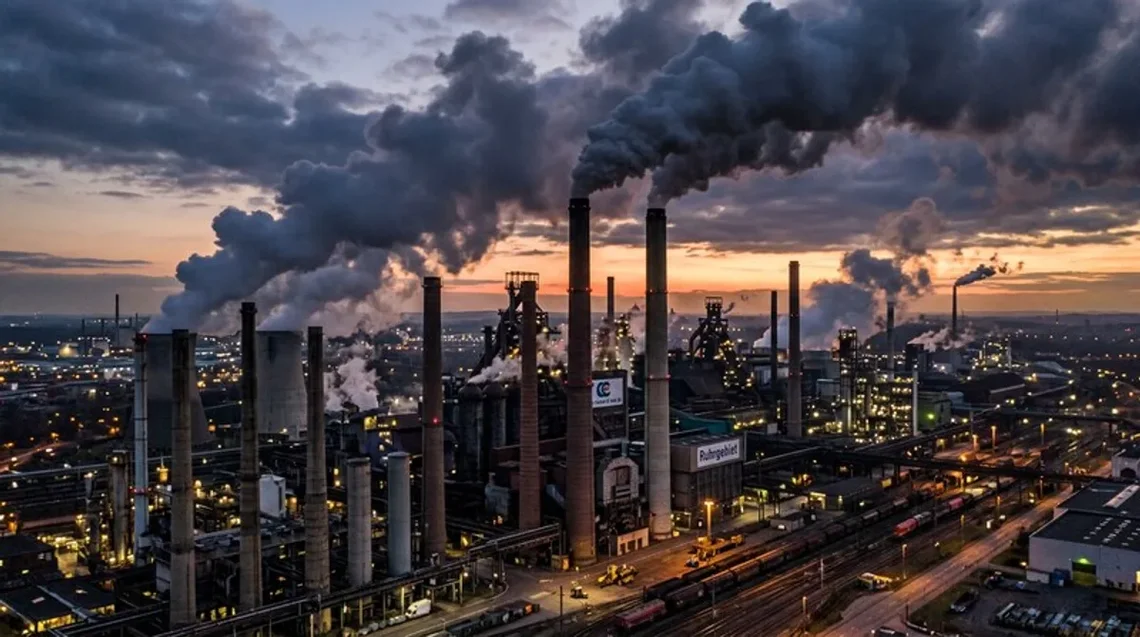
The United Kingdom has confirmed it will maintain its legally binding net zero emissions target for 2050, but has pushed back several interim milestones, citing mounting economic pressures, high energy costs, and slower-than-expected progress across key industrial sectors. The announcement draws fresh scrutiny from climate scientists, policy analysts, and opposition lawmakers who warn that delayed intermediate benchmarks risk locking in emissions pathways inconsistent with the goals of the Paris Agreement.
Climate figure: The UK's greenhouse gas emissions stood at approximately 394 million tonnes of CO₂ equivalent in the most recently reported year, representing a 50% reduction from 1990 levels — but independent analysts warn the pace of reduction must nearly double to meet 2035 and 2050 commitments. The IPCC's Sixth Assessment Report concludes that global emissions must reach net zero by around mid-century to limit warming to 1.5°C above pre-industrial levels. (Source: IPCC, UK Department for Energy Security and Net Zero)
What the Government Has Actually Announced
Ministers have reaffirmed the overarching 2050 net zero target enshrined in the Climate Change Act, but have indicated a reassessment of the specific carbon budget trajectories and sector-level timelines that underpin that goal. The review covers targets for heating, transport, and heavy industry — areas where decarbonisation has proven most technically and economically difficult.
Carbon Budgets Under Review
The UK's Climate Change Committee, the independent statutory body responsible for advising government on emissions targets, had previously set a series of five-year carbon budgets designed to create a credible glide path to 2050. Officials said the government is examining whether those interim budgets remain "deliverable" given current economic conditions, including elevated energy costs following global supply shocks. According to Carbon Brief, the UK has already missed key interim net zero emissions benchmarks, raising questions about whether the existing framework was ever sufficiently resourced.
Related Articles
Sectors Most Affected
The sectors facing the most significant timeline pressure include steel manufacturing, aviation, shipping, and residential heating. The government's own projections, as reported by the Climate Change Committee, show that without accelerated policy intervention, the UK will not meet its Sixth Carbon Budget — covering the period through to the mid-2030s — under current trajectories. Data from the International Energy Agency show that industrial decarbonisation globally remains the most capital-intensive element of any net zero transition. (Source: IEA)
Economic Context Driving the Delay
Government officials have pointed to a series of economic headwinds as justification for the revised timeline approach. High borrowing costs, elevated inflation in the construction and energy sectors, and the political difficulty of passing costs to consumers and businesses have all been cited in background briefings to media, including the Guardian Environment desk.
The Cost-of-Living Dimension
The rollout of heat pump subsidies and the phaseout of new petrol and diesel vehicle sales have both faced implementation challenges, according to officials. Consumer uptake of low-carbon heating solutions has lagged government projections, partly due to upfront installation costs and grid connectivity issues. Independent research published in Nature Climate Change has indicated that behavioural change at the household level is unlikely to occur at sufficient scale without more direct financial incentives or regulatory requirements. (Source: Nature)
For further context on how energy system challenges are shaping the delivery of climate commitments, see coverage of UK delays to net zero targets amid grid transition challenges, which examines the structural bottlenecks in electricity infrastructure that are limiting the pace of decarbonisation.
International Comparisons and the UK's Standing
The UK was among the first major economies to legislate a net zero target and has historically positioned itself as a global climate leader, hosting the COP26 summit in Glasgow. Any visible retreat from interim targets carries diplomatic consequences, particularly as the country attempts to maintain influence in international climate negotiations.
| Country / Region | Net Zero Target Year | Interim 2030 Emissions Reduction Target | Legal Status |
|---|---|---|---|
| United Kingdom | 2050 | 68% below 1990 levels | Legally binding (Climate Change Act) |
| European Union | 2050 | 55% below 1990 levels | Legally binding (European Climate Law) |
| United States | 2050 | 50–52% below 2005 levels | Executive commitment (NDC) |
| China | 2060 | Peak emissions before 2030 | National policy commitment |
| India | 2070 | 45% reduction in emissions intensity by 2030 | National policy commitment (NDC) |
| Germany | 2045 | 65% below 1990 levels | Legally binding (Federal Climate Protection Act) |
According to Carbon Brief's analysis of Nationally Determined Contributions submitted under the Paris Agreement, the UK's 68% reduction target for the current decade remains among the most ambitious of any major economy — but critics note that ambition on paper must be matched by delivery mechanisms. (Source: Carbon Brief)
Diplomatic Implications
Climate policy analysts have noted that the UK's credibility as a broker in multilateral climate forums depends substantially on its domestic record. If interim targets are visibly missed or formally revised downward, the government's ability to press developing nations on their own commitments may be weakened, according to policy researchers cited by the Guardian Environment team. (Source: Guardian Environment)
What Scientists and Independent Bodies Are Saying
The Climate Change Committee has been consistent in its public assessments: the UK is not on track, and a slower pace of action now will require steeper and more costly reductions later. The committee's chief executive has previously warned that every year of delay compresses the timeframe available for industry, households, and infrastructure to adapt — raising both the economic and physical risks of abrupt transition.
IPCC Guidance and Physical Risk
The IPCC's Sixth Assessment Report, the most comprehensive synthesis of climate science currently available, is unambiguous that delays in emissions reductions increase the probability of crossing critical climate thresholds. The report notes that pathways that overshoot 1.5°C and rely on future carbon removal technologies carry substantially higher risks than those that reduce emissions rapidly in the near term. The science does not support the proposition that 2050 targets are achievable if 2030 interim milestones are abandoned, according to the report's summary for policymakers. (Source: IPCC)
The IEA's World Energy Outlook, published annually, has similarly flagged that current global energy investment levels — while growing — remain below what is required to hold warming to agreed international thresholds. The agency estimates that clean energy investment must reach several trillion dollars per year globally by the early 2030s to keep 1.5°C within reach. (Source: IEA)
Political and Parliamentary Reaction
Opposition parties have called the announcement a capitulation to short-term political calculation over long-term national interest. Green and Labour environment spokespeople have each issued statements arguing that the economic case for rapid decarbonisation — including energy security, job creation in clean industries, and avoided costs of climate damage — is stronger than the government's framing suggests.
Within government, a minority of backbench voices have argued the opposite: that the pace of transition is imposing unacceptable costs on consumers and businesses, and that a more gradual approach is necessary for public consent. This internal tension reflects a broader pattern visible across several European democracies, where the political management of energy transition has become an increasingly contested issue.
This article is part of ZenNewsUK's ongoing coverage of UK climate policy. Readers following the trajectory of Britain's emissions commitments may also find relevant detail in our reporting on how net zero targets face pressure as emissions stall across major economic sectors, and in our earlier analysis of the UK's delay to its net zero target review amid rising energy costs, which traced the political economy of this debate over recent months.
What Happens Next
The government is expected to publish an updated delivery plan setting out revised sector-level policies and investment commitments. The Climate Change Committee will formally assess whether that plan constitutes a credible pathway to the 2050 target, and will report its findings to Parliament. If the committee concludes the plan is inadequate, ministers face the possibility of legal challenge — the government has previously been found by the courts to have fallen short of its statutory obligations under the Climate Change Act.
Key Dates and Milestones
Under the current legislative framework, the government must set its Seventh Carbon Budget in the near term. Independent modelling by Carbon Brief and academic institutions suggests that without significant policy additions in areas including grid expansion, building retrofit, and industrial electrification, the UK's legally mandated emissions ceiling will be breached well before 2050. (Source: Carbon Brief)
The international scrutiny will also intensify ahead of the next major UNFCCC conference of parties, at which the UK is expected to present its updated Nationally Determined Contribution. Climate negotiators and civil society groups have already indicated they will examine the detail of any revised delivery plan for consistency with the Paris Agreement's temperature goals.
The broader trajectory of the UK's climate commitments — and whether political will can be sustained through economic turbulence — will remain one of the defining domestic policy questions of this decade. As our ongoing coverage of how the UK has missed net zero interim targets and delayed climate goals demonstrates, the gap between legislative ambition and measurable delivery is widening, and the window for course correction, according to the best available science, is narrowing.