
UK Delays Net Zero Target Review Amid Energy Costs Row
Government pushes back climate policy assessment
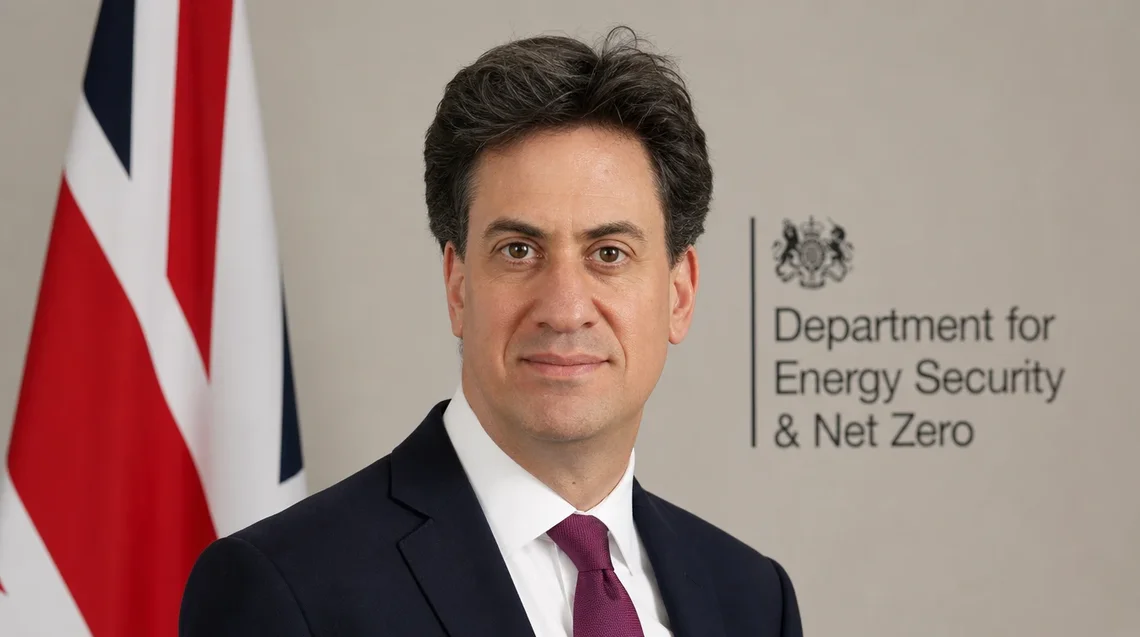
The UK government has postponed its scheduled review of net zero climate policy, citing mounting pressure over household energy costs and a fractured political consensus on the pace of the green transition. The delay — which officials have declined to attach a firm new timeline to — risks putting Britain further behind its own legally binding carbon reduction milestones, analysts and independent climate advisers warn.
The decision comes as the Climate Change Committee, the government's statutory advisory body, has repeatedly flagged that the UK is not on track to meet its Sixth Carbon Budget, which requires a roughly 78 percent reduction in emissions against 1990 levels by the middle of the next decade. The postponement has drawn criticism from environmental groups and some Conservative backbenchers alike, while energy industry representatives argue that policy clarity is essential for long-term infrastructure investment. For more background on how the delay intersects with broader economic pressures, see our earlier coverage: UK Delays Net Zero Target Review Amid Energy Costs.
Climate figure: The UK's greenhouse gas emissions currently stand at approximately 40 percent below 1990 levels, according to provisional government statistics. However, the Climate Change Committee has warned that the pace of annual reduction must roughly double to remain consistent with the 2050 net zero target and the intermediate carbon budgets set under the Climate Change Act. The IPCC's Sixth Assessment Report underlines that global emissions must fall by 43 percent from current levels by 2030 to limit warming to 1.5°C — a threshold the UK has committed to pursuing under the Paris Agreement.
What the Delay Means in Practice
The review under discussion is a scheduled government assessment of policies across heating, transport, agriculture, and industry — the so-called "sectoral decarbonisation" plans that underpin the headline net zero commitment. Without a completed review, a number of grant schemes, regulatory consultations, and infrastructure procurement decisions remain in a holding pattern, according to officials familiar with the process.
Related Articles
Heat Pump Rollout and Building Standards
Among the most immediately affected areas is the rollout of low-carbon home heating. The Boiler Upgrade Scheme, designed to incentivise consumers to replace gas boilers with heat pumps, has consistently underperformed its annual installation targets. Industry data and reporting by Carbon Brief indicate that uptake remains a fraction of the levels required to phase out new gas boiler installations within the government's own stated timeframe. Contractors and manufacturers have indicated that persistent uncertainty over future subsidy arrangements is suppressing demand and deterring investment in installer training.
The International Energy Agency, in its most recent World Energy Outlook, identified the UK as a country where heat pump deployment is lagging relative to national climate commitments — a finding that officials in the Department for Energy Security and Net Zero have not publicly disputed. (Source: IEA)
Transport Transition in Limbo
The electric vehicle mandate — which requires that a rising share of new car sales be zero-emission — has itself been subject to adjustment in recent parliamentary sessions, with the government granting manufacturers additional flexibility amid concerns about consumer affordability and charging infrastructure gaps. Environmental law organisation ClientEarth and analysts at Carbon Brief have noted that sequential rollbacks to transport decarbonisation policy create compounding risks for the UK's overall carbon budget trajectory. (Source: Carbon Brief)
The Political Economy of the Delay
Senior ministers have publicly framed the pause as a response to legitimate public concern about energy bills, which surged following the disruption to European gas markets triggered by Russia's full-scale invasion of Ukraine. The argument within government, officials said, is that pushing ahead with a review that might produce uncomfortable recommendations — particularly around the speed of fossil fuel phase-out — carries significant political risk ahead of any electoral cycle.
Treasury Resistance and Fiscal Constraints
According to multiple reports, including coverage in the Guardian Environment section, the Treasury has resisted committing additional public funding to green transition programmes at the scale that the Climate Change Committee has said is necessary. Internal disagreements between the energy department and HM Treasury over the fiscal envelope for net zero have been a recurring feature of climate policymaking in recent years, officials said. (Source: Guardian Environment)
The tension is not unique to the UK. Comparable debates over the cost of transition versus the cost of inaction are playing out across G7 economies. However, climate economists, including those cited in studies published in Nature, argue that delaying the review does not reduce the underlying cost of decarbonisation — it defers and often amplifies it, as carbon-intensive infrastructure continues to be installed and the window for orderly transition narrows. (Source: Nature)
International Comparisons
The UK's situation can be placed in context by examining how comparable economies are currently progressing against their stated climate commitments.
| Country | 2030 Emissions Target | Current Policy Gap (est.) | Notable Policy Status |
|---|---|---|---|
| United Kingdom | -68% vs 1990 | Significant | Review delayed; key sectoral plans unresolved |
| Germany | -65% vs 1990 | Moderate | Renewable buildout accelerating; heat law contested |
| France | -55% vs 1990 (EU-aligned) | Moderate | Nuclear expansion central to strategy; EV transition ongoing |
| United States | -50–52% vs 2005 | Moderate–High | Inflation Reduction Act funding active; political uncertainty high |
| Australia | -43% vs 2005 | Moderate | Accelerated renewables policy; fossil fuel exports continuing |
Data compiled from IEA country profiles and Climate Action Tracker assessments. (Source: IEA, Climate Action Tracker)
What Independent Advisers Are Saying
The Climate Change Committee, chaired by Lord Deben until a recent transition in leadership, has consistently maintained that the UK's policy delivery is falling short of what is required by statute. In its most recent annual progress report to Parliament, the committee identified fewer than half of the emissions reduction policies needed to meet the Sixth Carbon Budget as being "on track." The committee's findings are legally significant: the government is required to respond formally to the report and, where it disagrees, to explain its reasoning.
Legal Exposure
Environmental law groups, including ClientEarth and Friends of the Earth, have previously brought — and in some instances won — judicial review proceedings against governments on climate grounds in Europe and elsewhere. Legal observers note that a prolonged delay to the UK's policy review, if it results in demonstrably insufficient action against a statutory carbon budget, could create exposure to domestic legal challenge. Officials have not commented publicly on the legal risk assessment underpinning the delay decision.
Our analysis of how overlapping uncertainties are affecting green policy delivery is explored in further detail here: UK Delays Net Zero Target Review Amid Policy Uncertainty.
Energy Costs and the Public Consent Problem
One dimension of the delay that officials and independent analysts broadly agree on is the political reality of public attitudes toward energy bills. Polling consistently shows that while majorities of UK adults support the principle of net zero, support drops sharply when respondents are presented with specific cost implications — particularly in the context of a prolonged cost-of-living squeeze.
The Just Transition Argument
Proponents of a more ambitious review timeline argue that the answer to the public consent problem is not delay but a better-designed and better-funded transition. They point to the concept of a "just transition" — ensuring that the costs of decarbonisation do not fall disproportionately on lower-income households — as both an ethical requirement and a political precondition for durable public support. The IEA and numerous academic studies published in Nature and allied journals have found that well-targeted transition support policies can significantly reduce household net costs while accelerating emissions reductions. (Source: IEA; Nature)
For context on how the energy crisis specifically has shaped this political environment, see: UK Delays Net Zero Target Review Amid Energy Crisis.
Industry Response and Investment Risk
Business groups representing clean energy developers, infrastructure investors, and low-carbon manufacturers have been among the most vocal critics of the delay, warning that policy uncertainty raises the cost of capital for green projects and causes investment to flow toward jurisdictions with clearer long-term frameworks. The UK's offshore wind sector — historically a global success story — has itself experienced setbacks recently, with auctions failing to attract sufficient bids due to concerns about contract pricing and supply chain costs, according to industry body RenewableUK.
Analysts tracking the broader pattern of missed targets and stalled commitments have noted that the current delay fits a recurring pattern. Readers following the full trajectory of these developments may find useful context in: UK Misses Net Zero Interim Target, Delays Policy Review.
The longer-term consequences for Britain's energy transition, including the structural factors that have contributed to repeated slippage, are examined in our analysis piece: UK Delays Net Zero Targets as Energy Transition Stalls.
The government has indicated it will set out a revised timeline for the policy review in a forthcoming parliamentary statement, though no date has been confirmed. Independent climate advisers, energy industry representatives, and legal observers will be watching closely — not only for the timeline itself, but for whether the review, when it eventually arrives, contains the policy depth and funding commitments necessary to close what the Climate Change Committee has consistently described as a widening gap between the UK's statutory obligations and the measures in place to meet them. The arithmetic of carbon budgets, officials and scientists alike acknowledge, does not accommodate indefinite deferral.