
UK Misses Interim Net Zero Emissions Target
Government faces pressure as carbon cuts fall short of legally binding goals
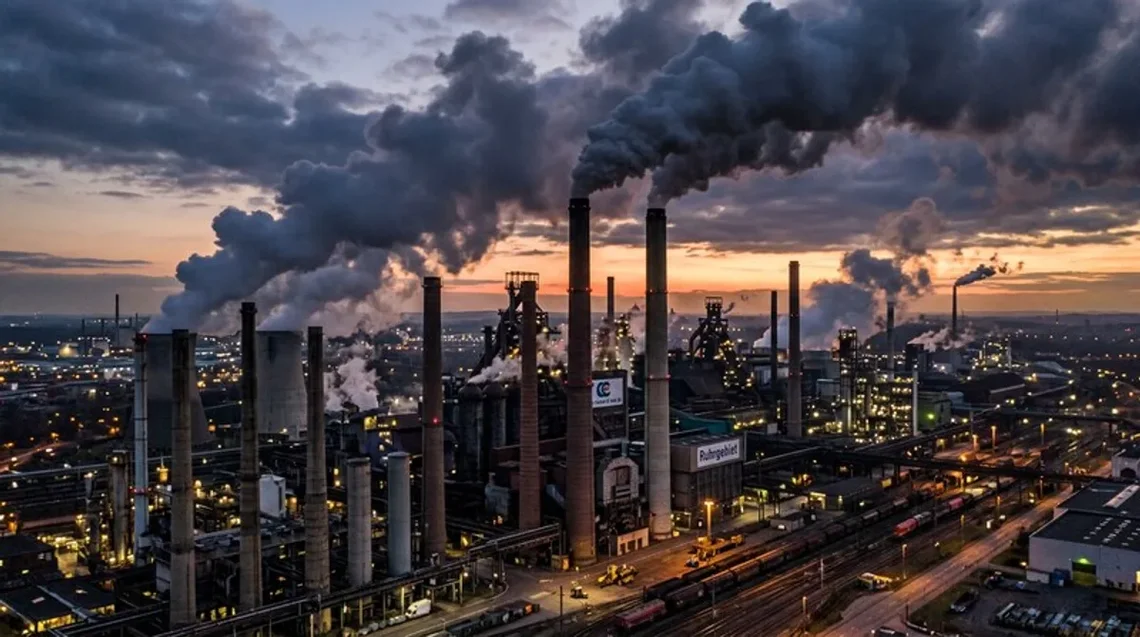
The United Kingdom has missed a key interim emissions reduction target under its legally binding net zero framework, with official figures showing the country has fallen short of the carbon budget thresholds set by the Climate Change Committee. The shortfall, measured against the Sixth Carbon Budget pathway, intensifies scrutiny on the government's industrial decarbonisation strategy and raises questions about the credibility of the UK's climate leadership ahead of upcoming international negotiations.
Climate figure: The UK's greenhouse gas emissions currently stand at approximately 434 million tonnes of CO₂ equivalent per year, according to provisional government data. To remain on track for net zero by 2050, the Climate Change Committee has stated that emissions must fall by at least 68% from 1990 levels by the end of this decade. The country is presently on a trajectory that falls an estimated 20–25% short of the required carbon budget pace, with the power, transport, and buildings sectors identified as the primary areas of underperformance. Global mean temperatures have already risen by approximately 1.2°C above pre-industrial levels, according to the Intergovernmental Panel on Climate Change, underscoring the narrowing window for corrective policy action. (Source: Climate Change Committee, IPCC)
What the Data Show
Provisional emissions statistics published by the Department for Energy Security and Net Zero confirm that the rate of carbon reduction has slowed considerably compared with earlier decades, when the phase-out of coal-fired power generation produced sharp annual declines. Those structural gains have now largely been absorbed, analysts said, leaving harder-to-decarbonise sectors — including heavy industry, agriculture, and residential heating — as the dominant remaining sources of emissions.
The Carbon Budget Framework
The UK operates under a system of five-year carbon budgets, each of which sets a legally binding ceiling on cumulative greenhouse gas emissions. The Climate Change Committee advises Parliament on these budgets and monitors compliance. Its most recent progress report found that current government policies are not sufficient to meet the Fourth or Fifth Carbon Budgets on their original trajectories, and that the Sixth Carbon Budget — covering this decade — requires a step-change in both policy ambition and implementation speed. Carbon Brief analysis of the committee's modelling indicates that the policy gap is widening rather than narrowing. (Source: Carbon Brief, Climate Change Committee)
Sector-Level Breakdown
The buildings sector remains one of the most significant sources of underperformance. Uptake of heat pumps, the primary low-carbon alternative to gas boilers, has lagged well behind the installation targets set in the government's Heat and Buildings Strategy. The International Energy Agency has separately noted that the UK's pace of heat pump deployment is among the slowest in comparable northern European economies. Transport, despite growth in electric vehicle registrations, continues to be a major emitter due to the size of the existing petrol and diesel fleet. Aviation and shipping, both subject to partial accounting under UK carbon budgets, remain structurally unresolved. (Source: IEA, Climate Change Committee)
| Country | Reduction from 1990 (%) | Net Zero Target Year | Carbon Budget / Legal Framework |
|---|---|---|---|
| United Kingdom | ~50% | 2050 | Legally binding (Climate Change Act) |
| Germany | ~40% | 2045 | Federal Climate Protection Act |
| France | ~25% | 2050 | Energy-Climate Law (2019) |
| Denmark | ~60% | 2050 | Climate Act (70% target by 2030) |
| United States | ~20% | 2050 (non-binding) | Executive/Inflation Reduction Act |
| Sweden | ~35% | 2045 | Climate Policy Framework |
Government Response and Policy Gaps
Ministers have pointed to the record share of renewable electricity now supplying the national grid and to the formal commitment to decarbonise the power sector by the end of the decade as evidence that the structural transition is under way. Energy Secretary officials said the government remains committed to its legally binding net zero obligations and that further policy measures are under development. However, independent analysts and parliamentary committees have repeatedly identified a gap between stated ambitions and funded, implemented policy. The Guardian Environment desk has tracked a series of delayed or diluted commitments across the buildings, transport, and industrial sectors over the past several years. (Source: Guardian Environment)
The Role of North Sea Licensing
A continuing source of controversy is the government's decision to approve new licences for North Sea oil and gas extraction. Ministers argue that domestic fossil fuel production reduces import dependency and has a lower emissions intensity than imported liquefied natural gas. Critics, including members of the Climate Change Committee, have countered that new licensing is inconsistent with both the UK's carbon budgets and with the IEA's finding that no new oil and gas fields need to be developed under a credible net zero pathway. The political tension between energy security framing and climate obligations has become one of the defining fault lines in domestic climate policy. (Source: IEA, Climate Change Committee)
Industrial Decarbonisation and Carbon Capture
Several flagship industrial decarbonisation projects, including carbon capture and storage clusters on Teesside and Merseyside, have faced repeated delays. These projects are critical to the government's plan for decarbonising heavy industry — steel, cement, and chemicals manufacturing — which cannot easily electrify. Nature-published research on carbon capture deployment timelines has highlighted the risk of over-reliance on technologies that have not yet been demonstrated at commercial scale in the UK context. Officials have said the projects remain a government priority, but no revised delivery schedules have been formally confirmed. (Source: Nature, IPCC)
The Science Behind the Urgency
The IPCC's Sixth Assessment Report, the most comprehensive review of climate science to date, makes clear that limiting global warming to 1.5°C above pre-industrial levels requires rapid, deep, and immediate emissions reductions across all sectors. Every fraction of a degree of additional warming is associated with measurable increases in the frequency and intensity of extreme weather events, sea level rise, and ecosystem disruption. The UK, as both a historically significant emitter and a nation with binding legal obligations, has a particular scientific and diplomatic responsibility to demonstrate that high-income economies can deliver credible decarbonisation. Falling short of interim targets, analysts said, erodes the evidentiary basis for that claim. (Source: IPCC)
Carbon Budgets and Temperature Outcomes
Carbon Brief modelling of the relationship between current UK policy trajectories and global temperature outcomes suggests that, were all major economies to follow a similar pace of reduction, warming well in excess of 2°C would become probable. While UK emissions represent a small fraction of the global total, the country's institutional framework — particularly the Climate Change Act and the independent advisory role of the Climate Change Committee — has been explicitly cited as a model for climate governance by policymakers in other jurisdictions. A credibility deficit at home therefore carries international consequences. (Source: Carbon Brief, IPCC)
Grid Transformation and Opportunity
Not all indicators point in the same direction. The electricity sector has achieved a genuine structural transformation, with coal now effectively eliminated from the generation mix and wind — both onshore and offshore — supplying a growing majority of power in high-output periods. The government's ambition to reach a fully decarbonised grid by the end of the decade, if achieved, would represent a substantial contribution toward the broader net zero pathway. Ongoing infrastructure investment, including interconnectors, battery storage, and long-duration energy storage projects, is being tracked as part of the broader net zero grid transformation programme that officials have described as central to the country's decarbonisation strategy.
Electricity market reform, currently progressing through Parliament, aims to unlock investment in clean generation by restructuring the way power is priced and contracted. Analysts said the reforms, if implemented effectively, could bring forward renewable deployment timelines and reduce the cost of low-carbon electricity for industrial consumers. The broader implications of accelerating clean grid investment for industrial competitiveness and energy security are subject to ongoing assessment by both the Climate Change Committee and independent energy economists.
Political and International Context
The missed interim target arrives at a diplomatically sensitive moment. The UK has positioned itself as a climate leader since hosting the COP26 summit, and ministers regularly invoke that legacy in international forums. A visible divergence between stated ambition and measurable performance risks undermining the country's credibility in multilateral negotiations, including forthcoming discussions under the Paris Agreement's global stocktake mechanism. Peer nations are watching closely, officials familiar with international climate diplomacy said, and gaps in domestic implementation are increasingly scrutinised by civil society groups and foreign governments alike.
Opposition and Civil Society Pressure
Parliamentary opposition parties have called for emergency debates and enhanced scrutiny of the government's net zero delivery plan. Environmental law organisations have indicated they are assessing the legal basis for judicial challenge, given the statutory force of the carbon budgets under the Climate Change Act. Legal action has precedent: courts in multiple jurisdictions, including the Netherlands and Germany, have ordered governments to strengthen climate plans in response to rights-based and statutory challenges. Whether similar litigation proceeds in the UK context remains to be seen, lawyers involved in climate cases said.
What Comes Next
The Climate Change Committee is expected to publish an updated assessment of government progress in the coming months, with particular focus on whether policy announcements made in recent spending reviews translate into measurable emissions reductions within the current carbon budget period. Analysts said the key test will not be the publication of new strategies, but evidence of funded, implemented programmes delivering verified reductions in the buildings, transport, and industry sectors. The government's net zero review process, and any subsequent policy package, will be assessed against that standard. For those tracking the UK's longer-term infrastructure ambitions, the pace of UK clean energy grid development will serve as a visible and measurable indicator of whether policy intent is being converted into physical reality. The arithmetic of the carbon budgets, officials and independent analysts both acknowledged, leaves little room for further slippage if the 2050 net zero target is to remain credible.