
UK Misses Interim Net Zero Target, Labour Vows Course Correction
Latest carbon emissions data shows 2025 shortfall in decarbonization plans
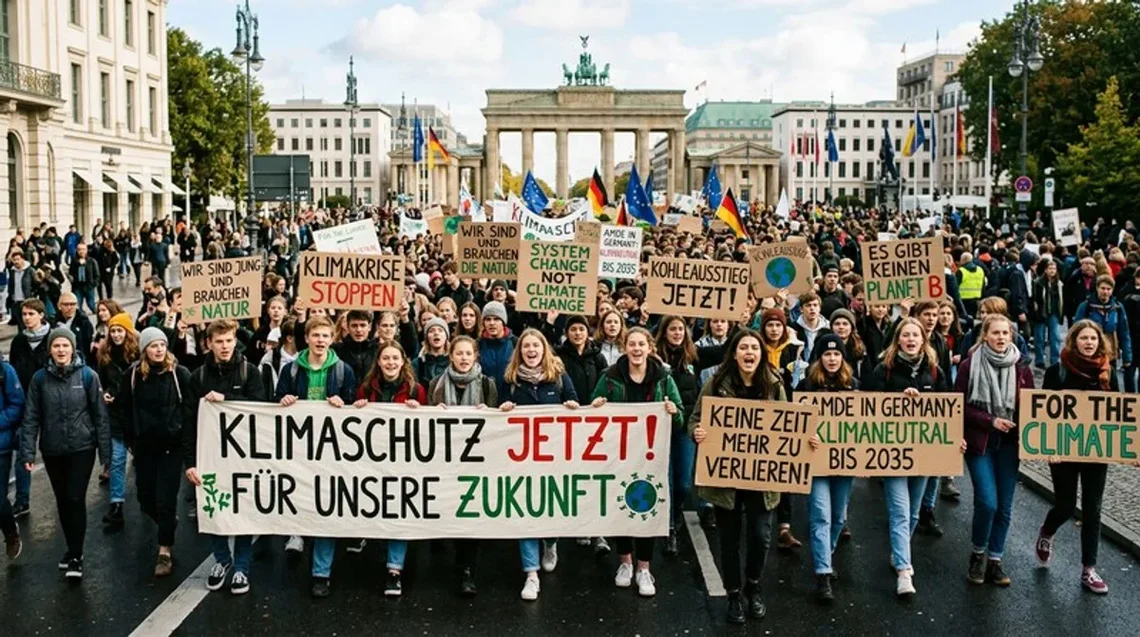
Britain has fallen short of a key interim carbon reduction milestone, with official data confirming that greenhouse gas emissions have not declined at the pace required to keep the country's legally binding net zero pathway on track. The shortfall, assessed against targets set under the Climate Change Act, has prompted Labour ministers to acknowledge the gap and pledge a series of accelerated policy interventions across power, transport, and buildings.
The figures, which draw on provisional emissions inventories compiled by the Department for Energy Security and Net Zero (DESNZ), show that the United Kingdom is currently emitting more carbon dioxide equivalent than the trajectory required by the sixth carbon budget framework demands at this stage. Analysts at Carbon Brief have described the gap as "material but not irrecoverable," provided that planned clean energy capacity and industrial decarbonisation policies are implemented without further delay.
Climate figure: The UK's greenhouse gas emissions currently stand at approximately 397 million tonnes of CO₂ equivalent per year, against a trajectory requirement of roughly 367 MtCO₂e to remain aligned with the Sixth Carbon Budget pathway. The global average surface temperature has now exceeded 1.1°C above pre-industrial levels on a decadal mean basis, according to the Intergovernmental Panel on Climate Change (IPCC), placing renewed urgency on national interim milestones. The International Energy Agency (IEA) projects that countries collectively off-track on near-term targets account for approximately 40 percent of the gap between current policies and a 1.5°C-compatible scenario.
What the Data Show and Where the Gaps Lie
The provisional emissions inventory released this year by DESNZ reveals that while the electricity generation sector has made considerable progress — driven by the expansion of offshore wind and a near-complete phase-out of unabated coal — reductions in surface transport, buildings, and agriculture have lagged substantially behind the modelled pace. (Source: Department for Energy Security and Net Zero)
Related Articles
Electricity: A Sector Success Story With Caveats
The power sector remains the strongest performer in Britain's decarbonisation record. Offshore wind capacity has expanded significantly, and grid carbon intensity has fallen to levels that were considered ambitious targets only a decade ago. However, analysts caution that electricity's success risks masking stagnation elsewhere. The Climate Change Committee (CCC), the statutory advisory body, noted in its most recent progress report that economy-wide emissions reductions have become increasingly reliant on a single sector, which creates systemic risk if grid expansion or storage deployment slows. (Source: Climate Change Committee)
Surface Transport: The Persistent Laggard
Road transport continues to account for a disproportionate share of the shortfall. Electric vehicle uptake has grown, but sales figures for this year show a market that remains sensitive to infrastructure confidence and upfront purchase costs. The phase-out mandate for new petrol and diesel cars, currently set for the middle of the next decade, has faced lobbying pressure from certain automotive industry groups, though the government has thus far maintained the policy timeline. Nature Climate Change research published recently highlighted that transport decarbonisation in high-income countries is consistently underperforming relative to modelled scenarios, a finding with direct relevance to the UK context. (Source: Nature Climate Change)
Labour's Response: Policy Pledges and the Road to 2035
Ministers in the current Labour government, which took office promising to make the United Kingdom a "clean energy superpower," have responded to the emissions data with a combination of acknowledgement and forward-looking commitments. Energy Secretary Ed Miliband has reiterated the government's commitment to decarbonising the electricity grid by the end of this decade, a goal that officials describe as foundational to all other sectoral targets.
Great British Energy and Grid Investment
The flagship Great British Energy initiative — a publicly owned clean power company — is intended to accelerate investment in renewable capacity and community energy schemes. Officials said the vehicle is designed to crowd in private finance rather than substitute for it, and that early project pipelines are being assembled in consultation with Ofgem and the National Energy System Operator (NESO). Critics, including some within the environmental policy community, have argued that capitalisation levels announced to date fall short of what independent modelling suggests is necessary to close the current gap. (Source: Carbon Brief analysis)
Buildings and Heat: The Hardest Sector
Domestic and commercial heating — predominantly reliant on natural gas boilers — represents one of the most structurally intractable elements of the UK's emissions profile. The government's warm homes plan, which targets improvements in building energy efficiency and a gradual transition to heat pumps, has been welcomed in principle but questioned on delivery capacity. The Guardian Environment desk has reported that the heat pump installation supply chain currently lacks the trained workforce to meet even near-term installation targets, a bottleneck that officials acknowledge requires urgent attention. (Source: The Guardian Environment)
For readers following the trajectory of these challenges in detail, analysis of the specific interim target mechanics is available in our earlier coverage: UK Misses Interim Net Zero Emissions Target, which sets out the legal framework underpinning the current accountability process.
International Context: How the UK Compares
Britain's difficulties in meeting interim milestones are not unique among major economies, though the country's historical leadership in legislating net zero frameworks means the shortfall attracts particular scrutiny from international observers and domestic civil society groups alike.
| Country / Region | Net Zero Target Year | Current Emissions vs. Pathway | Primary Lagging Sector |
|---|---|---|---|
| United Kingdom | 2050 | Approx. 8% above interim path | Transport & Buildings |
| Germany | 2045 | Approx. 5% above interim path | Buildings & Industry |
| France | 2050 | Broadly on interim path | Agriculture |
| United States | 2050 (federal) | Approx. 12% above interim path | Transport & Power |
| European Union | 2050 | Marginally below interim path | Industry & Heavy Transport |
(Sources: IEA World Energy Outlook; Carbon Brief country profiles; Climate Action Tracker)
The IEA's most recent World Energy Outlook assessment underscores that no G7 nation is currently on a trajectory fully consistent with limiting warming to 1.5°C, though several are within the range of the less stringent 1.7°C to 1.8°C scenarios. For the UK, the immediate policy question is not whether net zero by 2050 remains technically achievable — the CCC and independent modellers broadly agree that it does — but whether the pace of near-term action is sufficient to avoid locking in harder and costlier reductions in the following decade. (Source: IEA)
The Sixth Carbon Budget and Legal Exposure
The Climate Change Committee's statutory remit includes assessing government progress each year and reporting to Parliament. Where the government fails to demonstrate adequate policy measures, it faces potential judicial review under the Climate Change Act 2008 — a legal mechanism that has been invoked previously, most notably in a successful challenge that required the government to strengthen its net zero strategy. Environmental law groups have indicated they are monitoring current policy commitments against legal thresholds, though no formal proceedings have been announced at this stage.
What the CCC Has Said
In its most recent annual progress report to Parliament, the CCC characterised government action as "insufficient in pace and breadth," noting that of the approximately fifty policy interventions identified as necessary, fewer than half are currently operational or fully funded. The committee stopped short of triggering a formal inadequacy designation but indicated that the next assessment cycle will apply a higher evidential bar. (Source: Climate Change Committee)
The trajectory questions raised by this year's data extend directly into the medium-term planning horizon. Our reporting on UK Misses Interim Net Zero Target, Raises 2035 Questions examines how the current shortfall compounds the policy challenge of meeting the Sixth Carbon Budget period commitments, while our analysis of UK Misses Net Zero Interim Target by Wide Margin provides a quantitative breakdown of where the largest sectoral gaps have emerged.
Voices From Science and Civil Society
Research published recently in Nature Sustainability argued that statutory interim targets serve a critical accountability function precisely because they force governments to translate long-horizon commitments into near-term policy specifics. The authors, drawing on a comparative analysis of national climate legislation across thirty-two jurisdictions, found that countries with enforceable interim milestones outperform those with endpoint-only frameworks by a statistically significant margin on actual emissions reductions — a finding that strengthens the case for maintaining the UK's existing legal architecture rather than renegotiating its parameters. (Source: Nature Sustainability)
Environmental non-governmental organisations have been broadly critical of the pace of implementation. Friends of the Earth and the Climate Coalition have each called on the government to bring forward additional measures in the forthcoming spending review, with particular emphasis on public transport investment, social housing retrofit, and agricultural methane reduction schemes. Industry bodies representing the construction and energy sectors have, by contrast, emphasised the need for regulatory certainty and long-term contract frameworks before committing to the capital expenditure that decarbonisation requires.
What Happens Next
The government is expected to publish an updated emissions reduction plan later this year, fulfilling a requirement stemming from previous legal proceedings. Ministers have signalled that the document will include sector-by-sector delivery timelines, named responsible departments, and quantified policy impact assessments — a level of specificity that the CCC and legal observers have consistently demanded. Whether the plan will satisfy the statutory adequacy test remains to be seen.
In the meantime, the pressure on individual departmental budgets — particularly transport and housing — to deliver on climate commitments while managing competing fiscal constraints is likely to intensify in the months ahead. Officials said the Treasury's forthcoming spending settlement will be a decisive indicator of whether climate policy retains the cross-departmental priority status that the government has publicly claimed for it.
For further context on the scale of the challenge and the range of assessments from independent analysts, readers can consult our coverage of UK Misses Interim Net Zero Targets, Report Warns, which consolidates findings from multiple institutional assessments published in recent months. Additional background on the margin of deviation from the statutory trajectory is available in our report UK Misses Net Zero Interim Target by Narrow Margin, which contextualises earlier-period data against the current picture.
The scientific consensus, as codified by the IPCC in its Sixth Assessment Report, is unambiguous: limiting warming to 1.5°C requires deep, rapid, and sustained emissions reductions across all sectors and all major economies this decade. For the United Kingdom, a country that has positioned itself as a standard-bearer for climate legislation, the gap between statutory ambition and measured performance is not merely a domestic policy problem — it carries implications for international credibility at a moment when global climate diplomacy continues to depend, in part, on demonstrated leadership from wealthy nations with the technical and financial capacity to act. (Source: IPCC Sixth Assessment Report)