
UK Misses Interim Net Zero Targets, Report Warns
Carbon emissions rise despite renewable investment surge
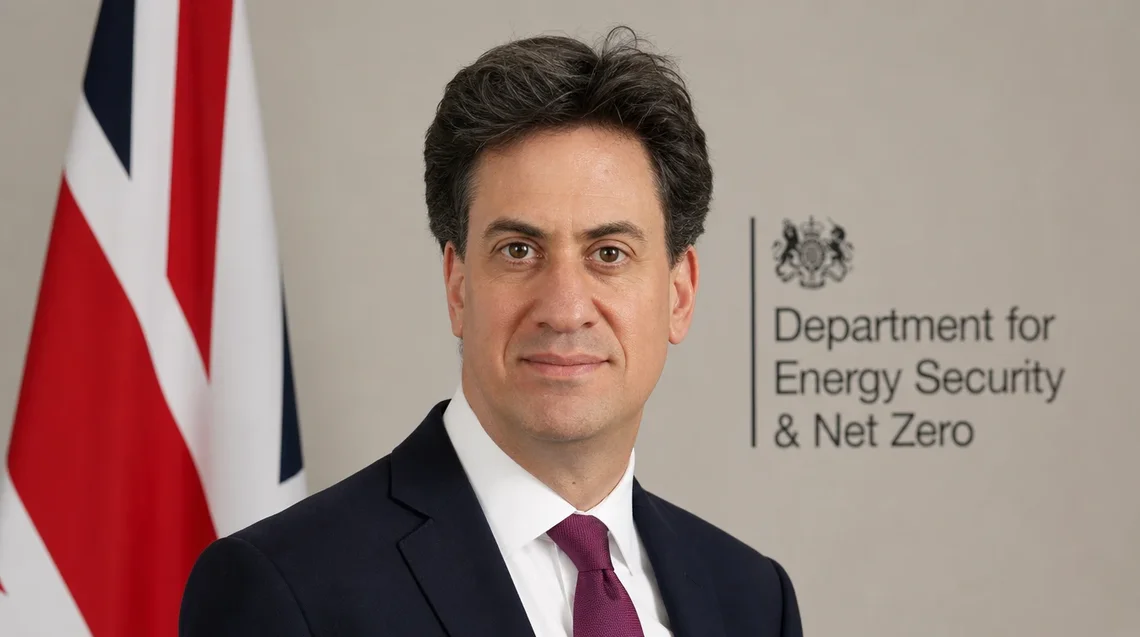
The United Kingdom has failed to meet a series of legally binding interim carbon reduction milestones, with official data showing national greenhouse gas emissions rising in key sectors despite record levels of renewable energy investment, according to analysis published by the Climate Change Committee and corroborated by Carbon Brief. The shortfall raises serious questions about the government's ability to deliver on its commitment to reach net zero by mid-century, and to achieve the more immediate target of reducing emissions by 81 per cent against 1990 levels by 2035.
Climate figure: UK greenhouse gas emissions fell by approximately 50 per cent between 1990 and recently measured baselines, according to the Department for Energy Security and Net Zero — yet the Climate Change Committee calculates the country must now achieve reductions at nearly twice the historical rate to stay on track for the 2035 carbon budget. Global mean surface temperature has already risen by approximately 1.1°C above pre-industrial levels, according to the Intergovernmental Panel on Climate Change (IPCC), placing additional urgency on national compliance with interim targets.
The Scale of the Shortfall
Analysis by the Climate Change Committee — the independent statutory body advising the UK government — indicates the country is falling materially short of the trajectories set out in the Sixth Carbon Budget, the framework designed to align UK policy with the Paris Agreement's 1.5°C temperature limit. Emissions in the buildings, transport, and agriculture sectors have proved particularly resistant to downward pressure, officials said.
Sectors Driving the Gap
Heating in residential and commercial buildings remains the single largest structural challenge. The government's target for heat pump installations has been consistently underdelivered, with deployment figures running well below the trajectory required. In transport, the shift to battery electric vehicles has accelerated on a consumer level, but the overall vehicle fleet still runs predominantly on internal combustion engines, meaning fleet-wide emissions remain elevated. Agricultural methane and nitrous oxide output has shown minimal reduction over the assessment period, reflecting the absence of enforceable sector-specific policy mechanisms, according to Carbon Brief.
Related Articles
For a broader examination of how these figures compare against previous assessments, see our earlier coverage: UK misses net zero interim target by wide margin, which detailed the methodology used by the Climate Change Committee in calculating the gap.
Renewable Energy: Progress Without Sufficient Pace
The expansion of renewable electricity capacity represents the most tangible area of UK climate progress. Offshore wind, solar photovoltaic, and onshore wind collectively supplied a record proportion of national electricity generation in recently reported periods, driven by sustained capital deployment from both the public Contracts for Difference scheme and private institutional investors, according to the International Energy Agency (IEA).
Why Renewables Alone Are Not Enough
The core paradox identified by analysts is that decarbonising the power grid, while necessary, addresses only approximately one-fifth of total UK greenhouse gas emissions. The harder challenge — electrifying heat, surface transport, and industrial processes — requires structural economic and behavioural changes that cannot be delivered through energy procurement alone. The IEA has noted in its annual tracking reports that countries across the G7 face a similar asymmetry: electricity system transformation outpacing whole-economy decarbonisation.
Grid infrastructure itself presents a compounding constraint. The volume of renewable generation capacity seeking connection to the National Grid has created multi-year waiting lists for grid connection, a bottleneck that risks delaying new clean energy projects. Our reporting on UK accelerates net zero grid overhaul amid climate targets examines the specific transmission investment programmes the government has announced in response.
| Country | 2030 Emissions Target (vs 1990) | Current Reduction Achieved | Primary Gap Sector | Assessment Source |
|---|---|---|---|---|
| United Kingdom | -68% | ~-50% | Buildings & Heat | Climate Change Committee |
| Germany | -65% | ~-46% | Industry & Transport | German Environment Agency / IEA |
| France | -55% | ~-34% | Agriculture | Citepa / European Environment Agency |
| Denmark | -70% | ~-55% | Agriculture | Danish Energy Agency / IEA |
| United States | -50 to -52% (vs 2005) | ~-20% | Transport & Industry | US EPA / IEA |
Policy Architecture and Accountability
The Climate Change Act creates a statutory duty on the UK government to meet carbon budgets, with the Climate Change Committee empowered to report publicly on compliance. However, the Act does not prescribe specific enforcement penalties for shortfalls, meaning accountability has operated primarily through political and reputational mechanisms rather than legal compulsion. This structural characteristic has drawn criticism from environmental law practitioners and climate economists, who argue that non-binding political accountability is insufficient given the pace of action required.
Government Response and the 2035 Carbon Budget
Ministers have maintained that the UK's legally binding net zero commitment for mid-century remains intact and that interim shortfalls can, in principle, be recovered through accelerated action in later carbon budget periods. Critics, however, argue this logic mirrors a pattern of deferred ambition observed across successive administrations. The tightening timeline toward the Sixth Carbon Budget period means that any further delays in policy deployment — particularly on heat pump subsidies, planning reform for onshore wind, and industrial decarbonisation contracts — compound the recovery challenge. For detailed analysis of the specific 2035 commitment and its political implications, see UK misses interim net zero target, raises 2035 questions.
Nature journal has published modelling indicating that countries which miss early-period carbon budgets face disproportionately higher costs in later periods to achieve equivalent atmospheric outcomes, owing to the non-linear relationship between cumulative emissions and temperature outcomes. This finding has been central to the Climate Change Committee's repeated calls for front-loaded policy action rather than back-loaded ambition.
Industrial and Economic Dimensions
The transition carries significant economic corollaries. The steel, cement, chemicals, and glass sectors — which together account for a meaningful share of industrial emissions — have called for long-term, predictable carbon contracts to justify capital investment in hydrogen or electrification-based production processes. The absence of a comprehensive industrial decarbonisation strategy with firm funding commitments has been identified by the Guardian Environment desk as a recurring point of tension between Whitehall and major manufacturing employers.
Green Finance and Investment Flows
Private capital allocation toward UK low-carbon infrastructure remains high in absolute terms, with offshore wind auction rounds consistently attracting institutional investment. However, the IEA's clean energy investment tracking reports indicate that the overall ratio of clean to fossil fuel investment in the UK economy, while improving, has not yet reached the threshold necessary to deliver the pace of physical capital turnover required by the carbon budgets. Banking and pension fund exposure to high-carbon assets also remains a material systemic risk, according to analysis cited by the Bank of England's Prudential Regulation Authority.
International Context and Legal Obligations
The UK's interim target shortfalls arrive against a backdrop of stalled progress at the international level. IPCC synthesis reports have reiterated that current nationally determined contributions under the Paris Agreement, in aggregate, are insufficient to limit warming to 1.5°C and place the world on a trajectory toward 2.5°C or higher absent significant policy escalation. This gap between stated ambition and measured delivery is not unique to the UK, but the country's position as a former COP26 host and frequent advocate for stronger global commitments lends the domestic shortfall particular diplomatic and reputational weight.
Devolved Administrations
Scotland, Wales, and Northern Ireland each operate within the overarching UK carbon budget framework but retain devolved powers over planning, land use, and aspects of transport policy. Scotland has published its own statutory climate targets, though the Scottish Government has acknowledged missing its own near-term milestones. The interaction between devolved and reserved policy levers adds complexity to any unified UK-wide acceleration strategy, officials said.
The trajectory of delay and recalibration has been extensively documented; our reporting on UK delays net zero targets amid grid transition challenges provides a detailed account of the specific regulatory and infrastructure bottlenecks cited by government agencies as contributing factors.
What the Evidence Requires
Independent assessments from the Climate Change Committee, the IEA, and academic researchers published in Nature consistently converge on a common set of policy requirements: a substantial increase in the rate of heat pump deployment supported by public subsidy and skills development; accelerated planning reform to unlock onshore wind and solar; enforceable sector-specific emissions standards in agriculture and industry; and a transport transition plan that extends beyond passenger cars to freight and aviation. Carbon Brief analysis has further emphasised that the credibility of the UK's net zero trajectory depends not on the existence of legislation but on the consistency between stated targets and funded, deliverable policy mechanisms.
The government has signalled additional policy consultations on several of these fronts, though no binding implementation timelines accompanied those announcements at the time of publication. For ongoing coverage of the statutory target landscape, see our full report on the UK misses interim net zero emissions target. The fundamental question facing policymakers is not whether the 2050 net zero destination is legally intact — it is — but whether the cumulative emissions released in the intervening decades will foreclose the temperature outcomes the legislation was designed to protect. On current trajectories, independent scientific bodies assess that the answer to that question is becoming more difficult to avoid.